The Manchurian Candidate
"The nightmare is now corporate policy."
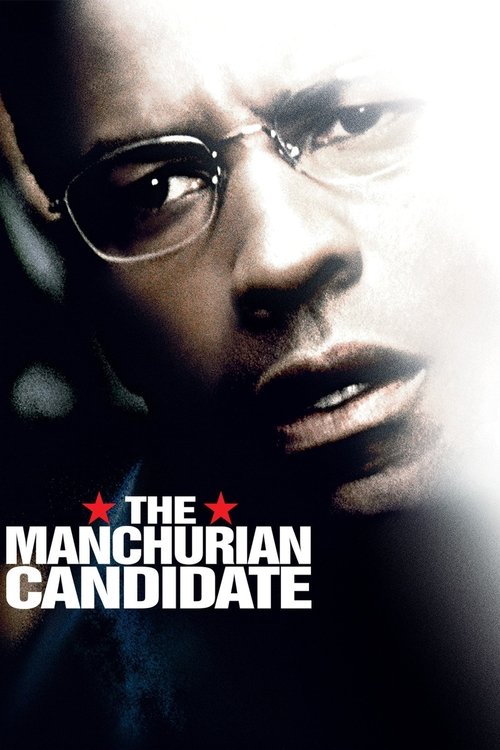
If you’ve ever woken up from a dream with the lingering sense that your brain was a hard drive someone else had been defragmenting overnight, you’ll recognize the specific, sweaty anxiety of The Manchurian Candidate. Not the 1962 classic with Frank Sinatra—though that’s a stone-cold masterpiece—but the 2004 reimagining directed by Jonathan Demme. Released in the thick of the Iraq War and the burgeoning "War on Terror," this film captures a very specific flavor of American paranoia that felt terrifyingly plausible in the early 2000s.
I actually watched this for the first time in a cramped dorm room while my roommate was frantically trying to beat a level in Halo 2 on the other side of the room. Despite the literal "pew-pew" sounds of an Xbox nearby, the movie’s suffocating atmosphere completely pulled me in. It’s one of those rare remakes that doesn't just copy the original’s homework but updates the villain for a new era of tech-anxiety.
From Red Menace to Corporate Boardrooms
In the original film, the "bad guys" were the Communists, a reflection of 1960s Cold War fears. By 2004, that threat felt like a dusty relic. Jonathan Demme and his screenwriters, Dean Georgaris and Daniel Pyne, pivot the threat toward something more contemporary: "Manchurian Global," a private equity firm that feels uncomfortably like Halliburton. This shift is brilliant because it taps into that post-9/11 cynicism where the real enemy isn't an ideology, but a corporation with a bottom line and a lobbyist in every office.
Denzel Washington plays Major Ben Marco with a jittery, sleep-deprived intensity that I found deeply relatable. He isn't the cool, collected hero we often see him play in movies like The Equalizer (2014); he’s a man who is literally falling apart at the seams. He’s digging into his own skin for a tracking chip he isn't even sure is there, and Denzel Washington makes you feel every ounce of that mental deterioration. His performance anchors the film's mystery, turning what could have been a standard thriller into a high-stakes character study about a man trying to reclaim his own mind.
A Masterclass in Mom-ster Politics
While Denzel provides the soul, Meryl Streep provides the venom. Playing Senator Eleanor Prentiss Shaw, she steps into the shoes of the legendary Angela Lansbury and somehow finds a way to be even more terrifying. Meryl Streep’s Eleanor Shaw is basically the final boss of helicopter parenting. She is a Machiavellian nightmare who views her son, Liev Schreiber’s Raymond Shaw, less as a person and more as a biological asset to be managed.
Liev Schreiber is equally impressive here, playing Raymond with a hollowed-out, "the lights are on but nobody’s home" quality. He’s a Vice Presidential candidate who has been programmed to be the perfect puppet, and Liev Schreiber nails the subtle, glassy-eyed stare of a man who has had his soul replaced by a software update. Watching the chemistry between him and Streep is like watching a snake try to comfort a mouse before swallowing it whole. The film also features a great, albeit brief, turn by Bruno Ganz (best known as Hitler in Downfall) as a scientist who might be the only person who can help Marco solve the puzzle.
The Demme Touch and the "Look" of Paranoia
One of the most distinctive things about Jonathan Demme’s direction—which he famously utilized in The Silence of the Lambs (1991)—is having the actors look directly into the camera lens. In this film, it’s used to devastating effect. When characters speak directly to us, it creates an intimacy that feels intrusive. It makes you feel like you're being interrogated or, worse, programmed.
The cinematography by Tak Fujimoto (who also shot The Sixth Sense) uses a palette of cold blues and harsh fluorescent lighting that makes every office and laboratory look like a surgical suite. It’s a very "Modern Cinema" look—sterile, digital, and slightly hostile. Even the score by Rachel Portman avoids the typical bombast of an action-thriller, opting instead for a rhythmic, ticking-clock tension that mirrors Marco’s escalating panic.
Why This One Slipped Through the Cracks
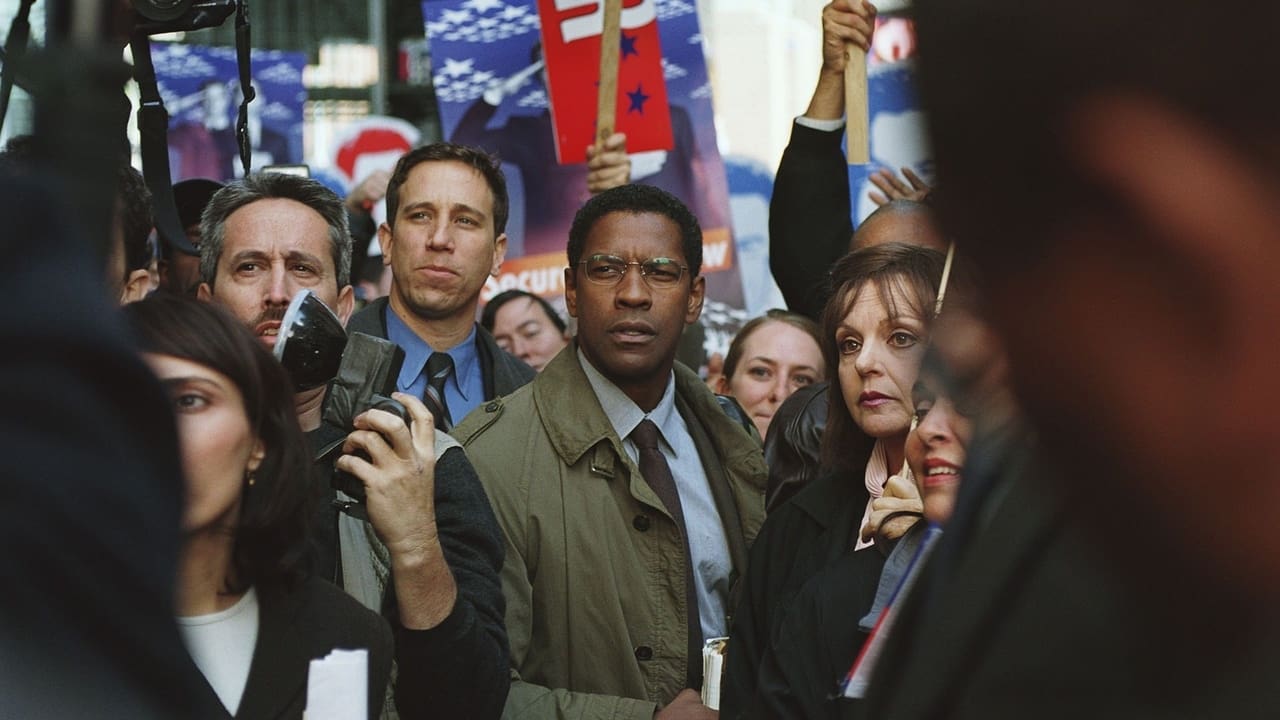
Despite a healthy budget and some of the biggest names in Hollywood, the 2004 Manchurian Candidate hasn’t quite achieved the legendary status of its predecessor. Part of that might be "Remake Fatigue," a phenomenon that was just starting to ramp up in the mid-2000s. Another reason might be that it was so tied to the political anxieties of 2004 that it felt "too soon" or "too on the nose" for audiences who were already exhausted by the 24-hour news cycle.
Looking back, though, it’s a remarkably sturdy thriller. It’s a film that respects the audience's intelligence and doesn't rely on CGI-heavy set pieces to keep the momentum going. Instead, it relies on the terror of a lost memory and the creeping realization that the people running the world might have had their humanity surgically removed. It’s a "forgotten" gem in the sense that people rarely list it among Denzel Washington's top five films, but it absolutely deserves a spot on your watchlist if you want a political thriller with actual teeth.
The 2004 version of The Manchurian Candidate manages to honor its source material while finding a fresh, corporate-fueled nightmare to explore. It’s a dense, expertly acted drama that proves you don't need a Cold War to tell a story about the fragility of the human mind. Between Meryl Streep's chilling performance and Jonathan Demme's claustrophobic direction, this is a film that will leave you double-checking your own memories for a few hours after the credits roll. It’s a paranoid trip worth taking, even if it makes you want to throw your smartphone into a river.

Keep Exploring...
-
Courage Under Fire
1996
-
The Bone Collector
1999
-
Joy Ride
2001
-
Double Jeopardy
1999
-
What Lies Beneath
2000
-
The Sum of All Fears
2002
-
Basic
2003
-
Stay
2005
-

Out of Time
2003
-

Pride and Glory
2008
-
Arlington Road
1999
-

The Gift
2000
-
Gosford Park
2001
-
The Pledge
2001
-
The Score
2001
-
K-19: The Widowmaker
2002
-
The Forgotten
2004
-
The Jacket
2005
-

Inland Empire
2006
-
In the Valley of Elah
2007