The Sea Inside
"A life that belongs to no one else."
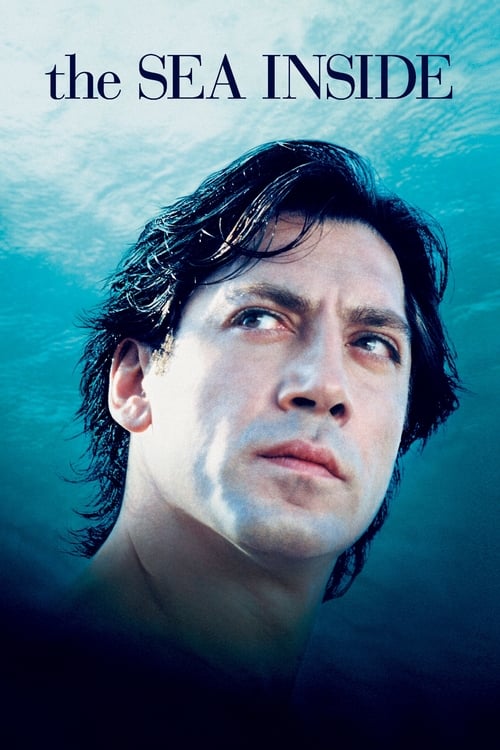
I remember finding the DVD of The Sea Inside in a bargain bin at a closing Blockbuster around 2008. It was wedged between a scratched copy of Shark Tale and a workout video. At the time, Javier Bardem was the guy from No Country for Old Men who looked like he could kill me with a pressurized air canister. Seeing him on the cover here—pale, paralyzed, and smiling with a profound, weary kindness—felt like a glitch in the Matrix.
I finally sat down to watch it on my old MacBook Pro, the one that got so hot it smelled like burning plastic, while my roommate was loudly practicing the bass in the next room. Despite the distractions and the fact that my battery was at 12%, the film sucked me in. It’s a movie that asks a very simple, terrifying question: If you don't own your death, do you really own your life?
The Architecture of a Bedridden World
Alejandro Amenábar is a director who usually plays with high-concept shadows. He gave us the chilly atmosphere of The Others and the reality-bending Open Your Eyes. With The Sea Inside, he stays in one room for most of the 126-minute runtime, yet it feels more expansive than a Ridley Scott epic. He achieves this through the eyes of Ramón Sampedro, a former ship mechanic who has spent nearly thirty years as a quadriplegic.
Ramón isn't the "saintly" disabled person we often see in Oscar-bait movies. He’s sharp, witty, and occasionally frustrating. He wants to die, and he’s spent three decades fighting the Spanish courts for the legal right to have someone help him do it. The film doesn't treat his desire as a symptom of depression that needs "curing" via a third-act montage. Instead, it treats it as a logical, albeit tragic, conclusion of a man who values his autonomy above his heartbeat.
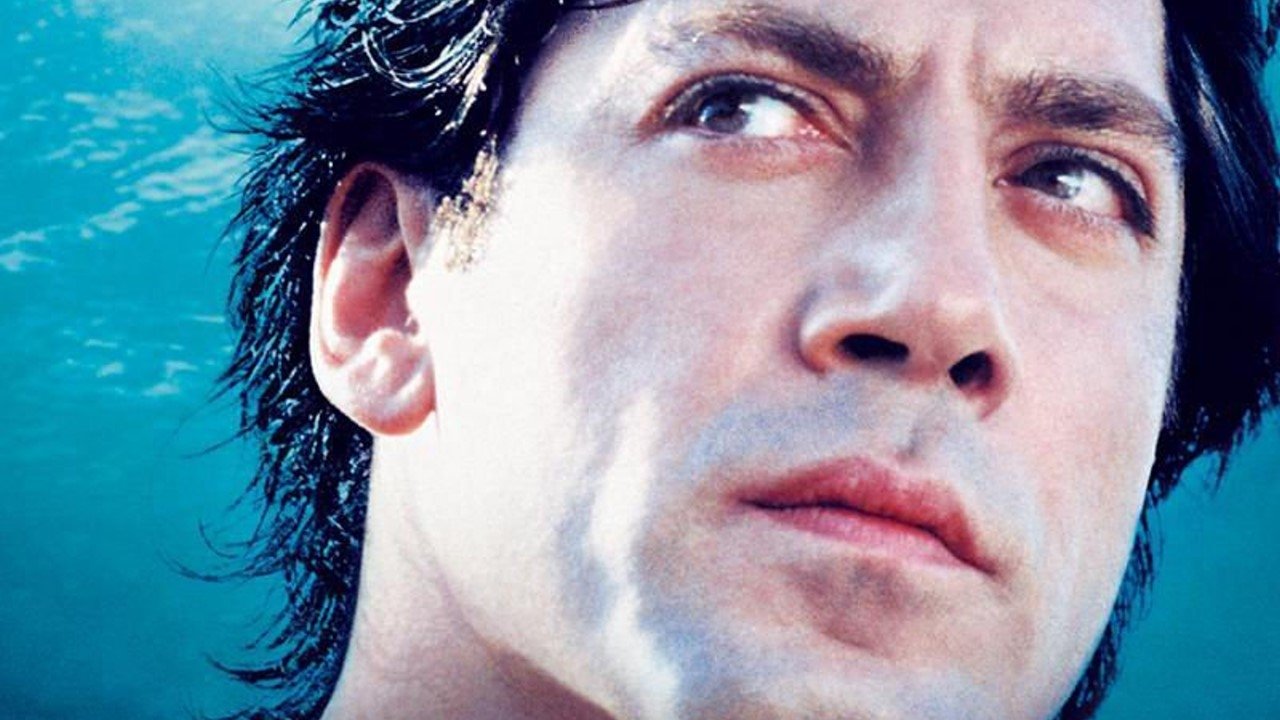
Javier Bardem delivers a performance that, in my opinion, remains his high-water mark. Since he can’t move anything below his neck, the entire film lives in his face. It’s all in the way he tilts his head or how his eyes light up when he’s describing the sea. He manages to make Ramón’s charisma feel like a physical force. You understand exactly why these women—the lawyer Julia (Belén Rueda) and the local factory worker Rosa (Lola Dueñas) —fall into his orbit. They don't pity him; they are genuinely charmed by him, which makes his unwavering desire to leave them all the more heartbreaking.
A Dialogue with the Divine and the Secular
One of the highlights of the film is a verbal sparring match between Ramón and a visiting priest, Padre Francisco, played by Josep Maria Pou. The priest is also a quadriplegic, but he uses his situation to argue for the sanctity of life. Because they can’t be in the same room—the priest’s wheelchair won't fit up the stairs—they shout their philosophical arguments through the floorboards.
It’s a sequence that could have been incredibly dry, but Amenábar shoots it like an action scene. Josep Maria Pou plays a priest who is essentially a sentient pile of patronizing laundry, and Ramón’s rebuttals are surgical. It highlights the era’s fascination with the clash between traditional religious values and the rising tide of individual secular rights. Looking back, this felt like a cornerstone of the mid-2000s "prestige drama"—intellectual, handsomely shot, and deeply concerned with the "big questions" that the blockbuster era was starting to move away from.
The cinematography by Javier Aguirresarobe is stunning without being showy. When Ramón "flies" out of his window to the strains of Puccini, soaring over the Spanish countryside to the ocean, it doesn't feel like a cheap CGI gimmick. It feels like a necessary relief from the claustrophobia of his bedroom. It’s the kind of visual storytelling that reminds me why we used to care so much about DVD commentary tracks; I wanted to know exactly how they captured that sense of weightless freedom.
The Bittersweet Legacy of the Mid-2000s Indie
Watching The Sea Inside today, it feels like a relic of a very specific time when "International Cinema" meant something slightly different in the American consciousness. This was the era of the "subtitled hit," where films like Amélie or Pan’s Labyrinth could actually penetrate the cultural zeitgeist. It lacks the frantic pacing of modern streaming dramas, opting instead for a slow, rhythmic build-up that mimics the tides Ramón so dearly misses.
The supporting cast is equally vital. Mabel Rivera as Manuela, Ramón’s sister-in-law, is the unsung hero of the film. She provides the quiet, domestic backbone of the story, showing the daily labor of love that goes into keeping Ramón alive while he fights to die. Joan Dalmau as the elderly father, Joaquín, provides one of the film's most crushing moments with just a few words about the tragedy of a father having to outlive a son who doesn't want to be there.
It’s a "heavy" movie, sure, but it’s not a miserable one. There’s a strange, buoyant humor running through it. It reminds me that even in the most static circumstances, the human mind is a restless, traveling thing.
The film earns its emotional climax by being brutally honest about the logistics of Ramón’s choice. It doesn't shy away from the awkwardness or the legal danger he puts his friends in. It’s a philosophical drama that actually has the guts to stick to its convictions. If you missed this during the initial 2004 Oscar sweep, it’s worth seeking out—just make sure your laptop is plugged in and your neighbors aren't practicing their scales. It deserves your full attention.

Keep Exploring...
-
Agora
2009
-
Open Your Eyes
1997
-
Talk to Her
2002
-

Thesis
1996
-

October Sky
1999
-
The Straight Story
1999
-

The Fall
2006
-
Control
2007
-

Evangelion: 1.0 You Are (Not) Alone
2007
-
The Diving Bell and the Butterfly
2007
-
Il Divo
2008
-
Synecdoche, New York
2008
-

Evangelion: 2.0 You Can (Not) Advance
2009
-
The Others
2001
-
A Dog's Will
2000
-

Millennium Actress
2002
-
Spring, Summer, Fall, Winter... and Spring
2003
-
Fearless
2006
-

Volver
2006
-
Departures
2008