The Stepford Wives
"The neighbors are perfect. The secret is messy."

There is a specific brand of early-2000s Hollywood madness that involves throwing nearly a hundred million dollars at a property originally designed to be a quiet, unsettling slice of suburban dread. The 2004 reimagining of The Stepford Wives is the poster child for this "bigger is better" delusion. It takes Ira Levin’s chilling 1972 satire—famously adapted into the 1975 thriller that made "Stepford" a permanent part of our lexicon—and douses it in neon-pink paint, slapstick humor, and enough production drama to fill a dozen DVD "making-of" featurettes.

I watched this recently while leaning against a vibrating laundry machine that was doing its best to escape the utility room, and honestly, the rhythmic thumping of the washer provided a more consistent internal logic than the final thirty minutes of this film. It is a fascinating, shiny, deeply broken artifact of an era when studios thought every dark story needed a comedic facelift and a happy ending.
A Masterclass in Tonal Whiplash
The setup remains roughly the same, but with a post-Y2K corporate twist. Nicole Kidman stars as Joanna Eberhart, a high-powered reality TV executive who suffers a spectacular public breakdown after one of her shows goes south. To recuperate, her husband Walter, played by a remarkably bland Matthew Broderick, drags her and their kids to the gated community of Stepford, Connecticut.
In the 1975 version, the horror comes from the slow realization that the men are replacing their wives with animatronic replicas. In this 2004 version, screenwriter Paul Rudnick (who did such brilliant work on Addams Family Values) tries to turn the horror into a campy social satire. The result is a movie that can’t decide if it wants to be Edward Scissorhands or a broad sitcom.
Kidman gives it her all, looking like she wandered off the set of a different, better movie. She’s twitchy, sharp-edged, and genuinely funny. But she is surrounded by a film that doesn't know how to support her. The early-2000s obsession with "gloss" is in full effect here. Everything is saturated, every set looks like a high-end catalog, and the CGI—like a scene where a woman’s head spins around or another where she acts as a literal ATM—looks remarkably dated today. It’s that uncanny-valley digital effects work that felt cutting-edge for five minutes in 2004 but now looks like a discarded screensaver.
The Power of a Stacked Cast
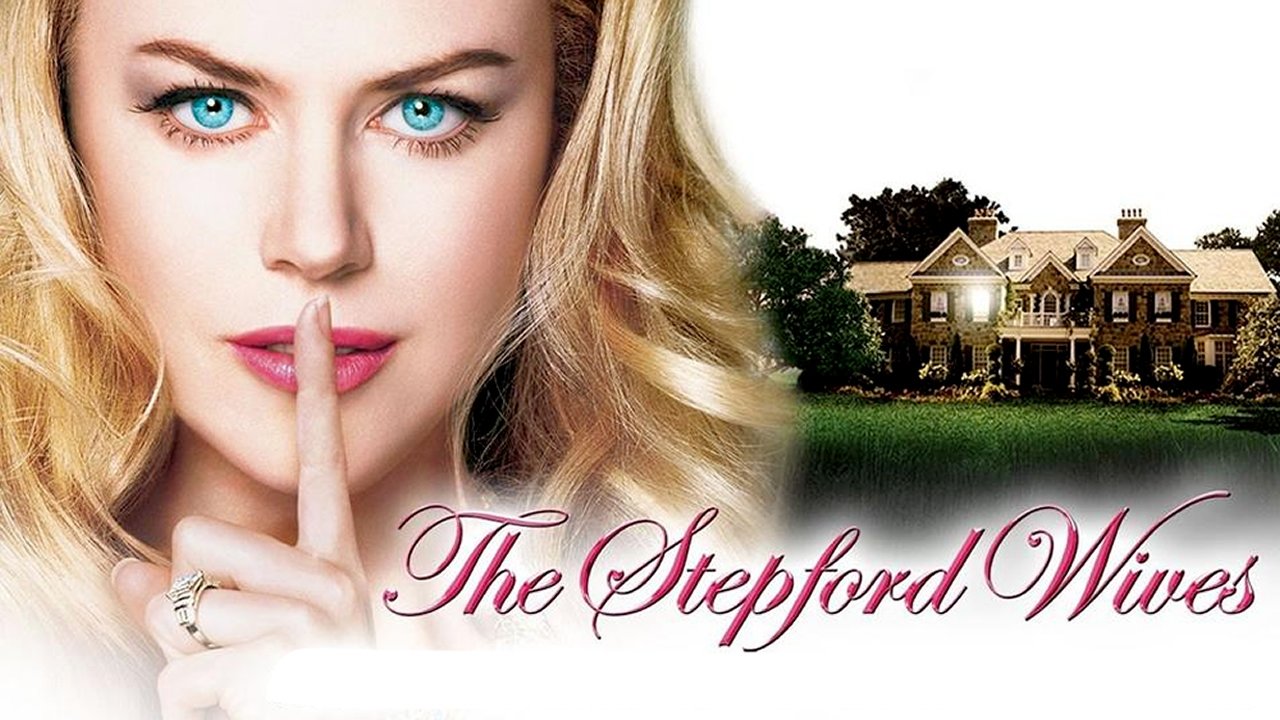
If there is a reason to revisit this oddity, it is the sheer wattage of the supporting cast. Bette Midler shows up as Bobbie, a messy, cynical writer who becomes Joanna’s only ally. Midler is a force of nature, and her transformation into a "perfect" wife is genuinely the most unsettling part of the film. Then there’s Roger Bart as Roger, a flamboyant architect who provides the film’s "progressive" update—yes, Stepford now has room for a "perfect" gay husband, too.
On the villainous side, we get the legendary Christopher Walken and Glenn Close. Walken does his usual Walken thing—odd cadences, menacing charm—but it’s Glenn Close who steals the entire show. As Claire Wellington, the town’s bubbly, terrifyingly poised matron, she manages to find a frequency of "crazy" that matches the movie’s heightened reality.
However, the behind-the-scenes stories suggest that the "perfect" town was a nightmare to film. Director Frank Oz (the man behind the voice of Yoda and the director of Little Shop of Horrors) famously clashed with Bette Midler and Nicole Kidman. The production was plagued by reshoots and a fundamentally shifting script. Apparently, test audiences were confused by whether the wives were actual robots or just brainwashed humans, leading to a frantic third-act rewrite that makes almost no sense if you think about it for more than four seconds. Matthew Broderick plays a man who seems to have been sedated with high-grade antihistamines for the duration of the shoot.
The Logic Gap
The film’s biggest failure is its refusal to commit to the bit. The original story is a pitch-black allegory for the way men try to control women’s bodies and minds. The 2004 version tries to have its cake and eat it, too. It wants to mock the suburban lifestyle while also suggesting that, hey, maybe some of these husbands just wanted a little more appreciation?
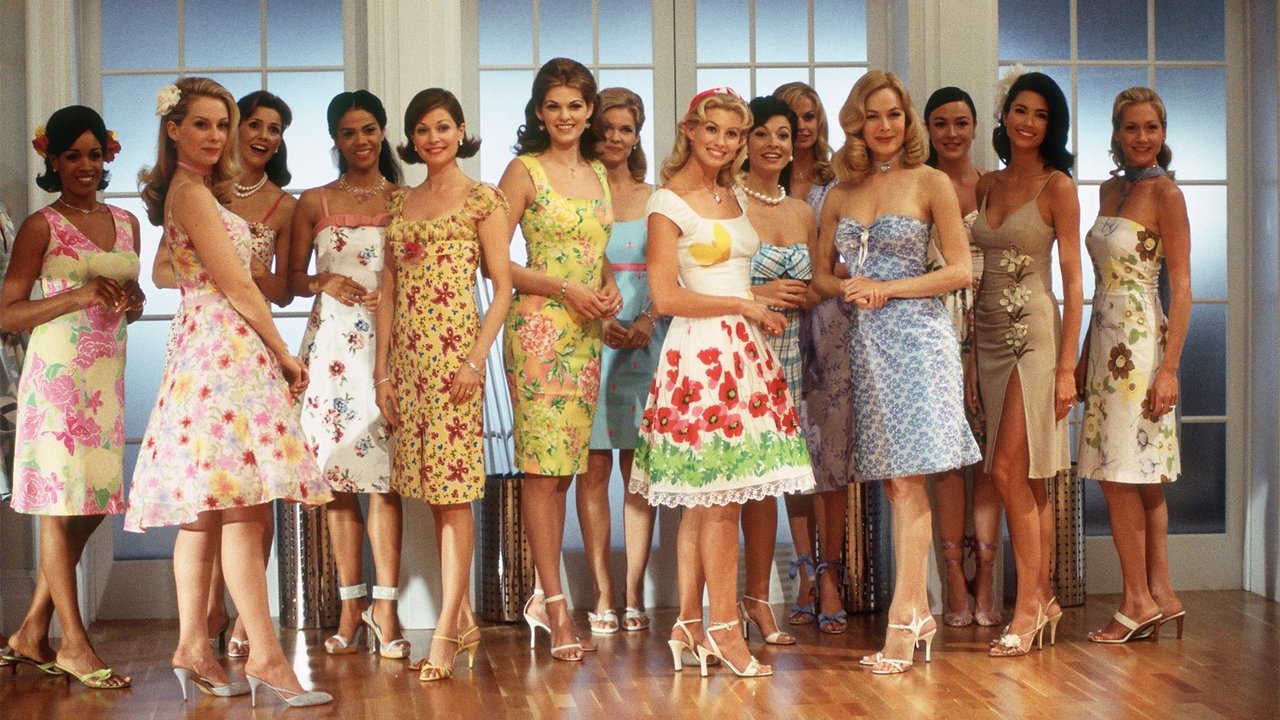
The ending—which I won’t spoil, though the film itself barely seems to care about it—is a colossal mess of logic holes. It’s a $90 million dollar car crash that insists on offering you a cupcake while the engine is still smoking. By the time the credits roll, you’re left wondering how so much talent could produce something so remarkably hollow.
Looking back from the 2020s, The Stepford Wives serves as a reminder of that weird transitional period in Hollywood. We were moving away from the gritty indie-spirit of the 90s and into a corporate, CGI-heavy franchise mentality where "brand recognition" mattered more than a coherent script. It’s not a good movie, but it is an entertaining disaster—a pastel-colored lobotomy of a film that is worth watching just to see Glenn Close try to hold the entire crumbling structure together with sheer willpower.
Ultimately, this is a film that was crushed by its own budget and a lack of tonal conviction. It’s too silly to be scary and too cynical to be truly funny. If you’re a fan of Bette Midler or you just want to see what happens when a studio tries to "fix" a masterpiece until it’s unrecognizable, it’s a curious watch. Just don’t expect any of it to make sense once the sun goes down in Connecticut.

Keep Exploring...
-

The Invasion
2007
-
Lake Placid
1999
-
Bowfinger
1999
-
Osmosis Jones
2001
-

Slither
2006
-

S1m0ne
2002
-

Dreamcatcher
2003
-

Seed of Chucky
2004
-
Aliens in the Attic
2009
-

Carriers
2009
-
Teenage Mutant Ninja Turtles II: The Secret of the Ooze
1991
-
Buffy the Vampire Slayer
1992
-
Mary Shelley's Frankenstein
1994
-
Dracula: Dead and Loving It
1995
-

Village of the Damned
1995
-

Mystery Men
1999
-

America's Sweethearts
2001
-
Evolution
2001
-

Austin Powers in Goldmember
2002
-
Men in Black II
2002