The Terminal
"Sometimes the best destination is where you're stuck."
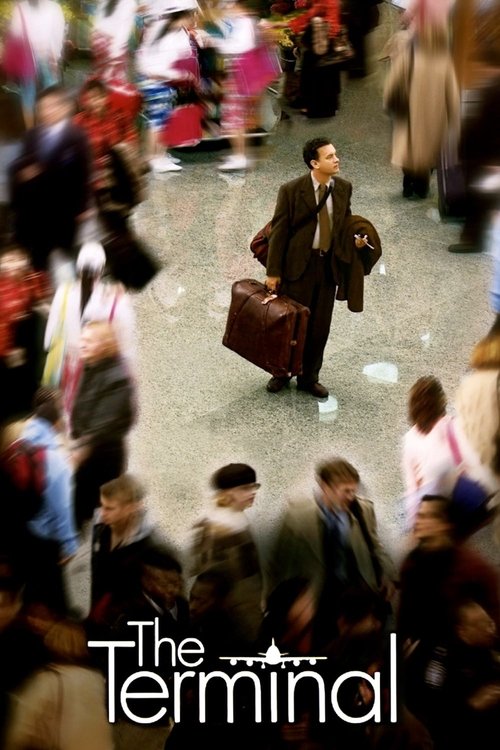
I once watched The Terminal on a laptop with a dying battery while sitting on a floor at O’Hare during a six-hour delay, eating a bag of slightly stale pretzels. It’s arguably the most immersive way to experience this movie. There is something profoundly specific about the "non-place" of an airport—the hum of the escalators, the digital chirp of boarding passes, and the crushing weight of bureaucratic limbo.
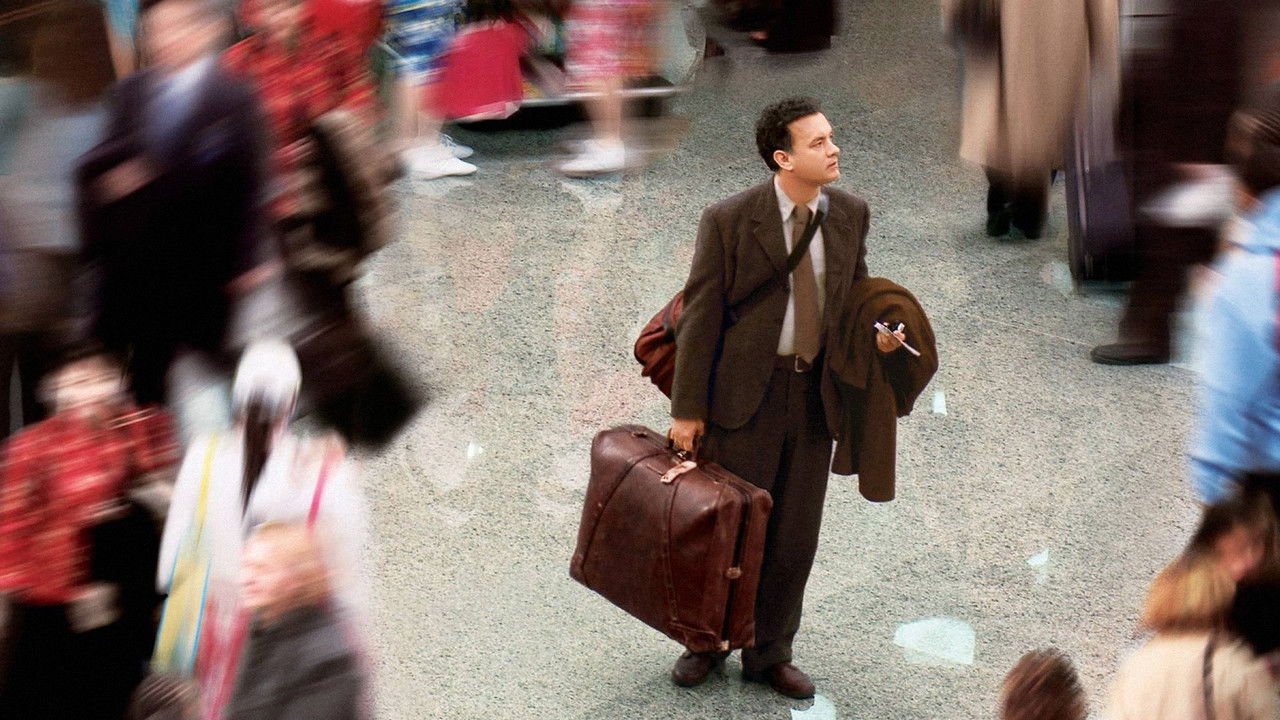
Steven Spielberg, a director who spent the early 2000s oscillating between the gritty sci-fi of Minority Report and the slick caper energy of Catch Me If You Can, decided in 2004 to build a village inside a vacuum. He didn’t just rent out a terminal; he built a functional, 1:1 scale replica of a JFK terminal inside a massive hangar in Palmdale, California. It cost a fortune—part of that $60 million budget—but looking back, it’s the physical reality of that set that keeps the movie from drifting into total sentimental goo.
A $60 Million Waiting Room
The premise is the stuff of urban legend, loosely inspired by the true story of Mehran Karimi Nasseri, who lived in Paris's Charles de Gaulle Airport for eighteen years. In Spielberg’s version, we get Viktor Navorski, played by Tom Hanks at his most charmingly porous. Viktor arrives from the fictional Eastern European country of Krakozhia, only to find that while he was mid-flight, his government was overthrown in a coup. His passport is now toilet paper, and his country no longer "exists" in the eyes of U.S. Customs.
Stanley Tucci plays Frank Dixon, the airport’s acting field commissioner, and I have a bit of a hot take here: Dixon isn’t actually a villain; he’s just a middle manager with a chronic migraine and a rulebook where his soul should be. Tucci plays the part with a wonderful, twitchy precision. He wants Viktor gone because Viktor is a "glitch" in a post-9/11 system that demands total cleanliness. Watching the friction between Viktor’s makeshift survival and Dixon’s sterile bureaucracy is the film’s real engine.
The production trivia here is genuinely wild. That terminal set had working escalators, actual food court franchises (Starbucks and Borders paid handsomely for the privilege), and enough glass to make a glazier weep. It captures a very specific 2004 aesthetic—that transitional era where airports were becoming malls with gates. Apparently, Tom Hanks worked with a professional dialect coach to create the "Krakozhian" accent, which was actually a blend of Russian and Bulgarian influences. His wife, Rita Wilson, reportedly helped him refine the Slavic phonetics, giving Viktor a voice that feels authentic even if the country is a map-maker's ghost.
The Hanks Factor

Let’s be honest: Viktor Navorski is basically a live-action Paddington Bear in a rumpled suit. If any other actor played him, the character’s wide-eyed innocence might feel like an insult to the audience’s intelligence. But Tom Hanks has this miraculous ability to communicate intelligence through a language barrier. He doesn't play Viktor as "slow"; he plays him as a man who is simply waiting for the world to make sense again.
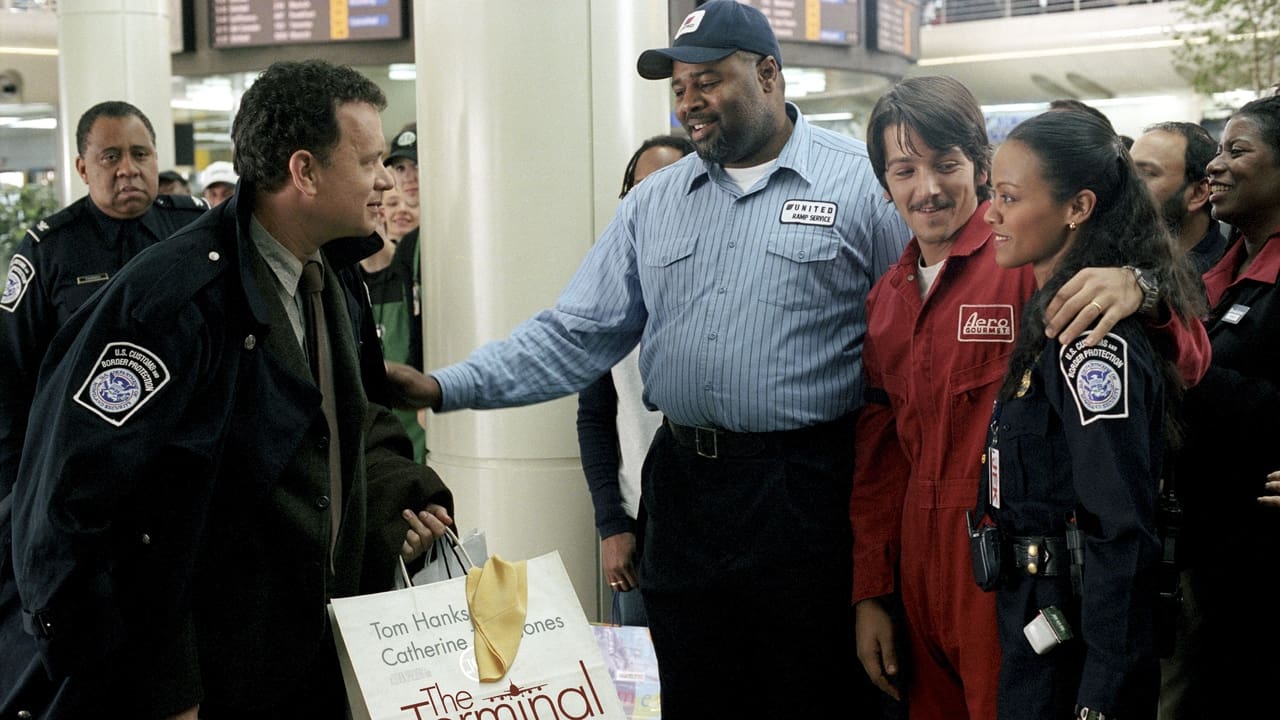
The supporting cast, featuring Chi McBride, Barry Shabaka Henley, and a young Diego Luna, forms a sort of "Island of Misfit Toys" community among the airport staff. These performances give the film its pulse. There’s a subplot involving Diego Luna as an airport food service worker trying to win over a customs agent (Zoe Saldana, long before her Marvel/Avatar stardom) that feels like a sweet, 90s-style indie romance tucked inside a blockbuster.
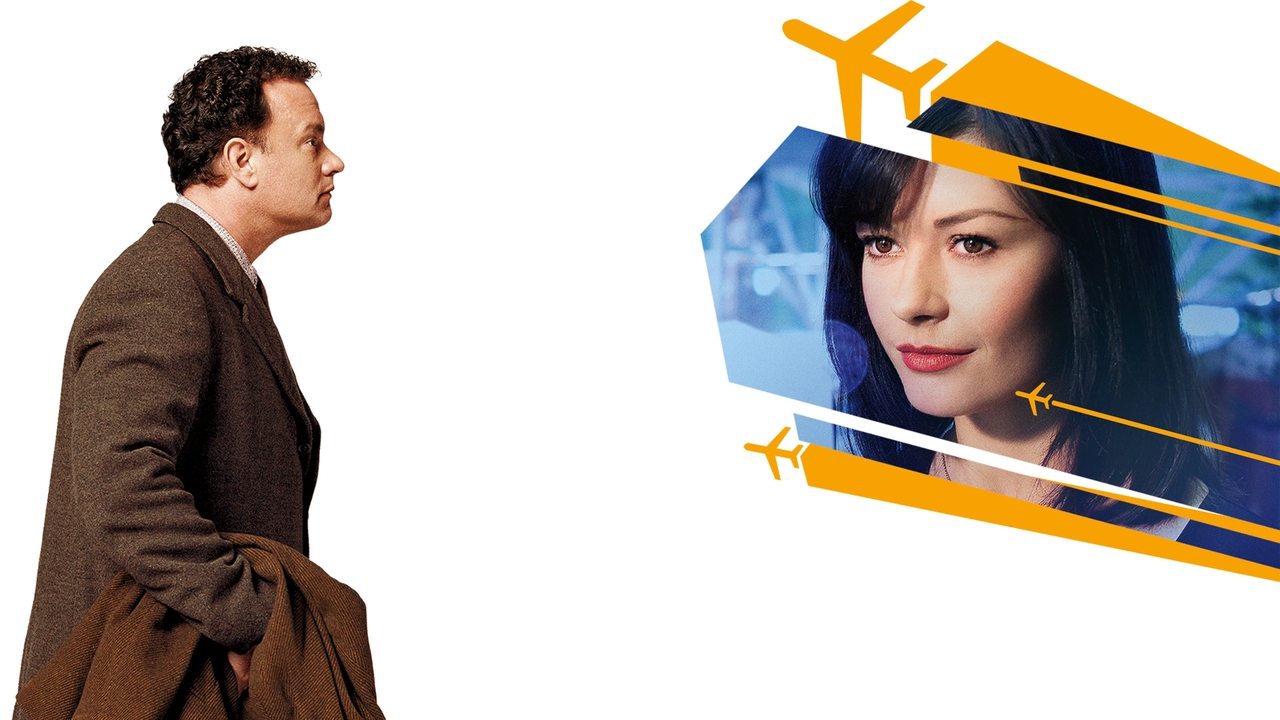
Where the film occasionally stumbles is the romance between Viktor and Catherine Zeta-Jones, who plays Amelia, a flight attendant caught in a perpetual loop of bad relationships. While Catherine Zeta-Jones is luminous, the script doesn't quite know what to do with her. Their connection feels like a narrative requirement rather than a natural occurrence. It’s the one part of the movie that feels like it’s checking a box, though John Williams provides a lovely, accordion-heavy score that tries its best to sell the whimsy.
A Post-9/11 Fairytale
Released only three years after the 2001 attacks, The Terminal is a fascinating cultural artifact. It takes the most anxiety-inducing location in the American psyche—the airport—and tries to reclaim it as a place of human connection. It’s Spielberg’s attempt to say that even in a world defined by security checkpoints and "no-fly" lists, a man with a Planters peanut can and a promise can still find a way through.
The film was a significant hit, pulling in over $219 million worldwide, proving that in the mid-2000s, the combination of Spielberg and Tom Hanks was still the closest thing Hollywood had to a sure bet. It’s a "cozy" movie, the kind that feels perfect for a rainy Sunday afternoon. It doesn't have the weight of Schindler's List or the adrenaline of Raiders of the Lost Ark, but it has a craftsmanship that you just don't see in modern mid-budget dramas.
Looking back, The Terminal represents a pivot point. It’s one of the last big-budget, "high-concept" human dramas that didn't need a superhero or a CGI monster to get greenlit. It relied entirely on a massive set, a great actor, and the simple idea that being stuck isn't the same thing as being lost.
While it occasionally leans too hard into the "Spielbergian" sugar, The Terminal remains a beautifully acted, technically impressive slice of 2000s cinema. It’s a movie about the dignity of waiting and the small communities we build when the world tells us we don't belong anywhere. If you haven't seen it in a decade, it’s worth a return trip—no passport required.

Keep Exploring...
-

Saving Private Ryan
1998
-
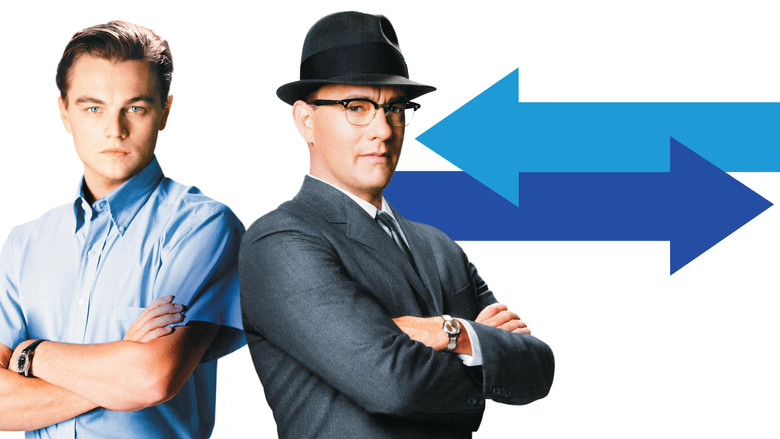
Catch Me If You Can
2002
-
Shall We Dance?
2004
-
Hook
1991
-
Lincoln
2012
-
A League of Their Own
1992
-

Charlie Wilson's War
2007
-
Chicago
2002
-

The Devil Wears Prada
2006
-
A.I. Artificial Intelligence
2001
-

Something's Gotta Give
2003
-
Hitch
2005
-

Mr. & Mrs. Smith
2005
-
Munich
2005
-
Sex and the City
2008
-

Cast Away
2000
-
Big Daddy
1999
-
Chocolat
2000
-
About a Boy
2002
-

About Schmidt
2002