Fun with Dick and Jane
"Corporate greed never looked this ridiculous."
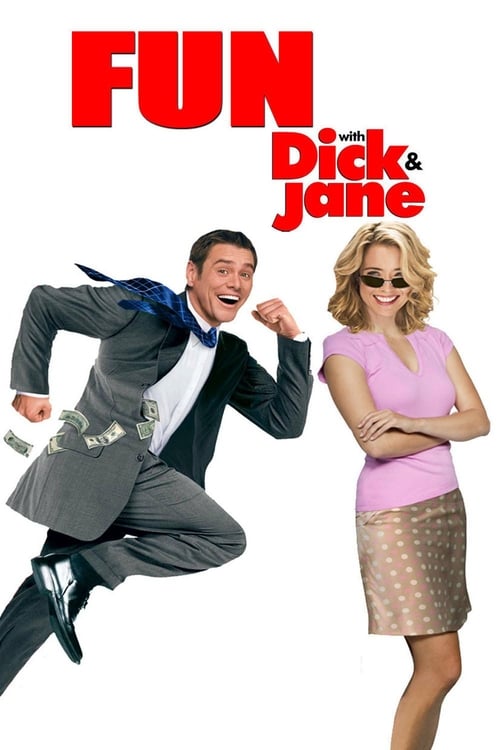
The most stressful moment in Fun with Dick and Jane isn’t the botched convenience store robbery or the high-stakes corporate espionage. It’s the sight of Jim Carrey frantically trying to steal his neighbor’s sod in the middle of the night. There is something uniquely mid-2000s about that image—a man so desperate to maintain the suburban facade of the American Dream that he’s willing to engage in landscaping larceny.

I recently rewatched this on a DVD I picked up at a garage sale for fifty cents, and the disc had a slight skip during the scene where they rob a head shop. Honestly, the jumpy playback only added to the frantic, caffeinated energy that Jim Carrey brings to the table. It felt right. Looking back, this film arrived at a very specific crossroads in cinema history: it was one of the last times a studio would hand a director $100 million to make a 90-minute social satire led by a single comedy titan.
The Panic of the White-Collar Cubicle
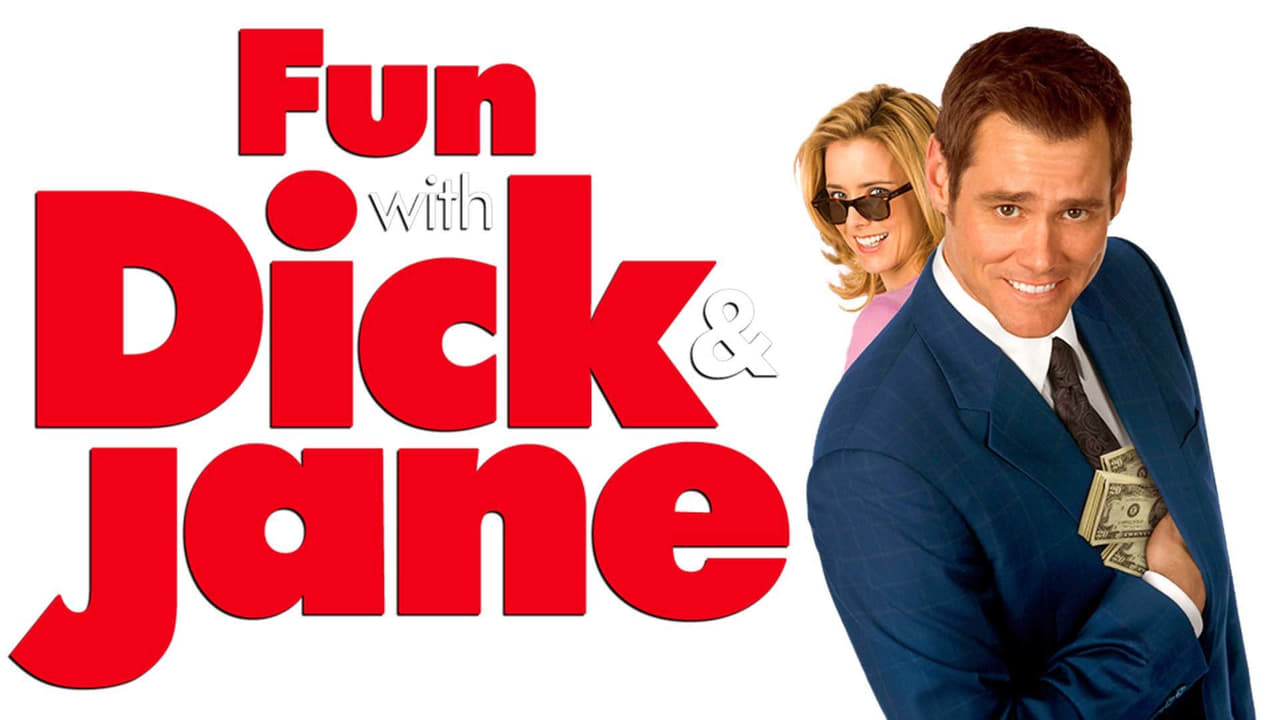
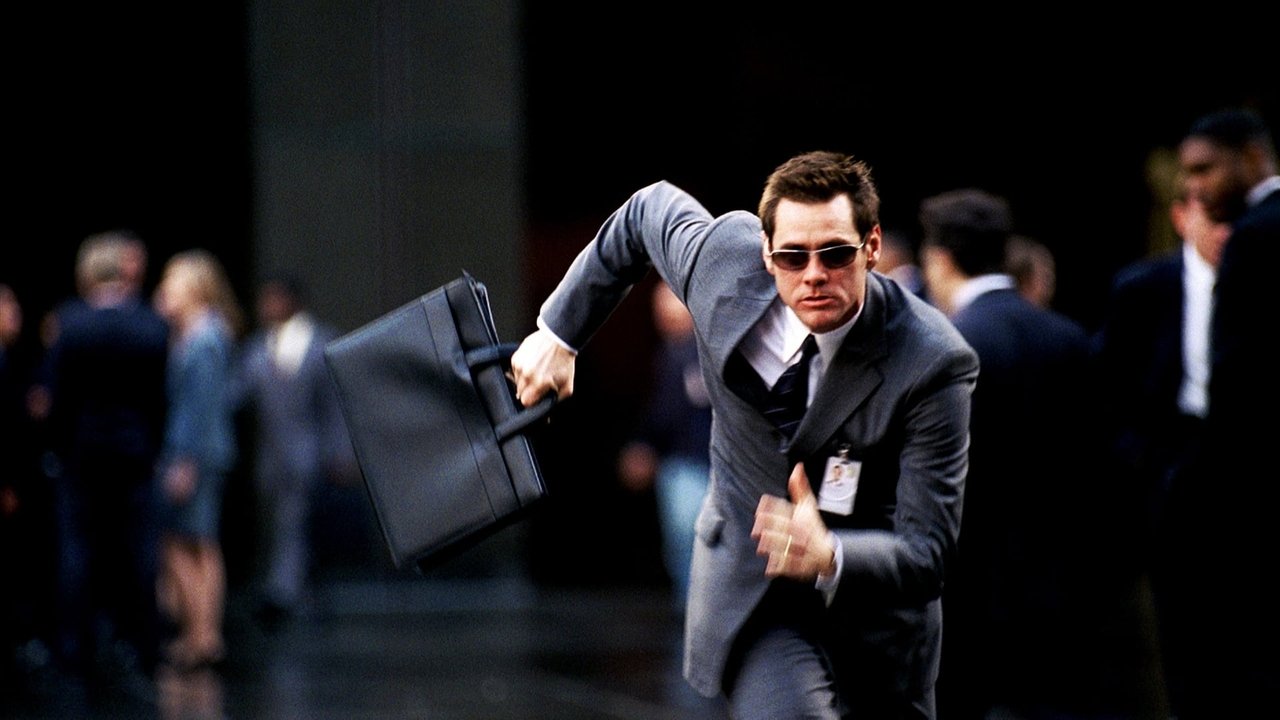
Released in 2005, Fun with Dick and Jane is a loose remake of the 1977 Jane Fonda and George Segal film, but it traded the post-Watergate cynicism for post-Enron rage. Jim Carrey plays Dick Harper, a corporate climber who gets promoted to VP of Communications at Globodyne just in time to be the fall guy for a massive accounting scandal. Watching his transition from smug executive to a man trying to pay his mortgage with a voice-changing toy and a water pistol is where the movie finds its heartbeat.
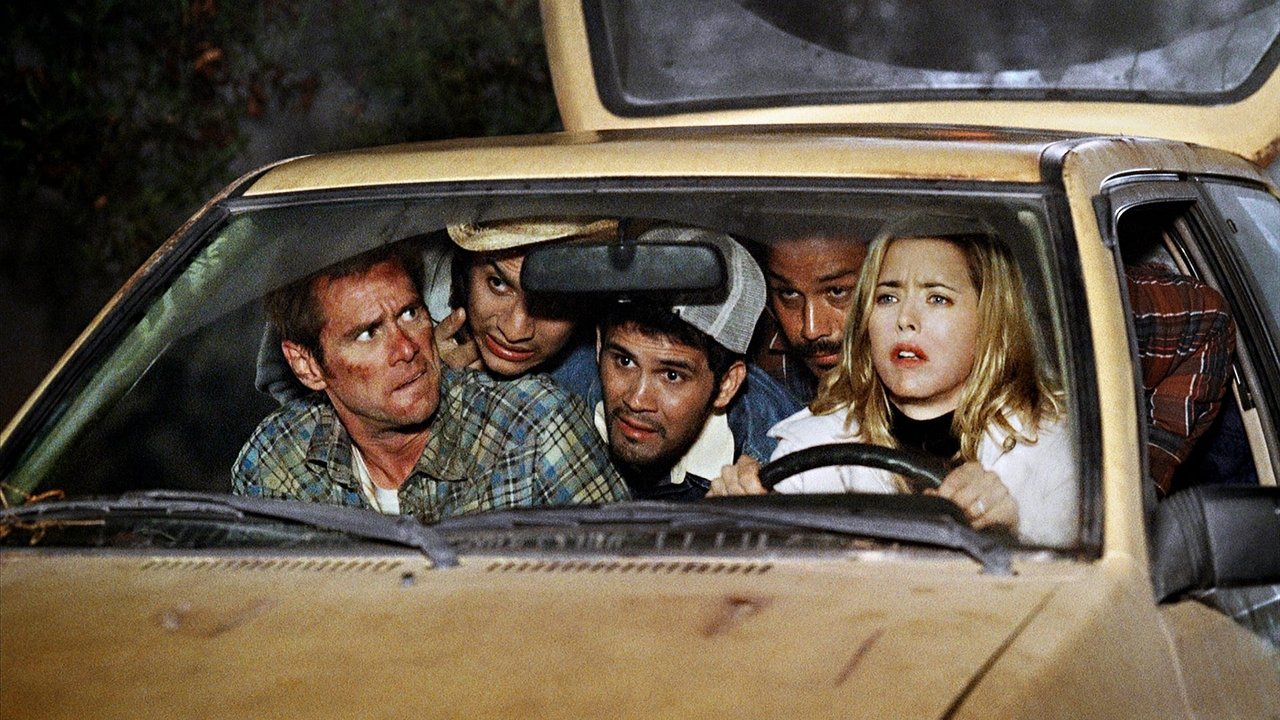
Carrey is remarkably restrained here—at least by his standards. He’s balancing the "rubber-face" antics of his Ace Ventura days with the more grounded, desperate Everyman he played in The Truman Show (1998). Beside him, Téa Leoni is the film’s secret weapon. Comedy often fails when the spouse is relegated to being the "voice of reason" who just frowns at the protagonist’s hijinks. But Leoni’s Jane is just as unhinged and game as Dick. Whether she’s suffering through a botched Botox experiment to make extra cash or tackling a security guard, her chemistry with Carrey makes the "crime as a hobby" premise actually believable.
A Time Capsule of Corporate Villains
The film thrives on its supporting cast of corporate caricatures. Alec Baldwin as Jack McCallister is essentially a dry run for his iconic Jack Donaghy role in 30 Rock, but with a much darker, Southern-fried malevolence. He’s the guy who bankrupts a company and buys a yacht while his employees are standing in the unemployment line. Richard Jenkins also turns in a hilarious, understated performance as the perpetually drunk CFO, Frank Bascombe, who seems to be the only person honest about how much of a sham the whole system is.
What strikes me now is how much the film captures the tech-anxiety of the mid-2000s. Everything in the Globodyne offices is sleek, silver, and digital—a world away from the beige clunkiness of the 90s but not quite as integrated as our current smartphone-obsessed era. The film mocks the jargon of the time, and while some of the jokes about "the internets" feel a bit dated, the core theme of being a disposable cog in a billionaire’s machine feels more relevant than ever.
The $100 Million Punchline
It’s wild to think this movie cost $100 million to produce. For context, that’s more than the budget of Batman Begins, which came out the same year. Most of that went toward the star salaries and a notoriously difficult production process. Director Dean Parisot (Galaxy Quest) took over after Barry Sonnenfeld left, and the script saw heavy rewrites from the then-up-and-coming comedy duo of Judd Apatow and Nicholas Stoller. You can feel the Apatow influence in the improvised-feeling banter, though the film stays firmly within its PG-13 boundaries.
Apparently, the production was so plagued by delays and reshoots that the budget ballooned, making it a "must-hit" for the studio. While it was a solid box office success, earning over $200 million, it never quite reached the legendary status of Dumb and Dumber (1994) or The Mask (1994). However, it has found a second life as a cable TV and streaming staple. It’s a "comfort watch" that deals with very uncomfortable things—like losing your pension while your boss practices his golf swing.
One of my favorite bits of trivia is that the closing credits actually thank the executives of Enron, WorldCom, and Tyco. It’s a biting, cynical touch that reminds you the filmmakers knew exactly who they were skewering. The film even features a cameo by John Michael Higgins as a frantic employee who ends up living in a tent, a performance that is painfully funny and just plain painful at the same time.
Fun with Dick and Jane isn't a comedic masterpiece, but it’s a fascinating relic of a time when Hollywood used massive budgets to tell stories about the collapsing middle class. It’s lean, mean, and powered by two leads who are clearly having a blast being terrible people for a good cause. It’s the kind of movie I’ll always stop to watch if I catch it halfway through on a Sunday afternoon, mainly just to see Jim Carrey's legendary "I’m a professional" face while he’s wearing a ridiculous mustache. It’s a satire with teeth, even if those teeth are mostly used for slapstick.
Keep Exploring...
-
RED 2
2013
-
Me, Myself & Irene
2000
-

Yes Man
2008
-
Bad Boys II
2003
-
Starsky & Hutch
2004
-
The Longest Yard
2005
-
The Pink Panther
2006
-

Rush Hour 3
2007
-
The A-Team
2010
-
I Love You Phillip Morris
2010
-

How the Grinch Stole Christmas
2000
-
The Whole Nine Yards
2000
-
Intolerable Cruelty
2003
-
You Don't Mess with the Zohan
2008
-
Beverly Hills Cop III
1994
-
Lethal Weapon 4
1998
-
Analyze This
1999
-
The Number 23
2007
-

The Green Hornet
2011
-
2 Guns
2013