Hard Candy
"Sugar, spice, and a surgical nightmare."
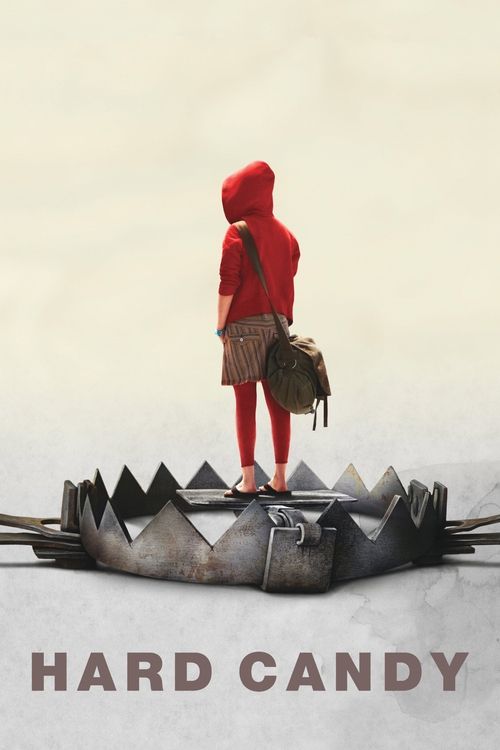
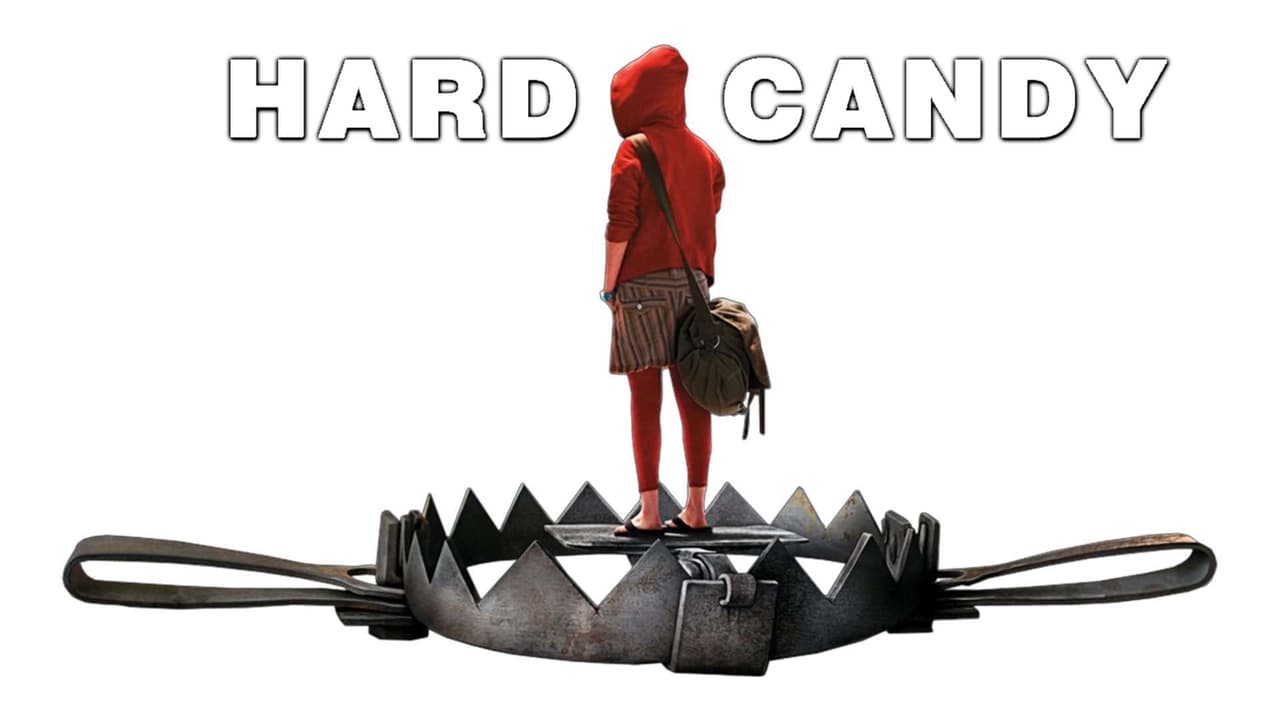
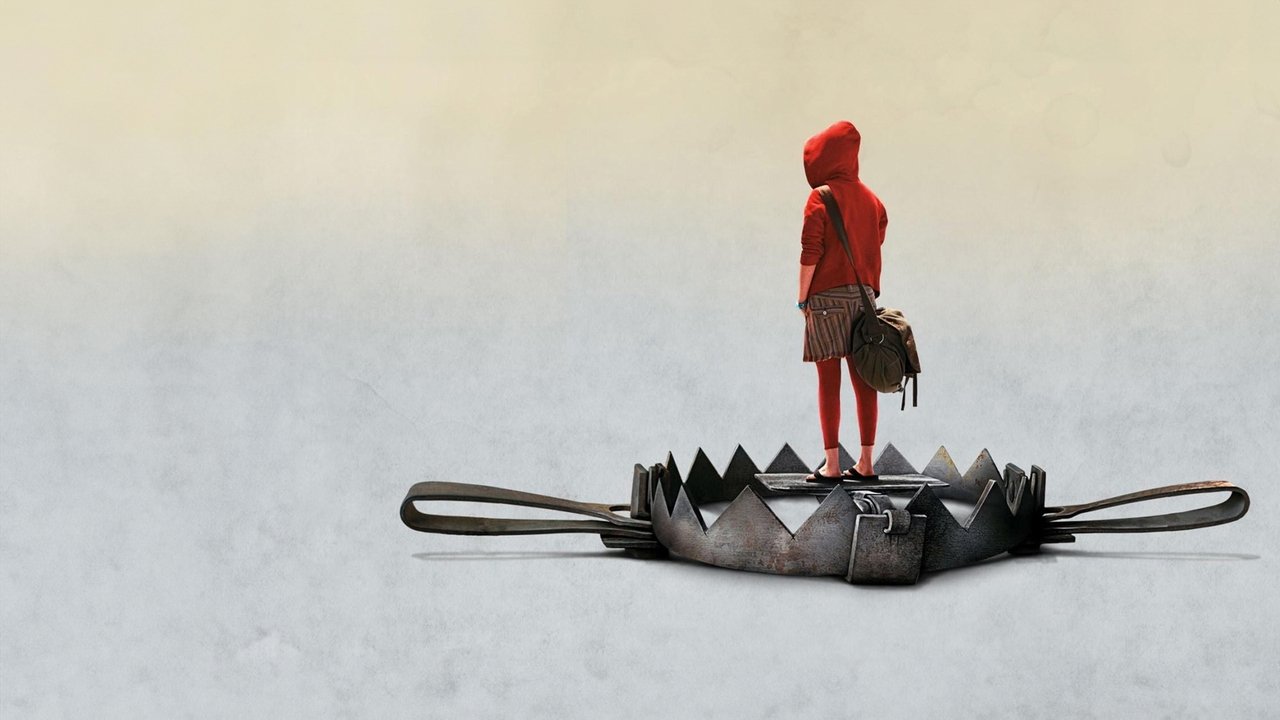
I remember the first time I saw the poster for Hard Candy. It featured a girl in a bright red hoodie standing over a massive, jagged wolf trap. It was 2005, and the "edgy indie" movement was reaching its zenith. We were right in that pocket where digital cameras were starting to look professional enough for the big screen, and David Slade (who later gave us the snowy vampire flick 30 Days of Night) used that technology to create something that looked almost surgically clean. I actually watched this for the first time on a scratched DVD I borrowed from a library; the "Return by Midnight" sticker was peeling off and kept sticking to my thumb, and honestly, that low-level annoyance was the only thing keeping me from vibrating out of my seat with anxiety.
Hard Candy isn't a movie you "enjoy" in the traditional sense. It’s a movie you endure, a 104-minute exercise in shifting power dynamics that turns a standard "stranger danger" trope on its head and then stomps on it.
A Digital Scalpel in a Chat Room World
The film opens with a split-screen chat room conversation—a very 2005 aesthetic—between "Thalia211" and "Lensman319." It’s the kind of interaction that feels like a time capsule now. This was before the MCU made every movie look like a billion dollars of CGI; instead, Hard Candy feels contained, claustrophobic, and dangerously intimate. When 14-year-old Hayley (Elliot Page) meets 32-year-old Jeff (Patrick Wilson) at a coffee shop, the air is thick with the kind of tension that makes you want to shout at the screen.
Jeff is a fashion photographer—the quintessential "cool" older guy—and Patrick Wilson plays him with a terrifyingly plausible smoothness. Looking back, this was a brilliant bit of casting. Wilson has that "All-American Dad" face that he’d later use to great effect in The Conjuring and Insidious, but here, it’s a mask. When they eventually retreat to his hyper-modern, ultra-clean house, you think you know exactly where this is going. You think this is a tragedy in the making.
Then, the coffee gets spiked. But it’s not Hayley’s cup.
The Architecture of Discomfort
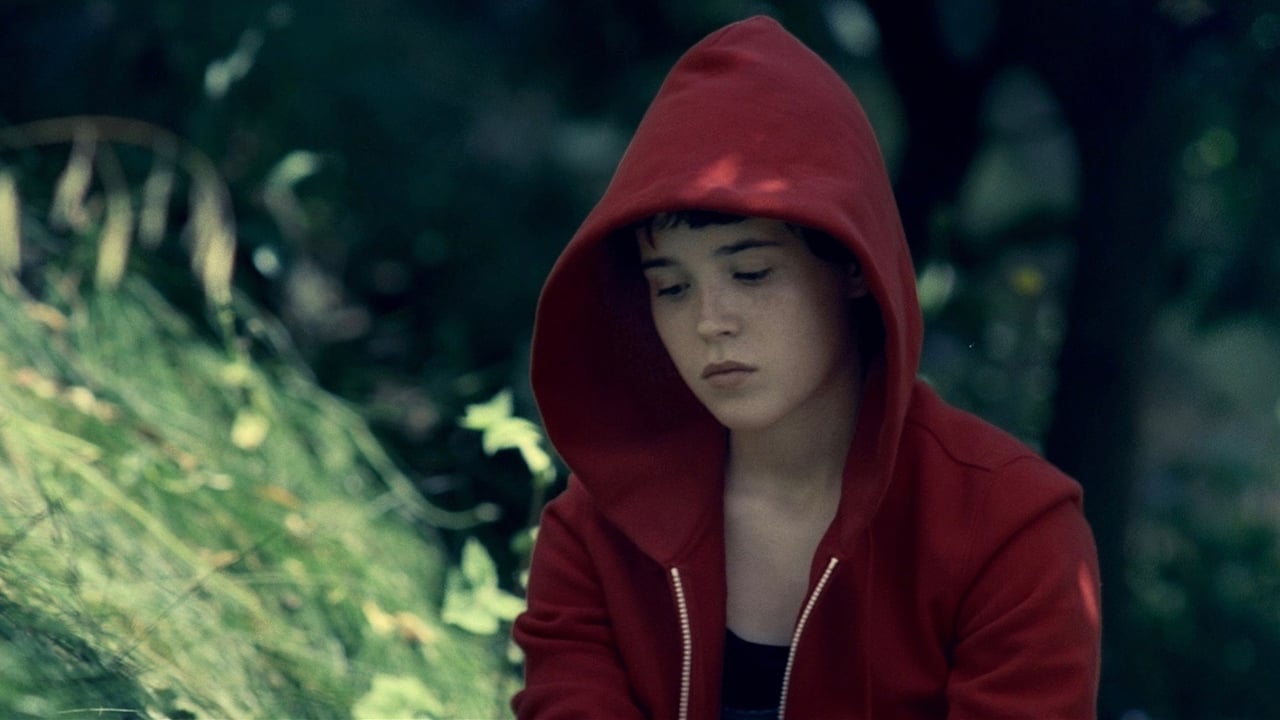
Once the trap springs, the movie transforms into a psychological chamber piece. David Slade and cinematographer Jo Willems (who went on to shoot the Hunger Games sequels) use the house as a weapon. The colors are hyper-saturated—vivid reds and clinical whites—giving the whole affair the feeling of a high-end commercial for a product that’s actually poison.
Elliot Page was about 18 when they filmed this, playing 14, and the performance is a revelation. It’s a role that requires a terrifying amount of certainty. Hayley isn’t just a victim fighting back; she’s an inquisitor. She’s cold, methodical, and possesses a vocabulary that cuts deeper than the tools she eventually pulls out of her bag. The surgical scene is the ultimate cinematic 'look-away' moment of the 2000s, not because of what you see, but because of what the movie convinces you that you’re about to see. It’s a masterstroke of sound design and reaction shots.
I’ve always felt that Jeff is a character designed to make the audience feel complicit, and that's why it's so hard to watch. As Hayley begins her "procedure," the movie forces you to grapple with a messy moral question: how much "justice" is too much? The film doesn't give you an easy out. It doesn't confirm Jeff’s guilt with a smoking gun right away; it lets the doubt fester, making Hayley’s actions feel increasingly monstrous even if her target is a predator.
Breaking the Indie Mold
What’s fascinating about Hard Candy in retrospect is how it represents that mid-2000s indie hustle. It was shot in just 18 days on a budget of about $950,000. In an era where we’re used to $200 million blockbusters feeling empty, this film feels overstuffed with ideas and intensity. It’s a "passion project" that actually feels like the people involved were losing sleep over it.

We even get a brief, haunting appearance by Sandra Oh (the legendary star of Grey's Anatomy and Killing Eve) as a neighbor who drops by. Her character, Judy, serves as a brief window into the "real world," a reminder that this horrific chess match is happening in a quiet, suburban neighborhood where no one hears the screaming. It adds a layer of social anxiety that feels very of its time—the idea that the person living next to you could be a monster, or a vigilante, or both.
The script by Brian Nelson is lean, almost like a stage play. It relies entirely on the chemistry—or rather, the nuclear friction—between Page and Wilson. It’s a film that couldn't happen in the studio system today; it’s too small, too mean, and far too ambiguous for a modern committee to approve. It’s a reminder of what happened when digital cameras first started democratizing filmmaking: it gave directors the freedom to be truly, unapologetically unpleasant.
Hard Candy is a rare bird: a thriller that manages to be both intellectually stimulating and physically revolting. It captures that specific post-9/11 anxiety where the threats aren't coming from the sky, but from the person sitting across from you at the Starbucks. It’s a film that demands your attention and then punishes you for giving it, which is exactly why it’s stayed in the cultural consciousness for nearly twenty years.
If you haven't seen it, find the quietest room in your house, turn off your phone, and prepare to be deeply, thoroughly uncomfortable. It’s not a movie you’ll want to watch twice, but you’ll never forget the first time you did. Just maybe skip the vanilla latte before you hit play.

Keep Exploring...
-
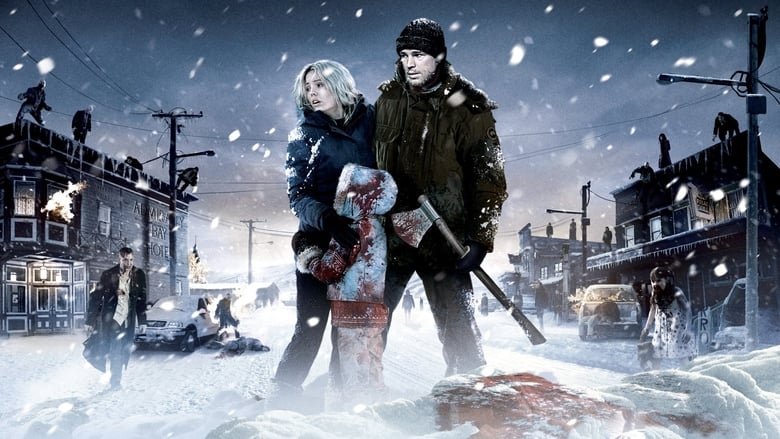
30 Days of Night
2007
-
Primer
2004
-
Felon
2008
-

Blood and Bone
2009
-
Monsters
2010
-
Undisputed III: Redemption
2010
-
Amores Perros
2000
-
Battle Royale
2000
-

The Devil's Backbone
2001
-
The Hole
2001
-
Irreversible
2002
-
Sympathy for Mr. Vengeance
2002
-
The Orphanage
2007
-
The Girl Who Played with Fire
2009
-
Buried
2010
-

The Twilight Saga: Eclipse
2010
-
Bound
1996
-
Pi
1998
-
Margin Call
2011
-

Lakeview Terrace
2008