Lord of War
"Guns, gold, and the business of dying."
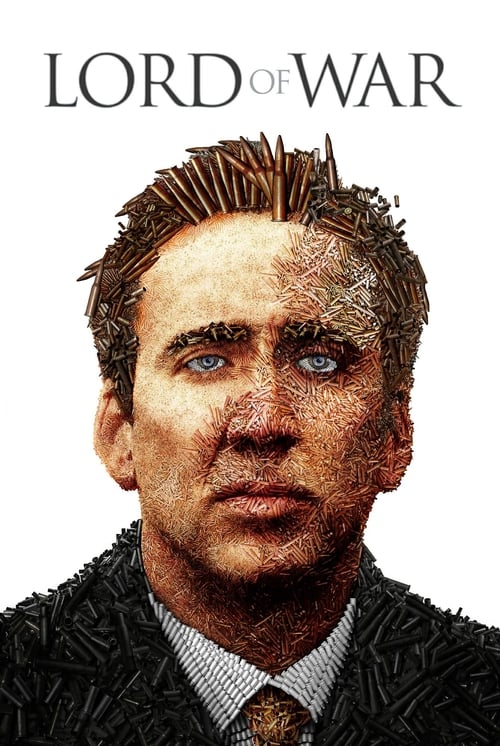
There’s a specific kind of pitch-black irony that could only have flourished in the mid-2000s, a period where we were collectively processing the logistical nightmares of global conflict through a sleek, cinematic lens. While the 1990s gave us the romanticized indie explosion, the early 2000s began to look at the "how" of the world’s ugliness. Released in 2005, Lord of War arrived at the perfect intersection of post-9/11 cynicism and the peak of the DVD-supplement era, offering a globetrotting tour of human misery that somehow feels as polished as a luxury car commercial.

I first watched this on a flight to Germany next to a guy who was aggressively clipping his toenails into a cocktail napkin. Between the rhythmic click-snap of his hygiene routine and the film’s relentless tally of international arms sales, I felt a strange, greasy immersion in the world’s general lack of decorum. It’s a film that thrives in that discomfort, presenting the illegal arms trade not as a shadowy underworld, but as a banal, high-stakes version of a shipping and receiving department.
The Logistics of a Moral Vacuum
Directed by Andrew Niccol (Gattaca, The Truman Show), the film follows Yuri Orlov, a Ukrainian immigrant from Brighton Beach who realizes that providing people with the means to kill each other is a recession-proof business model. Nicolas Cage plays Yuri with a subdued, watchful intensity that I honestly miss in his more recent "mega-acting" phases. Nicolas Cage is the only actor alive who can make a logistics seminar feel like a cocaine bender, and here, he uses that energy to narrate his own moral decay with the detachment of a weather reporter.
The film’s opening sequence—the "Life of a Bullet"—is a masterclass in the era’s transition from practical filmmaking to digital ambition. We follow a single 7.62x39mm round from a Soviet factory floor, across the ocean, into a crate, and eventually into the skull of a child soldier in Africa. It’s a bravura piece of storytelling that set a high bar for the CGI of 2005, using digital trickery to tell a story that practical cameras simply couldn't touch. Looking back, the effects hold up surprisingly well because they are tethered to a cold, hard narrative purpose rather than just spectacle.
Real Hardware in a Digital Age
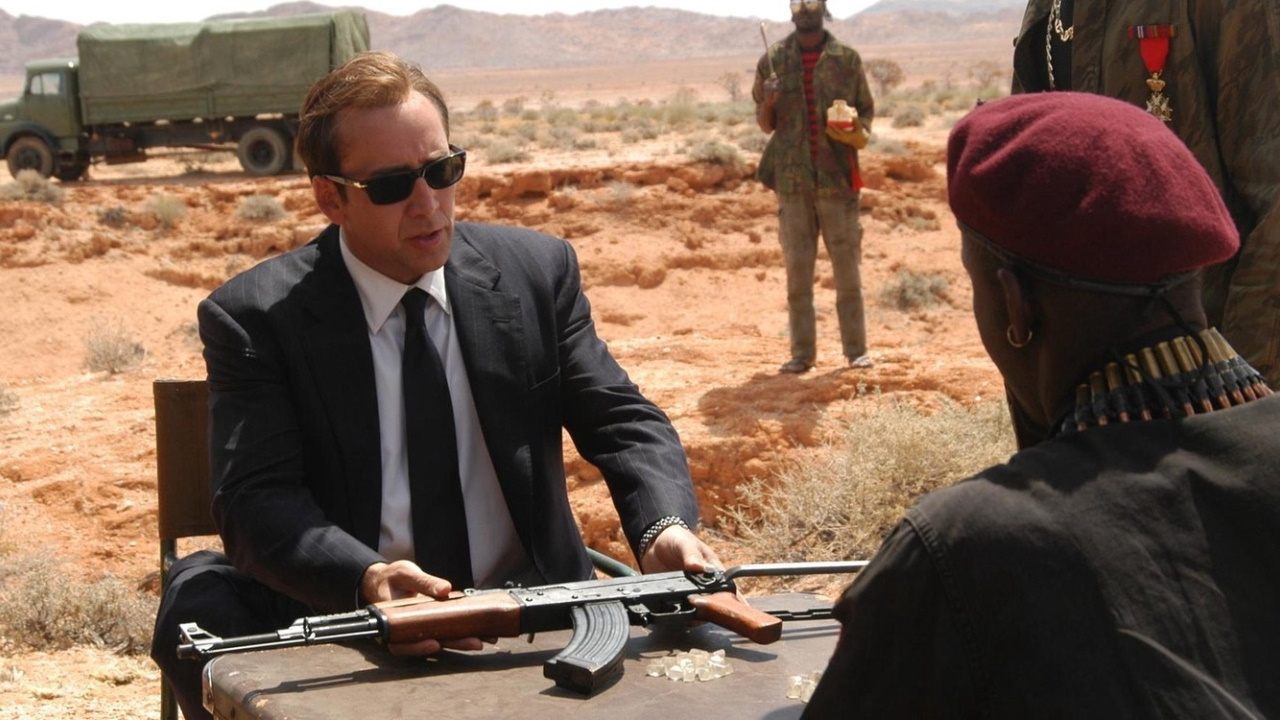
One of the most fascinating aspects of Lord of War is its relationship with reality. In a move that feels like a meta-commentary on the film itself, Andrew Niccol found that it was actually cheaper to buy 3,000 real AK-47s than to rent prop replicas. The production also "rented" a fleet of T-72 tanks from a Czech arms dealer, who reportedly needed them back quickly so he could sell them to Libya. The production design wasn't just imitating the arms trade; it was literally a customer of it.
This authenticity provides a gritty weight that balances out the more stylized elements of the film. While Jared Leto delivers a tragic, twitchy performance as Yuri’s brother Vitaly—a man whose conscience is far too loud for the family business—the film belongs to the machinery. The contrast between the sun-drenched, high-fashion world of Yuri’s wife, played by Bridget Moynahan, and the mud-caked misery of the conflict zones he services, highlights the era's growing awareness of global inequality. Ethan Hawke pops up as Jack Valentine, an Interpol agent who is so relentlessly "good" he becomes the film’s most frustrating character. He’s the moral compass in a world that has discarded North as a viable direction.
A Cult Legacy of Cynicism
Lord of War didn't exactly set the box office on fire upon release, but it found its true home on the DVD shelves of the late 2000s. It’s a "Director’s Cut" era staple, the kind of movie that rewards the viewer who digs into the special features to find out how much of the horror was based on the life of real-life arms dealer Viktor Bout. It captured a very specific Y2K-era anxiety: the feeling that the world is a series of interlocking systems that nobody is actually controlling.

I find that the film has aged remarkably well, largely because its cynicism hasn't been outpaced by reality. The performance by Eamonn Walker as the Liberian dictator Andre Baptiste Sr. is terrifyingly charismatic, reminding me that the "villains" of the world are often just the most successful entrepreneurs in their specific, bloody niche. Ian Holm also turns in a brief but chilling performance as a veteran dealer who views Yuri as a vulgar amateur. It’s a dense, thoughtful drama wrapped in the skin of a thriller, and it refuses to give you the satisfaction of a clean ending.
The film's greatest strength is its refusal to blink. While it occasionally leans too hard into its own cleverness—the dialogue can feel a bit "written" at times—the sheer audacity of its world-building carries it through. It’s a grimly fascinating look at the cost of doing business, anchored by a version of Nicolas Cage that is perfectly calibrated for the material. It’s a movie that invites you to look at the world’s machinery and then makes you wish you hadn't.
If you haven't revisited this one since the days of Netflix-by-mail, it’s time to put it back in the player. Lord of War remains a sharp, unapologetic indictment of the global appetite for destruction, served with a side of dark humor that still bites. It reminds me that while the technology of war changes, the men who sell the bullets stay exactly the same. Just try to watch it without someone clipping their toenails next to you.

Keep Exploring...
-
Matchstick Men
2003
-
American Psycho
2000
-
Road to Perdition
2002
-

The Life of David Gale
2003
-

Law Abiding Citizen
2009
-

John Q
2002
-

21 Grams
2003
-

Dogville
2003
-

A History of Violence
2005
-
Lucky Number Slevin
2006
-
The Next Three Days
2010
-
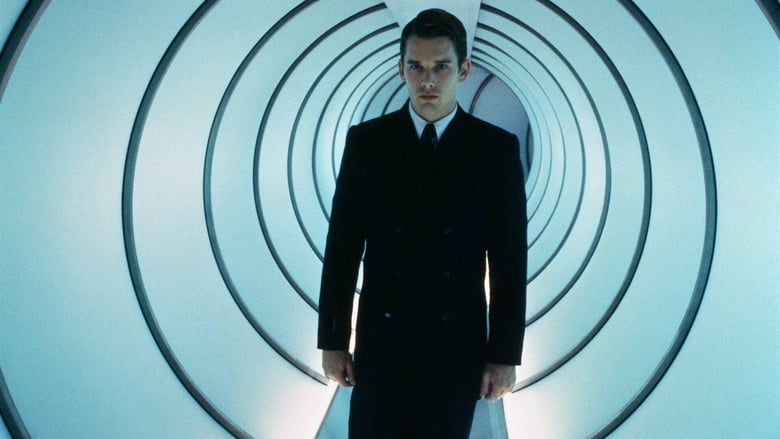
Gattaca
1997
-
The Godfather Part III
1990
-

The Negotiator
1998
-

Adaptation.
2002
-
Before the Devil Knows You're Dead
2007
-

Blood and Bone
2009
-

Falling Down
1993
-
Natural Born Killers
1994
-

Jackie Brown
1997