Match Point
"One lucky bounce justifies a lifetime of sin."
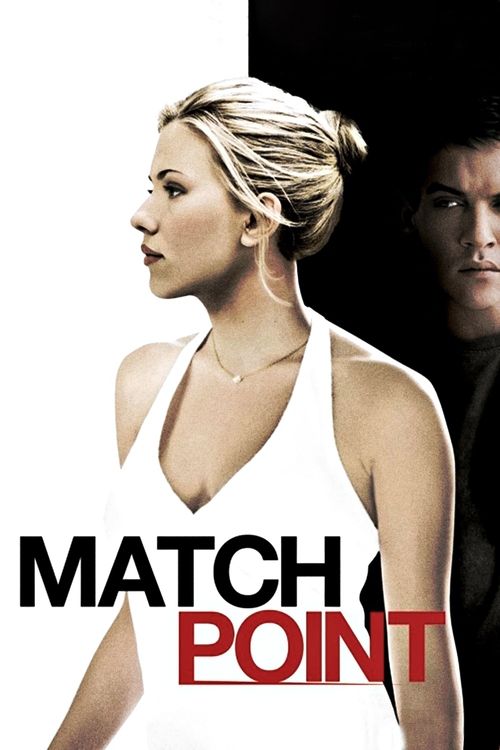
Imagine a tennis ball hitting the white tape at the top of the net. For a fraction of a second, it hovers—a fuzzy yellow orb of pure uncertainty. It could fall forward and win you the point, or it could drift backward and lose you the match. In the opening moments of Match Point, Woody Allen (moving far away from his Annie Hall neuroticism) tells us that we are terrified to admit how much of our lives depend on that bounce. It’s a cold, startlingly cynical thesis for a film that masquerades as a lush British romance for its first hour before unhinging its jaw to reveal a jagged thriller underneath.
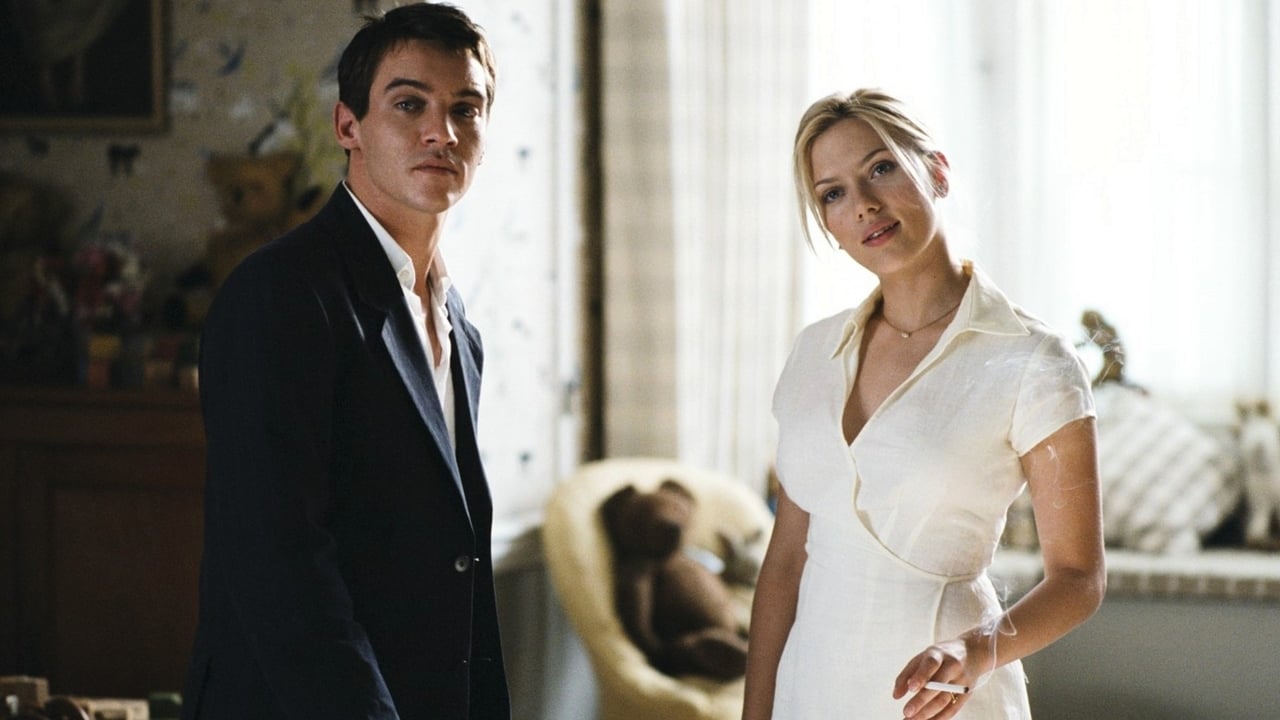
I first sat down to watch this during a rainy Tuesday afternoon while nursing a bag of slightly stale pretzels I’d found in the back of my cupboard. I expected the usual "Woody-in-London" travelogue—charming cobblestones and witty banter about opera. Instead, I finished the film feeling like I needed a very long, very hot shower to scrub off the moral grime.
The Grimp of the Social Climber
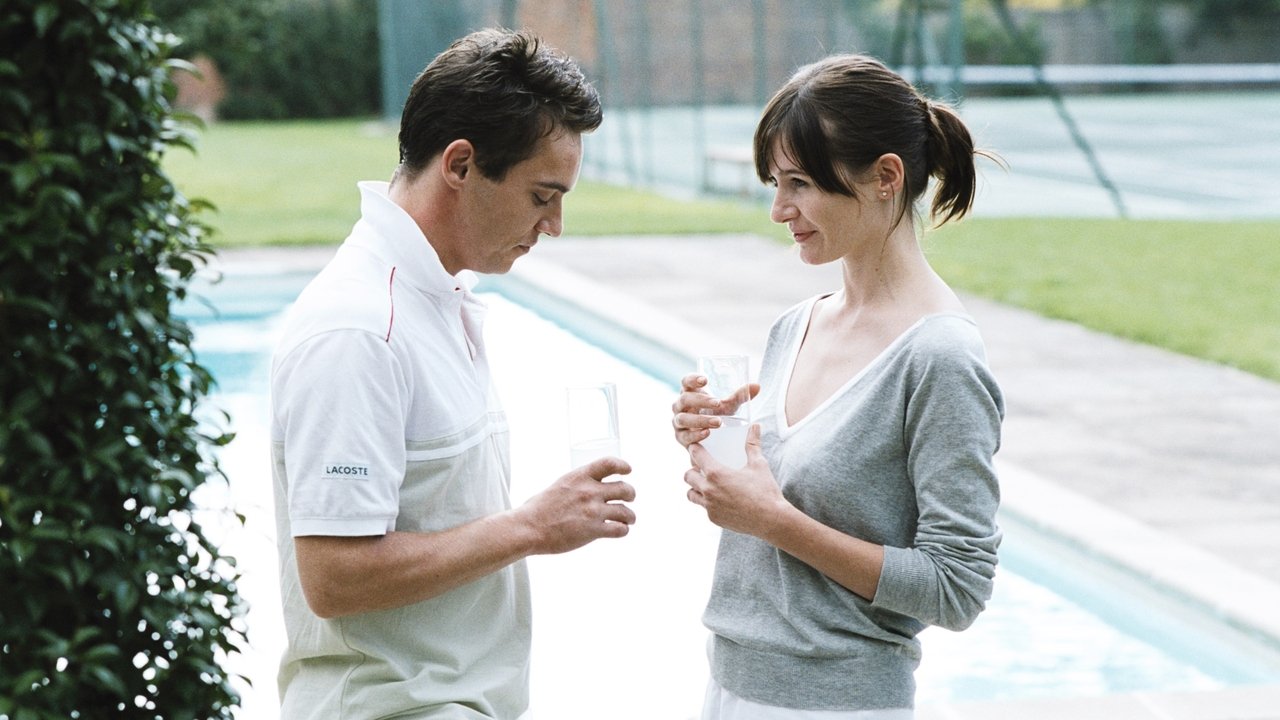
At the center of this moral vacuum is Chris Wilton, played by Jonathan Rhys Meyers with a predatory stillness that I find deeply unsettling. Chris is an Irish tennis pro who knows he isn’t quite good enough to be a champion, so he decides to be a champion at something else: wealthy society. He’s the kind of guy who carries Crime and Punishment around not because he’s a scholar, but because he’s studying the blueprint of a man who thinks he’s above the law.
Chris worms his way into the lives of the Hewetts, a family so posh they probably sweat Earl Grey. He marries Chloe (Emily Mortimer, playing the "sweet, oblivious wife" trope with heartbreaking sincerity), securing a high-paying executive job and a life of tailored suits. But then there’s Nola. Scarlett Johansson, fresh off the success of Lost in Translation, plays the American actress who is the Hewett family’s beautiful outsider. When Chris and Nola meet, the chemistry isn’t just "romantic"—it’s the kind of combustible lust that makes sensible people burn their entire lives to the ground for a weekend in a cheap hotel.
A Shift in the Allen Universe
Looking back at 2005, this film represented a massive pivot. After years of diminishing returns in New York, Woody Allen moved his production to London, and the change of scenery seemed to sharpen his claws. This was the era when indie cinema was becoming increasingly polished, moving away from the grainy digital experiments of the late 90s toward a sleek, high-end aesthetic. The cinematography by Remi Adefarasin (who shot Elizabeth) makes London look like a shimmering, expensive trap.
There is no jazz here. Instead, Allen uses scratchy, century-old recordings of Enrico Caruso singing Verdi and Donizetti. It gives the film an operatic weight that felt distinct from the post-9/11 grittiness of other mid-2000s thrillers. It’s a drama that understands that the most terrifying monsters don’t live under the bed; they live in expensive flats and wear cashmere.
What strikes me now, nearly two decades later, is how much the film benefits from the DVD culture of its time. I remember the special features emphasizing how much of a "lucky" production it was. For instance, the role of Nola was originally written for Kate Winslet, who dropped out just a week before filming to spend time with her family. Scarlett Johansson stepped in, and her performance—vulnerable, frantic, and earthy—is what makes the film’s second-half descent into darkness so painful. Without her specific energy, the movie might have been a dry intellectual exercise. Instead, it’s a tragedy.
The Horror of the Ordinary
As the affair between Chris and Nola spirals out of control, the film transforms. It stops being a movie about class and starts being a movie about the lengths a man will go to protect his comfort. The final act contains a sequence involving a shotgun and a neighbor that is easily the most nerve-wracking thing Allen ever directed; it’s basically a horror movie for people who own too many linen shirts.
There’s a specific kind of dread that comes from watching a protagonist you’ve started to loathe actually get away with it. Most films of the early 2000s still felt a need to punish the villain or offer some moral catharsis. Match Point refuses. It suggests that the universe doesn’t care about justice; it only cares about where the ball lands.

Stuff You Didn't Notice
The Hamptons Swap: The script was originally set in the Hamptons with an all-American cast. When financing fell through in the States, Allen moved it to London and swapped the tennis club for the upper-crust British scene. The Age Factor: Scarlett Johansson was only 19 years old when she filmed this. Her ability to hold the screen against veteran actors like Brian Cox is a testament to why she became the defining star of that decade. Literary Easter Eggs: Chris is seen reading Dostoevsky early on. It’s not subtle, but it’s a brilliant bit of foreshadowing for the "perfect crime" he eventually attempts. Directorial Luck: Allen has often called this one of the few "perfect" films he’s made, alongside The Purple Rose of Cairo and Husbands and Wives, mostly because the production went so smoothly. * The Opera Score: The use of Enrico Caruso wasn’t just a stylistic choice; it was a way to avoid the licensing fees of modern recordings while creating a haunting, "dead" atmosphere.
Match Point remains a standout of the 2000s because it’s a "grown-up" thriller that doesn't rely on explosions or car chases. It relies on the terrifying realization that your life could be ruined by a single phone call or a stray piece of jewelry. It’s cold, it’s mean, and it’s arguably the most honest film about the intersection of luck and greed ever made. Watch it when you’re feeling a bit too confident in your own success; it’ll bring you right back down to earth.

Keep Exploring...
-

Vicky Cristina Barcelona
2008
-

Magic in the Moonlight
2014
-
The Illusionist
2006
-
The Next Three Days
2010
-
Blue Jasmine
2013
-
American Psycho
2000
-
John Q
2002
-
21 Grams
2003
-
The Machinist
2004
-
Lucky Number Slevin
2006
-

The Hurt Locker
2008
-

Brothers
2009
-

127 Hours
2010
-

You Will Meet a Tall Dark Stranger
2010
-

Ghost
1990
-
Kill Your Darlings
2013
-

Labor Day
2013
-
Manhattan
1979
-
The Phantom of the Opera
2004
-
Whatever Works
2009