Mr. & Mrs. Smith
"Marriage is a battlefield. Literally."
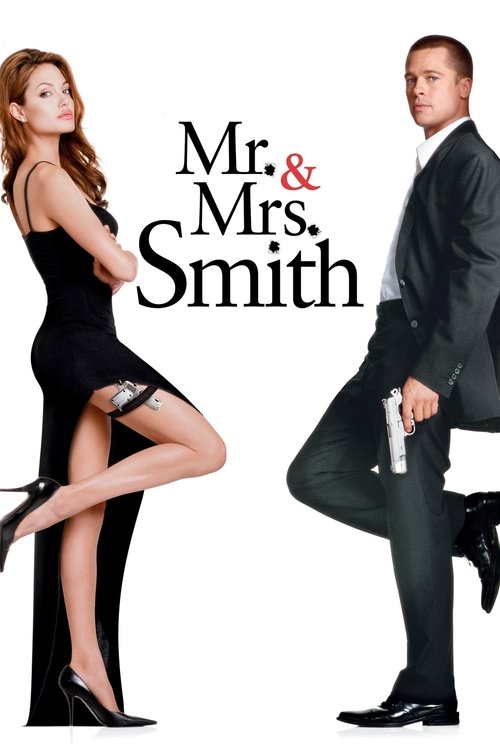
I remember watching Mr. & Mrs. Smith on a scratched-up DVD in a basement where the air smelled faintly of damp laundry and old pizza boxes. At the time, you couldn't escape this movie. It wasn't just a film; it was a cultural supernova that threatened to swallow every grocery store checkout line in America. This was the peak of the "Brangelina" tabloid frenzy, a time when the off-screen drama was so loud it almost drowned out the sound of the actual explosions on screen. But looking back at it nearly twenty years later—now that the gossip has settled into history—what’s left is a shockingly stylish, surprisingly funny action-romance that serves as a time capsule for a very specific era of Hollywood gloss.
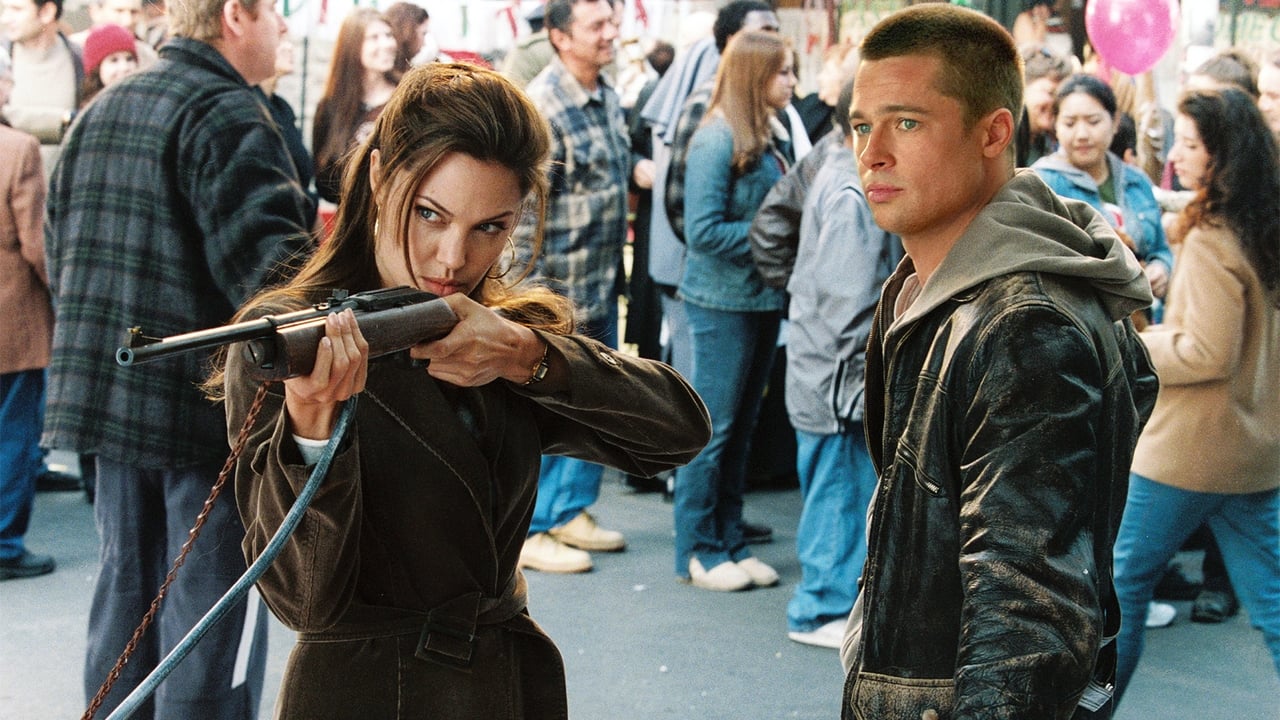
The Radioactive Chemistry Experiment
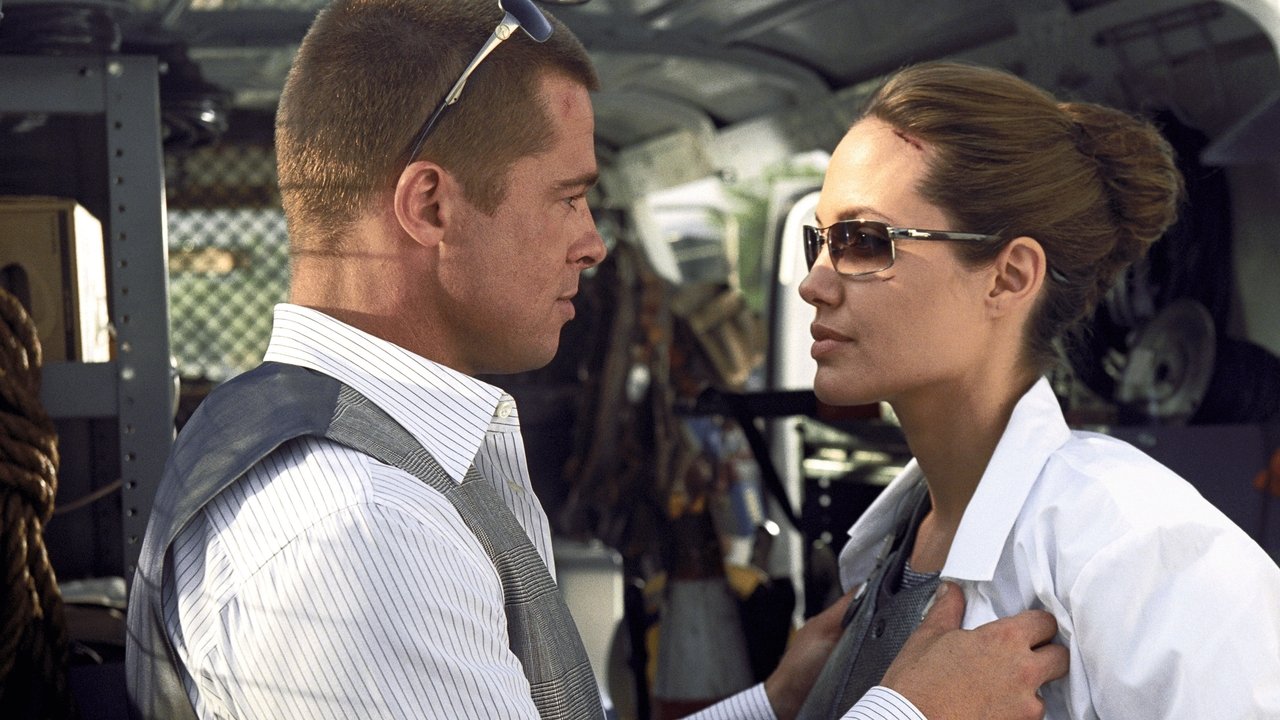
Let’s be honest: you aren’t here for the intricate lore of competing secret assassination agencies. You’re here to watch two of the most charismatic humans to ever walk the earth try to murder each other with high-end kitchen appliances. Brad Pitt (John) and Angelina Jolie (Jane) don't just act together; they exist in a state of radioactive chemistry that frankly feels dangerous to watch without goggles.
Brad Pitt brings that specific brand of "bumbling but deadly" energy he perfected in Snatch (2000), while Angelina Jolie—fresh off the Lara Croft movies—is all icy precision and lethal grace. The premise is a classic "High Concept" pitch: a bored suburban couple discovers they are both top-tier assassins working for rival firms. It’s a metaphor for the secrets we keep in marriage, but with more Claymore mines. The way Doug Liman (The Bourne Identity) directs them is fascinating. He treats their domestic life like a thriller and their gunfights like a domestic dispute. When they finally stop pretending and start shooting up their IKEA-perfect home, it’s not just an action set piece; it’s the most honest conversation they’ve had in six years.
Action as Foreplay
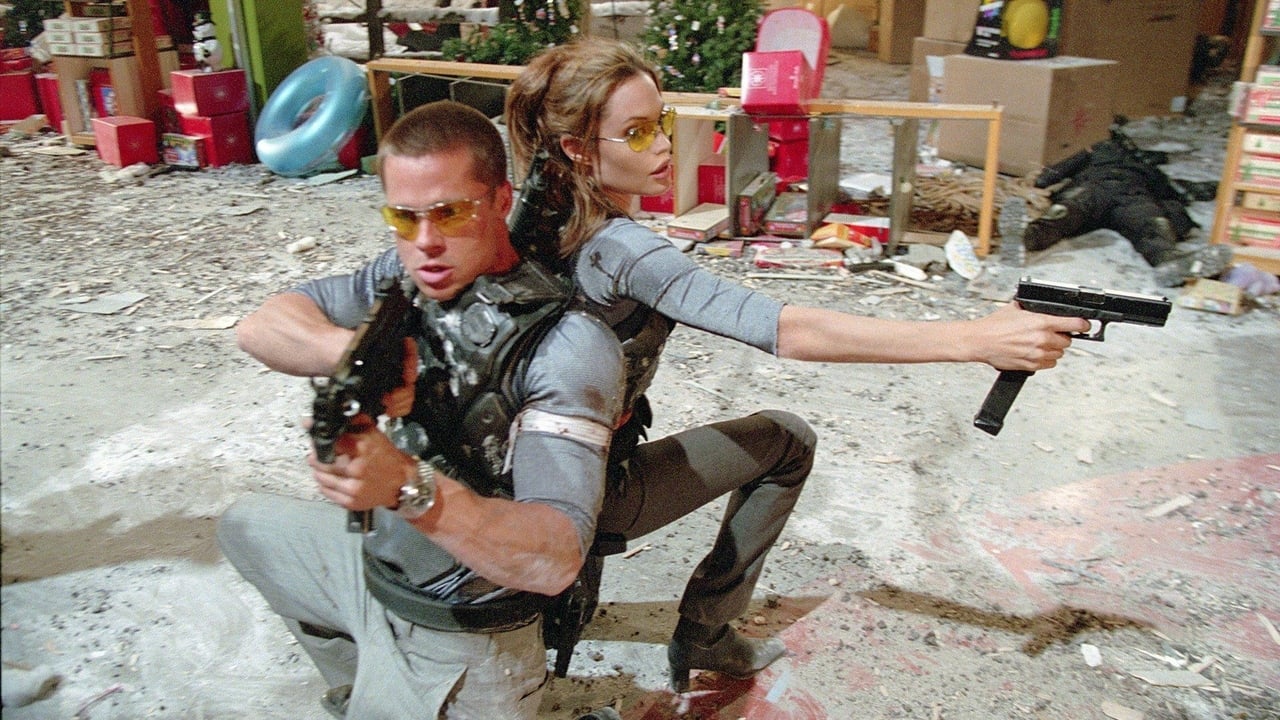
From a technical standpoint, the action choreography is a blast of mid-2000s energy. We were right in that sweet spot where CGI was being used to "polish" reality rather than replace it entirely. The stunts feel heavy. When Angelina Jolie jumps off a skyscraper in a cocktail dress, or when Brad Pitt gets kicked through a drywall partition, there’s a tactile crunch to it. The kitchen fight remains the gold standard for "Action-Comedy" sequences. It’s choreographed like a violent tango—knives in the floorboards, spinning around marble countertops—ending not in a kill, but in a realization that they’re still in love. The plot is basically a Swiss cheese of logic holes, but you’re too distracted by the lighting to care.
The film also benefits immensely from its supporting cast. Vince Vaughn as Eddie, John’s "handler" who still lives with his mother, is the secret weapon of the movie. His rapid-fire delivery adds a layer of dry, cynical humor that keeps the movie from drifting into self-serious spy territory. I’d argue that Vince Vaughn is the only reason this movie has a soul beyond its two leads, providing a necessary tether to the "real world" where assassins are just guys with annoying jobs and overbearing parents.
A Relic of the Star-Power Era
Looking back from our current landscape of "IP-driven" cinema, Mr. & Mrs. Smith feels like a dinosaur. It’s a movie that was greenlit and sold entirely on the backs of its stars. In 2005, Regency Enterprises dropped a massive $110 million budget on this—a figure that seems wild for a non-franchise action-comedy—and it paid off to the tune of nearly $500 million. It was a massive gamble on the idea that audiences would show up just to see two icons share a frame. Today, the "star" is the Spider-Man suit or the Jedi robe; back then, the star was the face on the poster.
The film also captures that post-9/11 anxiety of the "perfect suburb." The Smiths live in a world of manicured lawns and identical station wagons, a surface-level utopia that hides a subterranean armory. It’s a trope that was popular in the early 2000s, reflecting a cultural desire to peel back the wallpaper of "normalcy" to see what was actually lurking underneath. While the movie doesn't go deep into social commentary, it uses that setting for some fantastic visual gags, like Adam Brody (fresh off The O.C.) being interrogated while wearing a "Fight Club" t-shirt—a meta-wink that felt incredibly clever at the time.

Ultimately, Mr. & Mrs. Smith is the cinematic equivalent of a high-end cocktail: it’s bubbly, expensive, and goes down incredibly easy, even if it doesn't offer much nutritional value. It’s a testament to a time when Simon Kinberg could write a script that was 40% banter and 60% "cool stuff happens," and it would become a global phenomenon. I once ate a whole bag of salt-and-vinegar chips while watching the kitchen fight scene, and I still can't think of John Smith's shotgun blast without my tongue hurting—a Pavlovian response to a movie that is all about sensory overload.
If you haven't revisited this one since the DVD days, it’s worth a look. It’s a reminder of what movie stardom used to look like before everything became a "Cinematic Universe." It's fast, it’s loud, and it features two people at the absolute zenith of their powers. It might be a bit of a "forgotten blockbuster" in the shadow of the superhero boom that followed, but for two hours of pure, unadulterated entertainment, the Smiths still deliver the goods. Just don't ask them about their career at the next neighborhood block party.

Keep Exploring...
-

The Bourne Identity
2002
-

RED
2010
-
Another 48 Hrs.
1990
-
Lethal Weapon 3
1992
-
Bad Boys
1995
-
The Tuxedo
2002
-

The Rundown
2003
-

Shark Tale
2004
-

Sahara
2005
-

Fred Claus
2007
-
Get Smart
2008
-

Kung Fu Panda
2008
-

Killers
2010
-
American Made
2017
-

The Mexican
2001
-

xXx
2002
-

Sinbad: Legend of the Seven Seas
2003
-

The Bourne Supremacy
2004
-

The Bourne Ultimatum
2007
-
Fast & Furious
2009