Saw II
"The rules have changed, but the blood remains."
I remember exactly where I was when the "torture porn" wave officially broke over the shore of mid-2000s cinema. I was sitting in a theater that smelled faintly of spilled Blue Raspberry Icee and floor wax, watching a room full of people collectively wince as a character fell into a pit of needles. It was 2005, and Saw II was the moment a low-budget indie fluke transformed into a global industrial complex.
Looking back, the first Saw was a lightning-in-a-bottle thriller—a police procedural that happened to have a very messy ending. But Saw II is the blueprint for the franchise as we know it today. It traded the claustrophobic mystery of a single bathroom for a dilapidated house, more victims, and a much higher "ick" factor. It’s the cinematic equivalent of a film that looks like it was washed in Mountain Dew and despair, and yet, it’s surprisingly smart about how it handles its villain.
From Indie Fluke to Industrial Machine
The production of this sequel is a masterclass in opportunistic filmmaking. The original Saw had been a massive hit, and the studio wanted a follow-up immediately. As it happened, director Darren Lynn Bousman had written a script called The Desperate that was being rejected by studios for being too similar to Saw. The solution was simple: slap some Jigsaw stickers on it, bring in Leigh Whannell to punch up the dialogue, and get it in theaters exactly one year after the first film.
This haste usually results in a disaster, but Saw II managed to catch lightning twice. It had a budget of only $4 million—a modest increase from the first—and it absolutely decimated the box office, raking in over $152 million worldwide. That’s the kind of return on investment that makes studio executives weep with joy. It wasn't just a movie; it was the birth of "Saw-tober," a yearly tradition that would dominate the Halloween season for the next half-decade.
The Voice in the Monitor
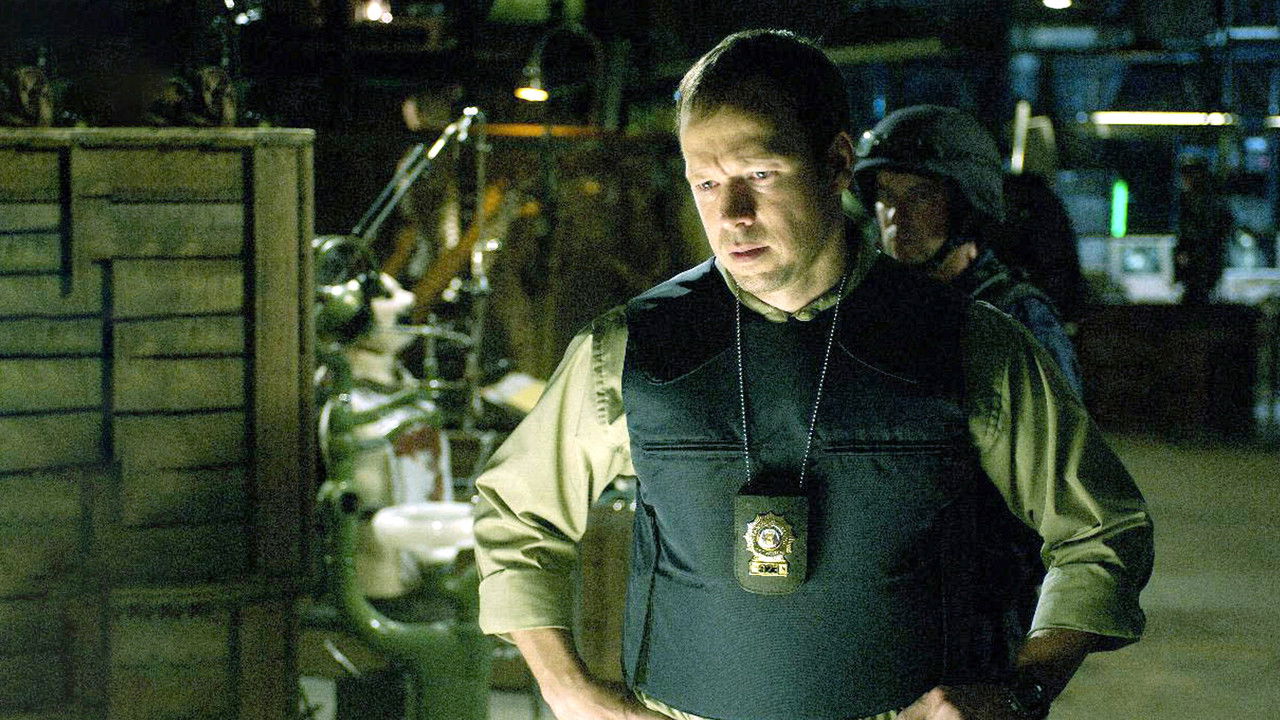
The real secret weapon here isn't the traps; it's Tobin Bell. In the first film, he spent most of his screentime playing a corpse on the floor. Here, he’s front and center, playing John Kramer/Jigsaw with a gravelly, pseudo-philosophical weight that grounds the whole ridiculous enterprise. When he sits across from Donnie Wahlberg, who plays the hot-headed Detective Eric Matthews, the movie briefly stops being a slasher and becomes a high-stakes stage play.
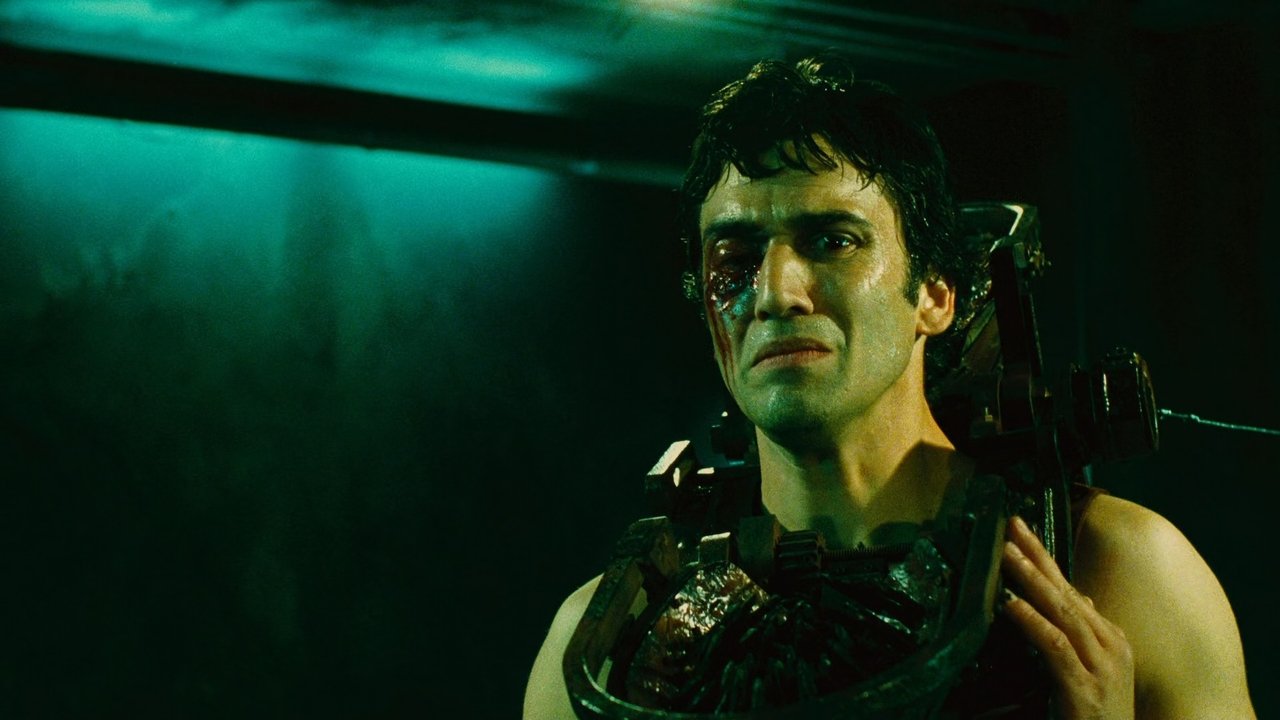
Donnie Wahlberg brings a frantic, "Boston-cop-on-too-much-espresso" energy that contrasts perfectly with Tobin Bell’s stillness. I’ve always found it funny how Jigsaw tries to claim he isn't a murderer because he gives people a "choice," and this film is where that twisted logic really takes root. It’s nonsensical, of course, but Tobin Bell sells it with such conviction that you almost find yourself nodding along until you remember there's a guy in the next room trying to cut a key out from behind his own eye.
The House of 120,000 Needles
The "Nerve Gas House" segment is where the film earns its R-rating. We have a group of ex-cons, including the returning Shawnee Smith as Amanda Young, trying to find antidotes before a lethal gas melts them from the inside out. This is where the franchise’s obsession with practical effects really shines.
Take the infamous "Needle Pit" trap. In an era where CGI was starting to take over everything, Darren Lynn Bousman and his team went the practical route. They used roughly 120,000 real syringes, but spent four days painstakingly replacing the needles with fiber-optic tips so Shawnee Smith wouldn't actually be turned into a human pincushion. The result is a sequence that remains physically painful to watch twenty years later. It captures that specific post-9/11 anxiety—a feeling of being trapped in an inescapable, decaying system where the only way out is through immense personal sacrifice.
The film also benefits from the peak DVD era. I remember my "Unrated Edition" disc had a featurette specifically about the "trap math," and that kind of behind-the-scenes access helped turn a generation of fans into amateur film scholars. We didn't just watch the movie; we studied the mechanics of how Franky G or Glenn Plummer were being put through the wringer.
Saw II is a fascinating relic of the mid-2000s. It lacks the pure shock of the first film’s ending, but it’s a much more confident piece of entertainment. It proved that Jigsaw was a character who could sustain a franchise, and it established the "Rules of the Game" that would be followed (and eventually broken) for a dozen sequels. If you can stomach the grit and the green-tinted cinematography, it remains the most solid sequel in the entire series.
It’s a film that knows exactly what it is: a mean, lean, efficient thriller that wants to make you sweat. While the later sequels eventually spiraled into a soap opera of convoluted flashbacks, this one keeps the stakes personal and the tension high. It’s the last time the series felt like a movie first and a franchise second. Plus, the twist at the end—which I won’t spoil here—actually feels earned rather than just being a mandatory requirement.
Keep Exploring...
-
Saw III
2006
-
Saw IV
2007
-
Saw
2004
-

Saw V
2008
-
Saw 3D
2010
-
Saw VI
2009
-
Saw X
2023
-
Spiral: From the Book of Saw
2021
-

Jigsaw
2017
-
Insidious
2011
-
Dead Silence
2007
-
Paranormal Activity
2007
-
The Collector
2009
-
Paranormal Activity 2
2010
-
Insidious: Chapter 2
2013
-
Final Destination
2000
-
Scream 3
2000
-
The Cell
2000
-

Resident Evil
2002
-
The Ring
2002