Sin City
"A town where the shadows have teeth."
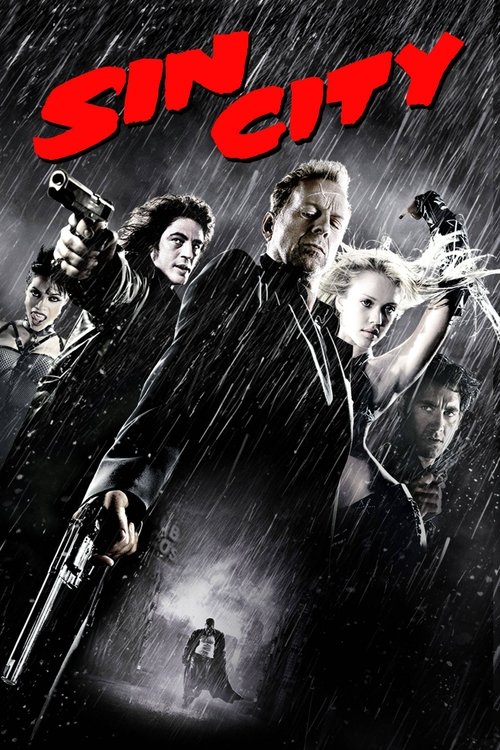
I remember the first time I saw the trailer for Sin City. It didn't look like a movie; it looked like a dream I’d had after falling asleep face-first in a stack of vintage crime novels. When I finally sat down to watch it in a basement apartment with a leaky pipe—the rhythmic drip-drip-drip perfectly syncing with the digital rain on screen—I realized I wasn't just watching a film. I was watching the moment the comic book medium finally stopped being "adapted" and started being "translated" with literal, frame-for-frame accuracy.

The Digital Ink and the DGA Divorce
Looking back from our current era of superhero saturation, it’s hard to convey how radical Sin City felt in 2005. This was the Wild West of the digital revolution. Robert Rodriguez (fresh off the Spy Kids franchise) wasn’t just shooting a movie; he was conducting an experiment at his Troublemaker Studios in Austin. He decided to ditch film entirely for the Sony HDC-F950, shooting the whole thing on green screens.
What fascinates me most about the production isn't just the tech, but the defiance behind it. Robert Rodriguez was so committed to Frank Miller’s vision that he insisted Miller be credited as a co-director. When the Director’s Guild of America (DGA) refused to allow it, Rodriguez simply quit the guild. That’s a massive professional gamble, but you can feel that "outsider" energy in every frame. It’s why the movie feels so cohesive—it wasn't filtered through a dozen studio committees; it was a direct pipeline from Frank Miller’s brain to the screen.
Even the "Special Guest Director" credit for Quentin Tarantino (who directed the scene where Benicio del Toro’s Jackie Boy talks with a pipe in his neck) felt like a middle finger to the industry standard. This was indie sensibilities fueled by a $40 million budget, and the result was a visual language that makes the MCU look like a collection of brightly lit insurance commercials.
Monsters with Code and Cops with Hearts
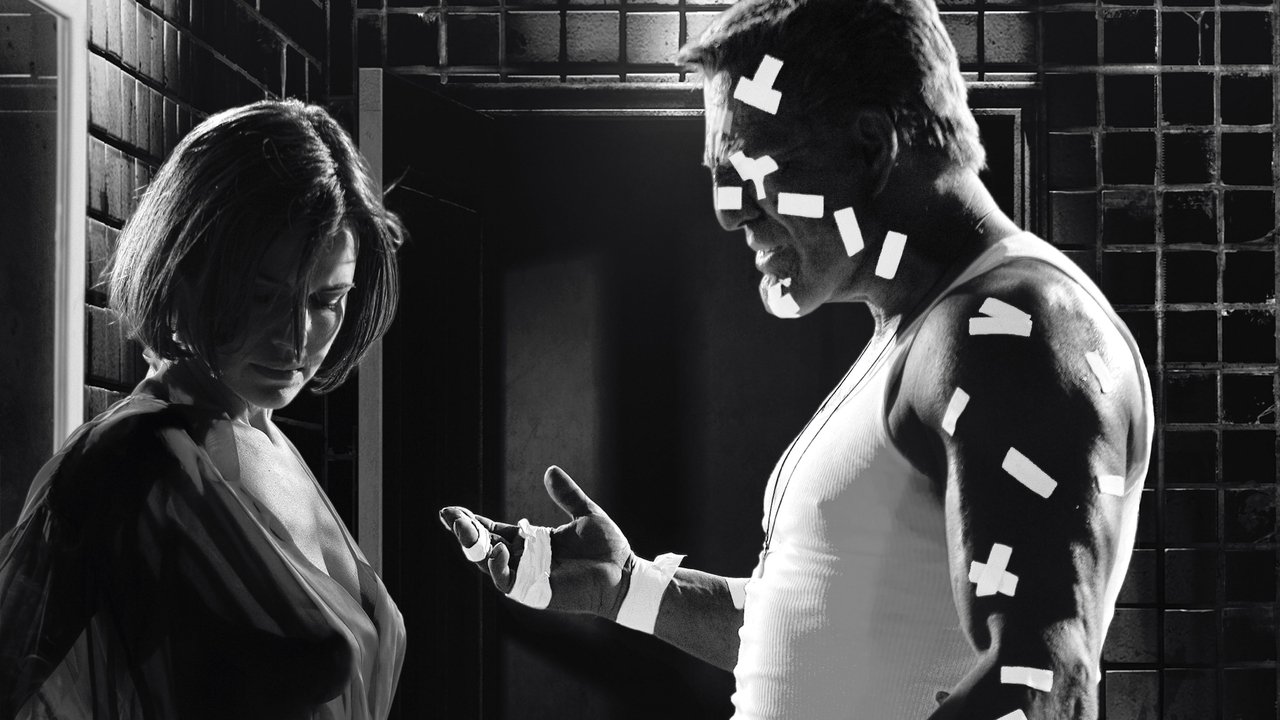
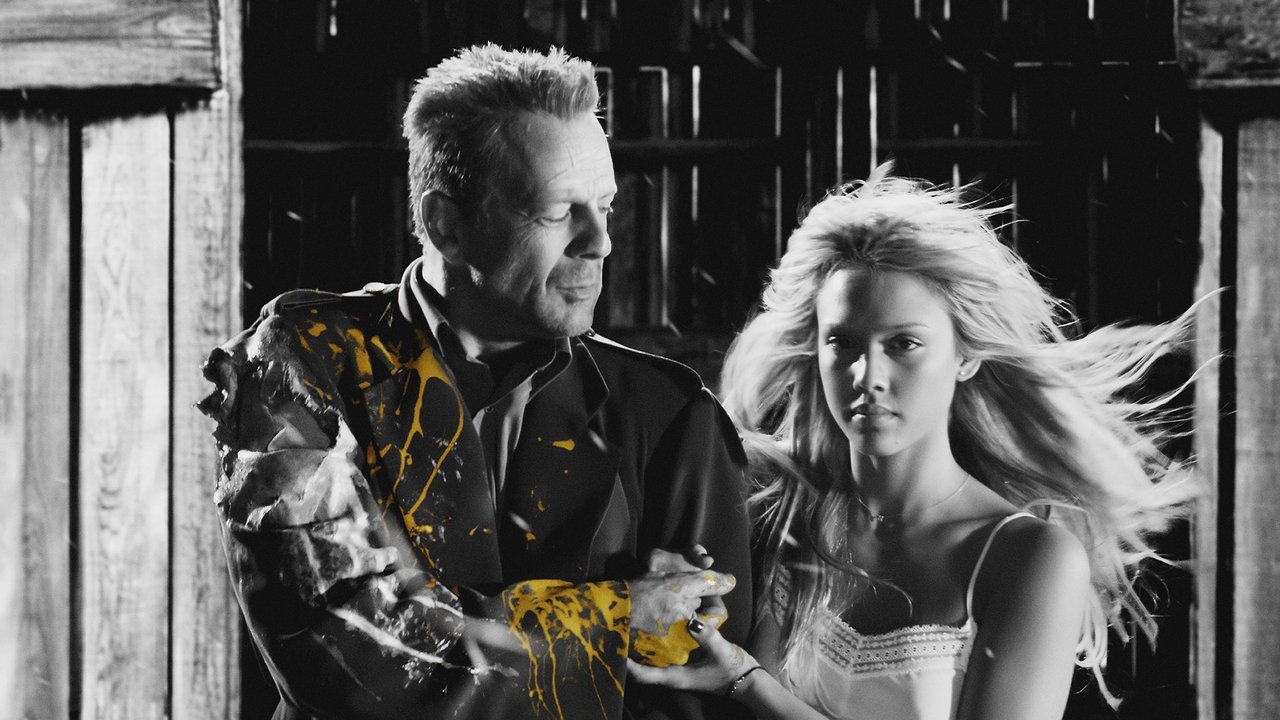
The drama in Sin City is heavy, heightened, and unapologetically grim. It functions on the logic of a Greek tragedy if the gods were all corrupt politicians and the heroes were all one bad day away from a heart attack. Bruce Willis as Hartigan is perhaps the most "Willis" he has ever been—weary, crumbling, yet possessed by a singular, stubborn moral compass. His chemistry with a young Jessica Alba (Nancy) provides the film’s emotional anchor, even if their dynamic feels like it belongs to a different, more archaic era of storytelling.
But for me, the soul of the film belongs to Mickey Rourke. His portrayal of Marv is a career-defining resurrection. Under layers of prosthetic grit, Mickey Rourke finds the pathetic, romantic heart of a man who knows he’s a monster but decides to use his monstrosity for one good cause. When he’s trade-marking his brand of "hard-boiled" justice against the terrifyingly silent Kevin (a chillingly cast Elijah Wood), the film taps into a primal kind of storytelling.
Then you have Clive Owen as Dwight, navigating the "Big Fat Kill" segment with a cynical detachment that perfectly balances the frantic energy of Benicio del Toro’s Jackie Boy. The performances aren't "realistic" in the traditional sense; they are archetypal. They require the actors to lean into the artifice, and watching heavyweights like Rutger Hauer (as the cannibalistic Cardinal Roark) chew the digital scenery is a macabre delight.
The $40 Million Gamble That Rewrote the Rules
From a business perspective, Sin City was a thunderclap. It pulled in over $158 million worldwide, proving that R-rated, highly stylized, and profoundly dark adult dramas could dominate the box office. It paved the way for Zack Snyder’s 300 and a whole wave of "digital backlot" filmmaking.
The DVD culture of the mid-2000s also treated this film like royalty. I remember spending hours going through the "Recut, Extended, Unrated" edition, which allowed you to watch the individual stories as standalone shorts. It was film literacy for a generation that was just starting to understand how editing and structure could change the entire vibe of a narrative.
What holds up best, surprisingly, is the use of color. The selective splashes of red (the dress, the blood) or that nauseating, sickly yellow for Nick Stahl’s "Yellow Bastard" character haven't aged a day. Because the film didn't try to look "real," it avoided the "uncanny valley" trap that claimed so many other CGI-heavy films from the early 2000s. It exists in its own pocket dimension of ink and shadow.
Sin City remains a staggering achievement in style-as-substance. It’s a film that respects its source material enough to let it breathe, bleed, and scream on its own terms. While the unrelenting darkness and hyper-masculine tropes might feel a bit thick by today’s standards, there is no denying the sheer craftsmanship on display. It’s a beautifully bruised poem to a city that never sleeps and never forgives. If you’ve never walked down these back alleys, bring a coat—it’s always raining, and the shadows have teeth.

Keep Exploring...
-
Sin City: A Dame to Kill For
2014
-
From Dusk Till Dawn
1996
-
Desperado
1995
-

Traffic
2000
-
Once Upon a Time in Mexico
2003
-

Kill Bill: Vol. 2
2004
-

Inside Man
2006
-
El Mariachi
1993
-
The Fast and the Furious
2001
-

Mystic River
2003
-
No Country for Old Men
2007
-
The Town
2010
-
Donnie Brasco
1997
-

Planet Terror
2007
-
Ocean's Eleven
2001
-
Collateral
2004
-
The Girl with the Dragon Tattoo
2009
-

RED
2010
-
21 Grams
2003
-
Cape Fear
1991