The Hitchhiker's Guide to the Galaxy
"Space is big. Really big. Bring a towel."
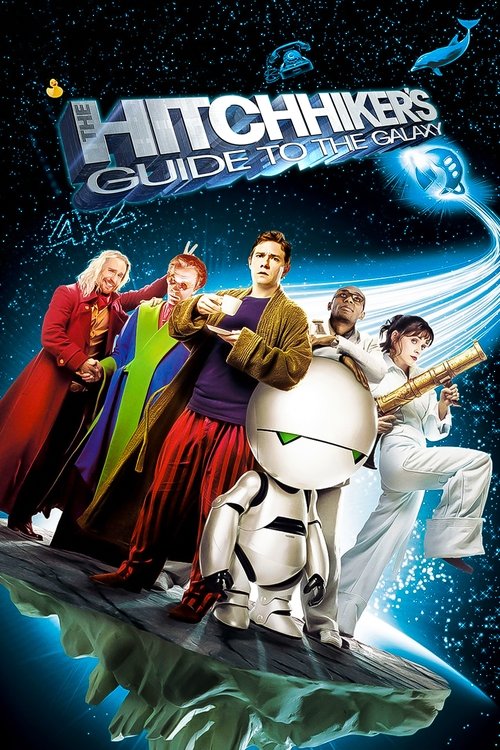
There is something fundamentally British about facing the literal end of the world and being most annoyed about a missing cup of tea and a demolished yellow house. When Garth Jennings (who came from the world of music videos, specifically directing Blur’s "Coffee & TV") took the reins of The Hitchhiker’s Guide to the Galaxy in 2005, he inherited a project that had been simmering in development hell for twenty years. It was a daunting task: how do you translate the late, great Douglas Adams’ singular, chaotic, and deeply philosophical wit into a cohesive Hollywood blockbuster without losing the very "Britishness" that makes it work?
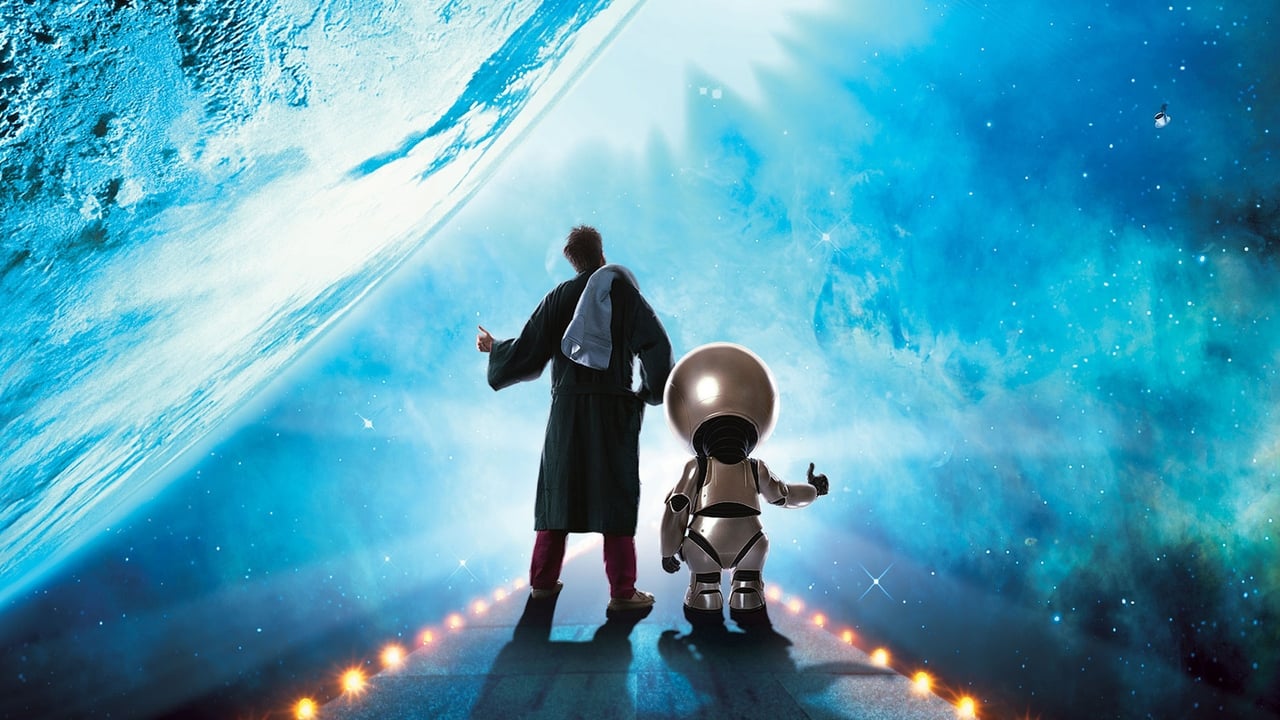
I watched this most recent time while recovering from a wisdom tooth extraction, and let me tell you, heavy painkillers make the bureaucratic Vogons feel much more relatable. Looking back at it nearly two decades later, this film sits in a fascinating pocket of cinema history. It arrived just as the CGI revolution was hitting its stride, yet it feels surprisingly tactile, thanks to a heavy reliance on practical effects that have aged far better than the digital landscapes of its contemporaries.
The Practicality of Impossibility
One of the smartest moves Jennings made was enlisting the Jim Henson Creature Shop. In an era where Star Wars: Revenge of the Sith (released the same year) was drowning in digital polish, Hitchhiker’s gave us the Vogons—massive, disgusting, ponderous puppets that feel physically present in the room. They have a weight and a "slop" to them that CGI simply couldn't replicate at the time. It gives the film a grounded, "used universe" vibe that feels more like Labyrinth than The Matrix.
The Heart of Gold ship, with its "Infinite Improbability Drive," is a triumph of production design. It looks like a giant, sleek teapot or a kitchen appliance designed by Apple in the early 2000s. Fun fact: the "Point of View Gun" in the film was actually designed by Jonathan Ive, the man responsible for the look of the iMac and iPhone. It’s that level of specific, era-defining design that prevents the movie from looking like a generic space opera.
Casting the Everyman and the Ego
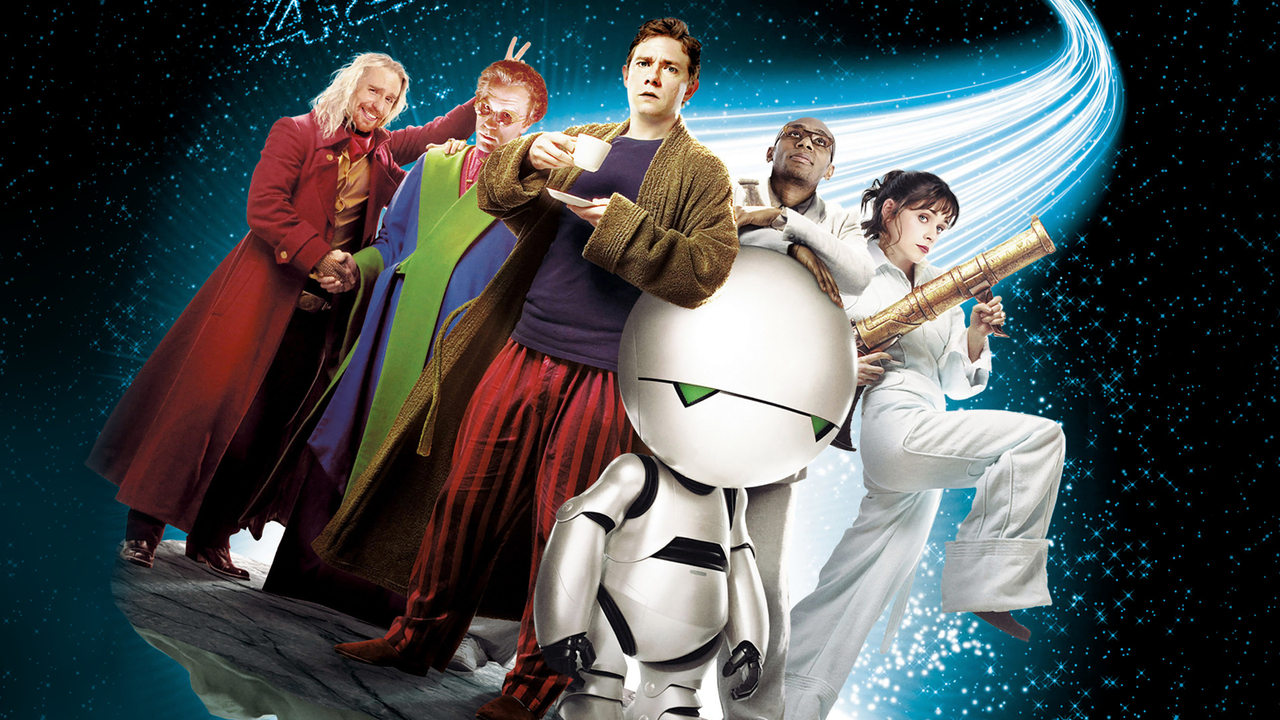
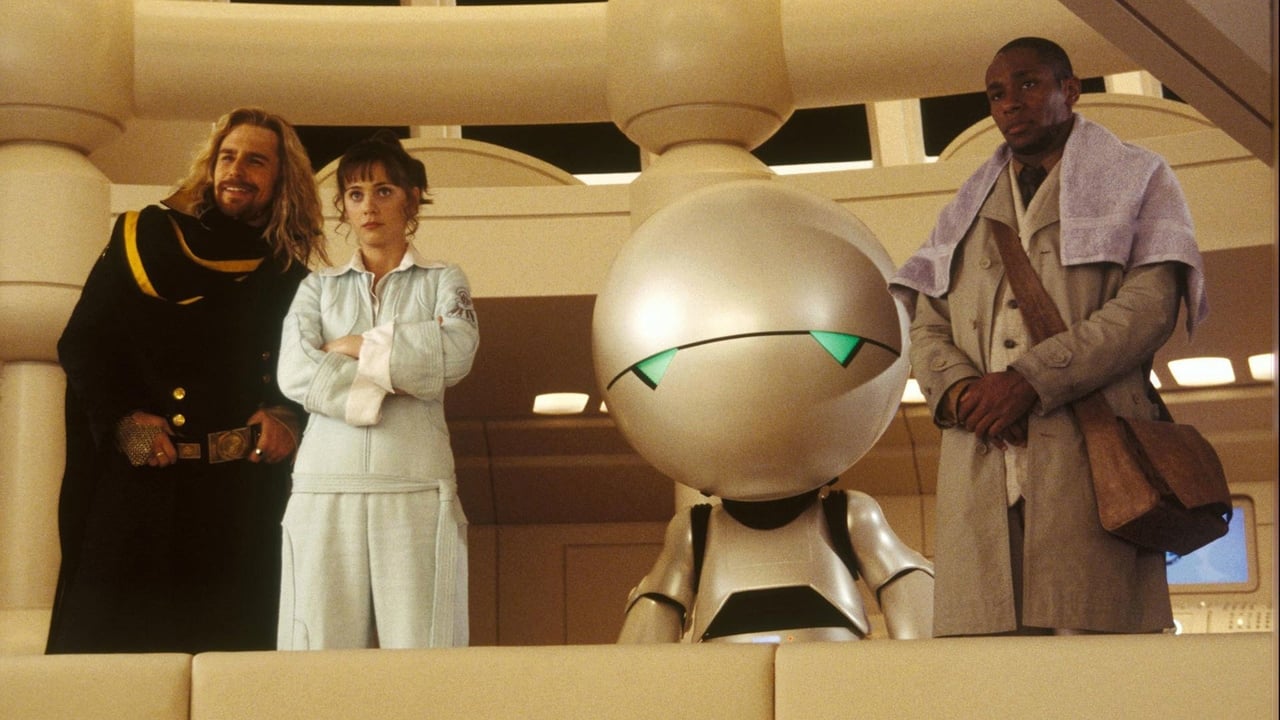
Martin Freeman was born to play Arthur Dent. Years before he was Bilbo Baggins or John Watson, he perfected the "perpetually baffled Englishman in a dressing gown" look. He is the perfect anchor for the audience; while the universe is exploding and dolphins are singing goodbye, he just wants to know why his planet was in the way of a bypass. Yasiin Bey (then known as Mos Def) is a delightful, low-key Ford Prefect, bringing a cool, detached energy that balances the madness.
Then there’s Sam Rockwell. Looking back, his performance as Zaphod Beeblebrox is a masterclass in chaotic energy. He plays the two-headed Galactic President like a cross between Freddie Mercury and a high-functioning frat boy. Space travel in this movie feels less like 'Star Trek' and more like a very expensive, very confusing stag party. Rockwell’s second head, achieved through a mix of animatronics and early-2000s digital compositing, is one of the few effects that shows its age, but his commitment to the bit makes it work.
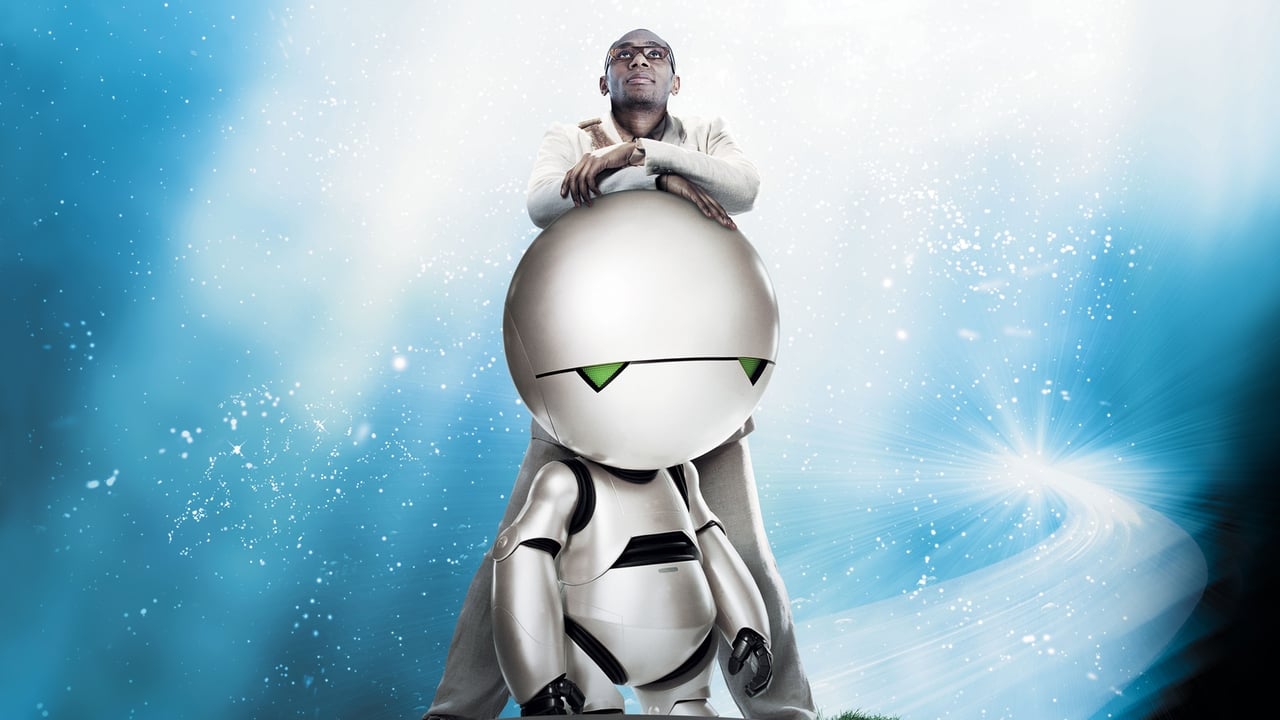
And of course, we have to talk about Marvin the Paranoid Android. Voiced by the late Alan Rickman and physically inhabited by Warwick Davis, Marvin is the film’s MVP. Rickman’s deadpan delivery of lines like, "I've calculated your chances of survival, but I don't think you'll like them," remains the gold standard for cinematic depression.
The Legacy of the Guide
This film is a bit of a cult anomaly. It wasn't the massive franchise-starter Spyglass Entertainment likely hoped for, but it has aged into a beloved comfort watch for sci-fi nerds. It captures that mid-2000s transition where studios were still willing to take big, weird risks on intellectual properties that didn't involve capes.
The production was famously bittersweet. Douglas Adams, who wrote the screenplay with Karey Kirkpatrick, passed away during the development process. The film is peppered with tributes to him; if you look closely at the starfield during the Vogon sequence, you can see Adams' face formed by the nebulae.
Does it capture every nuance of the books? No. It streamlines the plot and adds a romantic subplot between Arthur and Zooey Deschanel’s Trillian that feels a bit "Hollywood 101." But it gets the vibe right. It understands that the universe is vast, uncaring, and deeply, deeply silly. In a post-9/11 world where sci-fi was turning increasingly dark and gritty (think War of the Worlds or Children of Men), Hitchhiker’s was a colorful, absurdist reminder that the best response to cosmic horror is a good laugh and a sturdy towel.
Ultimately, The Hitchhiker’s Guide to the Galaxy is a vibrant, flawed, and immensely charming slice of 2000s sci-fi. It succeeds because it leans into the absurdity rather than trying to explain it away. It’s a film that encourages you to stop worrying about the "why" of the universe and just enjoy the ride—preferably with a Pan Galactic Gargle Blaster in hand. If you’ve skipped it because you’re a book purist, give it another shot; it’s a much warmer, more tactile experience than you might remember.
Keep Exploring...
-
Meet the Robinsons
2007
-
Journey to the Center of the Earth
2008
-
Planet 51
2009
-
Hot Tub Time Machine
2010
-
Mr. Peabody & Sherman
2014
-
Charlie's Angels
2000
-
Osmosis Jones
2001
-

Flushed Away
2006
-
Paul
2011
-

Galaxy Quest
1999
-
Jimmy Neutron: Boy Genius
2001
-
Spy Kids
2001
-
Aliens in the Attic
2009
-
Shanghai Noon
2000
-

The Emperor's New Groove
2000
-
The Road to El Dorado
2000
-
Stuart Little 2
2002
-
The Tuxedo
2002
-

Sinbad: Legend of the Seven Seas
2003
-
The Rundown
2003