The Squid and the Whale
"Pretension is the only inheritance."
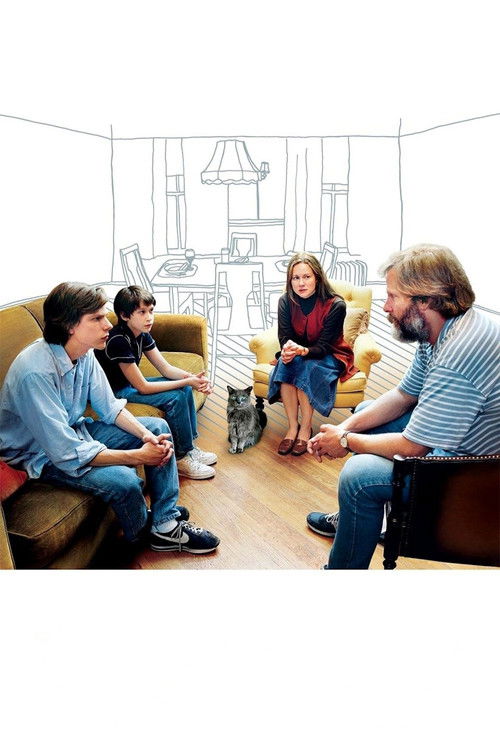
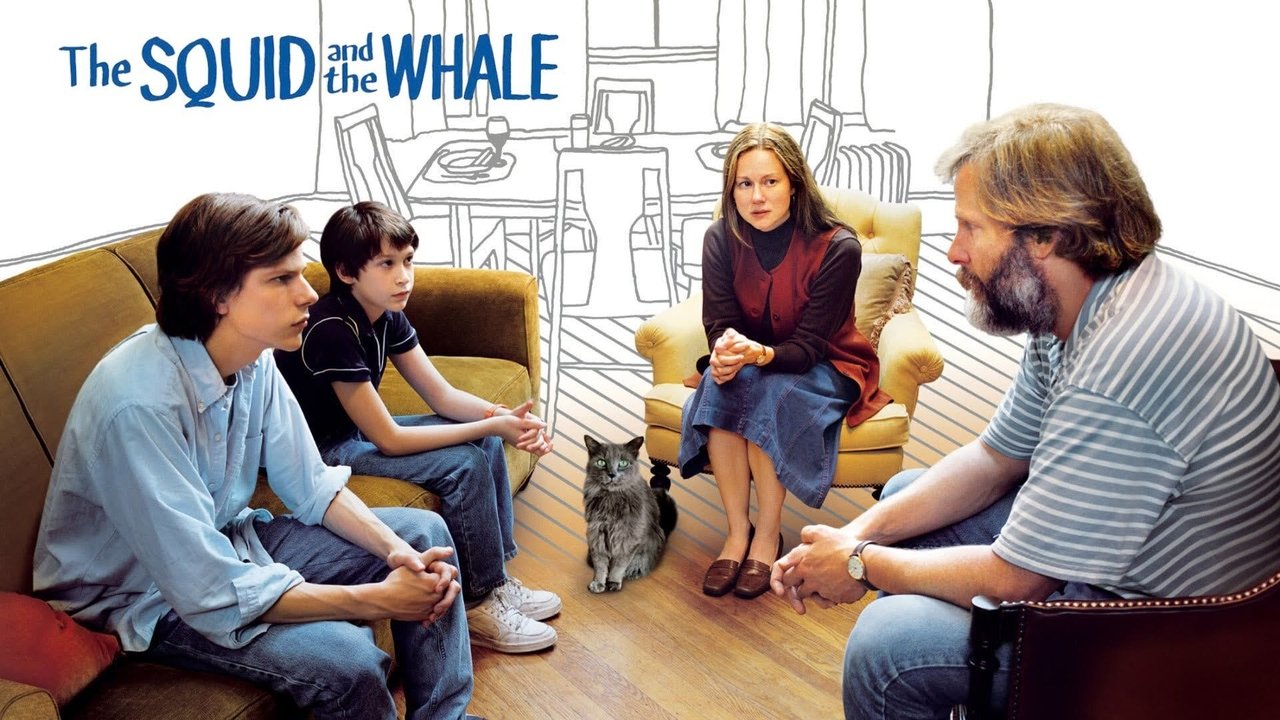
The opening scene of The Squid and the Whale isn't a sweeping shot of the Brooklyn Bridge or a nostalgic montage of 1980s street life. It’s a family tennis match that feels less like recreation and more like a blood sport. Within three minutes, you understand everything you need to know about the Berkman family: they are intellectual, competitive, and utterly incapable of showing love without keeping score. When Jeff Daniels' character, Bernard, dismisses his opponent’s skill because he’s a "philistine," the stage is set for one of the most painfully honest portraits of divorce ever put to film.

I watched this movie for the third time recently on a Tuesday afternoon while my neighbor was loudly practicing the scales on a trumpet. Usually, that would drive me insane, but somehow the discordant, repetitive brass notes felt like the perfect accompaniment to the Berkmans' slow-motion domestic car crash. It’s that kind of movie—it thrives in the uncomfortable spaces.
The Intellectual Hunger Games
Released in 2005, a year when big-budget sequels like Revenge of the Sith were dominating the box office, The Squid and the Whale felt like a defiant return to the "small" film. This was the peak of the mid-2000s indie renaissance, where digital cameras were starting to take over, yet director Noah Baumbach chose to shoot on 16mm film. It gives the movie a grainy, tactile, "found footage from your childhood" quality that digital just can't replicate. It feels like a memory you’ve tried to suppress.
The plot is deceptively simple: Bernard (Jeff Daniels) and Joan (Laura Linney) are two writers in Park Slope whose marriage is disintegrating. Their sons, Walt (Jesse Eisenberg) and Frank (Owen Kline), are caught in the blast radius. But while most divorce movies go for the "think of the children" tear-jerker angle, Baumbach goes for the jugular. He explores how children don't just suffer through a divorce; they weaponize their parents' worst traits. Jesse Eisenberg is masterfully annoying as Walt, a teenager who adopts his father’s literary snobbery like a suit of armor, dismissing classic novels as "minor" just to sound superior. It is the most claustrophobic 81 minutes you’ll ever enjoy.
A Masterclass in Unlikability
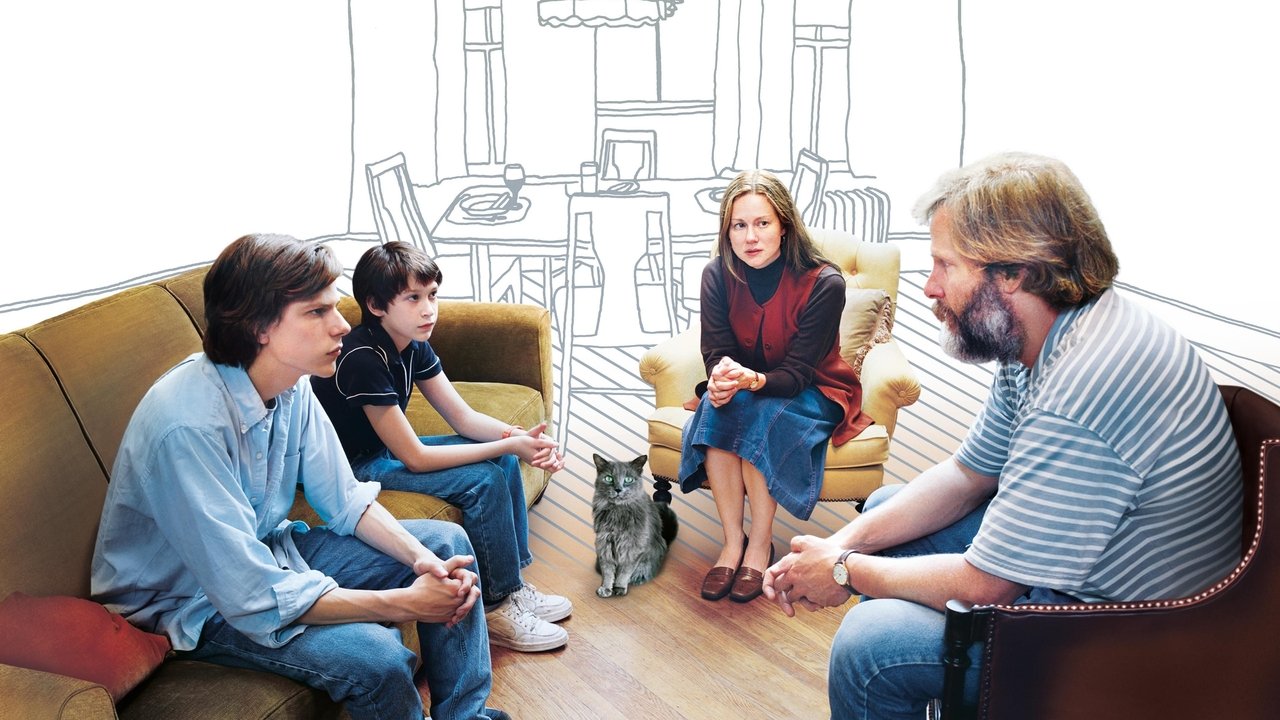
We talk a lot about "likable characters" in modern cinema, but Bernard Berkman is a glorious refutation of that requirement. Jeff Daniels—who I still occasionally associate with Dumb and Dumber (1994)—delivers a performance of such staggering ego and pathetic vulnerability that you don't know whether to punch him or hand him a tissue. He’s a "failed" novelist who considers himself "between triumphs," a phrase I have definitely stolen to describe my own bank account.
Then there’s Laura Linney, who brings a necessary complexity to Joan. She isn't just the "cheating wife"; she’s a woman finally realizing that she’s been living in the shadow of a man who considers himself a giant while standing on a milk crate. The chemistry between them is toxic, but it’s a specific, intellectual brand of toxin that feels incredibly real. Watching them argue is like watching two grandmasters play chess where the loser has to move into a shitty apartment in a less-cool part of Brooklyn.
The supporting cast is equally sharp. William Baldwin (of Backdraft fame) shows up as a tennis pro/love interest who represents everything Bernard hates—physicality over intellect—and Halley Feiffer is heartbreakingly earnest as the girlfriend Walt treats like a "minor" character in his own life story.
The Art of the Shoestring Budget
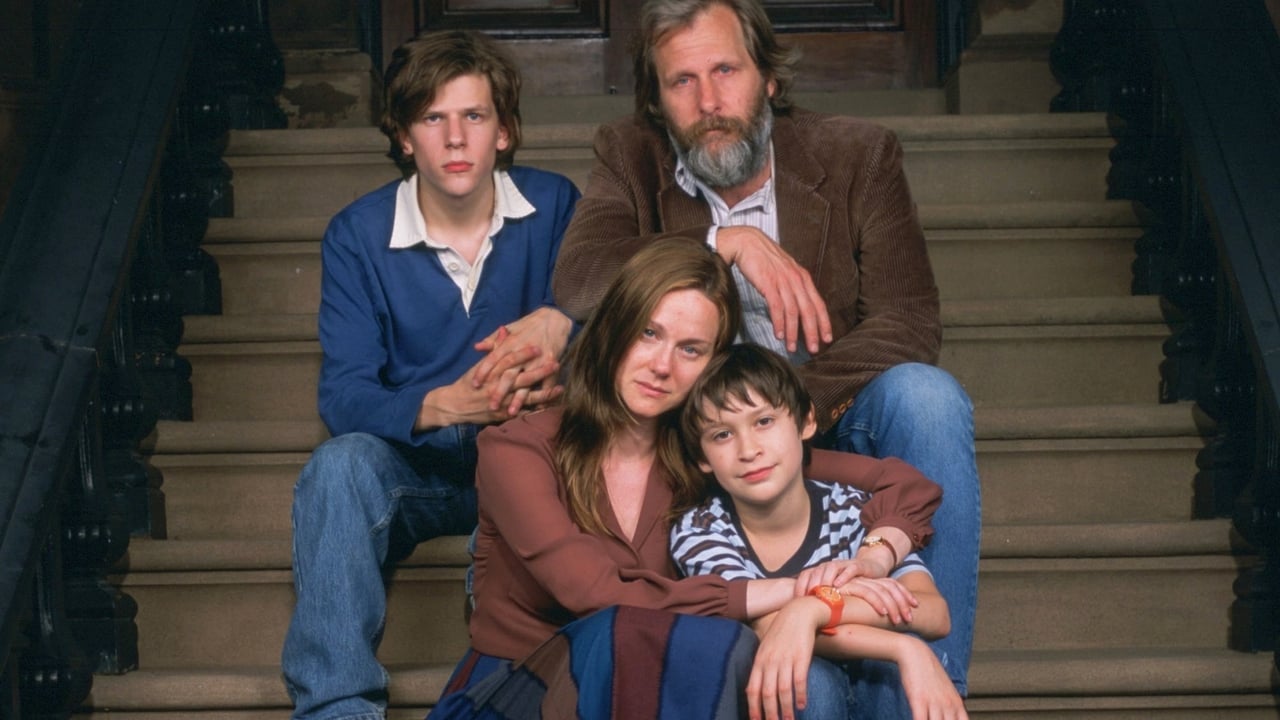
What strikes me looking back is how much Baumbach accomplished with practically nothing. This was a true "indie gem" produced by Wes Anderson (The Grand Budapest Legend), made for a measly $1.5 million. They shot the whole thing in just 23 days. Because they couldn't afford expensive sets, they used real Brooklyn locations, often dragging equipment through actual brownstones. This lack of resources forced a kind of intimacy that big budgets usually kill. The camera is always just a little too close, the rooms are always just a little too small, and the lighting feels like it’s coming from a dusty lamp in the corner.
The film's title refers to a giant diorama at the American Museum of Natural History—a sperm whale and a giant squid locked in eternal, terrifying combat. It’s a heavy-handed metaphor, sure, but the movie earns it. By the time Walt finally stands in front of that exhibit, you realize that for a child of divorce, the parents are the monsters in the dark water. They are massive, frightening, and completely unaware of anything outside their own struggle.
There’s a legendary bit of trivia that Jesse Eisenberg’s character sings "Hey You" by Pink Floyd at a school talent show and claims he wrote it. Apparently, the production had to fight to get the rights to that song, and it’s the best money they ever spent. It perfectly encapsulates the era's teenage angst and the desperate, pathetic need to be perceived as a genius before you’ve actually done the work.
The Squid and the Whale is a lean, mean, 81-minute reminder that the people who raise us are just as flawed and frightened as we are. It’s a movie that finds the comedy in the cringe and the tragedy in the truth. If you’ve ever felt like you were turning into your parents and hated yourself for it, this film will feel like a long, uncomfortable, but ultimately necessary therapy session. It’s a masterpiece of the "unpleasant" drama, proving that sometimes the best way to move on is to finally look the monster in the eye.
Keep Exploring...
-

Frances Ha
2013
-
Secretary
2002
-

Garden State
2004
-

High School Musical
2006
-

Fanboys
2009
-

Super
2010
-
The Kids Are All Right
2010
-

Bend It Like Beckham
2002
-
Good Bye, Lenin!
2003
-
The Life Aquatic with Steve Zissou
2004
-
Imagine Me & You
2006
-
Four Lions
2010
-

While We're Young
2015
-

The Meyerowitz Stories (New and Selected)
2017
-
Night on Earth
1991
-
Friday
1995
-
Chasing Amy
1997
-
Buffalo '66
1998
-

Happiness
1998
-

Beginners
2011