Valiant
"The bravest hearts have the smallest feathers."
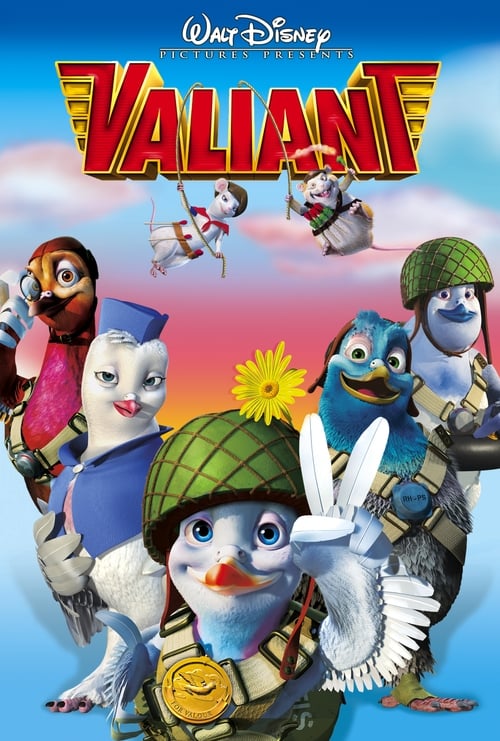
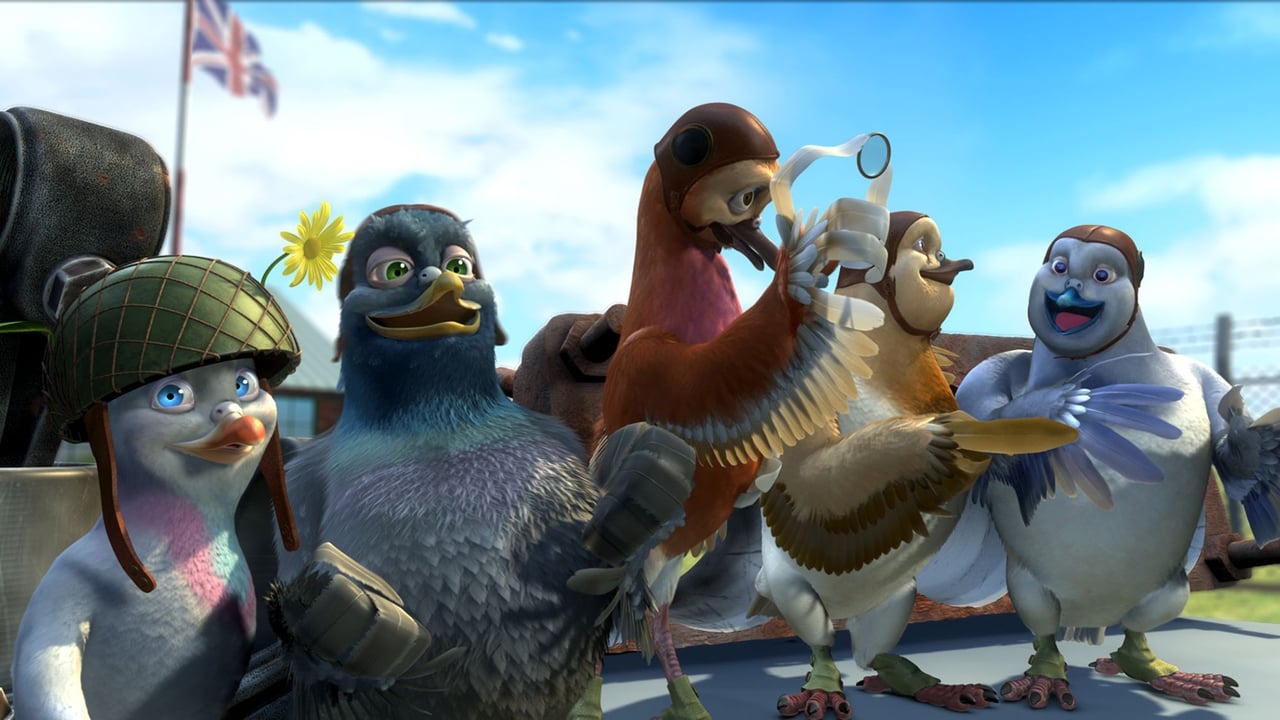
I remember exactly where I was when I first saw the trailer for Valiant. I was sitting in a humid cinema in the summer of 2005, picking a piece of fossilized chewing gum off the bottom of my armrest, and wondering why the guy three rows down was eating an entire rotisserie chicken. When the teaser played, featuring a scrappy little pigeon in a pilot’s cap, the marketing leaned heavily on one phrase: "From the Producer of Shrek." In the mid-2000s, that was the ultimate cinematic dog whistle. It promised edge, pop-culture riffs, and the kind of CGI that would make your old CRT monitor sweat.
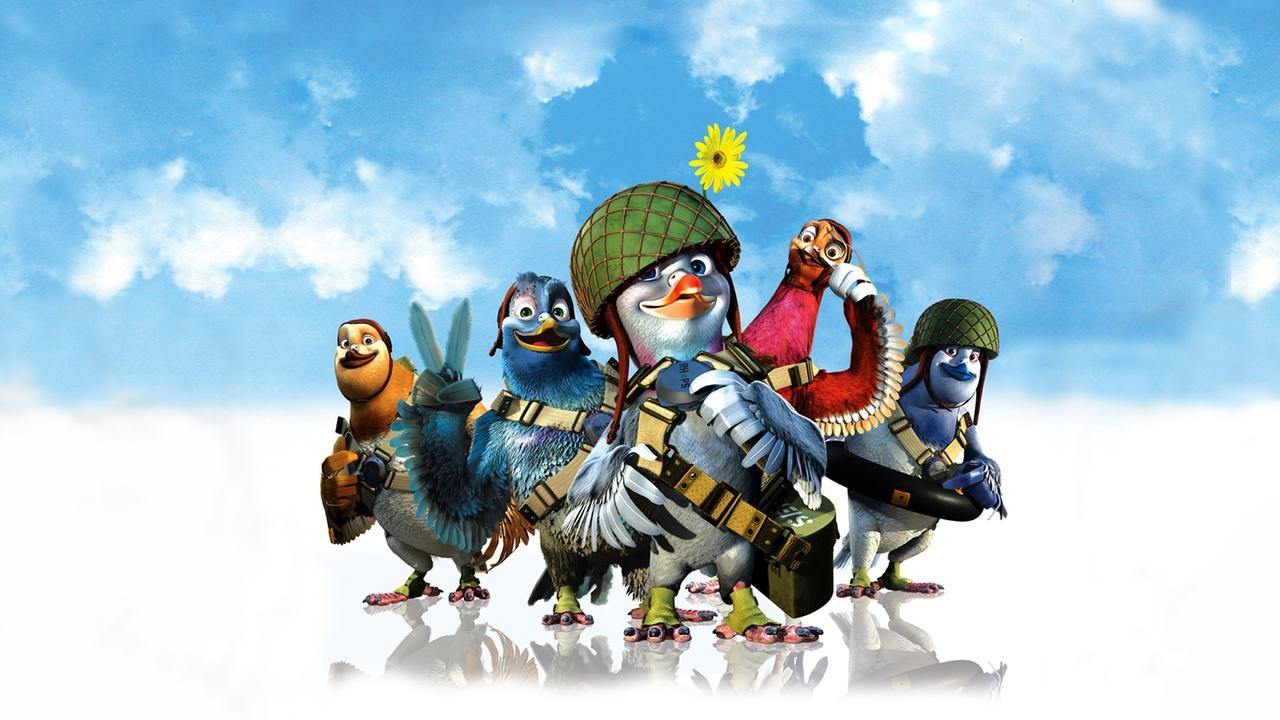
Looking back, Valiant didn't quite ignite a revolution. It’s a film that exists in that strange, transitional pocket of the Modern Cinema era where every studio on the planet was frantically trying to build a digital animation arm to compete with the Pixar/DreamWorks duopoly. While it hasn't stayed in the cultural conversation like Finding Nemo (2003) or The Incredibles (2004), there’s a scrappy, British charm to this WWII adventure that makes it a fascinating specimen to rediscover.
The Great British CGI Experiment
By 2005, the CGI revolution was in full swing, but Valiant represented something different: a mid-budget, independent European attempt to storm the gates. Produced by Vanguard Animation and the legendary Ealing Studios, it was an ambitious project that tried to do with $35 million what the big boys were doing with $150 million.
In retrospect, the technical gap is noticeable. While the feathers—the absolute bane of early 2000s digital artists—look decent enough, the environments often feel a bit sparse, like a high-end PlayStation 2 cutscene that refuses to end. However, there’s an earnestness to the world-building. The film takes the very real history of the Royal Homing Pigeon Service—which actually used birds to carry messages across the Channel during the war—and turns it into a classic "underdog" military academy story. I watched this most recently while wearing one mismatched sock because I couldn't find the other, and the irritation of my bare heel on the carpet really underscored the tension of Valiant’s grueling training camp.
A Cast Far More Distinguished Than Their Feathers
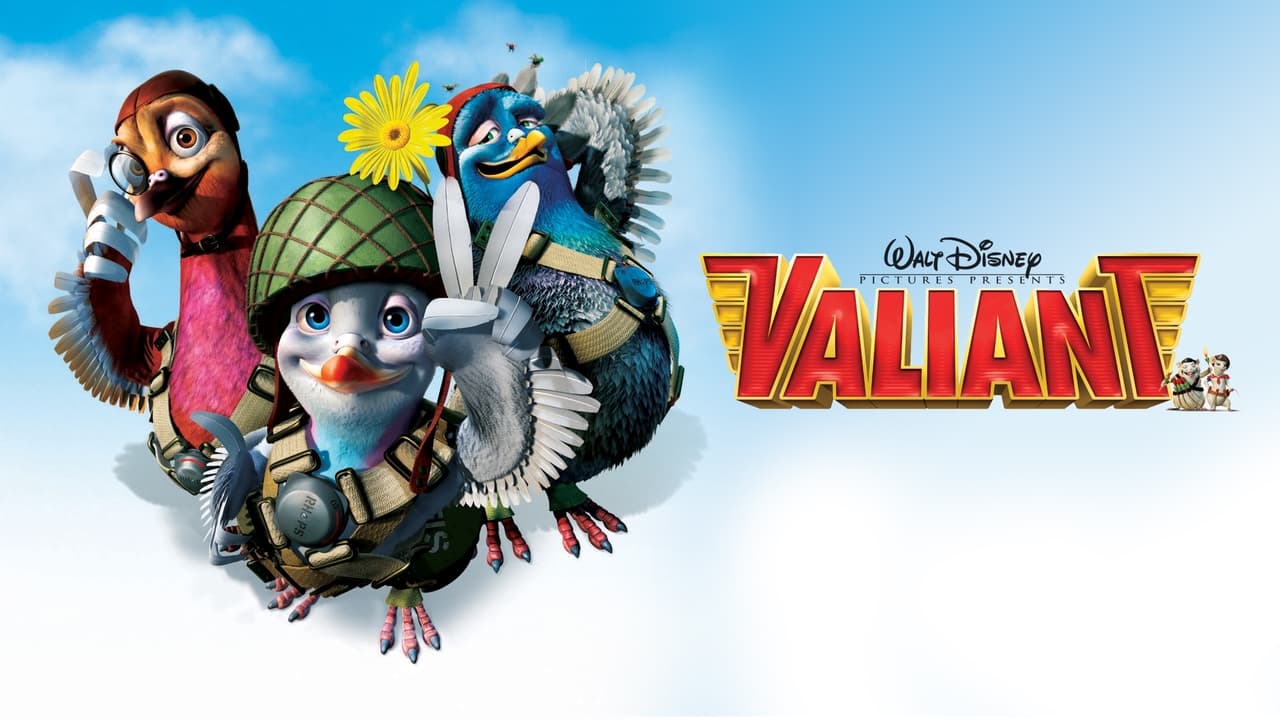
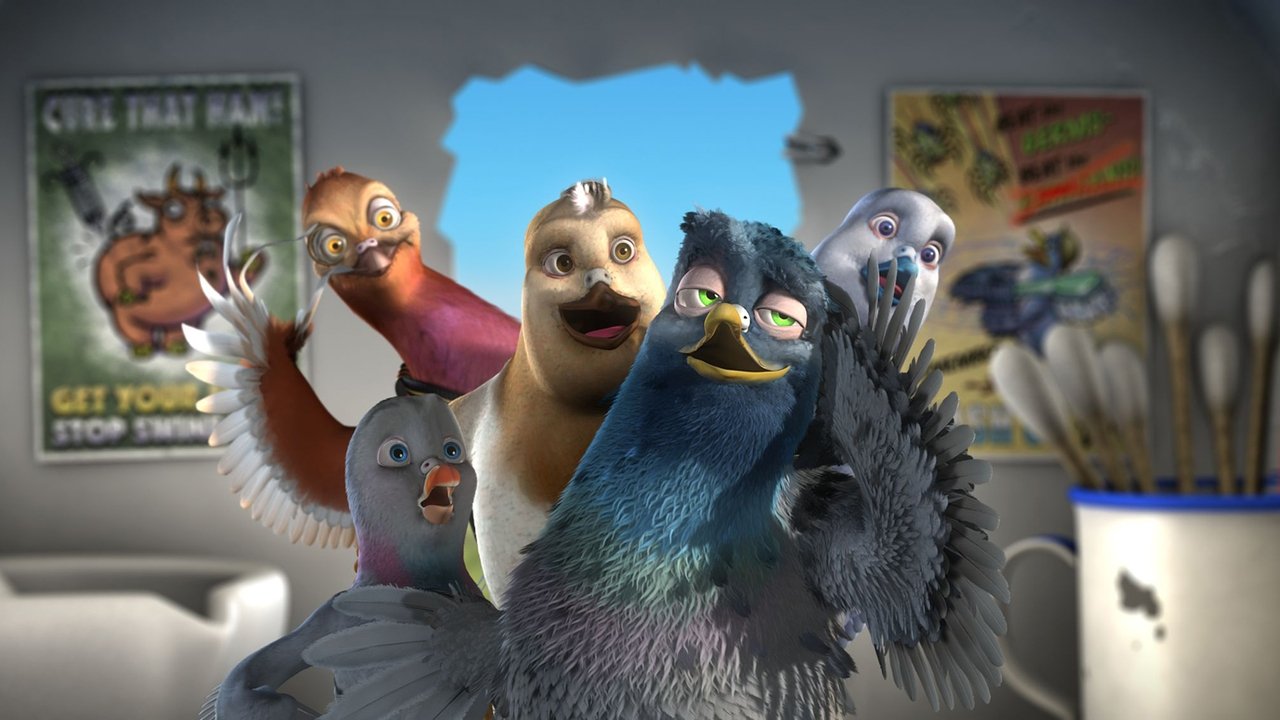
The real reason Valiant remains watchable is the voice cast. It is, frankly, an absurd assembly of British talent. You have Ewan McGregor (fresh off his Star Wars prequel duties) voicing the titular Valiant with a wide-eyed sincerity that keeps the movie grounded. But the film truly lives in its supporting roles. Ricky Gervais voices Bugsy, a smelly, street-smart pigeon who is basically David Brent with wings and a serious hygiene problem. This was peak 2005 Gervais, and his neurotic, fast-talking energy provides most of the laughs.
Then you have the legends. John Cleese pops up as Mercury, a pigeon who gets captured and interrogated by the enemy, and Hugh Laurie voices the square-jawed Gutsy. But the MVP is undoubtedly Tim Curry as the villainous Falcon, General Von Talon. Curry is the patron saint of "understanding the assignment." He plays the Nazi-adjacent predator with such delicious, scenery-chewing menace that you almost want him to win. Every time he’s on screen, the movie shifts from a standard family adventure to something darker and more theatrical.
Why the Flight Path Went Off Course
So, why is Valiant currently buried in the digital bargain bin of history? Part of it was the timing. 2005 was a crowded year for animation; Madagascar and Wallace & Gromit: The Curse of the Were-Rabbit were soaking up all the oxygen. Valiant felt small in comparison. It lacked the frantic, referential humor that Shrek had popularized, opting instead for a more traditional, almost 1940s-style hero’s journey.
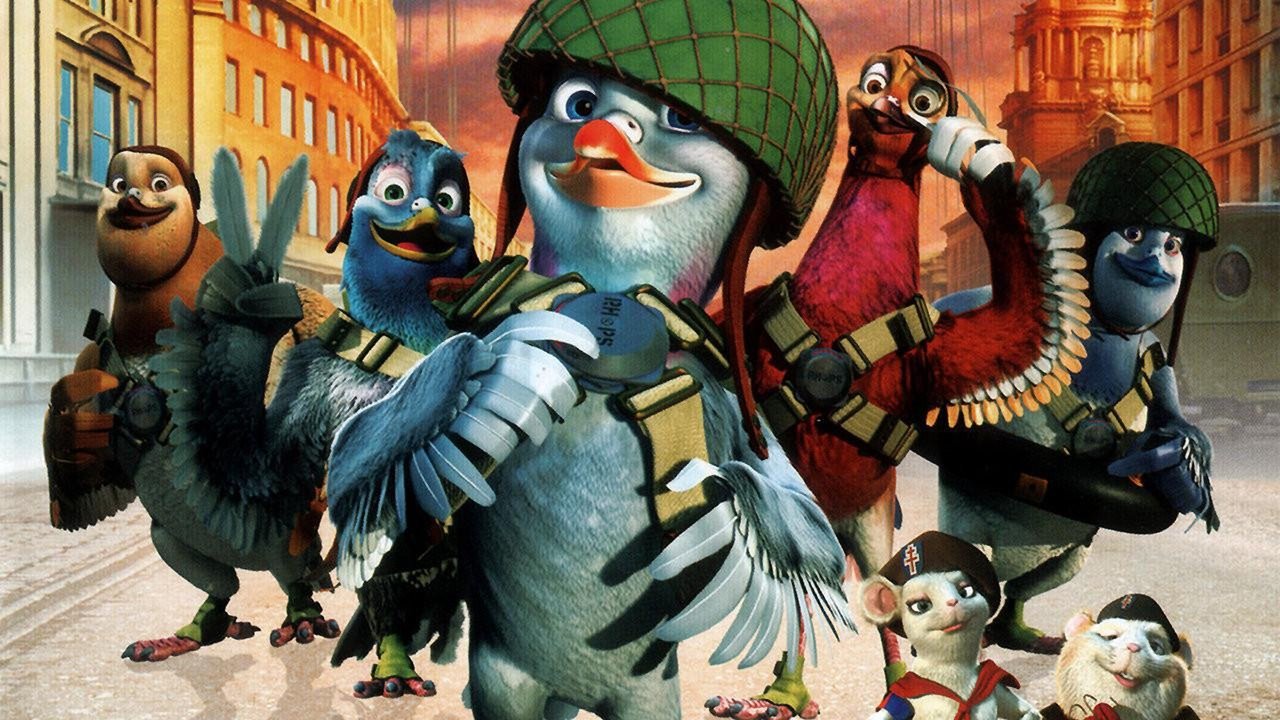
The film's "adventure" elements are actually quite solid. The sequence where the pigeons have to fly through a storm while being hunted by falcons has a genuine sense of peril. It captures that post-9/11 cinematic trend of treating war stories—even animated ones—with a certain level of stakes, even if they are wrapped in bird puns. However, the script often plays it too safe. It’s a 76-minute movie that feels like it’s checking off boxes: the training montage, the bumbling sidekick, the final daring rescue. It’s adventure by numbers, performed by the Royal Shakespeare Company.
Looking back at the DVD culture of the time, I remember the special features on the Valiant disc being surprisingly robust, detailing how they used actual WWII footage to inspire the aerial dogfights. It was a film proud of its heritage, even if it couldn't quite compete with the technical polish of its American cousins.
Valiant is a charming, if slightly thin, relic of the early CGI boom. It’s the kind of movie I’d recommend if you have a soft spot for British character actors or if you want to see what happened when the UK tried to build its own Pixar in a backyard shed. It doesn't soar, but it manages a respectable flutter. It’s a pleasant way to kill an hour, reminding us of a time when the digital frontier was still being settled, one feather at a time.
Keep Exploring...
-
Jimmy Neutron: Boy Genius
2001
-
TMNT
2007
-
The Little Mermaid II: Return to the Sea
2000
-
Osmosis Jones
2001
-
101 Dalmatians II: Patch's London Adventure
2003
-

The Ant Bully
2006
-
Shrek the Halls
2007
-
Open Season 2
2008
-

The Nut Job
2014
-
Shrek the Third
2007
-
Planet 51
2009
-
Robots
2005
-

The Swan Princess
1994
-

Flushed Away
2006
-

Open Season
2006
-

Bee Movie
2007
-
Horton Hears a Who!
2008
-
Madagascar: Escape 2 Africa
2008
-
Antz
1998
-
Big Fat Liar
2002