An Inconvenient Truth
"One man, a slide show, and the end of the world."
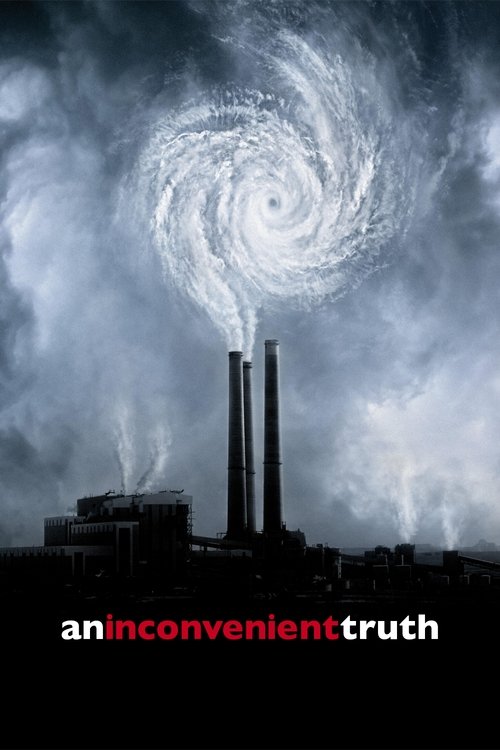
If you had told a Hollywood executive in 2005 that one of the most profitable and culturally seismic films of the following year would be a 100-minute PowerPoint presentation delivered by a man often nicknamed "The Tin Man," they would have laughed you out of the commissary. Yet, here we are, nearly two decades later, looking back at a moment when Al Gore—fresh off the most contentious presidential loss in American history—reinvented himself as a cinematic protagonist. I watched this again recently while eating a bag of slightly stale pretzel sticks, and every time Gore mentioned a receding glacier, I found myself staring guiltily at the plastic packaging.
The Indie Hustle of a Policy Wonk
It is easy to forget that An Inconvenient Truth wasn't a pre-packaged studio product; it was a scrappy independent effort that captured lightning in a bottle. Produced by Scott Z. Burns (who would later give us the prophetic Contagion) and Lawrence Bender (yes, the same guy who produced Pulp Fiction), the film had a production budget of roughly $1 million. In the world of 2006 cinema, that’s essentially the catering budget for a Pirates of the Caribbean sequel.
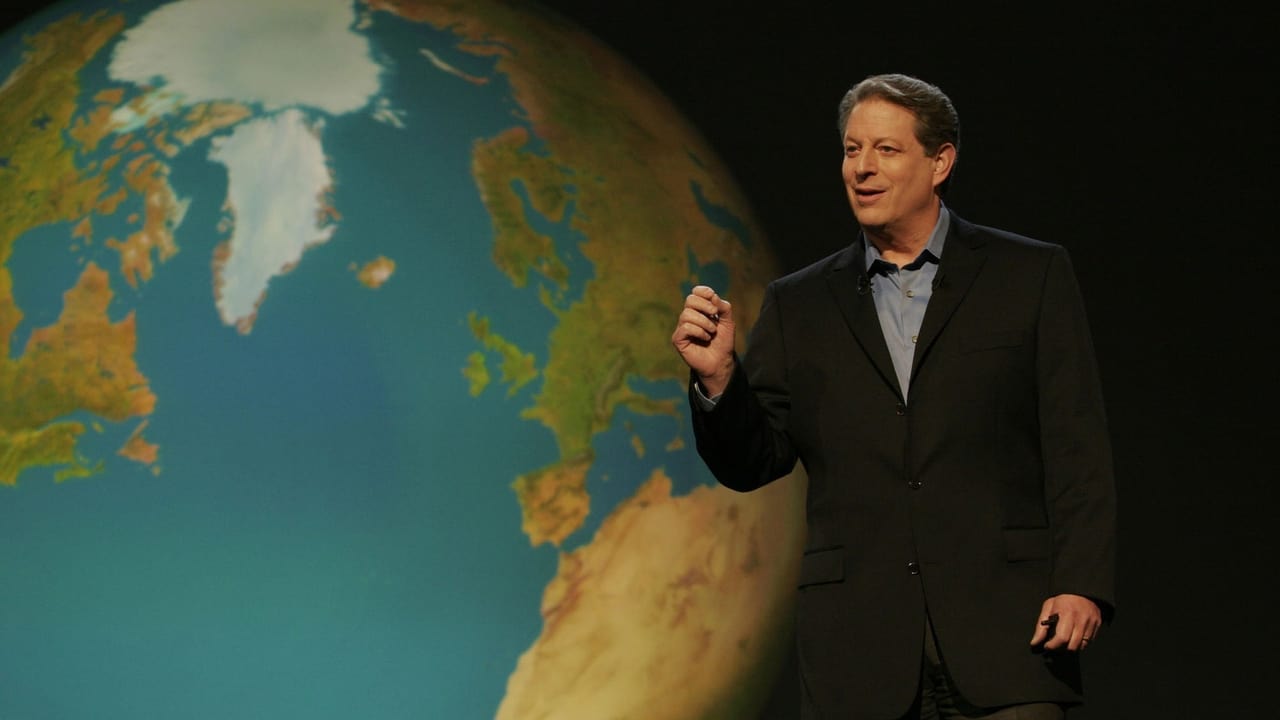
The film's journey is the quintessential "indie gem" story. It premiered at Sundance, where the buzz was so deafening it felt like a rock concert rather than a lecture on atmospheric CO2 levels. Director Davis Guggenheim—who had already proven his mettle with Training Day (as a producer) and episodes of Deadwood—faced a massive creative challenge: how do you make a man standing on a stage look cinematic? His solution was to treat the lecture like a thriller. Al Gore’s scissor-lift reveal is the closest the mid-2000s got to a superhero transformation sequence, and Guggenheim frames it with a sense of scale that makes the data feel like a looming monster in a creature feature.
Graphs, Gags, and Futurama
The film sits in a weird, wonderful pocket of the "Modern Cinema" era where digital cameras were starting to democratize the documentary form. It doesn't rely on the high-octane reenactments that plague modern Netflix docs. Instead, it relies on the clarity of its message and some surprisingly clever animation. One of my favorite details is the inclusion of a clip from Futurama, featuring the voice talents of Billy West. Seeing a cartoon sun batter the Earth with "global warming beams" provided the exact kind of levity needed to stop the audience from spiraling into a collective panic attack.
Looking back, the film also serves as a time capsule for 2006’s specific brand of tech-optimism. Gore uses a laptop and a remote with the reverence a knight might show Excalibur. For those of us who grew up in the peak DVD era, this movie was ubiquitous. It was the "special feature" of our lives. I remember the DVD release specifically because it was one of those discs that felt mandatory for any "serious" collection, right next to The West Wing box sets and The Lives of Others. It was the era when documentaries were finally being treated as blockbuster events, paving the way for the massive docu-boom we’re living through today.
The Human Element Behind the Science
What makes the film work as a drama, rather than just an educational tool, is the focus on Al Gore the person. Guggenheim weaves in personal anecdotes—the near-loss of his son, the story of his family’s tobacco farm—to ground the global catastrophe in human tragedy. It’s a classic directorial move to build empathy, and while some critics at the time found it a bit manipulative, I think it’s what saved the film from being dry. Gore’s performance (and it is a performance, honed over a thousand live iterations of this talk) is surprisingly vulnerable. He’s no longer the stiff politician in a suit; he’s a man who has found a purpose that transcends the White House.
The film also captures the post-9/11 anxiety of the mid-2000s, shifting the focus from external "enemies" to a systemic, internal threat. It’s fascinating to see how the cameos of George W. Bush and Ronald Reagan are used not just as political targets, but as markers of a decades-long trajectory of denial. Al Gore is low-key the best actor to ever play a bored professor, and his dry delivery actually helps the more terrifying statistics land with a thud rather than a scream.
Ultimately, An Inconvenient Truth succeeded because it didn't feel like homework; it felt like a revelation. Whether or not you agree with every projection made in 2006, the craft behind the film is undeniable. It took the most boring medium imaginable—the corporate presentation—and turned it into a compelling narrative about stakes, survival, and the stubbornness of the human spirit. It remains a landmark of independent filmmaking that proved a clear voice and a good slide deck could change the world more effectively than a hundred-million-dollar CGI explosion.
The film ends not with a solution, but with a challenge, leaving the viewer to sit in the quiet of the credits. It’s a rare documentary that manages to be both a product of its specific political moment and a perennial reminder of our own fragility. Even if you only watch it for the "Futurama" clip, it's a piece of cinema history that earned its place on the shelf.
Keep Exploring...
-
Bowling for Columbine
2002
-

Super Size Me
2004
-

Fahrenheit 9/11
2004
-

Waltz with Bashir
2008
-
Inside Job
2010
-

Searching for Sugar Man
2012
-
Grizzly Man
2005
-
Man on Wire
2008
-
This Is It
2009
-

Exit Through the Gift Shop
2010
-
Donnie Darko
2001
-
Monster's Ball
2001
-
Session 9
2001
-

Waking Life
2001
-
Secretary
2002
-
Elephant
2003
-

Thirteen
2003
-

Garden State
2004
-

Napoleon Dynamite
2004
-
Primer
2004