Black Snake Moan
"The blues will set you free, but the chain comes first."
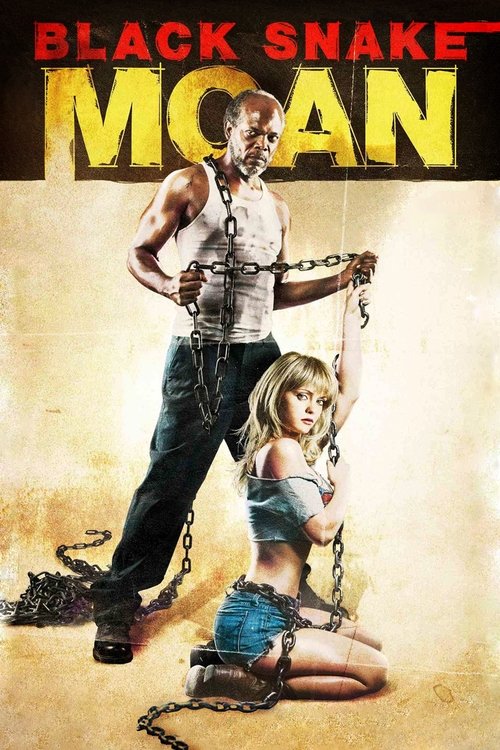
The sound of a heavy iron chain dragging across a sun-bleached hardwood floor shouldn't feel like a lullaby, yet by the time the credits roll on Black Snake Moan, that’s exactly where we’ve landed. I remember seeing the poster for this back in 2006 at a Blockbuster—you know the one, Christina Ricci in a skimpy top and a literal chain around her waist—and thinking it looked like a trashy, low-rent exploitation flick that someone’s weird uncle would hide under his mattress. I watched it this week on a dusty DVD I found in a thrift store bin between a workout video and a copy of Shrek 2, and I spent the first twenty minutes wondering if the movie was going to be as problematic as my neighbor’s un-mowed lawn.
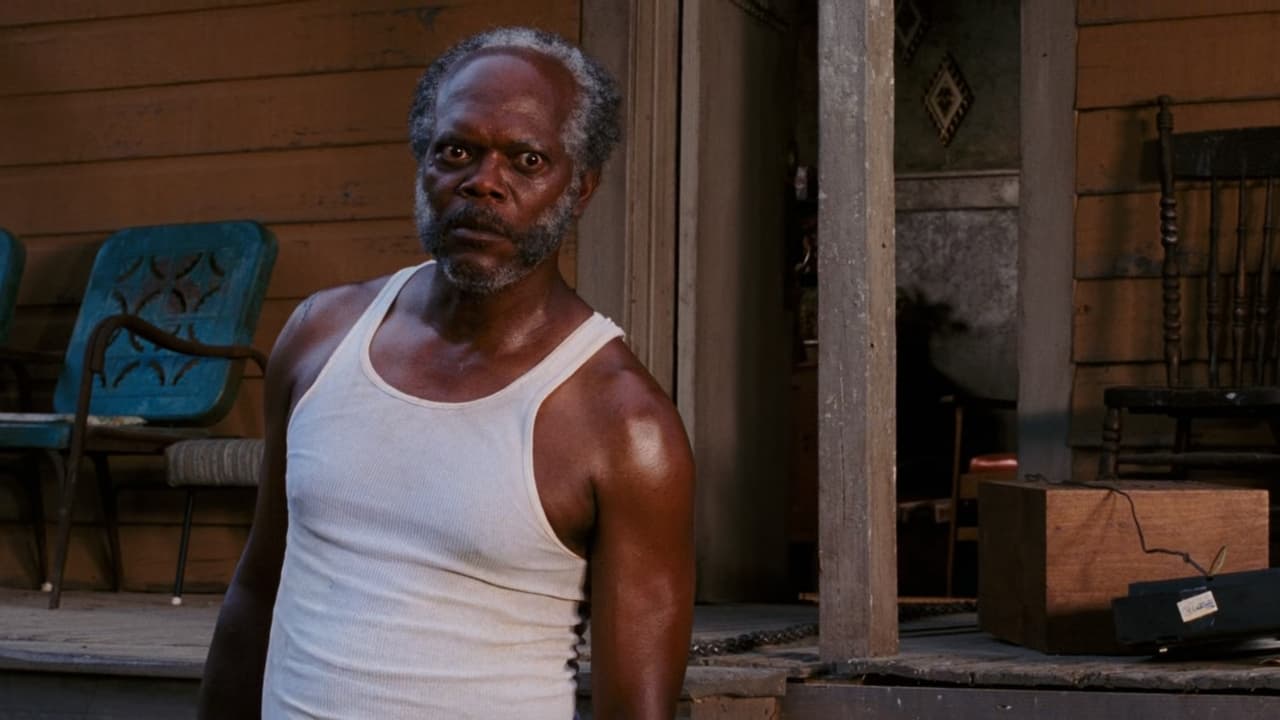
But here’s the thing about Craig Brewer’s sophomore effort: it’s a total bait-and-switch. It lures you in with the promise of "Grindhouse" sleaze and then hits you with a surprisingly tender, sweaty, and deeply religious meditation on how broken people try to fix one another with the only tools they have—in this case, a radiator and some Mississippi blues.
The Marketing Malpractice of 2006
Looking back, the way Paramount Vantage sold this movie was almost a crime. They leaned so hard into the "Everything is hotter down south" tagline that they completely obscured the fact that this is a small, three-person stage play disguised as a Southern Gothic fever dream. In the mid-2000s, there was this brief window where "prestige-indie" studios were trying to act edgy to capture the Quentin Tarantino crowd, but Black Snake Moan has more in common with a Tennessee Williams play than it does with Machete.
The setup is undeniably wild. Samuel L. Jackson plays Lazarus, a God-fearing bluesman whose wife has just left him for his brother. He’s bitter, he’s lonely, and he’s nursing a soul-deep ache that only a Gibson guitar can soothe. Then he finds Rae (Christina Ricci) beaten half to death on the side of the road. Rae is a "wild child" in the most tragic sense—a victim of horrific childhood abuse who uses sex as a blunt-force instrument to numb her own existence. Lazarus decides, in a moment of questionable but strangely sincere logic, that he’s going to "cure" her of her demons by chaining her to his radiator until she finds some self-respect.
If this movie were made today, the internet would collectively implode within six seconds of the trailer dropping. Even in 2006, it felt like a dare. But Brewer, who previously gave us the fantastic Hustle & Flow (2005), has a way of filming the American South that feels tactile. You can practically smell the humidity, the stale beer, and the woodsmoke. It’s an era-specific vibe where digital film was starting to take over, but Brewer kept things looking grainy and lived-in.
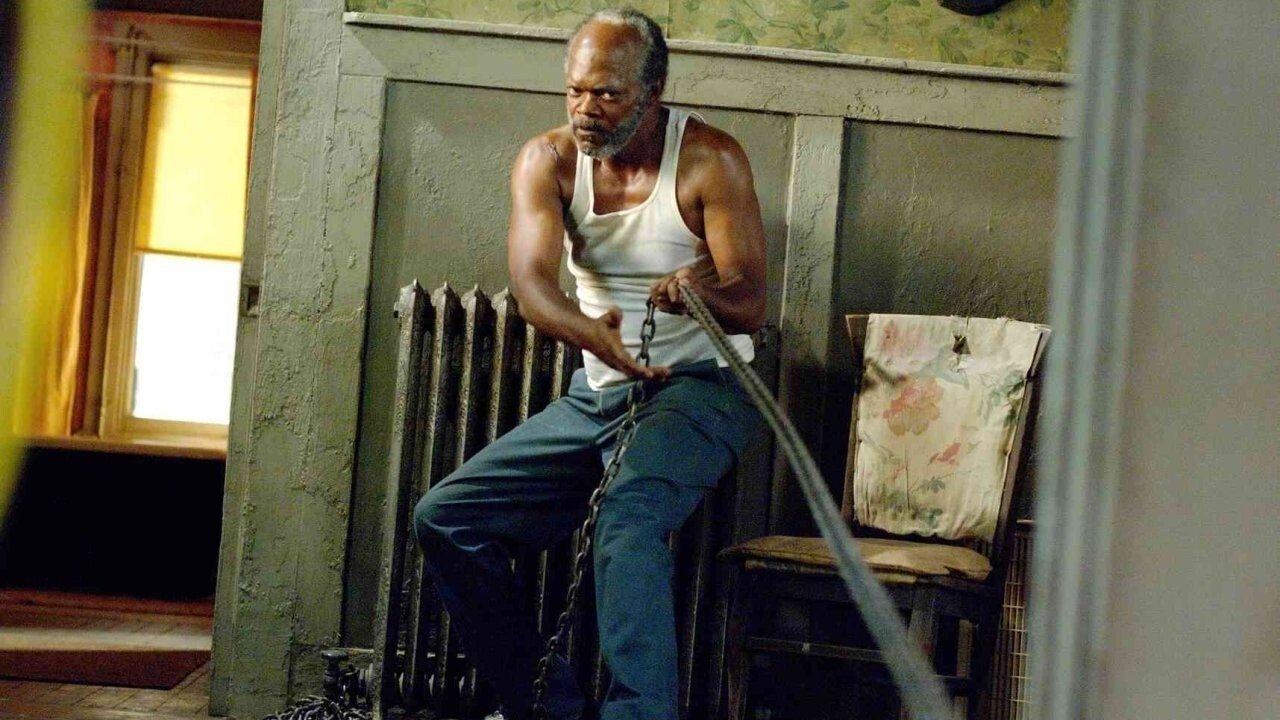
Performances That Earn the Sweat
This might be the most underrated work of Samuel L. Jackson’s entire career. We’re so used to him being "Mace Windu" or "Jules Winnfield" that we forget he can play quiet, simmering grief with the best of them. Apparently, he actually learned to play the guitar for the role, and when he sits down to growl out the title track during a thunderstorm, the movie transcends its weird premise. It becomes something primal.
Then there’s Christina Ricci. She spent most of the 90s being the "alt-girl" icon in movies like The Addams Family or Buffalo '66, but here she’s feral. It’s a brave, uncomfortable performance that requires her to be vibrating with anxiety for two hours straight. She makes Rae feel like a wounded animal rather than a caricature. And we have to talk about Justin Timberlake. This was right when he was trying to prove he wasn't just "the guy from 'N Sync," coming off Alpha Dog and heading toward The Social Network. He plays Ronnie, Rae’s boyfriend who’s suffering from crippling panic attacks and deployment anxiety. It’s a twitchy, nervous performance that captures that specific post-9/11 anxiety that was colonizing a lot of 2000s dramas.
Blues, Chains, and Redemption

The music is the actual pulse of the film. Scott Bomar’s score and the inclusion of legends like R.L. Burnside give the movie an authenticity that the script sometimes fumbles. There’s a scene where Lazarus takes Rae to a local blues club—still chained, though loosely—and for a moment, the movie stops being a thriller and starts being a communal experience. It’s about the idea that the "Black Snake" (the depression, the trauma, the itch) can only be driven out by making a hell of a lot of noise.
Does it all work? Mostly. The ending feels a little too "neat" for a story that spends so much time in the dirt, and the Southern archetypes occasionally tip into stereotypes. However, the sheer audacity of making a movie this sincere about a girl chained to a radiator is enough to make me respect it. It’s a relic of that mid-2000s indie spirit before every "edgy" movie had to be a franchise starter.
In an age where movies feel increasingly sanitized and focus-grouped to death, there is something genuinely refreshing about a film as messy and humid as Black Snake Moan. It’s a movie that asks you to look past a very ugly exterior to find a story about two people trying to survive their own minds. It’s not always easy to watch, and the chain metaphor is about as subtle as a car crash, but the performances from Samuel L. Jackson and Christina Ricci give it a heartbeat that’s impossible to ignore. If you can handle the sweat and the discomfort, the music alone is worth the price of admission.


Keep Exploring...
-
Footloose
2011
-
Changing Lanes
2002
-
Alpha Dog
2006
-
The Experiment
2010
-
Basic
2003
-
Behind Enemy Lines
2001
-
Gosford Park
2001
-
Joy Ride
2001
-
Original Sin
2001
-

Sweet November
2001
-

The Glass House
2001
-
The Man Who Wasn't There
2001
-
The Pledge
2001
-
Confessions of a Dangerous Mind
2002
-
Enough
2002
-
One Hour Photo
2002
-
S1m0ne
2002
-
Solaris
2002
-
The Count of Monte Cristo
2002
-
The Mothman Prophecies
2002