Camping
"Pastis, Speedos, and the ultimate class-war holiday."
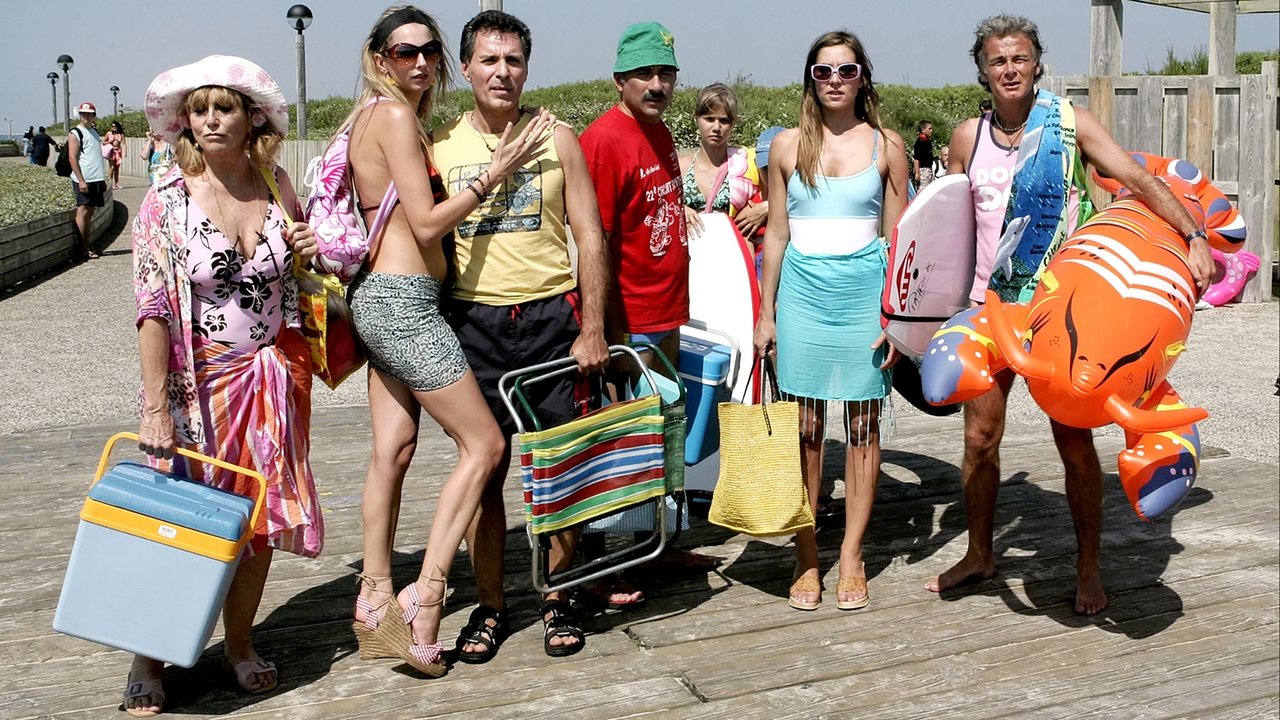
There is a specific shade of Mediterranean blue that only exists on the French coast in July, and somehow, Franck Dubosc managed to find a pair of Speedos that matches it perfectly. I watched Camping on a Sunday afternoon while my radiator was making a rhythmic clanking sound that perfectly synced up with the death rattles of the protagonist’s broken-down car, and honestly, the mechanical frustration only added to the atmosphere. For a certain generation of French filmgoers, this movie is a touchstone of "beauf" culture—that specific, unapologetic brand of blue-collar kitsch—but for the rest of the world, it remains a bizarre, sun-drenched curiosity that feels like a postcard from a very specific time and place.
The Art of the Aniseed-Scented Nuisance
At its heart, Camping is a classic "fish out of water" tale, though the fish in question is a high-end Parisian plastic surgeon who has been dropped into a pond of luke-warm beer and communal showers. Gérard Lanvin plays Michel Saint-Josse, a man whose skin is likely 40% Botox and whose patience is thinner than a crepe. When his car gives up the ghost near the "Flots Bleus" campsite, he and his daughter are taken in by Patrick Chirac (Franck Dubosc), a permanent fixture of the grounds who treats his pitch like a royal estate and his tent like a five-star villa.
Franck Dubosc is the engine that makes this film run, though your mileage may vary on whether that engine is a Ferrari or a lawnmower. He plays Patrick with a relentless, terrifying optimism. He is the guy who thinks everyone is his best friend because they haven’t filed a restraining order yet. It’s essentially a 95-minute Speedo commercial for a man who refuses to acknowledge the concept of personal space. Looking back at 2006, this was the peak of Dubosc’s "lovable loser" persona, a character he had honed on stage for years. Watching it now, the comedy feels remarkably tactile; it’s all about the physical proximity, the shared bread, and the inevitable smell of grilling sardines.
A Class War in Flip-Flops
The humor thrives on the friction between Michel’s elitism and the campers’ aggressive hospitality. Gérard Lanvin is the perfect straight man here; his face is a permanent mask of suppressed rage. Lanvin looks like he’d rather be undergoing a root canal without anesthesia than sharing a tent with a man who smells exclusively of aniseed and desperation. The film doesn't aim for subtle satire; it goes for the jugular with broad strokes.
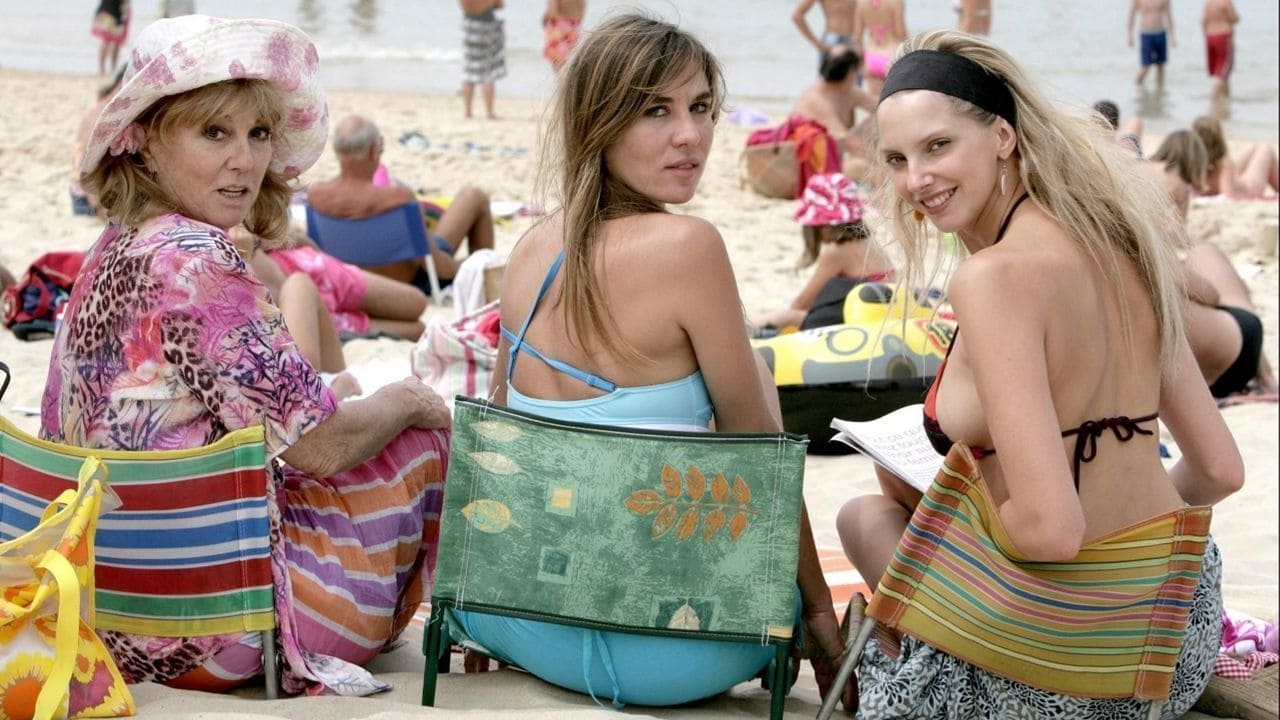
Director Fabien Onteniente captures the "Modern Cinema" transition of the mid-2000s by leaning into a bright, almost hyper-saturated palette that screams "DVD Special Edition." It’s a film made for the era of home cinema, where the behind-the-scenes features often showed the cast actually living it up on location. There’s an ensemble strength here too, particularly with Claude Brasseur and Mylène Demongeot as the long-suffering Pic couple. They represent the "old guard" of the campsite, and their subplot about a coveted pitch location adds a layer of strangely high stakes to what is essentially a movie about doing nothing.
Why It Stayed Behind the Barrier
Despite being a gargantuan hit in France—spawning sequels and becoming a staple of television reruns—Camping never really translated to an international audience. Part of that is the cultural specificity. The jokes about "Pastis par temps sec" (Pastis in dry weather) and the sacred nature of the "apéro" are deeply rooted in a French holiday tradition that doesn't always survive a subtitle track.
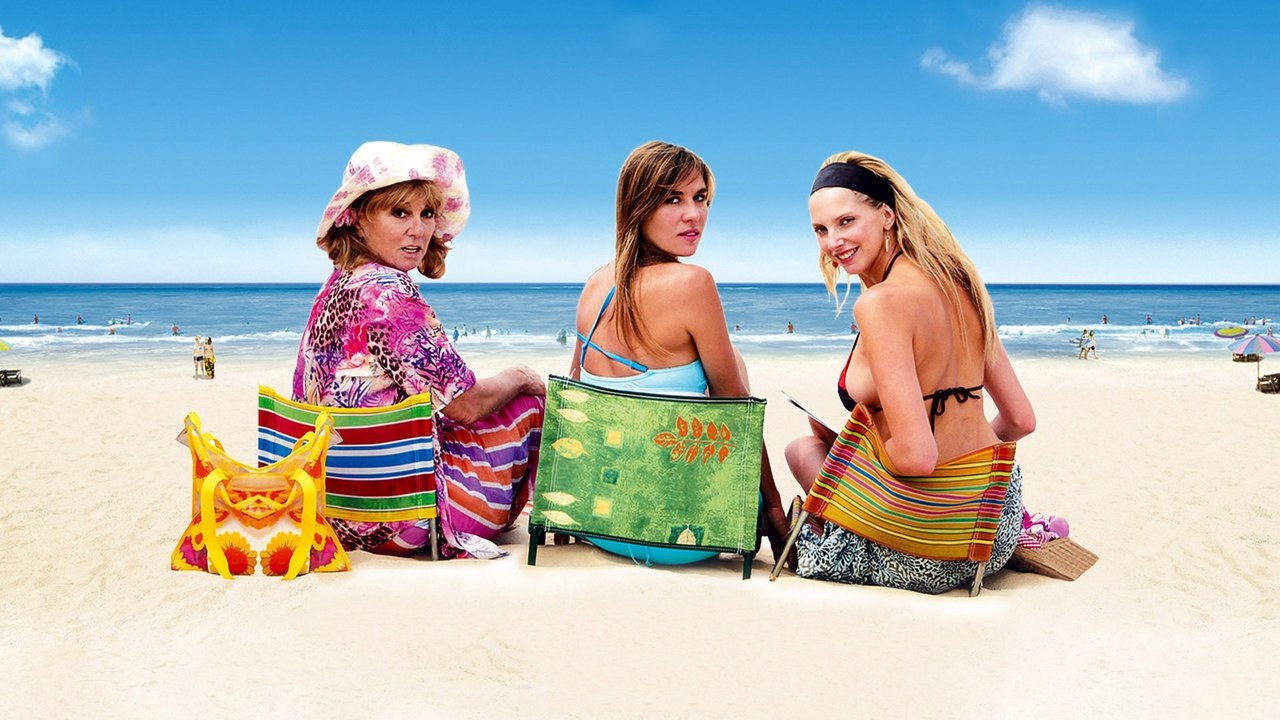
However, looking back with nearly two decades of hindsight, the film serves as a fascinating time capsule. It captures a moment before the digital ubiquity of smartphones took over our vacations. These people are forced to actually talk to each other, to fight over physical space, and to find entertainment in a game of pétanque or a poorly organized "Miss Camping" pageant. The film’s greatest strength isn't its punchlines, but its weirdly earnest affection for people who think a folding chair is a luxury item.
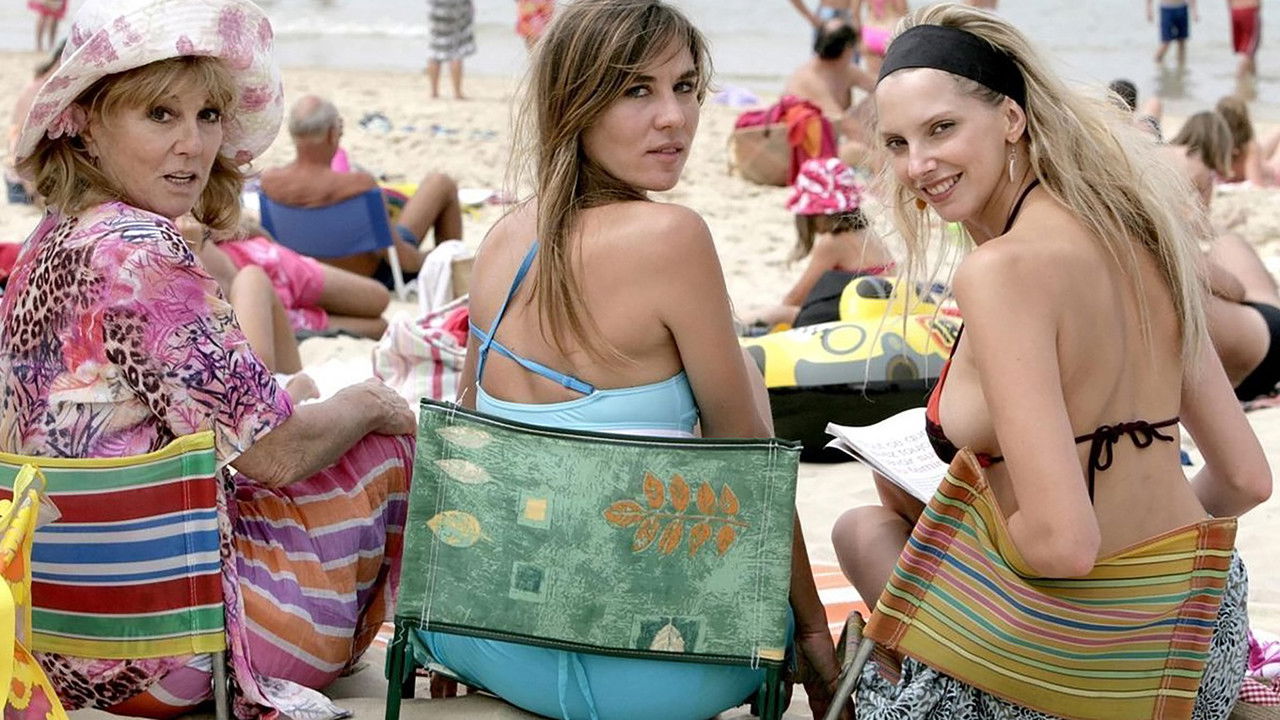
Does it hold up? Mechanically, the comedy is hit-or-miss. For every clever observation about class pretension, there’s a fart joke or a sequence of slapstick that feels like it belongs in a silent-era short. But there’s a warmth to it that prevents it from being mean-spirited. It’s a movie that invites you to laugh at the campers, but eventually insists you laugh with them.
Camping is far from a masterpiece, but it’s a quintessential piece of French populist cinema that deserves a look if you’re curious about what makes an entire nation laugh. It’s loud, it’s sweaty, and it’s occasionally annoying, much like a real camping trip. If you can handle Franck Dubosc’s relentless grin and the sight of a middle-aged man in a very small swimsuit, you might find yourself surprisingly charmed by the time the credits roll. Just don't expect a refund on the pitch fee.
Keep Exploring...
-

Don't Die Too Hard!
2001
-
Taxi 3
2003
-
RRRrrrr!!!
2004
-

Wimbledon
2004
-
Bandidas
2006
-
Smokin' Aces
2006
-
Taxi 4
2007
-
Little Nicholas
2009
-

LOL (Laughing Out Loud)
2009
-
Neuilly Yo Mama!
2009
-

Nothing to Declare
2010
-

The Tuche Family
2011
-
America's Sweethearts
2001
-

Bandits
2001
-

Heartbreakers
2001
-
How High
2001
-
Jay and Silent Bob Strike Back
2001
-
Jimmy Neutron: Boy Genius
2001
-
Kate & Leopold
2001
-
Osmosis Jones
2001