Final Destination 3
"Life is a ride. Death is the drop."
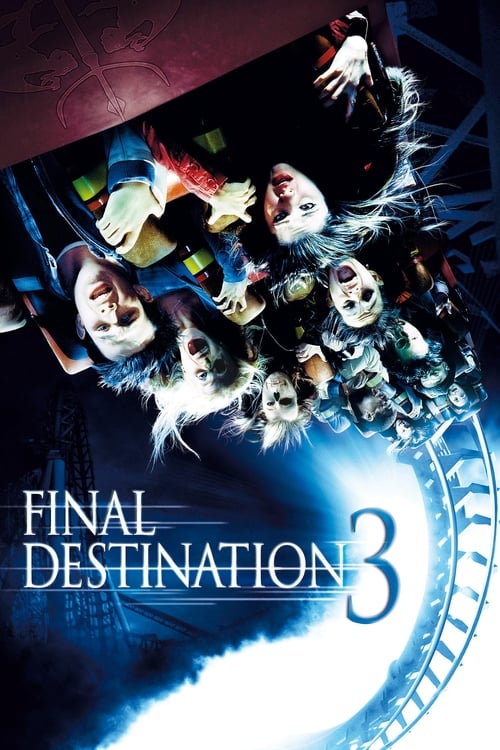
There is a specific brand of 2000s cruelty that Final Destination 3 wears like a badge of honor. It’s the cinematic equivalent of a low-rise jean-wearing bully—mean-spirited, slightly tacky, and undeniably effective at making you look over your shoulder at a ceiling fan. By 2006, the "unseen killer" gimmick of the franchise had shifted from the eerie, X-Files-adjacent dread of the original into something more akin to an R-rated Mouse Trap game. This isn't a movie about survival; it’s a movie about the spectacular, creative, and often hilarious ways the human body can be turned into confetti.

I once tried to watch this while eating a very lukewarm Hot Pocket, and the sound of the microwave dinging right as a head got crushed made me lose my appetite for three days. It’s that kind of movie.
The Engineering of the End
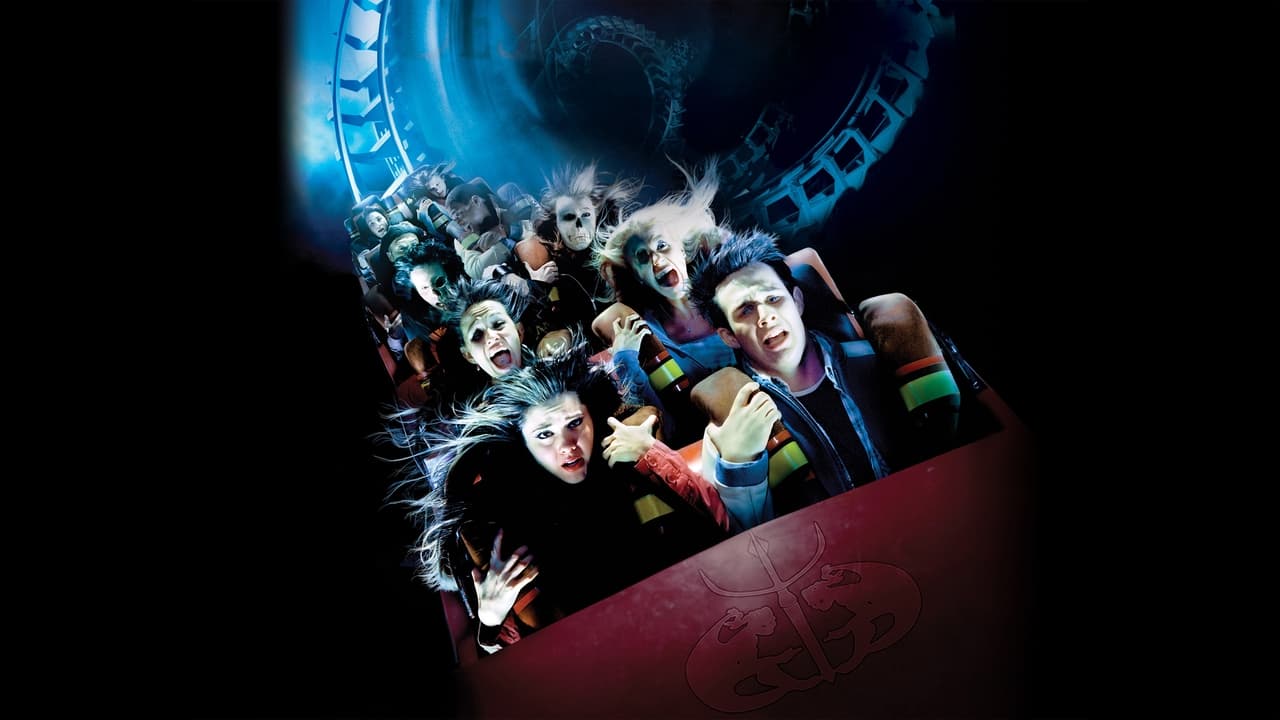
The genius of James Wong and Glen Morgan—the duo who essentially birthed the franchise’s DNA—is that they realized Death doesn't need a hockey mask or a dreamscape. Death just needs a loose bolt and a physics textbook. Final Destination 3 kicks off with the series' best set-piece: a roller coaster derailment. It’s a masterclass in building tension through mundane mechanical failures. We see the hydraulic leaks, the forgotten digital camera, and the rattling tracks. By the time the cars are flying off the rails, you’ve already decided you’re never visiting a Six Flags again.
The film serves as a fascinating snapshot of the mid-2000s "splatter" era. We were moving away from the post-modern irony of Scream and into the "torture porn" territory of Saw and Hostel. Final Destination 3 bridges that gap. It’s not quite as grim as Saw, but it’s far goreier than its predecessors. The CGI, while a bit "PlayStation 2" in some of the wide shots of the coaster collapse, is largely supplemented by some truly gnarly practical effects. The tanning bed sequence, in particular, remains the gold standard for franchise deaths. It’s the reason an entire generation still checks the hinges on every appliance they own. It plays on a very specific, mid-aughts vanity, turning a symbol of "the good life" into a claustrophobic oven.
A Scream Queen in the Making
At the center of this carnage is Wendy, played by a young Mary Elizabeth Winstead. While the rest of the cast—including Ryan Merriman as the well-meaning jock Kevin and Kris Lemche as the cynical goth Ian—do a fine job of being "Death’s hors d’oeuvres," Winstead is doing actual acting. She brings a grounded, frantic energy to the role of the visionary photographer who sees the deaths coming through her developed prints.
It’s easy to dismiss horror performances, but Winstead has to sell the idea that a picture of a tanning bed is a prophecy of doom without looking ridiculous. She’s the emotional anchor that keeps the movie from drifting into total parody. Opposite her, Alexz Johnson and Jesse Moss provide the necessary high-school archetype fodder, but the film’s real "star" is the Rube Goldberg-esque logic of the kills. Whether it’s a runaway engine block in a drive-thru or a nail gun in a hardware store, the movie is essentially Mouse Trap for sociopaths, and it’s remarkably efficient at its job.
The Peak of the DVD Era
Looking back, Final Destination 3 was a pioneer of the "DVD Culture" that defined the era. This was the height of the home video boom, where special features weren't just an afterthought—they were a selling point. The 2nd-disc "Choose Their Fate" feature was a literal game-changer, allowing viewers to use their remote to change the characters' decisions, which led to entirely different death scenes or even an ending where the coaster crash never happens. It was an early, analog version of what Black Mirror: Bandersnatch would do a decade later.
Financially, the film was a juggernaut for New Line Cinema. Produced on a relatively modest $25 million budget, it raked in over $118 million worldwide. It proved that the "Death is the killer" concept had legs (and arms, and torsos) that could sustain a long-term franchise. It also showcased a shift in Hollywood marketing; this was one of the first major horror films to utilize a massive viral web campaign, leaning into the burgeoning internet culture of the time. The score by Shirley Walker—who was a legend in the industry—doesn't get enough credit either. She avoids the typical jump-scare stingers and instead opts for a relentless, driving tension that makes the quiet moments feel even more dangerous.
Ultimately, Final Destination 3 is the most "Final Destination" of the sequels. It’s lean, mean, and perfectly understands that its audience is there to see the mechanics of mortality. It doesn't over-explain the "rules" of Death, and it doesn't try to be a deep psychological thriller. It’s a carnival ride in film form—loud, slightly greasy, and likely to leave you with a bit of whiplash. If you can stomach the mid-2000s fashion and the unapologetic gore, it’s a top-tier popcorn flick that still delivers the goods.

Keep Exploring...
-
Final Destination
2000
-
The Final Destination
2009
-
Final Destination 5
2011
-

Final Destination 2
2003
-

Final Destination Bloodlines
2025
-
The Thing
2011
-
The Ring
2002
-
Gothika
2003
-
The Grudge
2004
-
Hide and Seek
2005
-

The Omen
2006
-
1408
2007
-
Paranormal Activity 3
2011
-
Paranormal Activity
2007
-
Paranormal Activity 2
2010
-
The One
2001
-
I Know What You Did Last Summer
1997
-

Scream 2
1997
-
Scream 3
2000
-
The Blair Witch Project
1999