Gridiron Gang
"Salvation is earned sixty yards at a time."
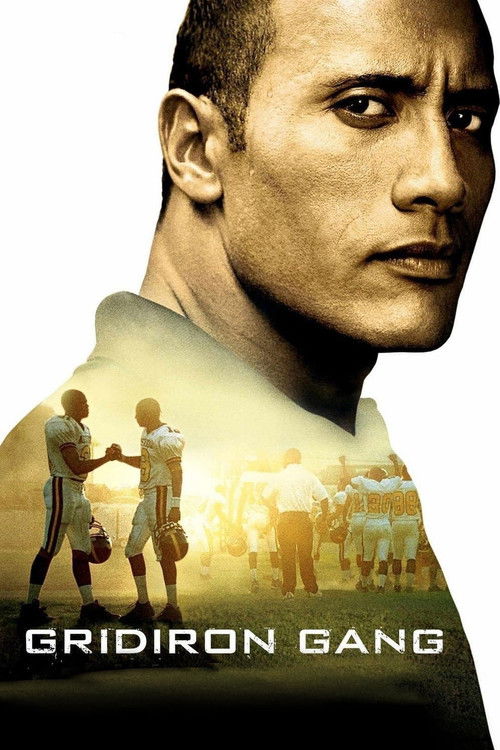
There is a specific, haunted look on Dwayne Johnson’s face in the opening movement of Gridiron Gang that has largely been scrubbed from his modern, hyper-curated persona. Before he became the world’s highest-paid "franchise insurance" policy—a walking, smirking mountain of charisma—there was a brief window in the mid-2000s where he was trying to figure out if he could actually act. I’m talking about the raw, jagged frustration of a man who is tired of burying children.
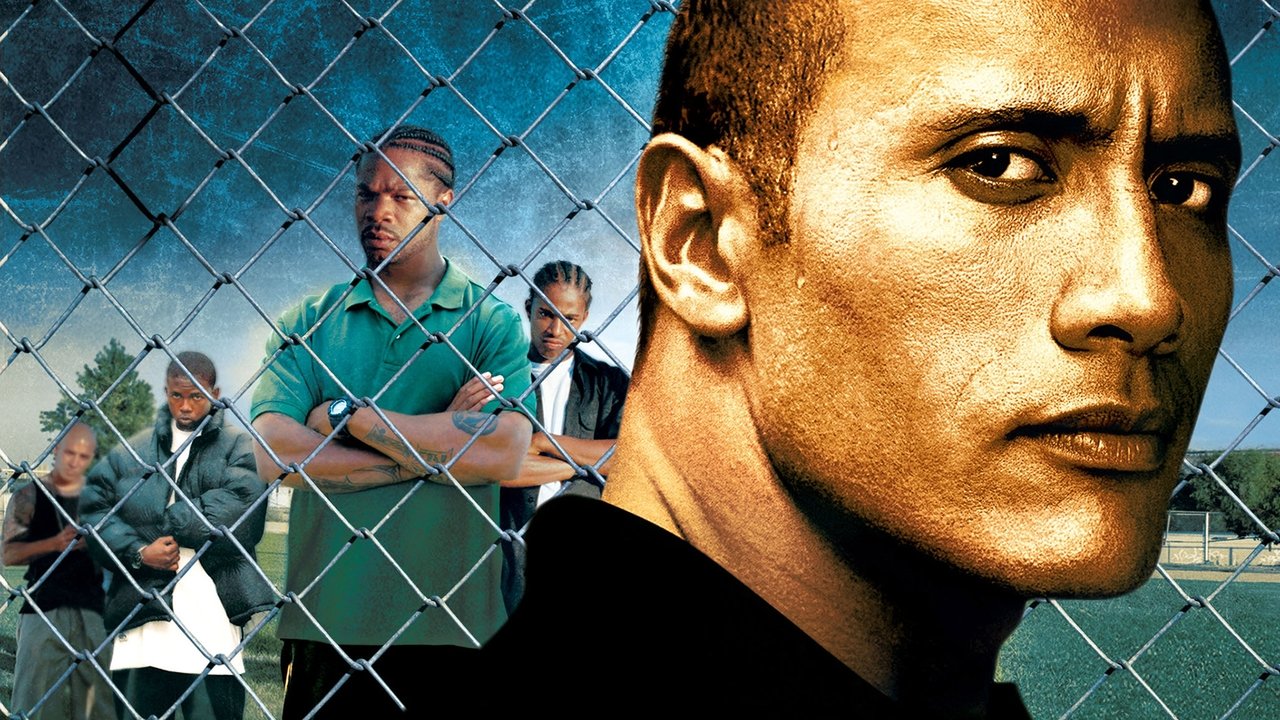
Released in 2006, a year when the "gritty reboot" was becoming the industry’s favorite toy, Gridiron Gang is a strange, intense artifact. It’s a sports movie, sure, but it’s one where the stakes aren't a plastic trophy; they are a literal matter of whether these kids get shot at a bus stop three weeks after their release. I watched this again recently while eating a bag of slightly stale pretzels that I’d forgotten in the back of the pantry, and the saltiness oddly complemented the film’s dehydrated, dusty aesthetic.
The Rock Before the Polish
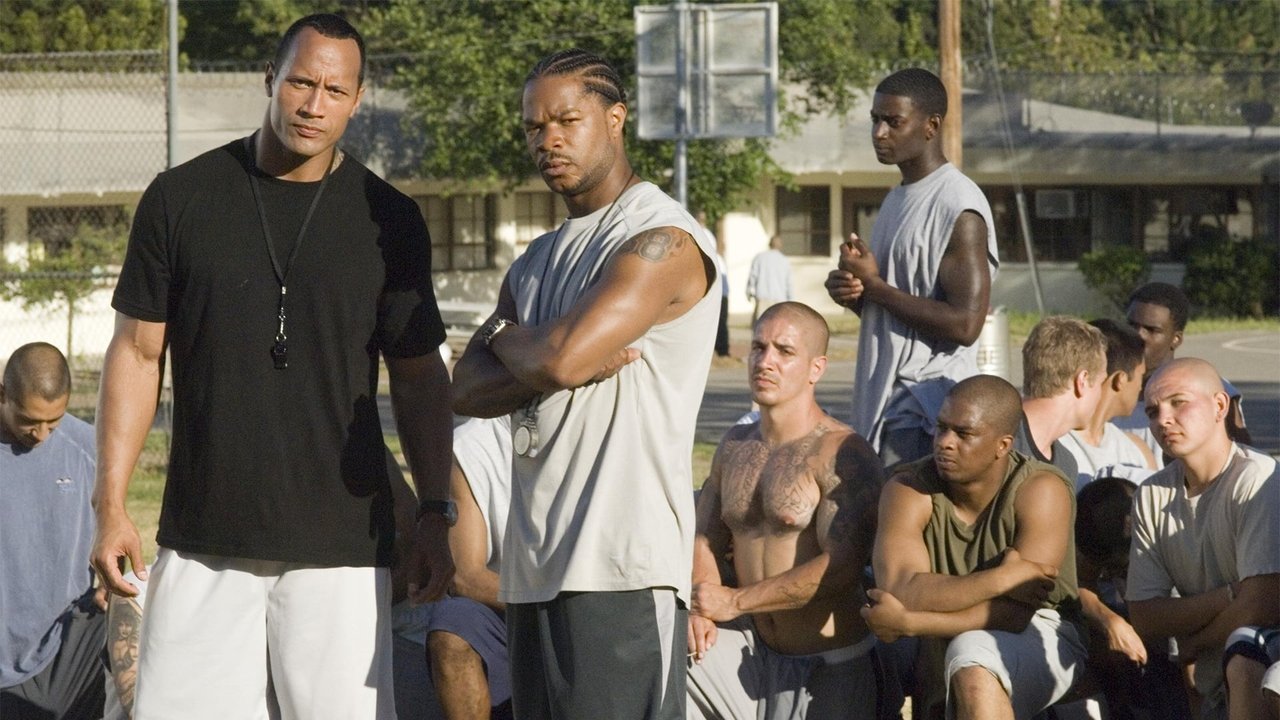
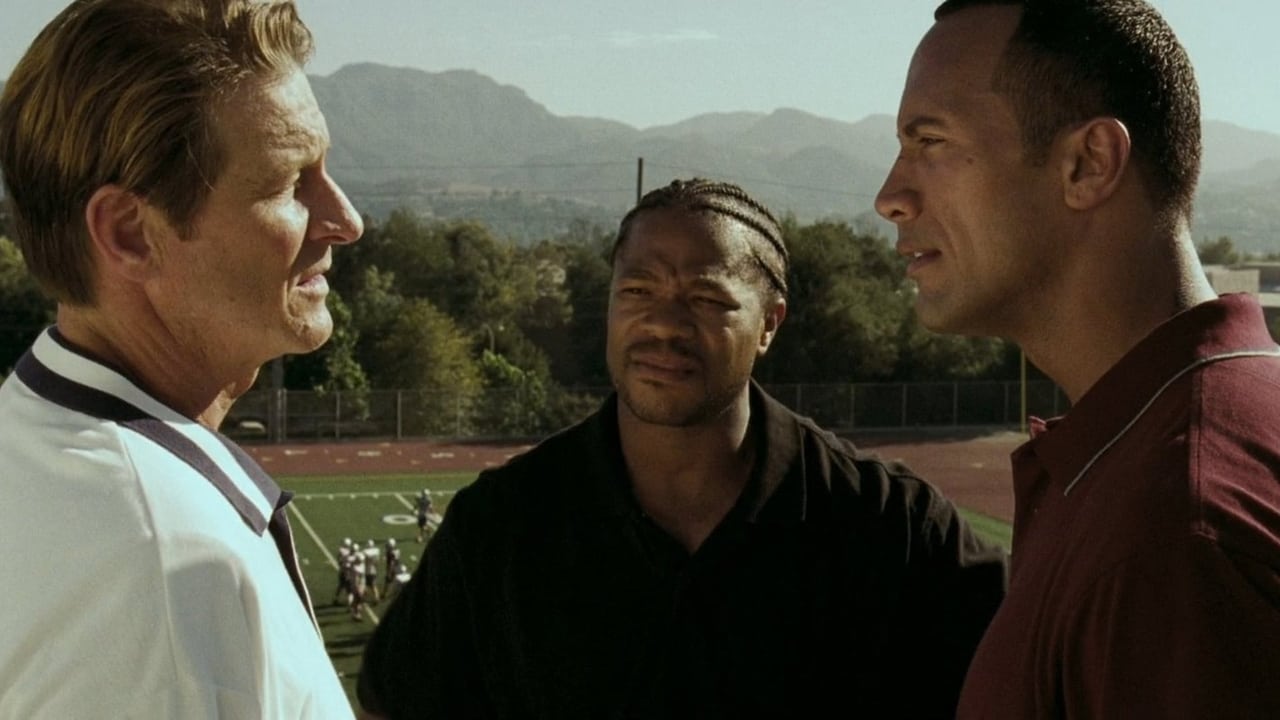
Director Phil Joanou, who gave us the criminally underrated neo-noir State of Grace (1990), treats the juvenile detention setting of Camp Kilpatrick with a clinical, almost oppressive eye. This isn't the sun-drenched, nostalgic Americana of Remember the Titans. The cinematography by Jeff Cutter favors harsh contrasts and muted tones—everything looks hot, cramped, and desperate.
At the center of it is Sean Porter (Dwayne Johnson), a probation officer who decides that the only way to break the cycle of recidivism and gang warfare is to give these teenagers something to belong to: a football team. What’s fascinating looking back is how much the film asks of Johnson. He isn't allowed to rely on his "People’s Champ" eyebrow or his comedic timing. He has to play a man whose ego is constantly clashing with his empathy. Dwayne Johnson’s best acting happens when he isn’t allowed to smile, and in this film, he looks like he hasn’t slept in a decade.
The supporting cast is where the "intense" modifier really earns its keep. Xzibit (as Malcolm Moore) provides a surprisingly grounded, understated performance as Porter’s right hand, a far cry from the "Pimp My Ride" persona he was juggling at the time. But the film belongs to the kids, specifically Jade Yorker as Willie Weathers. The scene where Willie is forced to confront the reality of his domestic situation is genuinely harrowing, proving that Gridiron Gang wasn't interested in being a "Disney-fied" version of the juvenile justice system.
A Relic of the DVD Era
In the mid-2000s, movies like this lived or died by their DVD "Special Features." I remember the disc for this one prominently featured the 1993 documentary of the same name that inspired the film. If you haven't seen it, the documentary is even bleaker, and it’s clear Phil Joanou and screenwriter Jeff Maguire tried to port that sense of impending doom into the fictionalized version.
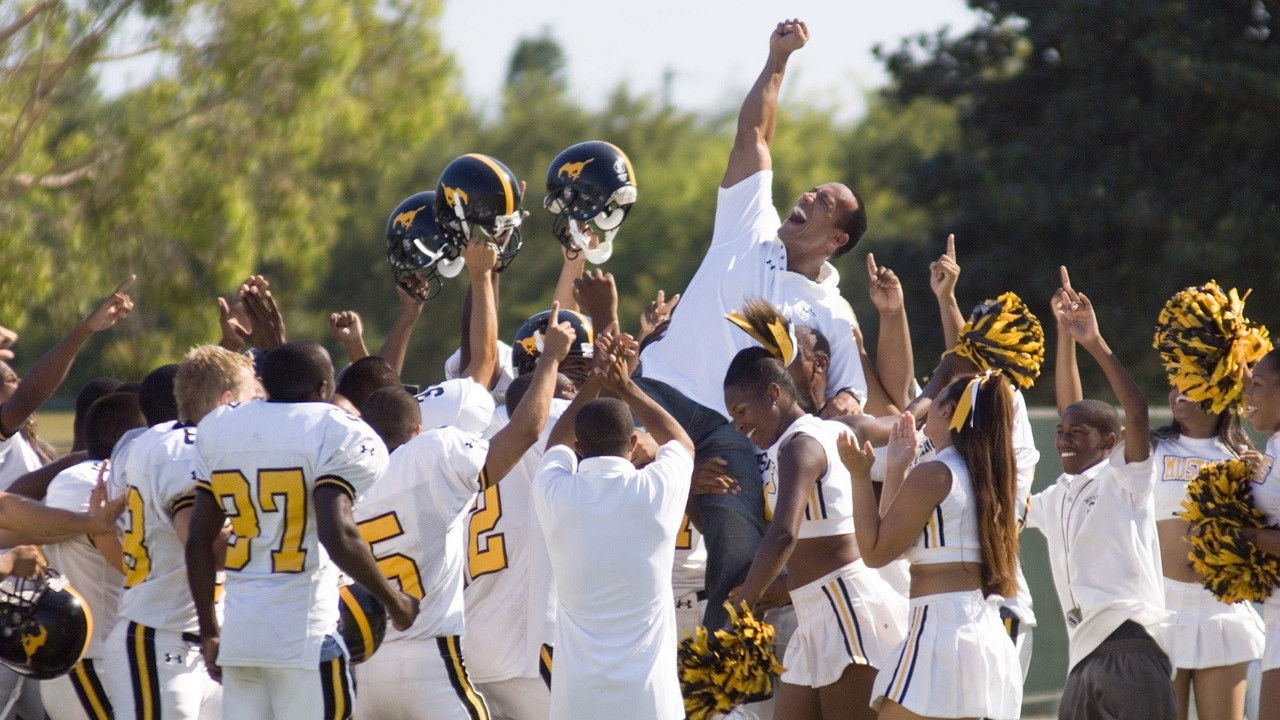
There’s a persistent anxiety that runs through the film—a post-9/11 sense that the systems meant to protect us are fundamentally broken. The "Mustangs" football team isn't just a group of underdogs; they are a group of casualties-in-waiting. The film is essentially a horror movie where the monster is the zip code you were born in. While the script occasionally veers into the predictable "big game" tropes, it earns its sentimentality through the sheer brutality of the characters' lives outside the white lines of the field.
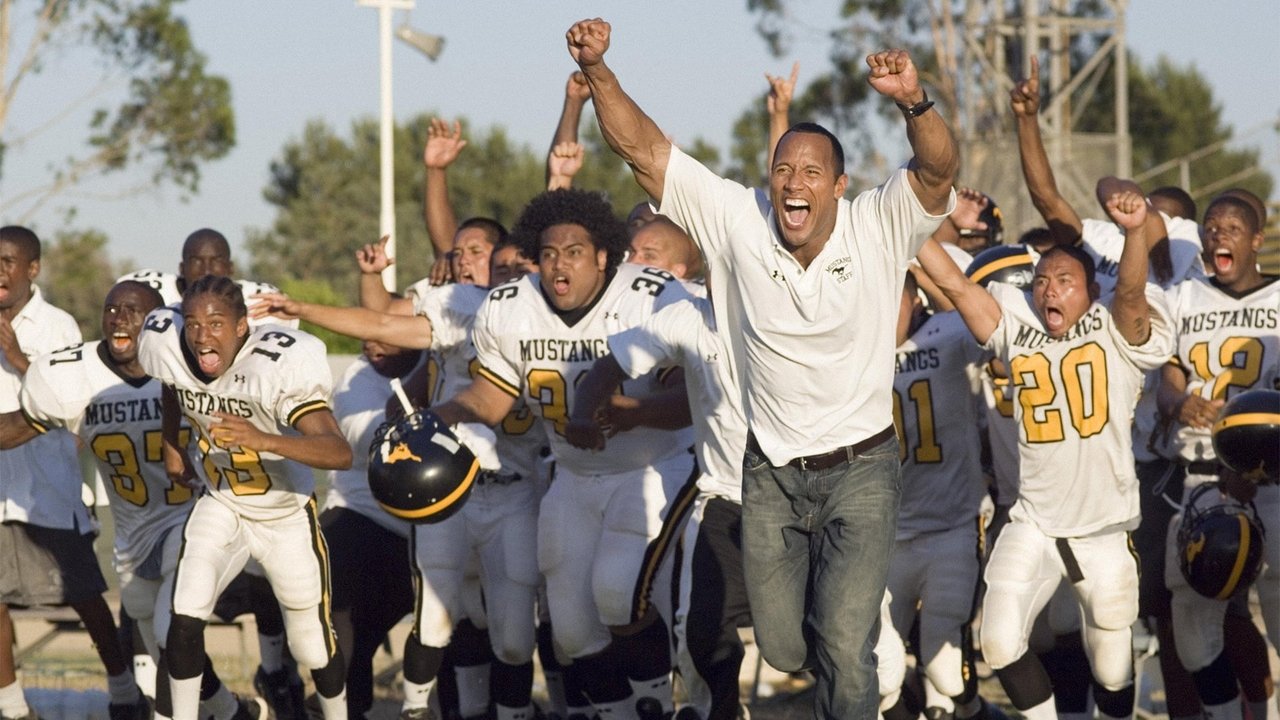
Interestingly, the production went to great lengths for authenticity. The actors went through a grueling three-week "mini-camp" that was reportedly so intense that several extras quit on the first day. That physical exhaustion translates to the screen; when these kids hit each other, you can almost feel the air leaving their lungs. It’s a level of practical, sweat-soaked filmmaking that often gets lost in today’s CG-heavy sports sequences.
Why It Vanished into the Shuffle
So why don't we talk about Gridiron Gang anymore? It’s caught in a weird cinematic limbo. It’s too dark for the "feel-good" crowd and too much of a traditional sports narrative for the "prestige drama" crowd. It arrived just as the industry was shifting toward the massive, interconnected franchises we see today. Columbia Pictures was looking for a hit, but Gridiron Gang was a $30 million drama about incarcerated youth—a tough sell in any era, but especially in a year dominated by Pirates of the Caribbean and Cars.
Looking back, it serves as a testament to a time when mid-budget dramas could still command a theatrical release. It’s a film that respects the gravity of its subject matter, even when the score by Trevor Rabin tries to push it toward the heroic. It’s not a perfect movie—the 125-minute runtime definitely feels its weight in the middle act—but it has a soul. It’s a reminder that before Dwayne Johnson was a global brand, he was a guy who could hold a close-up and make you believe he was truly grieving.
Gridiron Gang is the kind of movie you stop on when you find it while scrolling through a streaming service late at night. It’s more intense than you remember, grittier than it needs to be, and anchored by a lead performance that deserves more retrospective credit. It doesn't offer easy answers to the systemic issues it raises, but it does offer a powerful, if familiar, glimpse at the redemptive power of a shared goal. If you can handle the bleakness, the payoff is genuinely earned.
Keep Exploring...
-
The Man Who Wasn't There
2001
-
Undisputed II: Last Man Standing
2006
-
United 93
2006
-
Before the Devil Knows You're Dead
2007
-
Matchstick Men
2003
-
Bad Education
2004
-
Capote
2005
-
The Protector
2005
-

Tell No One
2006
-
Mesrine: Killer Instinct
2008
-
Mesrine: Public Enemy #1
2008
-
Batman: Under the Red Hood
2010
-
Batman: Year One
2011
-
Glengarry Glen Ross
1992
-
Strange Days
1995
-

The Rainmaker
1997
-
A Simple Plan
1998
-

Rounders
1998
-
Arlington Road
1999
-

I'm Not Scared
2003