Just My Luck
"Be careful who you kiss at the masquerade."
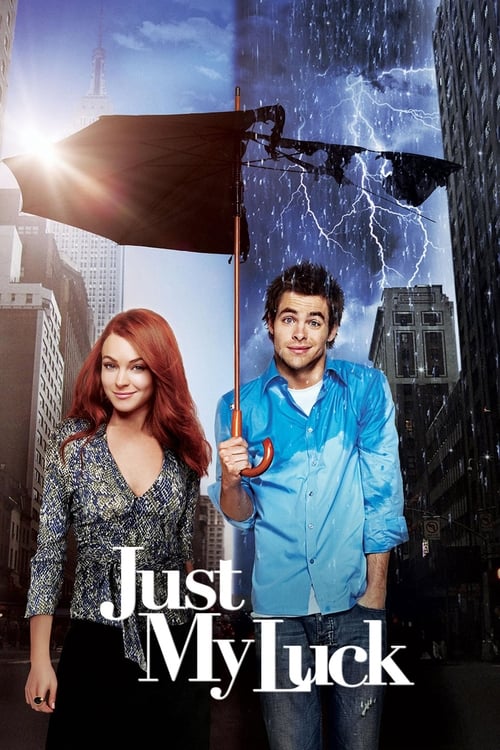
The mid-2000s were a strange, glossy fever dream for Manhattan-set cinema. It was an era of saturated colors, Razr flip phones, and a very specific type of "it-girl" energy that Lindsay Lohan sat atop like a precarious crown. Watching Just My Luck today feels less like a nostalgia trip and more like peering into a time capsule from the exact moment the traditional romantic comedy began to pivot into something weirder, slightly more desperate, and surprisingly more cynical.

I watched this on a Tuesday afternoon while eating a bowl of slightly stale cereal, and the crunching sound in my ears actually paired quite well with the crisp, digital sheen of 2006 cinematography. It’s a film that sits at the crossroads of two massive careers—the tail end of Lohan’s reign as a bankable lead and the very beginning of Chris Pine's journey toward the A-list. In the middle of it all is a high-concept plot about luck-swapping that, if you squint, actually functions as a pretty decent character drama about the fragility of social status.
The Weight of a Fall from Grace
While marketed as a breezy fantasy-comedy, there’s an undercurrent of genuine anxiety in how the script handles Ashley Albright’s (Lohan) sudden descent into "unluckiness." Lindsay Lohan has always had an underrated dramatic range—see Margot at the Wedding or even the better parts of Georgia Rule—and here, she’s tasked with playing someone who has never been told "no" by the universe. When she loses her luck after a chance kiss at a masquerade ball, the film shifts into a survival story.
The drama comes from the realization that Ashley’s "luck" was actually her identity. Without the front-row seats and the effortless job promotions, she doesn’t know who she is. I found her performance surprisingly grounded in these moments of panic. She doesn't just play the physical comedy of tripping into puddles; she plays the internal horror of a woman realizing her entire life was built on a foundation of cosmic accidents rather than merit. It’s a bit of a "Eat the Rich" manifesto hidden inside a movie with a McFly soundtrack.
The Discovery of a Future Captain
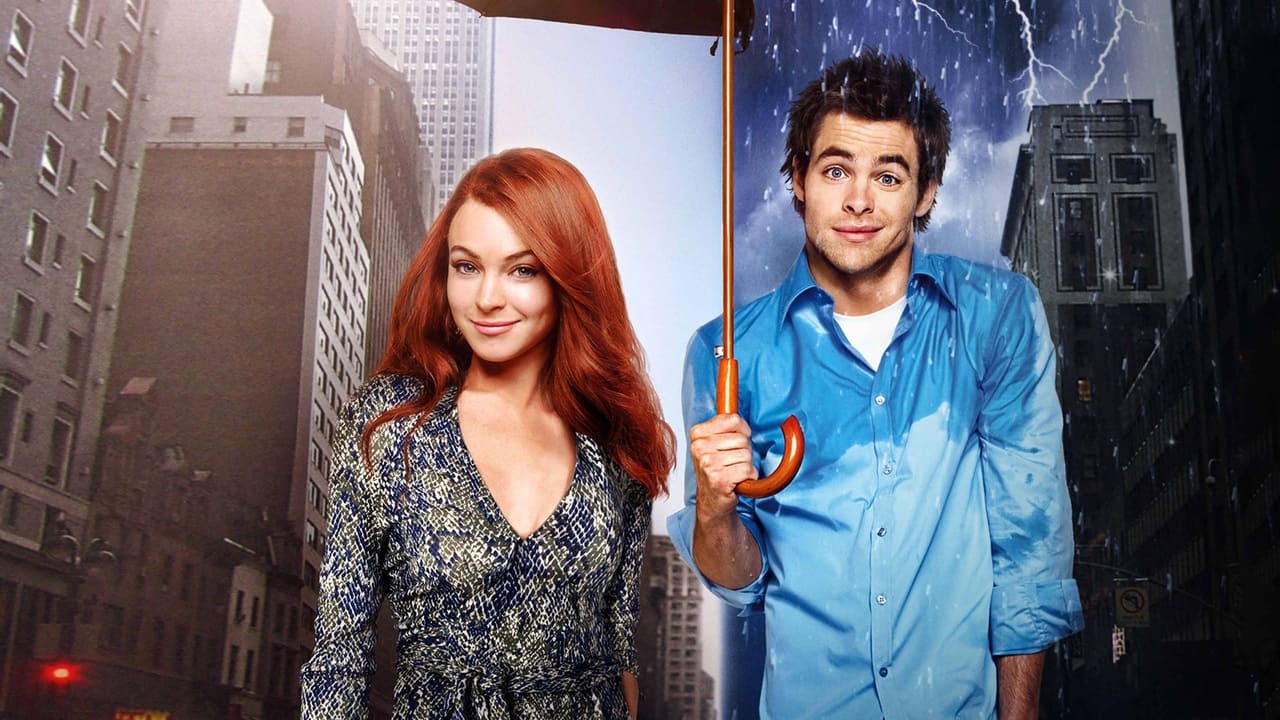
Then there’s Chris Pine. Looking back, it’s wild to see James T. Kirk playing Jake Hardin, a guy who is effectively a human magnet for bird droppings and electrical shocks. Pine’s performance is the film’s secret weapon. He approaches the role of the perpetual loser with a quiet, soulful dignity that feels far more substantial than the script probably deserved.
The chemistry between Lindsay Lohan and Chris Pine is the only thing keeping the movie’s logic from collapsing into a black hole. They have a classic screwball energy, but Pine adds a layer of tenderness. When he finally gets his "luck" and starts succeeding, he doesn't become a jerk; he becomes a guy who is terrified the other shoe is about to drop. The luck-swapping logic makes less sense than a tax return filed by a golden retriever, but Pine sells the emotional stakes of it. You actually want him to succeed, not because he’s lucky, but because he’s clearly a decent human who has been through the wringer.
A Relic of the Digital Transition
Technically, Just My Luck is a fascinating example of the 2000s transition from film to digital aesthetics. Directed by Donald Petrie (who gave us the much more cohesive How to Lose a Guy in 10 Days), the film uses a lot of early-CGI luck "accidents" that haven't aged particularly well. There’s a scene involving a laundry room flood that looks like it was rendered on a Nintendo GameCube, but there’s a charm to that ambition.

What captures the era best isn't the effects, but the "DVD culture" feel of the production. Everything is lit for a standard-definition television screen—bright, high-key, and relentlessly cheerful. It was a time when a studio would drop $28 million on a fantasy about a magic kiss without blinking. There’s a certain "forgotten curiosity" quality here because it’s a film that couldn't exist today; it would be a low-budget Netflix original or a viral TikTok trend. Instead, we have this polished, big-budget theatrical release that feels like the last gasp of a specific kind of Hollywood star-vehicle.
Supporting players like Missi Pyle and Faizon Love do their best to inject some comedic grit into the margins, but the film ultimately lives and dies on the central swap. It’s a story about perspective—how the "haves" react when they become "have-nots." In a post-9/11 world that was becoming increasingly obsessed with celebrity culture and the illusion of perfection, Just My Luck offered a safe, slightly goofy way to watch a princess become a pauper.
Just My Luck isn't a masterpiece, and it’s arguably not even the best film in either lead's filmography. However, as a retrospective piece of Modern Cinema, it’s an engaging look at the 2006 cultural landscape. It captures Lindsay Lohan at a pivotal moment and introduces us to a Chris Pine who was clearly destined for much bigger things. If you can get past the illogical fantasy mechanics, there’s a sweet, earnest drama about two people finding each other when the universe is at its most chaotic.

Keep Exploring...
-

A Cinderella Story: Once Upon a Song
2011
-

What a Girl Wants
2003
-
First Daughter
2004
-
Aquamarine
2006
-
Ghost Town
2008
-
Herbie Fully Loaded
2005
-
The Princess Diaries 2: Royal Engagement
2004
-
Jack Frost
1998
-

The Odd Life of Timothy Green
2012
-
Freaky Friday
2003
-

Shallow Hal
2001
-

High School Musical 2
2007
-

High School Musical 3: Senior Year
2008
-

17 Again
2009
-

Hannah Montana: The Movie
2009
-
Just Like Heaven
2005
-

High School Musical
2006
-

It's a Boy Girl Thing
2006
-

Bedtime Stories
2008
-
The Family Man
2000