Lady in the Water
"Believe in the story before time runs out."
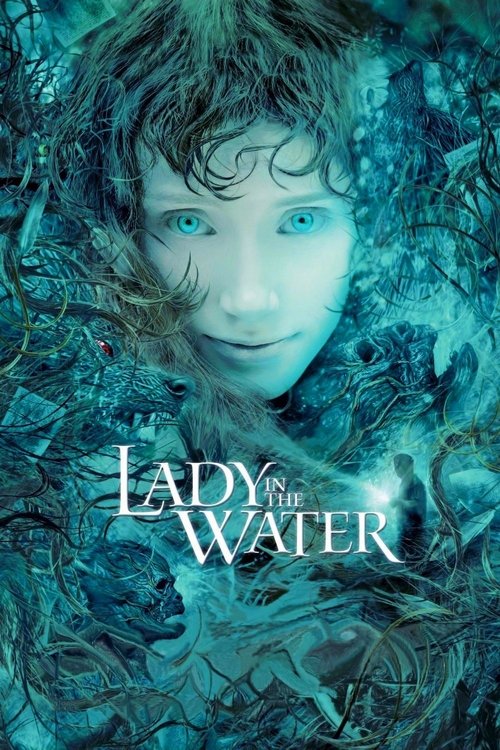
There is a specific kind of silence that only exists around a communal apartment complex swimming pool at 2 AM. It’s a liminal space of damp concrete and chlorine, a stage waiting for something weird to happen. In 2006, M. Night Shyamalan decided that "something weird" should be a blue-tinted nymph from a bedtime story, a grass-covered wolf-monkey, and a stuttering superintendent who carries the weight of the world in his tool belt.

I remember watching this for the first time on a scratched DVD I rented while recovering from a mild case of food poisoning—I was eating a very sad, very dry ham sandwich at the time—and there’s something about that hazy, vulnerable state of mind that actually helps you process Lady in the Water. It is a film that demands you turn off your cynical, "modern" brain and retreat into a state of childhood earnestness. Whether or not you can actually do that is the gamble the movie takes with your time.
The Stutter and the Super
At the heart of this fractured fairy tale is Paul Giamatti (fresh off Sideways), and I’ll be honest: he is far better than this movie deserves. As Cleveland Heep, the superintendent of "The Cove" apartments, Giamatti provides a masterclass in suppressed grief. He plays Cleveland with a localized, physical sadness—a persistent stutter and a slumped posture that suggests he’s trying to hide from his own life.
When he discovers Story (Bryce Dallas Howard) in the pool, he doesn't react like a character in a blockbuster; he reacts like a man who has finally found something worth fixing. Howard, for her part, is tasked with being ethereal and "nymph-like," which mostly involves looking wide-eyed and shivering in a raincoat. Their chemistry isn't romantic, but rather a strange, protective bond between two people who feel out of place in the physical world. Giamatti’s performance is the only thing that keeps the film’s feet on the ground when the mythology starts floating away into the stratosphere.
A Mythology Only a Father Could Love
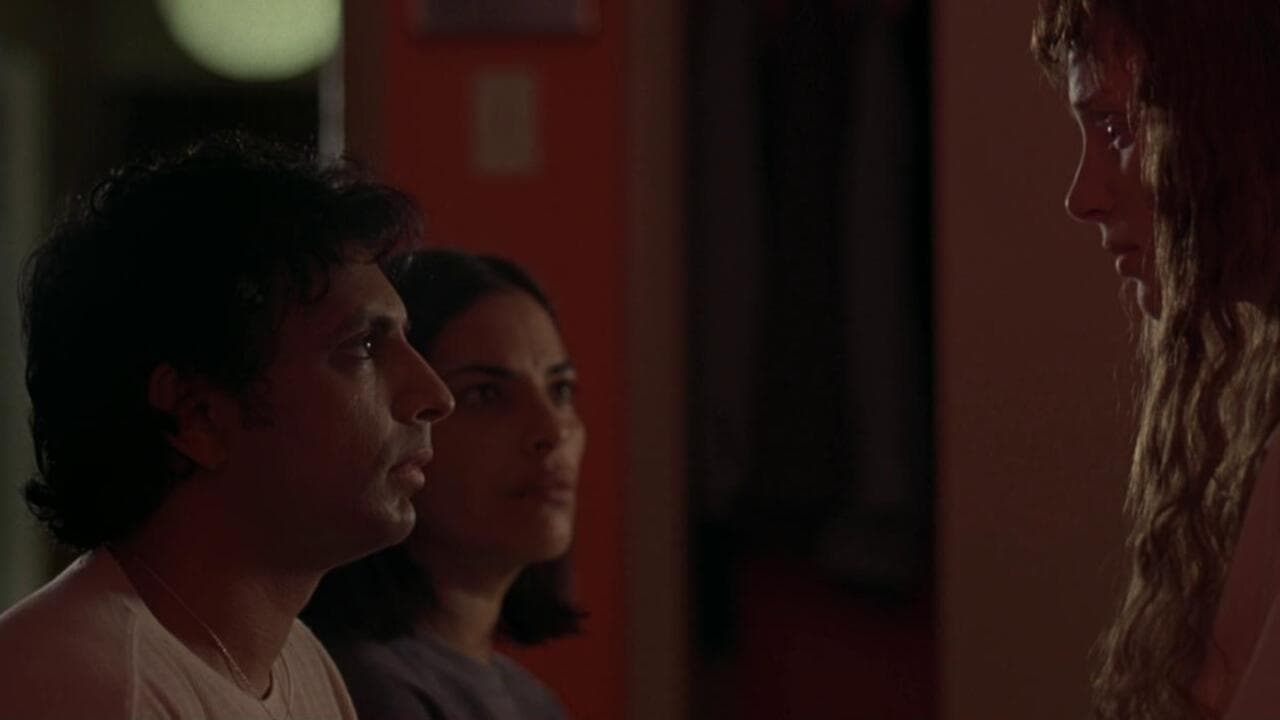
The 2000s were a fascinating time for M. Night Shyamalan. He was transitioning from the "Twist King" who gave us The Sixth Sense to a filmmaker who seemed deeply bored by traditional structures. Lady in the Water began as a bedtime story he told his own children, and you can feel that DNA in every frame. It is stubbornly idiosyncratic. We’re introduced to a vocabulary of "Narfs," "Scrunts," and "Tartutic"—words that sound like they were pulled from a Dr. Seuss fever dream.
The drama here isn't found in the threat of the monsters, which are mostly CGI-heavy grass-dogs that haven't aged particularly well. Instead, the tension comes from the ensemble cast—a group of tenants who have to find their "roles" in the story. Jeffrey Wright is wonderful as a man who decodes messages from cereal boxes, and Bob Balaban plays a film critic whose sole purpose is to be a meta-commentary on the movie itself. It’s a movie that asks you to believe in 'Scrunt' and 'Tartutic' with a straight face, which is a big ask for anyone who hasn't just huffed a gallon of fairy dust.
The Audacity of the Visionary
Looking back, the behind-the-scenes drama of this film is almost as famous as the movie itself. This was the project that caused a massive rift between Shyamalan and Disney. After a legendary executive reportedly gave him notes he didn't like, Shyamalan took his ball and went to Warner Bros., a move chronicled in the book The Man Who Heard Voices. You can feel that defiance on screen.

There’s a glaring bit of self-insertion here: M. Night Shyamalan casts himself as a writer whose future book is destined to change the world and inspire a great leader, provided he survives the night. Shyamalan casting himself as a world-saving prophet is the cinematic equivalent of high-fiving yourself in a mirror, and it’s likely what turned many critics against the film in 2006. It felt less like a movie and more like a manifesto on why we should appreciate misunderstood geniuses.
Yet, despite the ego and the clunky terminology, the film is gorgeous to look at. Christopher Doyle—the cinematographer who gave us the lush, saturated dreams of In the Mood for Love—shoots the apartment complex with an amber, nocturnal warmth. He makes a Philadelphia suburb look like a haunted grotto. The score by James Newton Howard is equally haunting, providing a sense of awe that the script sometimes fails to earn.
Lady in the Water is a beautiful, bloated, confusing, and deeply sincere mess. It’s a relic of a time when a director could get $70 million to film a personal diary entry about his kids’ bedtime stories. I can’t call it a "good" movie in the traditional sense—the pacing is weird and the internal logic is held together by scotch tape—but it is a fascinating one. If you're tired of the assembly-line precision of modern franchise filmmaking, this is a wild, idiosyncratic detour into one man's very specific imagination. Just bring your own ham sandwich.


Keep Exploring...
-

The Village
2004
-
Winter's Tale
2014
-

Signs
2002
-
Hereafter
2010
-
Untraceable
2008
-
Dragonfly
2002
-

Basic
2003
-

Sahara
2005
-

Edge of Darkness
2010
-

The Jacket
2005
-

Rubber
2010
-

Red Riding Hood
2011
-
Unbreakable
2000
-

Joy Ride
2001
-
Original Sin
2001
-

K-19: The Widowmaker
2002
-

The Mothman Prophecies
2002
-
The Forgotten
2004
-

Just My Luck
2006
-
Premonition
2007