Over the Hedge
"Suburban sprawl has never looked so appetizing."
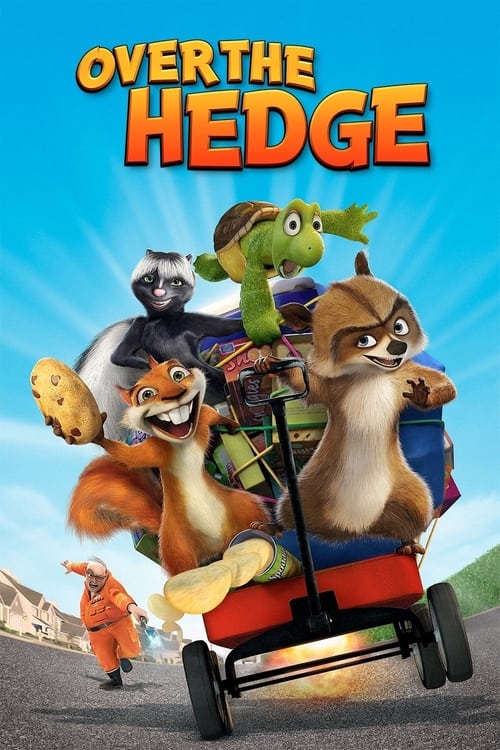
The mid-2000s were a weirdly specific time for American suburbia, a period defined by the aggressive march of cookie-cutter cul-de-sacs and the sudden realization that we were all living in a "sprawl." DreamWorks Animation, then in its imperial phase of challenging Pixar with snark and celebrity-heavy casts, looked at this landscape of manicured lawns and SUVs and decided the most logical perspective was that of a hungry raccoon. While Shrek was busy deconstructing fairy tales, Over the Hedge set its sights on the American Dream, viewed through a hole in a giant green wall.

The Raccoon Who Sold the World
At the heart of this heist-comedy-masquerading-as-a-kids-movie is RJ, voiced by Bruce Willis with that signature "smirking through the microphone" energy he perfected in the late 90s. RJ is a con artist with a debt to pay to a very large, very hungry bear named Vincent (Nick Nolte, sounding like he’s gargling gravel). To settle the score, RJ has to trick a group of "foraging" forest animals into raiding the new housing development that popped up while they were hibernating.
What I love about this setup is how it mirrors the era’s obsession with the "fast-talker." Bruce Willis was basically playing a furry version of his Moonlighting or Hudson Hawk persona, and it works surprisingly well. He’s the catalyst for a group led by Verne (Garry Shandling), a neurotic box turtle who is essentially the moral compass—and the physical punching bag—of the group. Garry Shandling brings a dry, observational wit that feels completely distinct from the usual manic energy of animated leads. While I was watching this, I found myself getting genuinely annoyed by a loose thread on my sweater that I eventually just pulled until a hole appeared, which felt oddly thematic given how these animals slowly dismantle the suburban facade.
A Satire of the Sprawl
Looking back from the 2020s, Over the Hedge feels like a time capsule of 2006 anxieties. The "Hedge" itself is a brilliant literal and metaphorical barrier. On one side, you have the "natural" world—a tiny, dwindling patch of forest. On the other, the "Sprawl," a place where humans, according to RJ, "eat to live, and live to eat." The film’s critique of consumerism isn't exactly subtle, but it is hilarious. The way RJ explains the "food chain" to the other animals—referencing the "Log" (a giant SUV) and the "Depletor" (the humans' bottomless appetite)—is top-tier satirical writing from Karey Kirkpatrick and Len Blum.
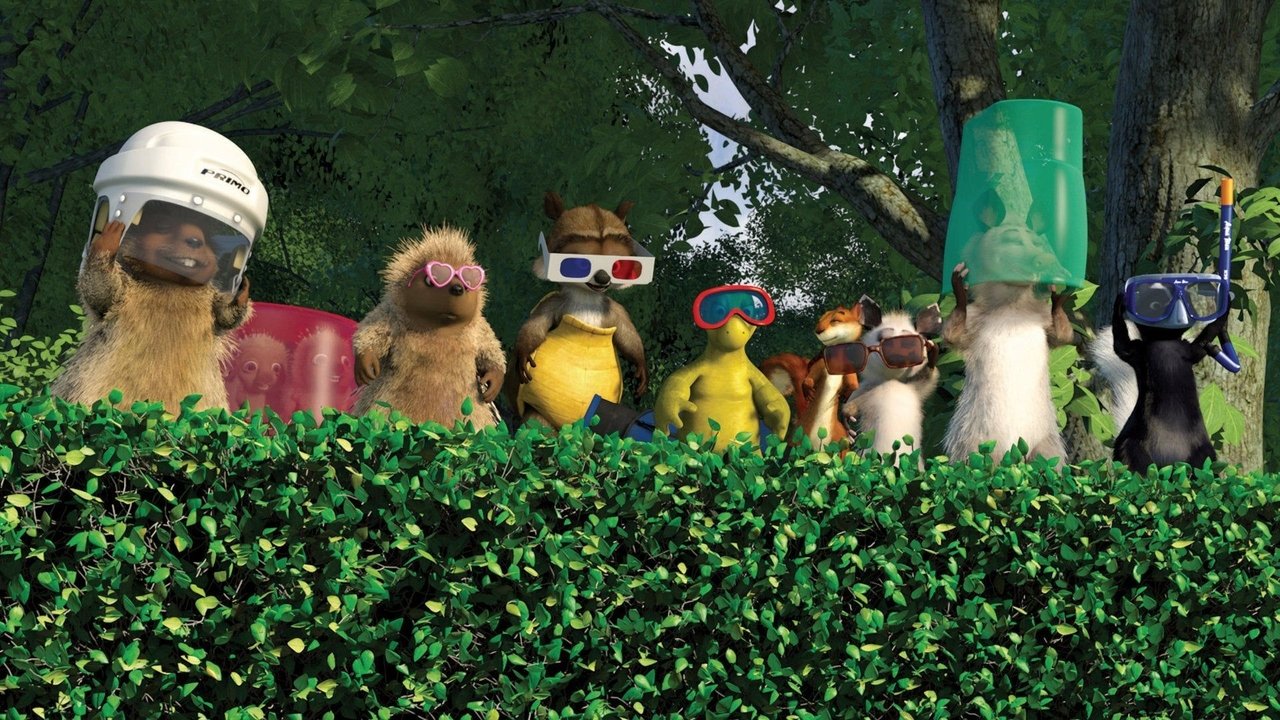
The humans in this movie are depicted as grotesque, over-caffeinated monsters, led by Gladys Sharp (Allison Janney), the president of the homeowners association. She is the ultimate 2000s villain: a woman obsessed with property values and "vermin" control. She hires the "Verminator," voiced with creepy, tech-bro precision by Thomas Haden Church. This was the era where "pest control" started looking like tactical warfare, and the film leans into that absurdity. It’s a scathing indictment of the McMansion lifestyle that we all just sort of accepted at the time.
The Hammy Factor and 2000s Tech
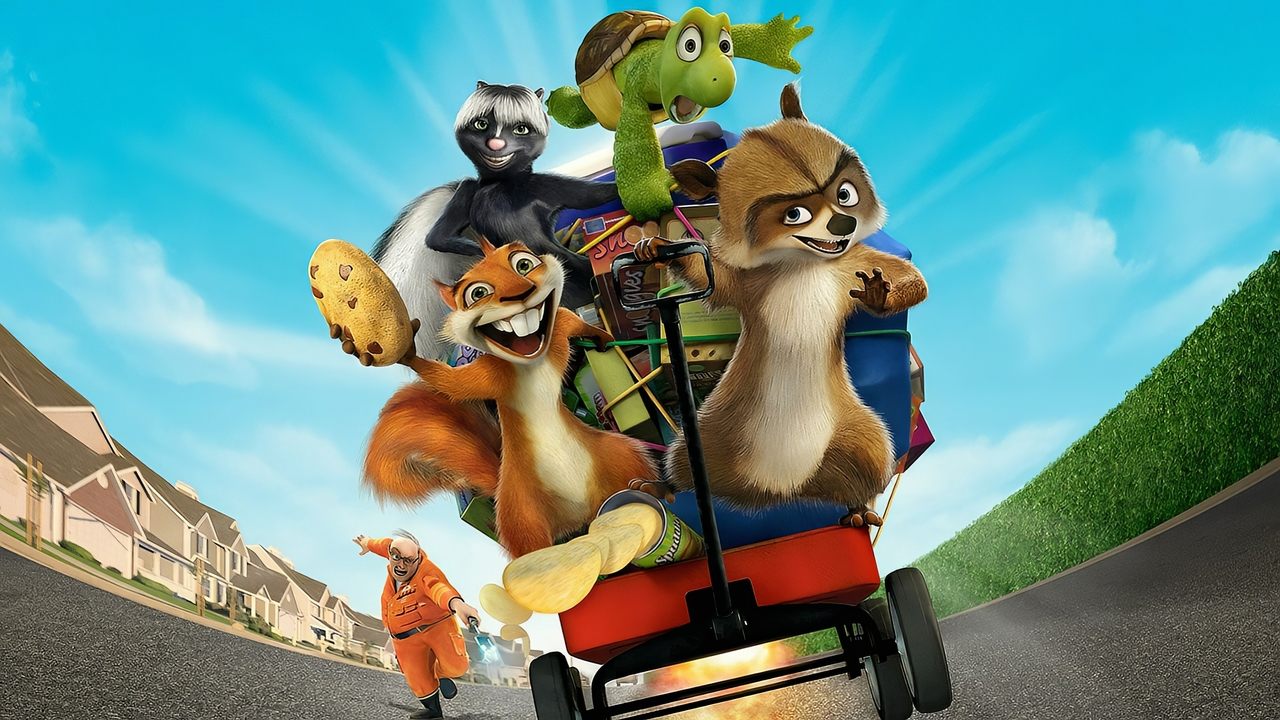
You cannot talk about this movie without mentioning Hammy, the hyperactive squirrel voiced by Steve Carell. Released right as The Office was becoming a cultural juggernaut, Steve Carell gives a performance that is pure, unadulterated comedic timing. The "caffeine" scene, where the world slows down to a crawl because Hammy is moving so fast, remains a high-water mark for 2000s visual comedy. It’s a sequence that makes those 5 minutes before your bus arrives feel like a frantic, joyous blur.
Technologically, the film sits in that sweet spot of the CGI revolution. The fur rendering on RJ and the gang was groundbreaking at the time, though looking at it today, it lacks the hyper-realistic sub-surface scattering of modern Disney or Illumination hits. But honestly? The slightly plastic look of the humans actually enhances the satire. They should look a bit artificial; they’re living in an artificial world.
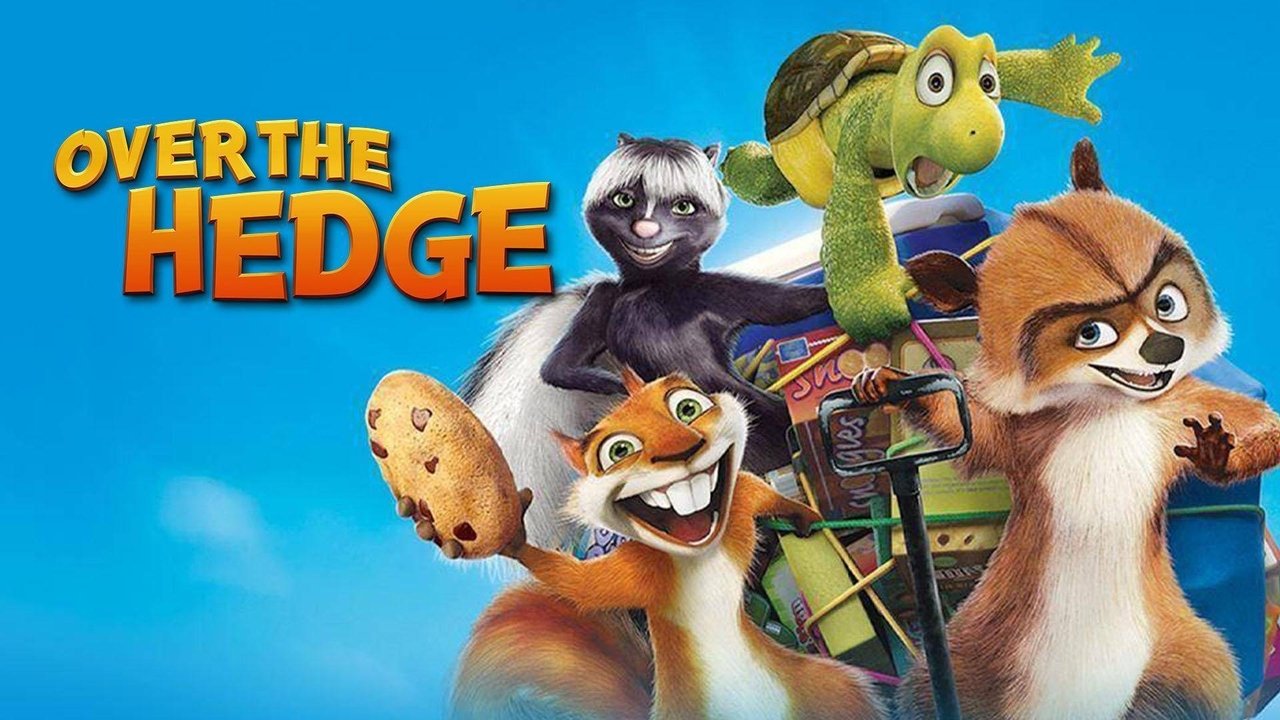
The production was a massive $80 million undertaking that paid off handsomely, raking in over $343 million worldwide. It also birthed a DVD that was a staple in many households, featuring a "Hammy’s Boomerang Adventure" short that probably saw more repeat viewings than the actual movie in some playrooms. This was the peak of "DVD Culture," where the special features actually mattered.
Over the Hedge isn't a "masterpiece" in the way Toy Story is, but it’s a fiercely intelligent, cynical-yet-sweet comedy that understands its era perfectly. It captures that post-9/11, mid-2000s feeling of being trapped in a bubble of consumerism while the natural world slowly disappears. It’s also just really funny. Between Wanda Sykes' sassy skunk, William Shatner's melodramatic possum, and a Ben Folds soundtrack that hits way harder than it has any right to, it’s a film that deserves a revisit. It’s a reminder that even when the world is being paved over, there’s still fun to be had in the dumpster behind the grocery store.

Keep Exploring...
-

Sinbad: Legend of the Seven Seas
2003
-
Antz
1998
-
Horton Hears a Who!
2008
-
Rio
2011
-
The Smurfs 2
2013
-
Chicken Run
2000
-

Ice Age
2002
-

Lilo & Stitch
2002
-
Shark Tale
2004
-
Shrek 2
2004
-

Madagascar
2005
-
Robots
2005
-
Cars
2006
-
Happy Feet
2006
-

Ice Age: The Meltdown
2006
-
Shrek the Third
2007
-

The Simpsons Movie
2007
-
Kung Fu Panda
2008
-
Madagascar: Escape 2 Africa
2008
-

Ice Age: Dawn of the Dinosaurs
2009