The Lake House
"Two years apart. One mailbox away."
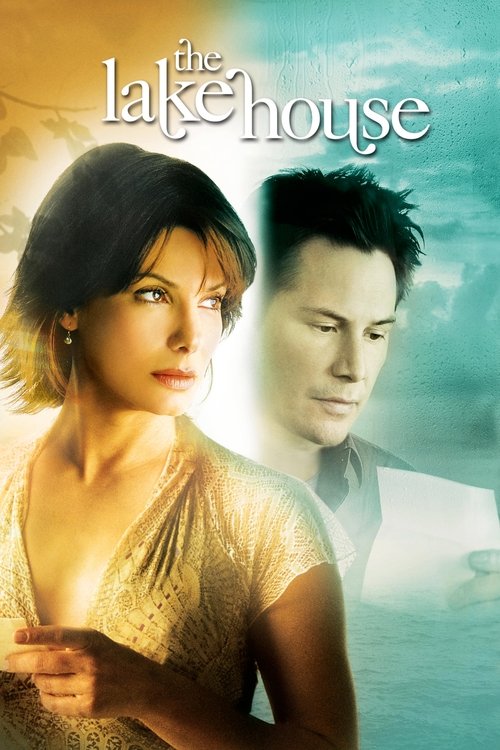
There is a specific kind of architectural porn that only exists in mid-budget 2000s dramas, where the house isn’t just a setting but a character with more dialogue than the supporting cast. In The Lake House, that character is a glass-walled box on stilts, hovering over Maple Lake like a transparent temple of loneliness. I watched this again last Tuesday while trying to finish a bowl of cereal that had gone dangerously soggy, and I realized that the film itself has that same texture—soft, comforting, and requiring almost no effort to chew.
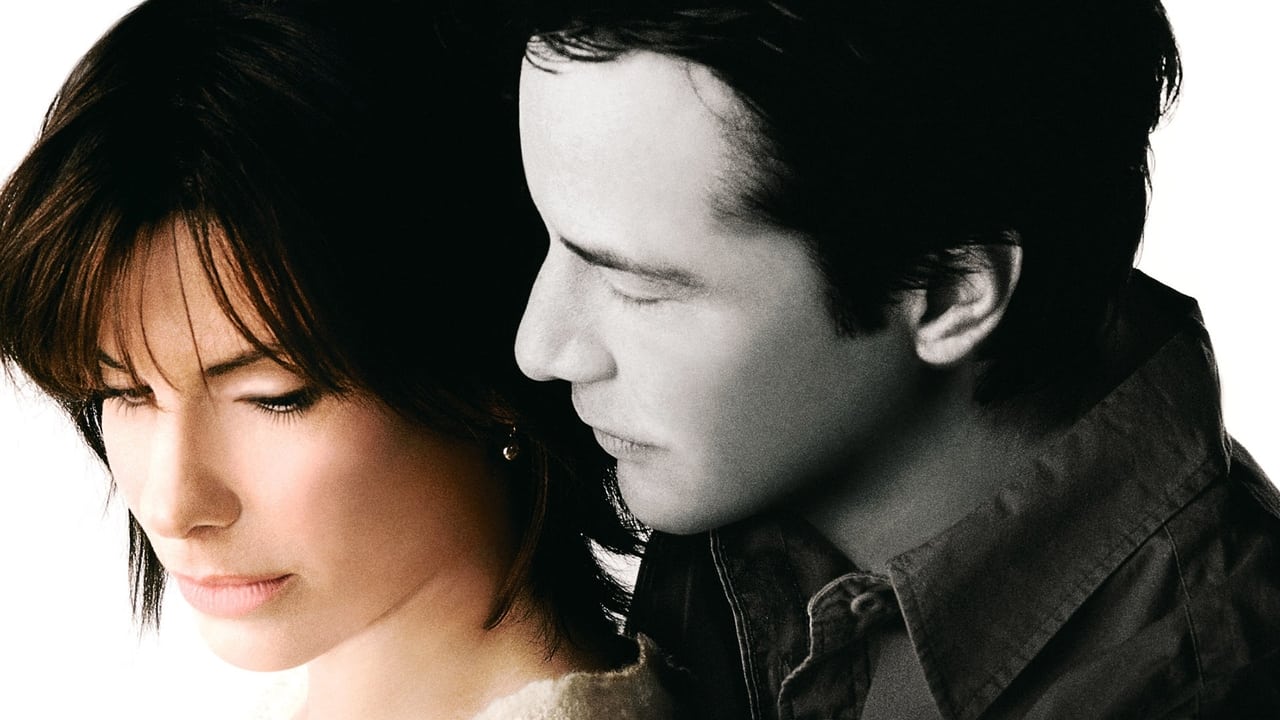
It is a movie that shouldn't work. On paper, it’s a logistical nightmare of temporal mechanics that would make Christopher Nolan’s head spin. Yet, here we are, nearly twenty years later, still talking about the time Keanu Reeves and Sandra Bullock fell in love via a magical mailbox that functions like a low-tech version of AOL Instant Messenger.
The Glass House Paradox
The plot is a remake of the South Korean film Il Mare, and it carries that lyrical, slightly heightened reality common in early 2000s international crossovers. Alex Wyler (Keanu Reeves) is an architect in 2004, living in a stunning lakeside home built by his distant, legendary father (Christopher Plummer). Kate Forster (Sandra Bullock) is a doctor living in the same house in 2006. They begin leaving notes for each other in the mailbox, only to realize they are living two years apart.
Director Alejandro Agresti handles this with a surprisingly light touch. Instead of leaning into the sci-fi of it all, he focuses on the atmosphere—the grey Chicago winters, the scratching of pens on paper, and the reflected light of the lake. The movie makes absolutely zero sense if you think about it for more than four consecutive seconds, but it’s not asking you to think. It’s asking you to feel the ache of a missed connection. It’s a "vibe" movie from an era before we called them that.
A Speed Reunion Without the Bus
The real draw, of course, was the reunion of Keanu Reeves and Sandra Bullock. This was their first pairing since 1994’s Speed, but instead of a runaway bus, their primary obstacle is the linear flow of time. It’s a testament to their chemistry that they manage to sell a romance where they are almost never in the same room.

Keanu brings that soulful, slightly bewildered stillness that he perfected in the post-Matrix years. He looks great in a chunky knit sweater, which is about 40% of his job description here. Bullock, meanwhile, does the "relatable but lonely professional" better than anyone. She’s the anchor that prevents the film from floating away into pure pretension. Seeing a young Ebon Moss-Bachrach (now famous for The Bear) pop up as Keanu’s brother is a fun retrospective treat, a reminder of the "before times" when he was playing the supportive sibling rather than the frantic chef.
The Cult of the Mailbox
While critics at the time were busy pointing out the plot holes—like how Alex never bothers to Google Kate or why they don't just meet in a "present" that works for both—the film found a massive, enduring audience on DVD. It’s a "comfort watch" classic. Fans have spent years obsessively cataloging the timeline, trying to make the math work (spoiler: it doesn’t), and celebrating the film's unapologetic sincerity.
The production itself has some great "DVD extra" style trivia. For instance, the house was entirely real but built specifically for the movie. It didn't have any actual plumbing or a foundation; it was a temporary structure built on 35 tons of steel. It was so beautiful that local residents wanted to keep it, but it had to be torn down immediately after filming because it didn't meet building codes. There’s something beautifully ironic about a film about a permanent love being filmed in a house that wasn't allowed to exist.
A Relic of the Analog-Digital Bridge

Looking back from 2024, The Lake House feels like a snapshot of a very specific cultural transition. It’s a movie about the power of the written word, released just as the world was fully surrendering to the smartphone. There’s a scene where Kate tries to explain her situation to a boyfriend, and you realize that today, she’d just send a "U up?" text across the space-time continuum.
The film captures that post-9/11 desire for something steady and meaningful in a world that feels increasingly disconnected. It’s recent enough that the fashion doesn't look like a costume, yet old enough that the slow pace feels like a luxury. It doesn’t have the CGI-heavy spectacle that began to dominate the late 2000s; instead, it relies on Alar Kivilo’s cinematography and Rachel Portman’s melancholic score to do the heavy lifting.
Ultimately, The Lake House is a flawed, beautiful, and deeply earnest experiment. It’s the kind of mid-budget drama that studios rarely make anymore—one that prioritizes mood and star power over logic and franchise potential. If you’re willing to turn off the "physics" sector of your brain and just enjoy two movie stars looking pensive in beautiful coats, it’s a journey worth taking. It’s a reminder that sometimes the best way to hold on to someone is to simply stop worrying about the clock.


Keep Exploring...
-

Original Sin
2001
-
Broken Flowers
2005
-
The Devil's Advocate
1997
-

Sweet November
2001
-
Passengers
2008
-

K-PAX
2001
-

Frida
2002
-

Match Point
2005
-

The Skeleton Key
2005
-

Lucky Number Slevin
2006
-

Stranger Than Fiction
2006
-
The Illusionist
2006
-

Gone Baby Gone
2007
-

High School Musical 2
2007
-
Revolutionary Road
2008
-

The Other Boleyn Girl
2008
-

Vicky Cristina Barcelona
2008
-

(500) Days of Summer
2009
-

Adventureland
2009
-

The Time Traveler's Wife
2009