The Lives of Others
"The silence hides a soul waking up."
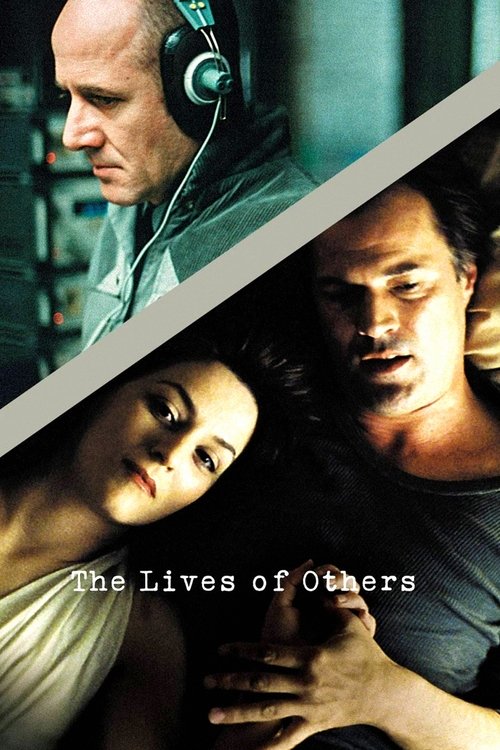
Before the Berlin Wall fell, the air in East Germany tasted like coal smoke and quiet, systemic paranoia. Most spy thrillers from the mid-2000s were busy trying to out-Bourne the Bourne Identity with shaky cameras and hyper-kinetic editing, but Florian Henckel von Donnersmarck’s debut feature went in the opposite direction. It’s a film that asks you to lean in, to listen, and to watch a man’s soul slowly defrost in a room that is perpetually gray.
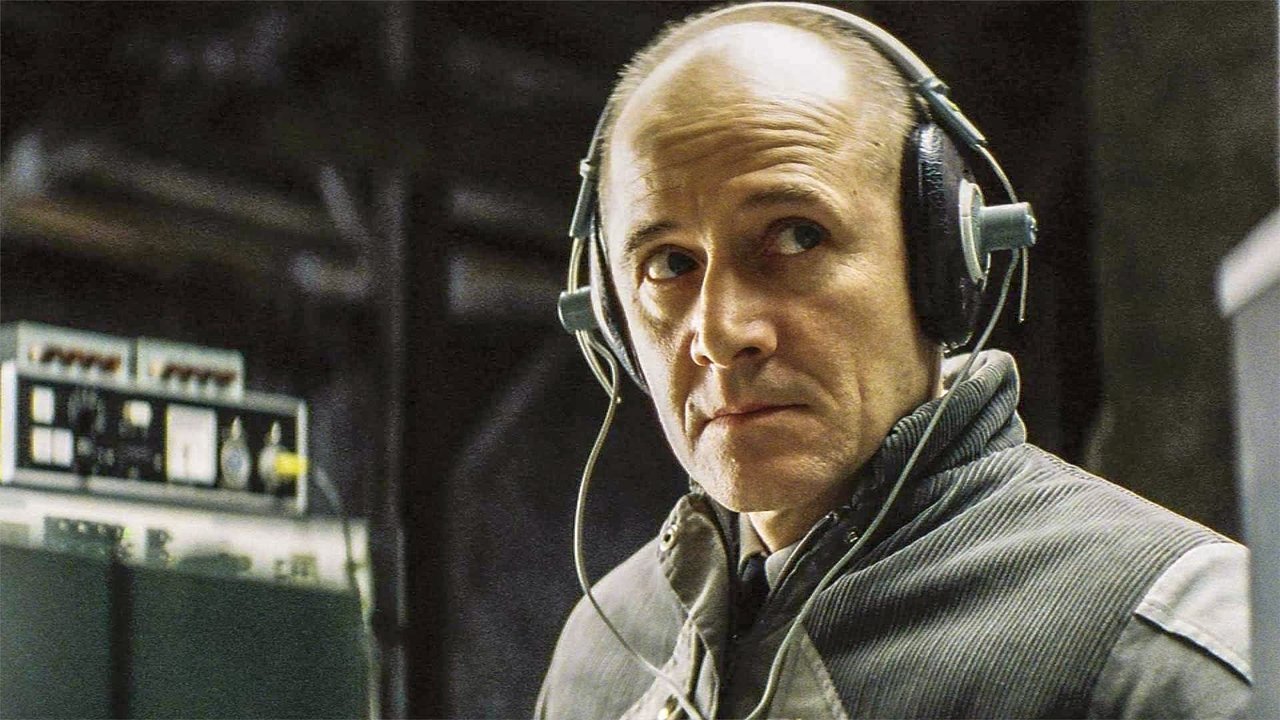
I first watched this movie on a laptop while eating a slightly stale sesame bagel, and I remember feeling genuinely guilty for how loud my chewing sounded. The film creates such a pressurized vacuum of silence that every rustle of paper feels like a gunshot. It’s not a "fun" movie in the popcorn-munching sense, but it is one of those rare cinematic experiences that leaves you feeling like you’ve been through a spiritual car wash.
The Art of the Ear
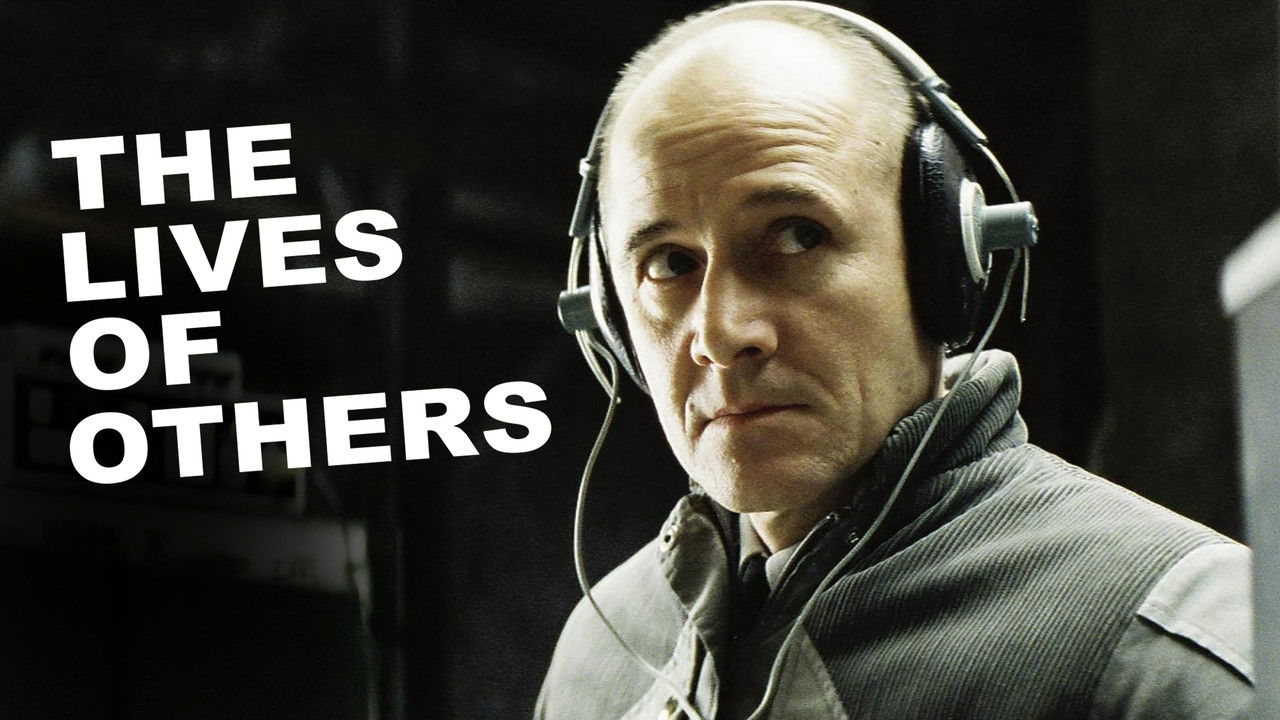
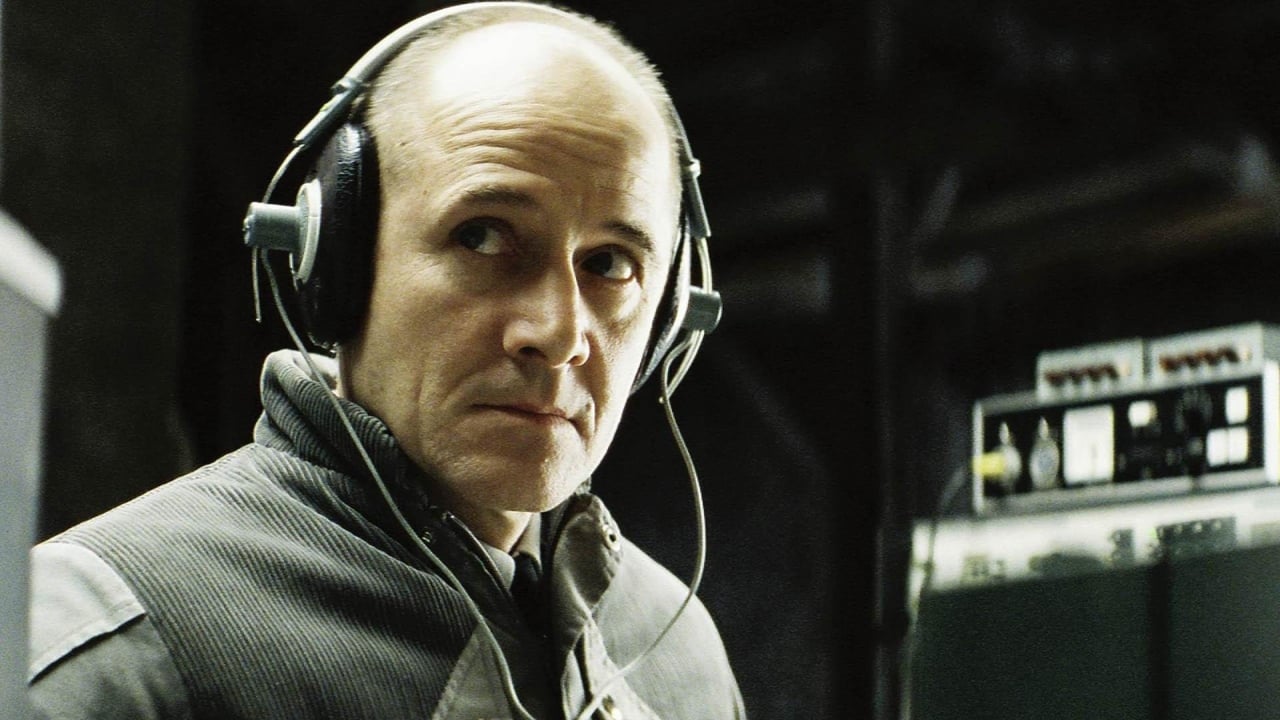
The story centers on HGW XX/7, otherwise known as Gerd Wiesler, played with a haunting, stone-faced precision by Ulrich Mühe. Wiesler is a Stasi captain—a man who has replaced his personality with a state-issued gray suit and a pair of oversized headphones. He is tasked with surveilling a high-profile playwright, Georg Dreyman (Sebastian Koch), and his actress girlfriend, Christa-Maria Sieland (Martina Gedeck).
The setup is pure thriller: a corrupt Minister (Thomas Thieme) wants Dreyman out of the way so he can have Christa-Maria for himself. But the movie’s real engine isn't the plot; it's the transformation of Wiesler. He sits in a cold, dusty attic above the couple’s apartment, listening to their music, their arguments, and their intimacy. He’s basically the world’s most depressed podcaster.
As he eavesdrops, the "others" of the title stop being targets and start being human beings. I’ve always been fascinated by how Ulrich Mühe manages to convey a total internal revolution using nothing but a slight softening of his eyes. It’s a masterclass in "less is more" acting, and it’s even more poignant when you learn that Mühe was actually under surveillance by the Stasi in real life during the 1980s. When he was asked how he prepared for the role, he simply said, "I remembered."
Authenticity and the Shadow of the Wall
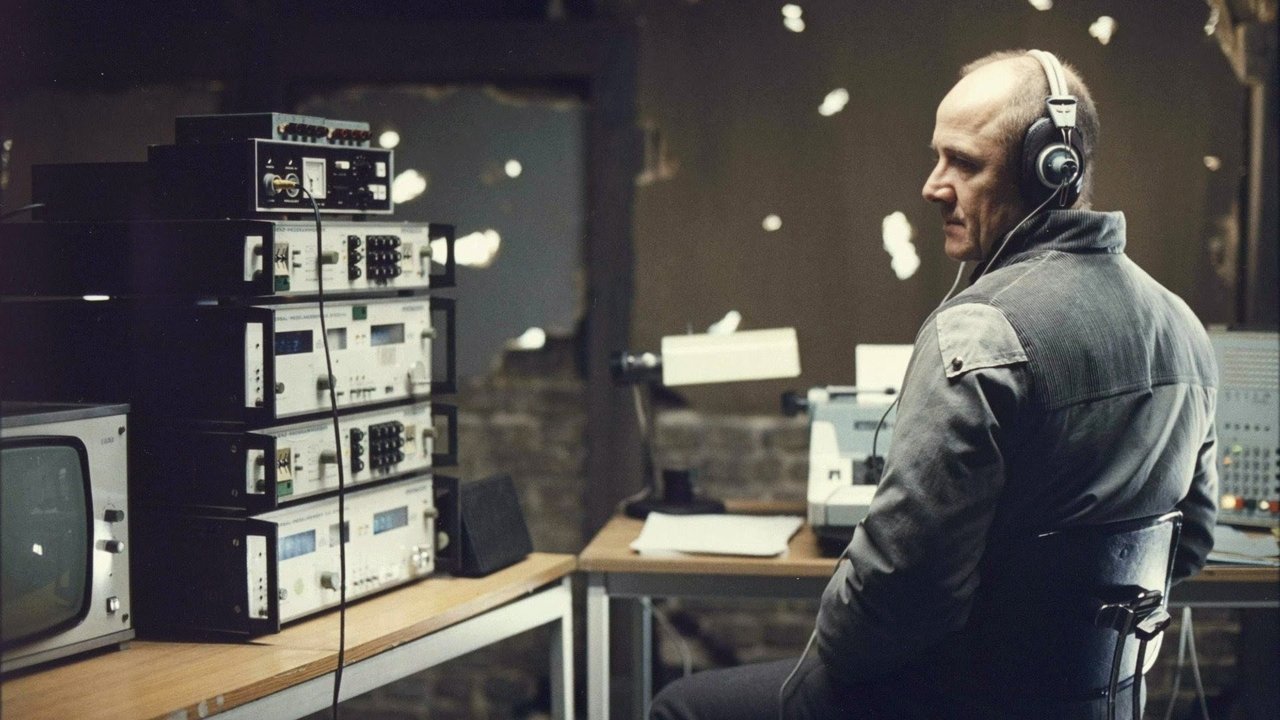
Visually, the film is a triumph of production design. Cinematographer Hagen Bogdanski captures an East Berlin that looks like it hasn't seen a primary color since 1945. It’s all olive greens, mustard yellows, and concrete grays. It feels lived-in and claustrophobic. The Stasi wallpaper is the true villain of the piece, radiating a kind of beige misery that perfectly matches the bureaucratic evil of the era.
The film arrived in 2006 during a specific window of German "Ostalgie" (nostalgia for the East), but it aggressively refused to be nostalgic. It reminded the world that the GDR wasn't just about quirky cars and retro coffee brands; it was a place where your best friend might be reporting your dinner conversations to the secret police. Interestingly, the director was denied permission to film at the former Stasi prison in Hohenschönhausen because the memorial's director felt the film’s "good Stasi man" protagonist was too unrealistic. I get that perspective, but I think the movie is more of a fable about the power of art than a literal historical document.
The music, specifically the piece "Sonata for a Good Man" by Gabriel Yared (who did the lush score for The English Patient), serves as the catalyst for Wiesler’s change. There’s a scene where Dreyman plays the piano after hearing of a friend’s suicide, and the camera lingers on Wiesler in his attic. If you don’t feel something during that scene, you might actually be a Stasi agent.
A Prestige Powerhouse
The Lives of Others was a massive critical darling, eventually winning the Academy Award for Best Foreign Language Film. It was a bit of an upset at the time, beating out Guillermo del Toro’s Pan’s Labyrinth, which was the heavy favorite. While I love del Toro’s dark fairy tale, there’s something about the grounded, human tragedy of Donnersmarck’s film that feels more enduring. It’s a prestige film that actually earns its "important" status by being a cracking good thriller first and a moral inquiry second.
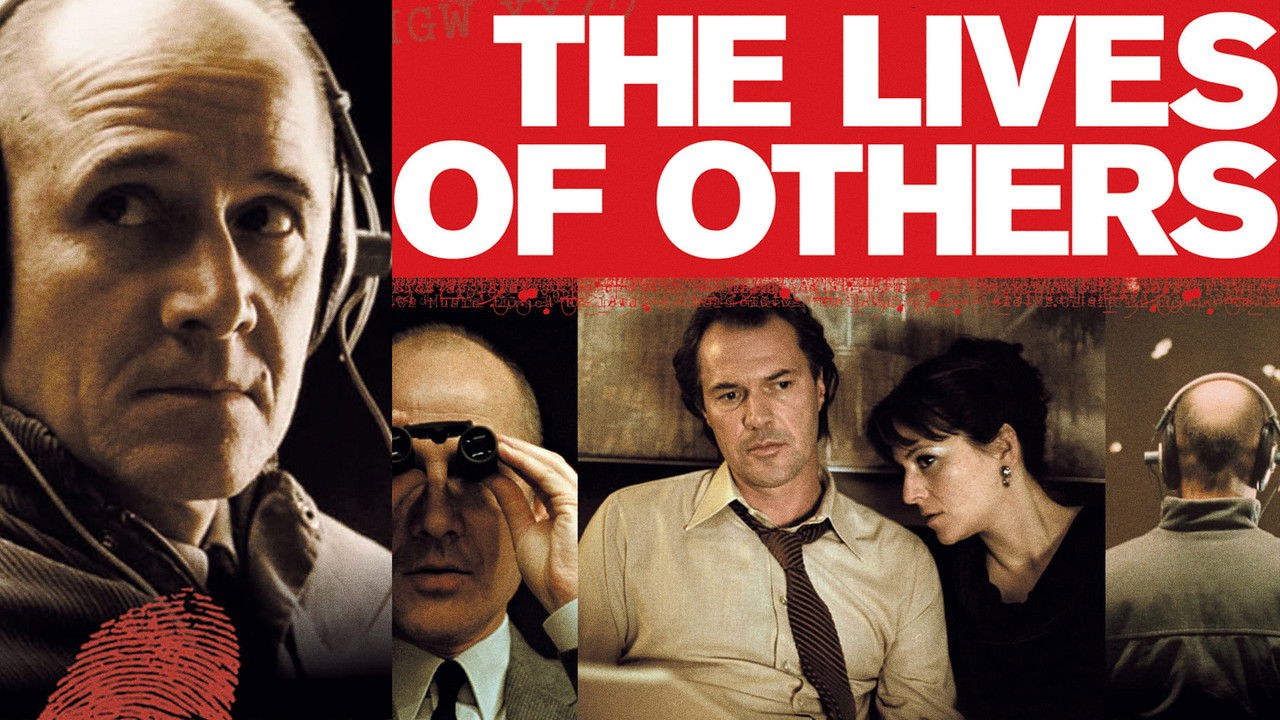
The supporting cast is equally sharp. Ulrich Tukur as Wiesler's superior, Anton Grubitz, is chilling precisely because he’s so charming and career-focused. He’s the guy who would fire you over a Zoom call while smiling. Meanwhile, Martina Gedeck plays Christa-Maria with a heartbreaking fragility; she’s a woman caught between her art, her love, and the crushing weight of a state that owns her body and career.
Looking back from our current era of digital surveillance and social media "listening," the film feels even more relevant. In 1984, the Stasi had to hide microphones in your walls. Today, we carry the microphones in our pockets and pay for the privilege. It makes Wiesler’s eventual choice feel even more radical—the choice to see someone as a person rather than a data point.
This is a film that demands your full attention, but it pays it back with interest. It’s a cold movie about a warm heart, a story that proves even the most rigid systems can’t entirely extinguish the human spirit. If you haven't seen it, dim the lights, turn off your phone (the irony is intended), and let yourself get lost in the attic with Gerd Wiesler. It's a journey that ends with one of the most satisfying final lines in cinema history.
Keep Exploring...
-
Memories of Murder
2003
-
Oldboy
2003
-
Mulholland Drive
2001
-
The Departed
2006
-
The Dark Knight
2008
-
Inglourious Basterds
2009
-
Shutter Island
2010
-
Run Lola Run
1998
-
Black Book
2006
-
The Silence of the Lambs
1991
-
Carlito's Way
1993
-
The Usual Suspects
1995
-
Fargo
1996
-
L.A. Confidential
1997
-
Fight Club
1999
-
The Sixth Sense
1999
-

The Devil's Backbone
2001
-
The Experiment
2001
-
Irreversible
2002
-

Sympathy for Mr. Vengeance
2002