The Pursuit of Happyness
"The American Dream at its most expensive."
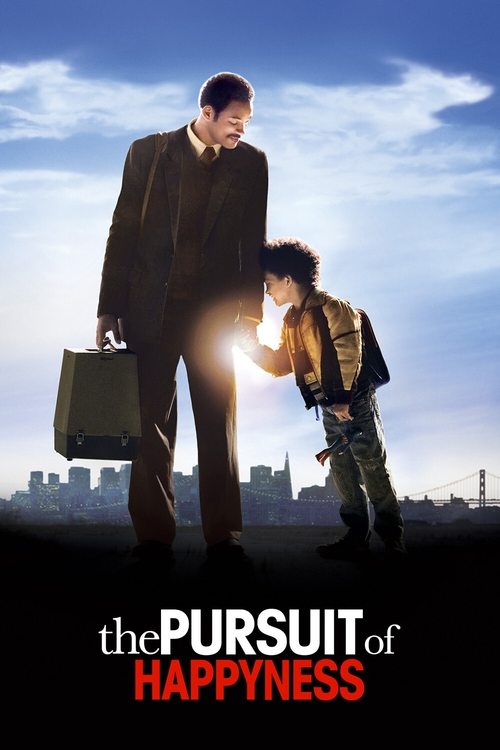
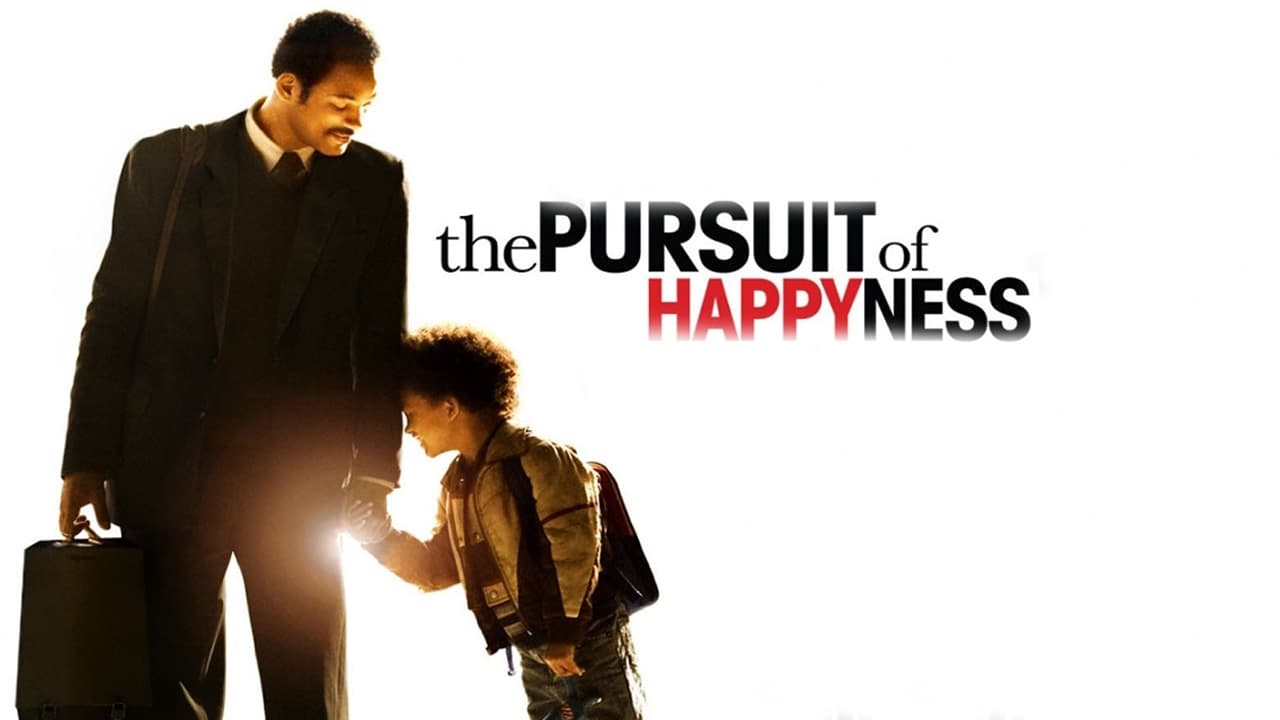
In the mid-2000s, Will Smith was the closest thing Hollywood had to a sure bet. He was the guy who fought aliens in July and saved the world in high-definition CGI. So, when the posters for The Pursuit of Happyness started appearing, showing a weary-looking Smith clutching the hand of a small boy against a drab San Francisco backdrop, it felt like a deliberate glitch in the Matrix. This wasn't the "Fresh Prince" or the cocky hero of Men in Black (1997). This was a calculated, high-stakes pivot into the "Prestige Era," where the biggest movie star on the planet decided to see if he could make us cry as effectively as he made us cheer.
I watched this film on a Tuesday night while wearing only one wool sock because I couldn't find the other, and that minor, nagging discomfort of a cold left foot actually helped me empathize with the protagonist’s constant, low-level agitation. It’s a movie that lives in those small, irritating frictions.
The High Cost of a Misspelled Dream
The film is set in 1981, but it arrived in 2006, right on the cusp of the Great Recession. Looking back, there’s a haunting quality to its depiction of economic fragility. Will Smith plays Chris Gardner, a man who has staked his entire life savings on portable bone density scanners—devices that look like bulky pieces of 80s sci-fi tech but are essentially glorified paperweights that doctors don't want. The bone density scanner is the most cursed object in cinematic history, representing every bad investment and "get rich quick" scheme that ever blew up in a hard-working person's face.
What makes this drama work isn't just the "rags to riches" trajectory; it's the sheer, exhausting volume of "rags." Director Gabriele Muccino, whom Smith hand-picked after seeing the Italian film The Last Kiss (2001), brings a frantic, European energy to the streets of San Francisco. The camera doesn't just follow Chris; it chases him. We see him sprinting after buses, sprinting after thieves, and sprinting toward a non-paying internship at Dean Witter Reynolds. The film earns its title—the "pursuit" is literal, physical, and breathless. It’s a movie about the indignity of being broke, where a lost shoe or a broken lightbulb isn't just an inconvenience; it’s a catastrophe.
A Family Affair in the Trenches

The secret weapon here, of course, is the chemistry between Chris and his son, Christopher. Jaden Smith was only seven years old during filming, and while "star-kid" casting often feels like a cynical exercise in nepotism, here it’s the film's beating heart. Apparently, the production auditioned over a hundred kids before Will Smith suggested his own son. The result is a lack of artifice that you rarely see in child performances. When they’re huddled in a subway bathroom, Chris pretending it’s a cave to protect his son’s innocence while he holds the door shut with his foot against the world outside, the emotion isn't "prestige acting"—it's raw.
On the other side of that emotional coin is Thandiwe Newton as Linda. She’s often unfairly remembered as the "villain" of the piece for leaving, but re-watching it now, her performance captures a specific kind of 1980s burnout. She’s the realism to Chris’s idealism. While Will Smith is busy being the charismatic underdog, Newton is the one showing the toll that poverty takes on the soul. She’s great in films like Crash (2004), but here she provides the necessary grit that prevents the movie from floating away into pure sentimentality.
Awards, Rubik's Cubes, and Real-Life Echoes
By the time the credits roll, you realize you've watched a two-hour movie about a man trying to get a job, and somehow, it’s as tense as a thriller. This was the peak of the "Awards Bait" era done right. Will Smith secured a Best Actor nomination at the Oscars, ultimately losing to Forest Whitaker in The Last King of Scotland—a year where the Academy was truly spoiled for choice.

The film's technical side is equally deliberate. Cinematographer Phedon Papamichael (who also shot Walk the Line) uses a color palette that starts in muddy browns and greys, slowly allowing more light and blue sky into the frame as Chris climbs the corporate ladder. It’s subtle, but it works on your subconscious. And then there’s the Rubik's Cube—the ultimate 80s signifier. In a pre-internet world, mastering that cube was the ultimate "smart guy" shorthand, and seeing Smith solve it in a taxi to impress Brian Howe's Jay Twistle is the film's version of a superhero landing.
One of my favorite "Popcornizer" details is the very end. As the real Chris Gardner walks past the fictionalized version of himself on the street, it’s a quiet nod to the fact that this wasn't just a Hollywood script. It was a life. The film captures that specific mid-2000s belief in the individual's ability to overcome systemic failure—a theme that feels a bit more complicated through a 2024 lens, but remains undeniably moving in the context of this specific story.
Ultimately, The Pursuit of Happyness is a heavy lift that rewards the effort. It’s a reminder that before he was a meme or a tabloid fixture, Will Smith possessed a staggering ability to channel vulnerability and desperation into something universal. It’s a film that makes you want to check your bank account, hug your family, and maybe, just maybe, finally learn how to solve that dusty Rubik's Cube sitting on your shelf. It’s a drama that doesn't just ask for your empathy—it sprints alongside you until it earns it.
Keep Exploring...
-
Seven Pounds
2008
-
I Am Legend
2007
-

Catch Me If You Can
2002
-

Gran Torino
2008
-
A Beautiful Mind
2001
-
The Departed
2006
-
The Dark Knight
2008
-

Inglourious Basterds
2009
-
Shutter Island
2010
-

Enemy of the State
1998
-
Mulholland Drive
2001
-

A Walk to Remember
2002
-

Eternal Sunshine of the Spotless Mind
2004
-

Million Dollar Baby
2004
-
The Notebook
2004
-

The Prestige
2006
-
Into the Wild
2007
-
There Will Be Blood
2007
-

Flipped
2010
-

The Help
2011