The Texas Chainsaw Massacre: The Beginning
"The meat is fresh, but the law is rotten."
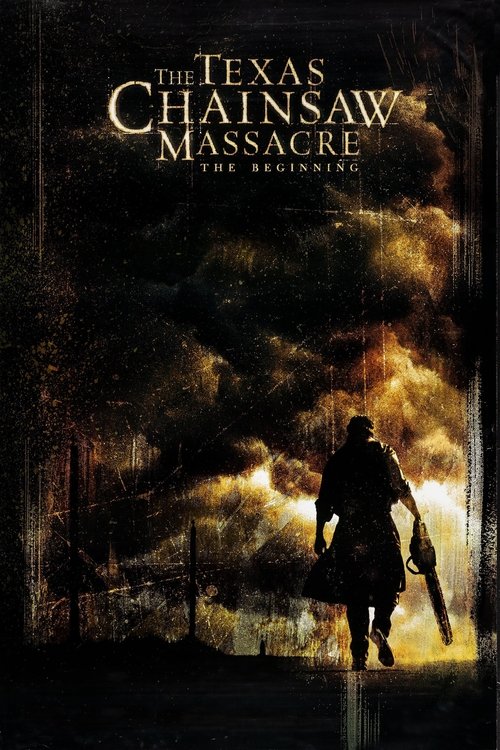
There was a specific shade of urine-yellow filter that dominated mid-2000s horror, a visual shorthand for "everything here is sweaty, dirty, and likely to give you tetanus." It was the Platinum Dunes aesthetic, a House that Michael Bay built, where the budgets were mid-sized, the actors were distractingly gorgeous, and the nihilism was dialed up to eleven. The Texas Chainsaw Massacre: The Beginning is the quintessential artifact of this era. It’s a film that doesn’t just want to scare you; it wants to make you feel like you need a three-hour shower in boiling water.

I watched this most recent time on a handheld DVD player while my neighbor was loudly practicing the bagpipes, and honestly, the dissonant skirl of the pipes added a layer of avant-garde dread that the original score couldn't quite reach.
The Hewitt Family Values
If the 2003 remake was about the shock of the new, the 2006 prequel is about the comfort of the cruel. We’re taken back to 1969, where we learn how Thomas Hewitt became Leatherface and, more importantly, how the Hewitt family became the most terrifying HOA in Texas. While the "origin" elements—like seeing how Leatherface got his mask or why Uncle Charlie Hewitt has a penchant for police uniforms—feel a bit like checking boxes on a fan-service clipboard, the movie finds its pulse whenever R. Lee Ermey is on screen.
R. Lee Ermey, famous for his drill sergeant role in Full Metal Jacket, is the absolute MVP here. As "Sheriff" Hoyt, he isn't just a villain; he’s a one-man wrecking crew of charisma and malice. He carries the film’s mid-section with a performance that feels genuinely dangerous. While the kids are the typical slasher fodder, Ermey treats every line of dialogue like he’s chewing on a piece of gristle. He makes the Hewitt household feel like a lived-in nightmare. It’s a reminder of that mid-2000s trend where the villains started to become the "stars" of the franchise, overshadowing the victims entirely. In my book, Leatherface is actually the least interesting person in his own house, mostly because Ermey’s Hoyt is so much more articulate in his insanity.
Too Pretty to Survive
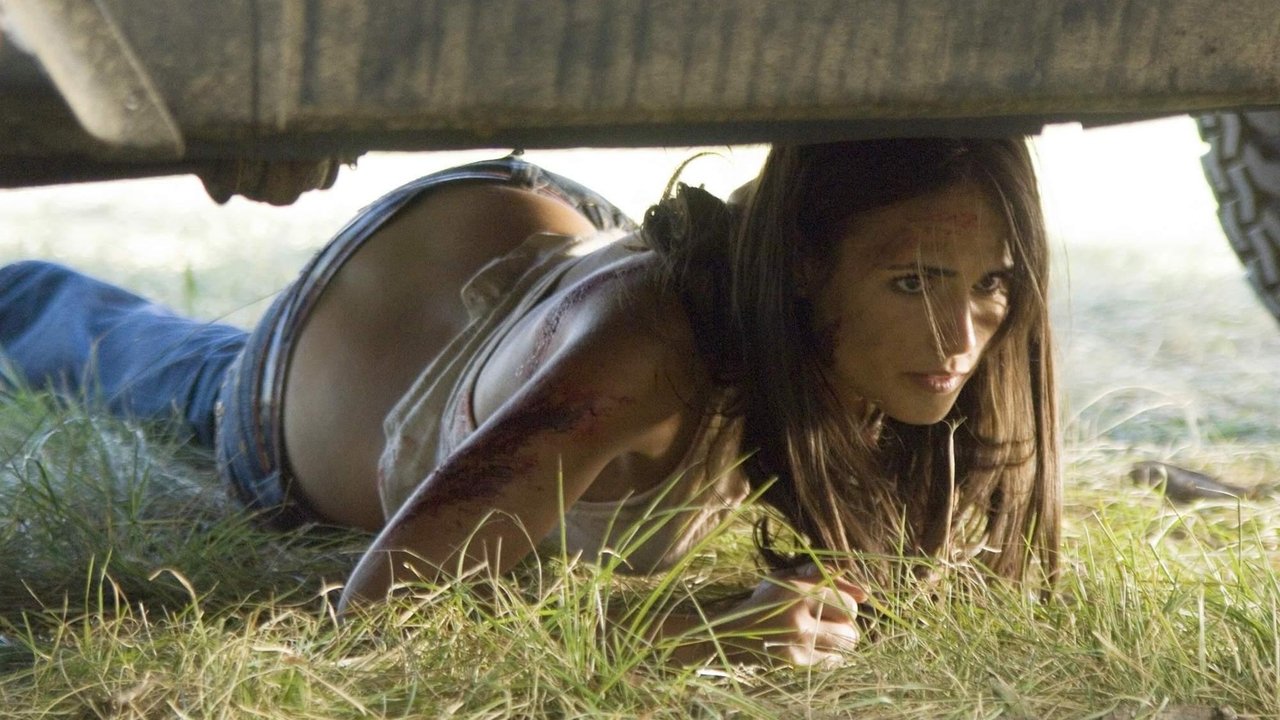
The cast is a fascinating time capsule of "Before They Were Superstars." You’ve got Jordana Brewster, fresh off the early Fast & Furious fame, playing Chrissie with a level of grit that earns her "Final Girl" stripes. Then there’s Matt Bomer, long before White Collar or Magic Mike, and Taylor Handley from The O.C. They play brothers headed for Vietnam, a plot point that adds a layer of heavy-handed irony to the proceedings—they’re trying to avoid a war only to stumble into a slaughterhouse.
Looking back, these actors were almost too beautiful for the grimy world director Jonathan Liebesman (who later gave us Battle: Los Angeles) created. There’s a scene where Diora Baird and Jordana Brewster are covered in Texas dust and engine grease, yet they still look like they’re in a high-end denim ad. It’s a hallmark of the 2000s remake boom: the "CW-fication" of horror. But to their credit, they all commit to the physical demands of the script. When the hooks come out and the chainsaws start revving, the sheer exhaustion on their faces feels real.
The Prequel Paradox
The biggest hurdle for The Beginning is the inevitable reality of the prequel format. We know who survives into the 2003 film, which means we know exactly who doesn't survive this one. It robs the film of some suspense, forcing it to rely on "how" they die rather than "if." To compensate, Jonathan Liebesman ramps up the gore to a level that felt genuinely shocking in 2006. This was the era of "torture porn," where films like Hostel and Saw were pushing the boundaries of what a mainstream audience would tolerate.
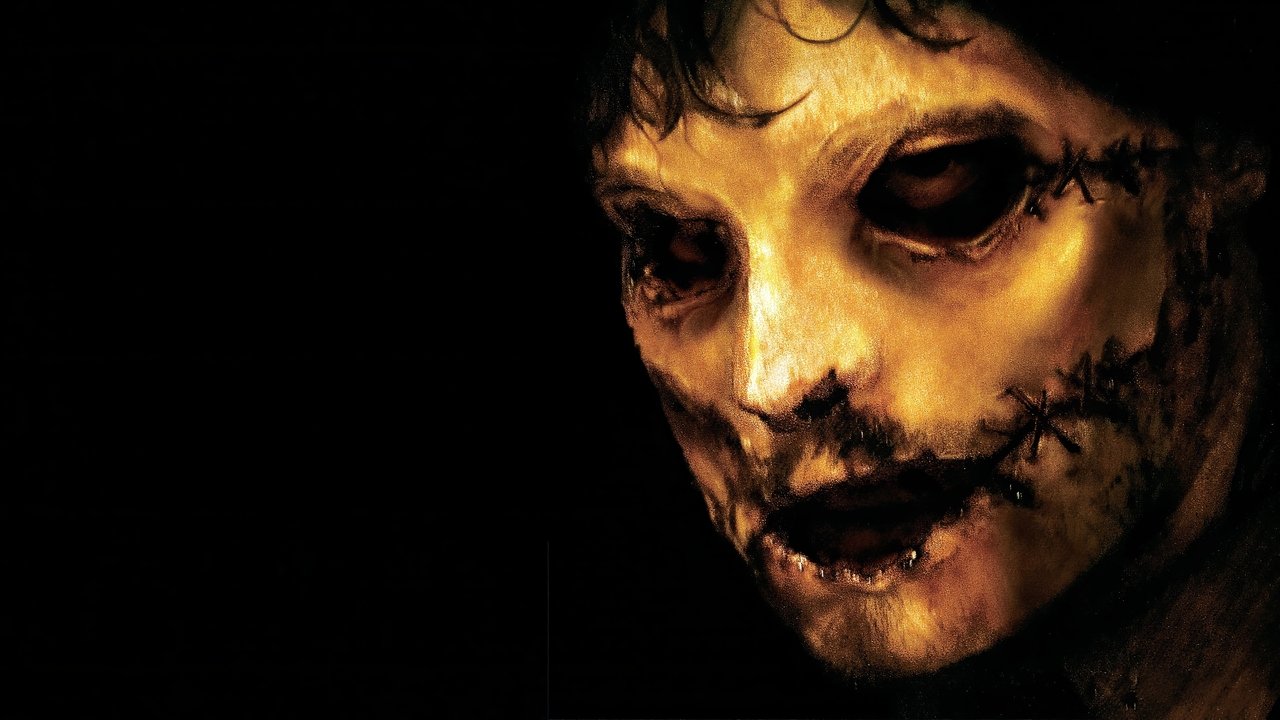
The practical effects, overseen by the folks who lived through the transition from 80s splatter to digital sheen, are impressively tactile. There’s a heaviness to the violence here. When the chainsaw bites, it feels like it has weight. The cinematography by Lukas Ettlin leans into the high-contrast, grainy look of 16mm film, even though it was shot on 35mm, giving it a faux-documentary harshness that still looks great on a modern screen. It’s far more polished than the 1974 original, but it lacks the "is this a snuff film?" energy of Tobe Hooper's masterpiece. Instead, it feels like a very expensive, very well-made haunted house attraction.
Ultimately, The Texas Chainsaw Massacre: The Beginning is a mean, lean, and occasionally redundant slice of mid-2000s horror. It doesn't reinvent the wheel—or the saw—but it delivers exactly what it promises on the tin: a nasty origin story with a legendary villain performance by R. Lee Ermey. It’s a film that reminds us of a time when horror wasn't afraid to be unapologetically nihilistic. If you have a stomach for the red stuff and an appreciation for the Platinum Dunes era of "dirty" cinema, this one still has plenty of teeth.

Keep Exploring...
-
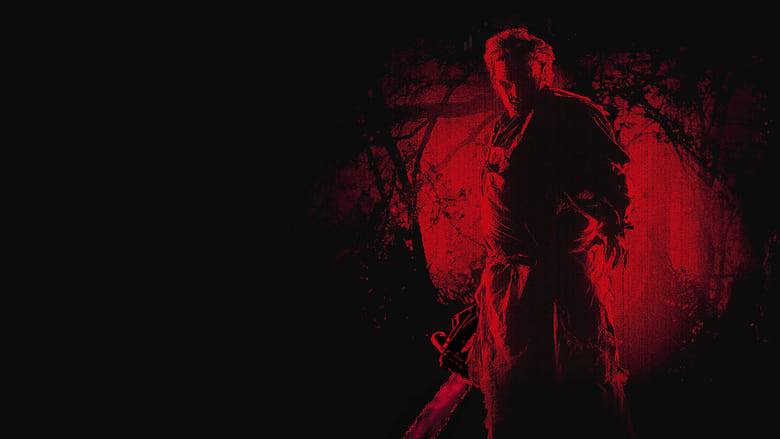
The Texas Chainsaw Massacre
2003
-
Eight Legged Freaks
2002
-
The Mothman Prophecies
2002
-
House of 1000 Corpses
2003
-
Jeepers Creepers 2
2003
-

Seed of Chucky
2004
-
Dark Water
2005
-
Inland Empire
2006
-
The Covenant
2006
-
When a Stranger Calls
2006
-
The Hitcher
2007
-
The Reaping
2007
-

Vacancy
2007
-
Mirrors
2008
-
Quarantine
2008
-
The Eye
2008
-

The Midnight Meat Train
2008
-
The Ruins
2008
-
Untraceable
2008
-
The Descent: Part 2
2009