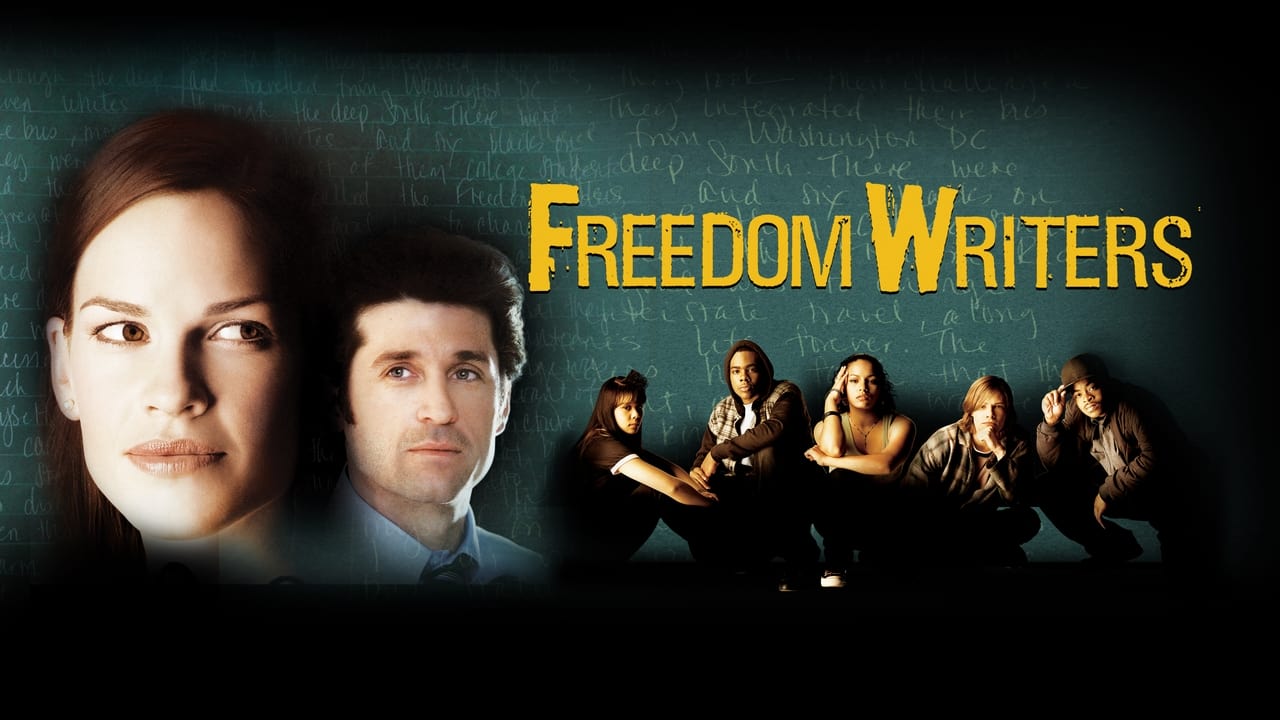
Freedom Writers
"One classroom. Two hundred diaries. A thousand truths."
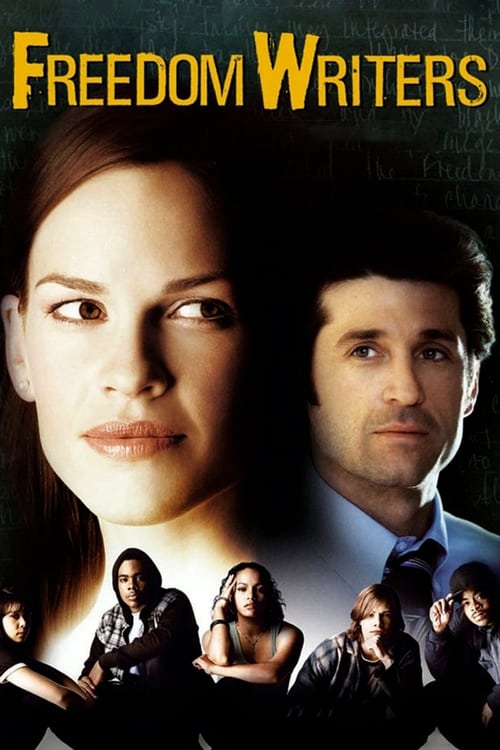
I first watched Freedom Writers on a scratched DVD I borrowed from a library, sitting on a beanbag chair while eating a lukewarm Hot Pocket that eventually burned the roof of my mouth. It’s funny how certain movies are inextricably linked to the smell of singed cheese and the hum of a PlayStation 2. Revisiting it now, in an era where we’re much more cynical about "inspirational teacher" tropes, I expected to roll my eyes. Instead, I found myself surprised by how much of its grit still gets under the fingernails.
Released in 2007, the film landed right in that sweet spot of the "Modern Cinema" era where Hollywood was still obsessed with prestige social dramas that felt like they were gunning for an Oscar but settled for becoming a permanent fixture in high school English curriculums. Directed by Richard LaGravenese—who wrote the screenplay for the heartbreaking The Fisher King—the film takes us to Long Beach, California, in 1994. The Rodney King riots are a fresh, bleeding wound, and the school system is a bureaucratic nightmare of "integration" that looks a lot more like a war zone.
The Gritty Reality of Room 203
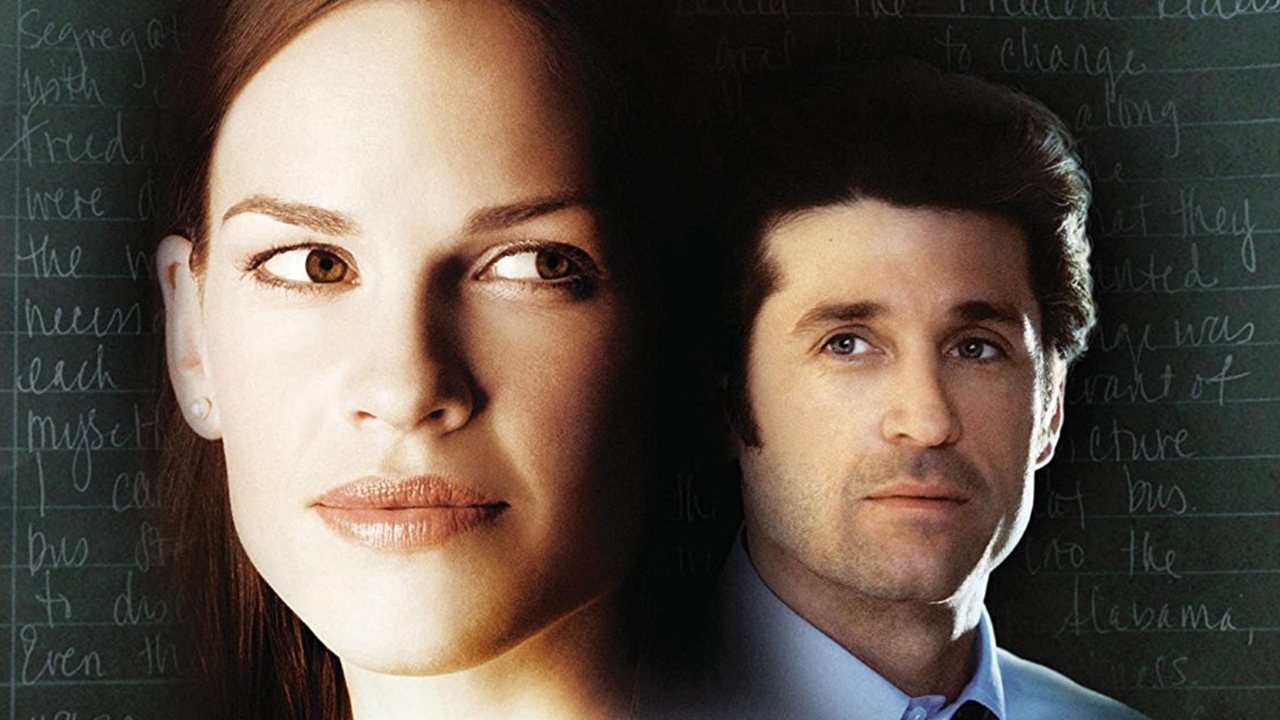
Hilary Swank plays Erin Gruwell, a woman who enters Woodrow Wilson High School looking like she stepped out of a J.Crew catalog, complete with a pearl necklace and an optimism that is, frankly, borderline pathological. She’s the ultimate outsider, a woman who thinks she can solve generational gang warfare with a well-placed lesson on the Odyssey. Opposite her is Imelda Staunton, fresh off her turn as Dolores Umbridge in Harry Potter, playing Margaret Campbell. Imelda Staunton is essentially playing the same character here—a woman who has weaponized "the rules" to hide her own lack of empathy—and she is magnificent at being loathsome.
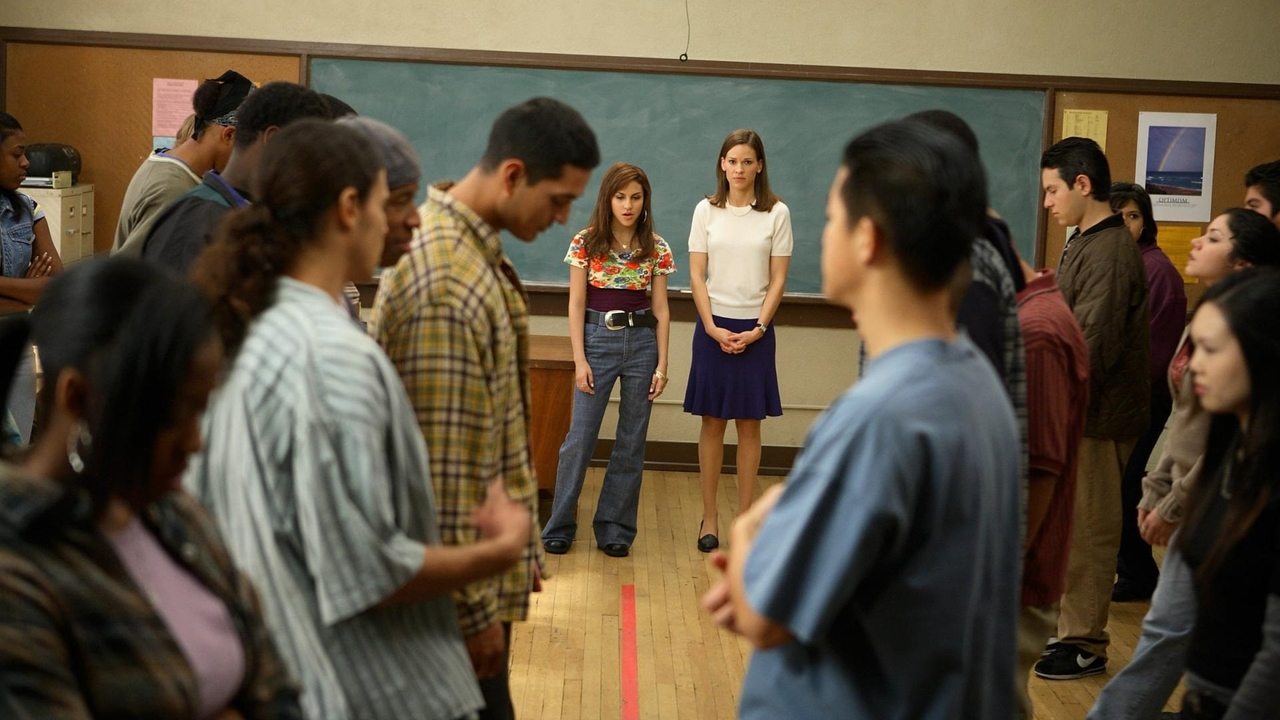
The film earns its "Dark/Intense" stripes not through the teacher’s struggle, but through the students. The sequences depicting the home lives of kids like Eva, played with a haunting, jagged intensity by April Hernandez Castillo, are the film's true engine. When the movie stops being about Gruwell’s domestic squabbles with her husband—a role where Patrick Dempsey is essentially a sentient pair of khakis with a frown—and starts focusing on the kids, it finds its soul. The scene where the students play the "Line Game," standing on a red piece of tape if they’ve lost a friend to gang violence, is a sequence that avoids the "after-school special" trap by being genuinely quiet and somber.
A Time Capsule of 2000s Earnestness
Looking back, Freedom Writers is a fascinatng artifact of mid-2000s production. The score was partially handled by will.i.am, which feels like a quintessential "we need to be hip" 2007 choice, yet it works surprisingly well to anchor the film in its specific urban-meets-cinematic-drama vibe. Interestingly, many of the students in the film weren't professional actors; Richard LaGravenese wanted a level of authenticity that couldn't be faked by 25-year-old "teenagers" from a talent agency. Apparently, the real Erin Gruwell actually took a massive pay cut and worked three jobs to fund the books and field trips seen in the movie—a detail that makes Hilary Swank’s frantic energy feel less like a performance and more like a document of exhaustion.
The film also serves as a bridge to the DVD culture that defined that decade. I remember the special features on the disc included interviews with the real Freedom Writers, which was a big deal at the time—the idea that the "real world" was just a click away on your remote. It turned the movie from a piece of fiction into a movement. It’s also one of those rare cult classics that isn't defined by midnight screenings, but by the fact that almost every person born between 1990 and 2000 has seen it at least three times in a classroom when their teacher was too tired to give a lecture.
The Weight of the Past
Where the film takes a dark, heavy turn is its intersection with the Holocaust. Gruwell realizes her students don't know what the Holocaust is, and the subsequent parallels she draws between the Jewish ghettos and the projects of Long Beach are bold—and potentially risky—storytelling. The appearance of Miep Gies, the woman who hid Anne Frank, played by Pat Carroll, brings a gravity to the third act that most "teacher movies" lack. It shifts the stakes from "will they pass the test?" to "will they survive the walk home?"
Is it a "White Savior" movie? In retrospect, yes, it hits many of those beats. But Hilary Swank plays the role with such a clumsy, dorky sincerity that it undercuts the ego. She’s often the butt of the joke, a woman who tries to use Tupac lyrics to teach grammar and gets laughed out of the room. The film's strength is that it eventually realizes the notebooks are more important than the teacher holding them.
Freedom Writers is a movie that shouldn't work as well as it does. It’s a drama that leans into its intensity, refusing to shy away from the blood on the pavement or the scars on its characters' backs. While it occasionally wanders into sentimental territory, the performances—especially from the younger cast and a stoic Scott Glenn—keep it grounded. It’s a snapshot of a specific moment in cinema where we believed that if you just gave a kid a pen and a place to feel safe, the world might actually stop spinning off its axis for a second. Even if the cheese from your Hot Pocket is still burning your mouth, this one is worth a re-watch.

Keep Exploring...
-
P.S. I Love You
2007
-
25th Hour
2002
-

Adaptation.
2002
-
John Q
2002
-
21 Grams
2003
-
Dogville
2003
-
Monster
2003
-

A History of Violence
2005
-

Lord of War
2005
-
Lucky Number Slevin
2006
-
Perfume: The Story of a Murderer
2006
-
Gone Baby Gone
2007
-
The Next Three Days
2010
-
Drive
2011
-

The Lincoln Lawyer
2011
-
End of Watch
2012
-
Lawless
2012
-
Training Day
2001
-
Gangs of New York
2002
-
Road to Perdition
2002