Ghost Rider
"He sold his soul. You get the jellybeans."
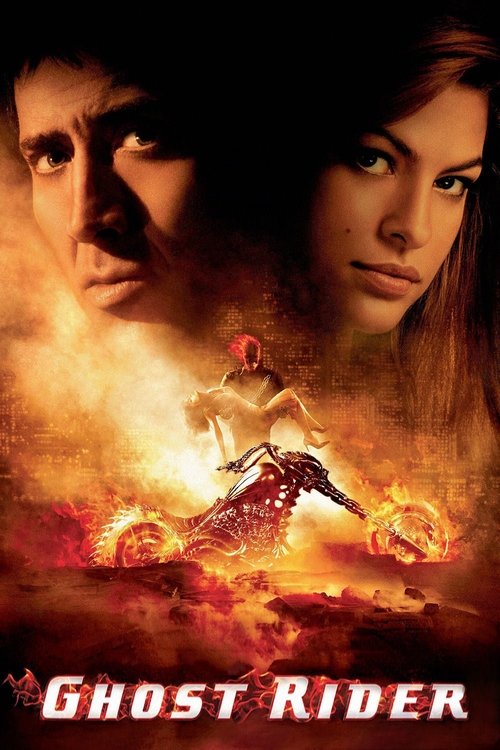
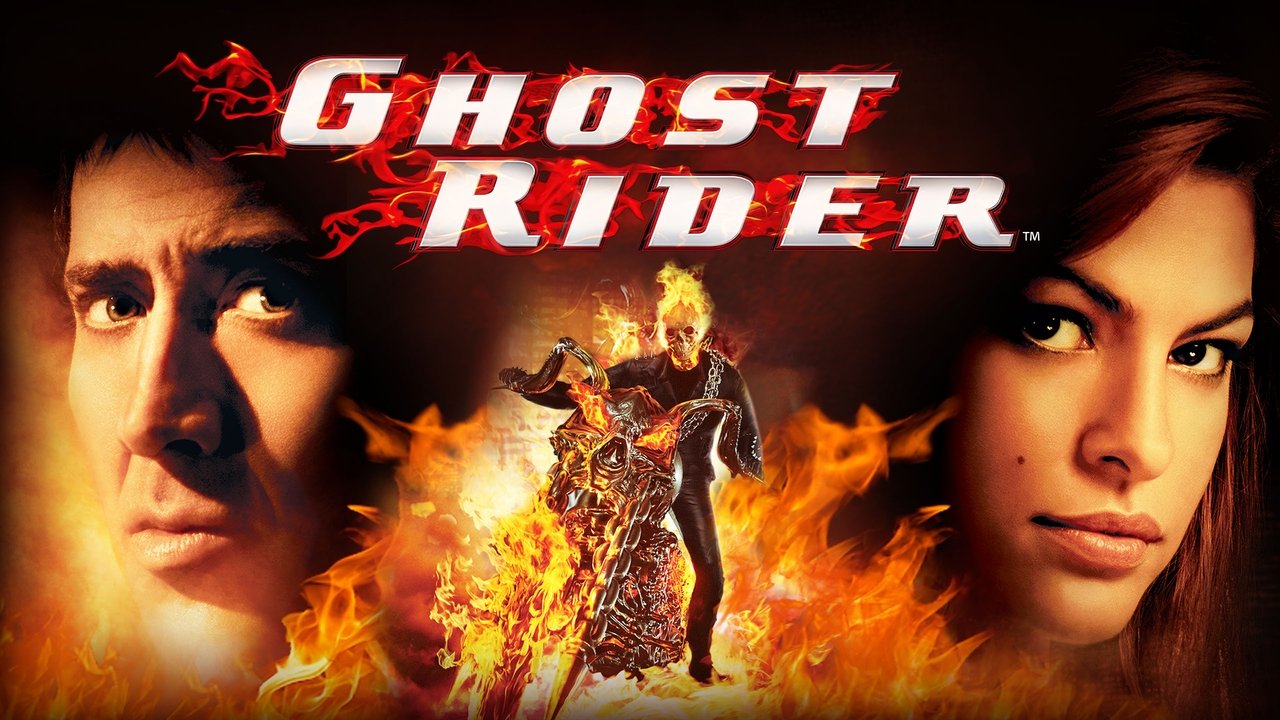
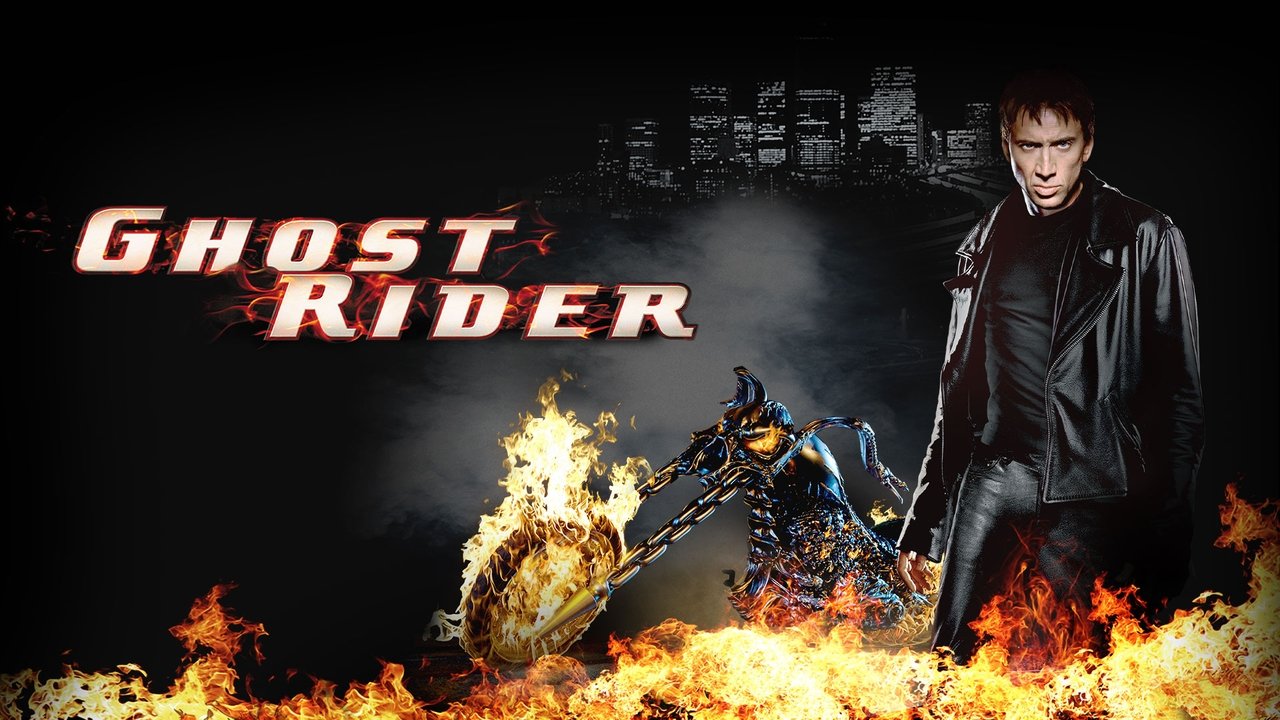
If you want to understand the chaotic energy of mid-2000s blockbusters, you don’t look at the polished perfection of Iron Man. You look at Nicolas Cage pointing a skeletal finger at a mugger and screaming about "innocent blood." There is a specific, feverish brand of commitment that only Cage brings to the screen, and in 2007’s Ghost Rider, he isn't just playing a superhero; he’s playing a man who looks like he’s constantly trying to pass a very sharp kidney stone made of hellfire.
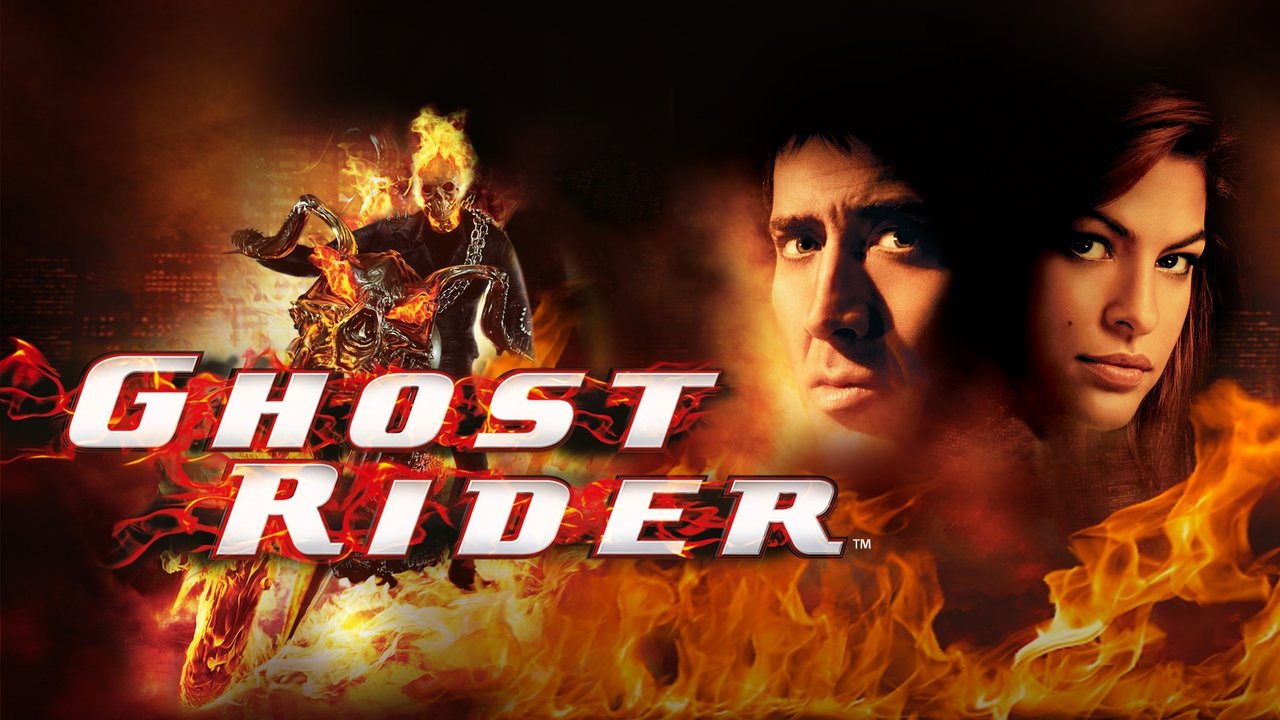
I recently rewatched this while my neighbor was loudly pressure-washing his driveway, and the rhythmic drone of the water actually synced up perfectly with the engine revs of Johnny Blaze’s Hell Cycle. It was the most immersive 4D experience I’ve had in years.
The Peak of "Pre-MCU" Weirdness
Directed by Mark Steven Johnson—who previously gave us the gritty, rain-soaked Daredevil (2003)—Ghost Rider sits in that fascinating "Modern Cinema" pocket where studios were still throwing $110 million at B-movie concepts to see what stuck. This was before the Marvel Cinematic Universe "formula" dictated a uniform tone. Instead, we got a movie where the protagonist eats jellybeans out of a martini glass and listens to the Carpenters to "stay calm."
The CGI revolution was in full swing here, and looking back, the fire effects hold up surprisingly well. There’s a tactile, liquid quality to the flames engulfing Cage's skull that feels more substantial than some of the weightless digital assets we see in modern multiversal romps. However, the villains are a different story. Wes Bentley as Blackheart looks less like a Prince of Hell and more like the lead singer of a mid-tier emo band who just got kicked out of a Hot Topic. The digital "scary faces" the demons occasionally make are peak 2007—ambitious, slightly goofy, and deeply reminiscent of a PlayStation 3 cinematic.
Casting the Hellfire and Brimstone
The real joy of Ghost Rider isn't the plot (which is a standard "deal with the devil" yarn); it’s the sheer density of the "cool guy" casting. You’ve got Peter Fonda playing Mephistopheles, which is a brilliant meta-nod to his Easy Rider (1969) legacy. Then you have Sam Elliott as the Caretaker, leaning into every gravelly-voiced cowboy trope he’s ever perfected. When Elliott and Cage finally ride together across the desert—one on a flaming horse, one on a flaming chopper—to the strains of Christopher Young’s operatic score, it’s impossible not to grin. It is the cinematic equivalent of a velvet painting of a wolf howling at the moon.
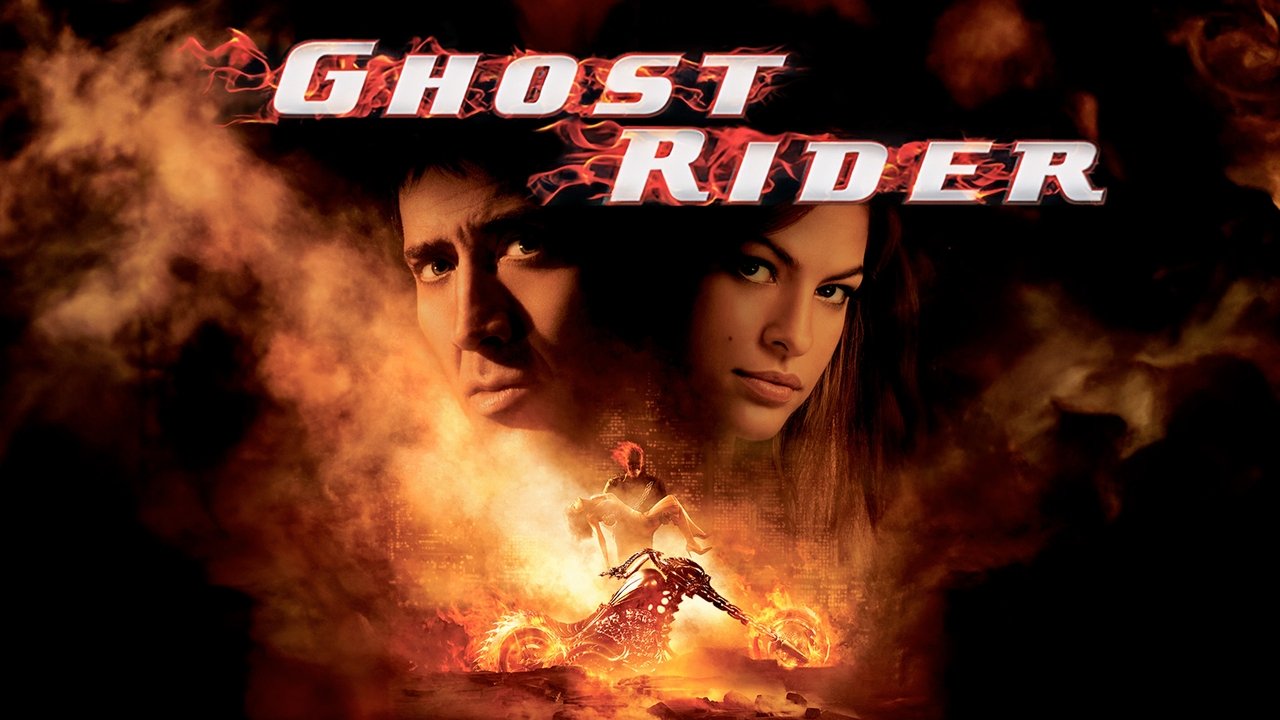
Eva Mendes does her best as Roxanne Simpson, though the script doesn't give her much to do besides look perpetually confused by Johnny's eccentricities. And let’s be honest, Johnny is very eccentric. Nicolas Cage famously had to have his actual Ghost Rider tattoo covered with makeup because the studio thought it would be "too meta" for the character to have a tattoo of himself. Think about that: Cage loved the character so much he’d already branded his skin, yet he still brings a "first-time-on-earth" energy to every scene.
Stunts, Chains, and Cult Status
The action choreography is where Johnson shines. The bridge jump sequence and the final showdown in the swamp utilize a great mix of practical motorcycle stunts and digital enhancement. The way the Ghost Rider uses his chain as a lasso, a whip, and a spinning shield of death is genuinely creative. It’s "heavy metal" filmmaking—loud, shiny, and unconcerned with subtlety.
It’s easy to see why this film failed to win over critics back in the day (it currently sits at a measly 27% on Rotten Tomatoes), but its cult status has grown because it’s so unapologetically weird. Unlike the assembly-line superhero movies of the 2020s, Ghost Rider has a specific, weird heartbeat. It’s a movie where the hero’s primary superpower is "The Penance Stare," which basically involves him looking you in the eyes until you feel really, really bad about your life choices. It’s basically superhero therapy via arson.
Stuff You Didn't Notice:
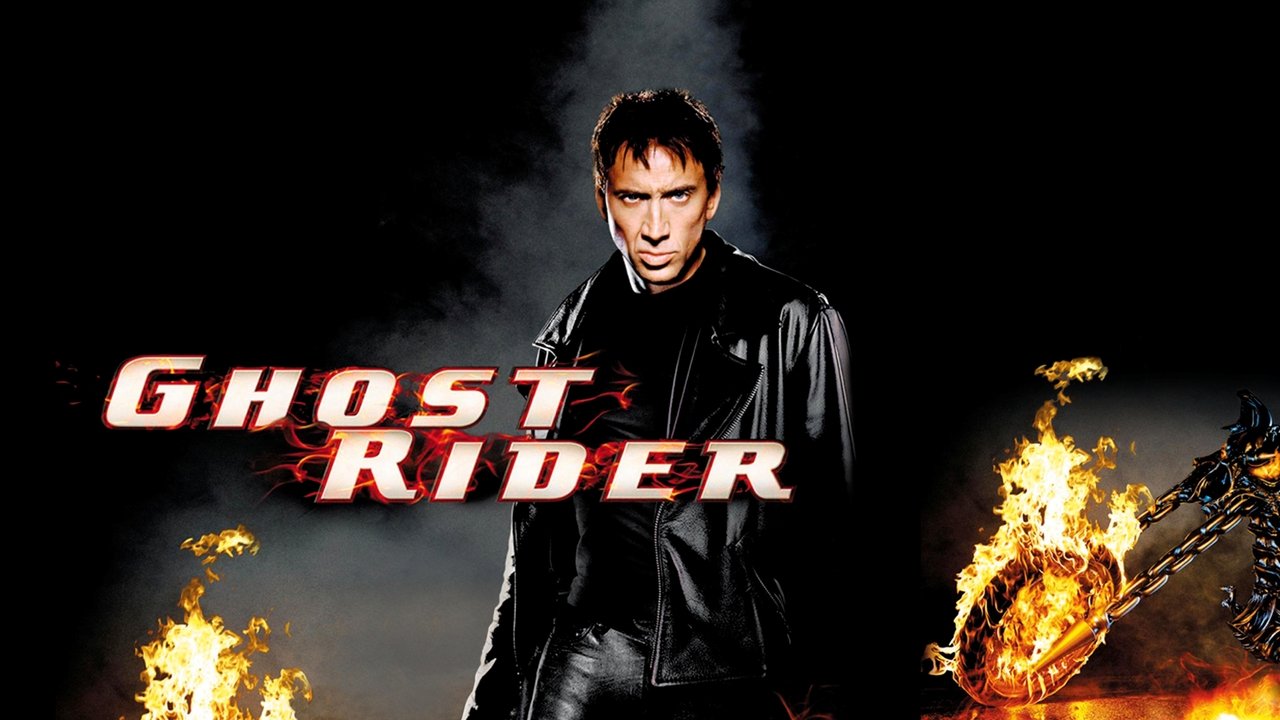
Nicolas Cage’s hairpiece in this movie deserves its own SAG award for "Best Supporting Role in a High-Wind Environment." The motorcycle Johnny Blaze rides is a direct homage to the "Captain America" chopper from Easy Rider. Jon Heder (of Napoleon Dynamite fame) was reportedly considered for the role of Blackheart. Imagine the timeline where we got that version. The "Penance Stare" effects were inspired by the "Hell" sequences in Constantine (2005) and the distorted faces in Jacob's Ladder (1990). * During the transformation scenes, Cage reportedly wore "Scarecrow" style makeup to freak out his co-stars and get into the headspace of a demon.
Looking back, Ghost Rider is a relic of a time when superhero movies were allowed to be "bad" in interesting ways. It’s messy, the pacing slows to a crawl every time Eva Mendes and Cage try to have a "normal" dinner, and the villain's plan is remarkably thin. But when that skull ignites and the chain starts whistling through the air, it’s pure, unadulterated fun. It’s a movie for people who think a flaming skeleton on a motorcycle is the coolest thing imaginable—and honestly, who am I to disagree?
While it’s far from a masterpiece, Ghost Rider remains a fascinating artifact of the pre-MCU era. It’s a showcase for Nicolas Cage at his most earnest and a reminder of a time when CGI fire was the height of cinematic spectacle. It’s flawed, clunky, and occasionally ridiculous, but it has more personality in its flaming pinky finger than most modern blockbusters have in their entire runtime. Turn your brain off, grab some jellybeans, and enjoy the ride.
Keep Exploring...
-
Drive Angry
2011
-
Sucker Punch
2011
-
Next
2007
-
The Sorcerer's Apprentice
2010
-
The League of Extraordinary Gentlemen
2003
-
The Brothers Grimm
2005
-
Underworld: Rise of the Lycans
2009
-
Season of the Witch
2011
-
Gone in Sixty Seconds
2000
-

Blade II
2002
-
Race to Witch Mountain
2009
-
Killing Season
2013
-
Underworld: Evolution
2006
-
National Treasure: Book of Secrets
2007
-

Knowing
2009
-
Once Upon a Time in Mexico
2003
-
Cirque du Freak: The Vampire's Assistant
2009
-
The Scorpion King
2002
-
The Tuxedo
2002
-

Lara Croft: Tomb Raider - The Cradle of Life
2003