In the Valley of Elah
"The war didn't end at the border."
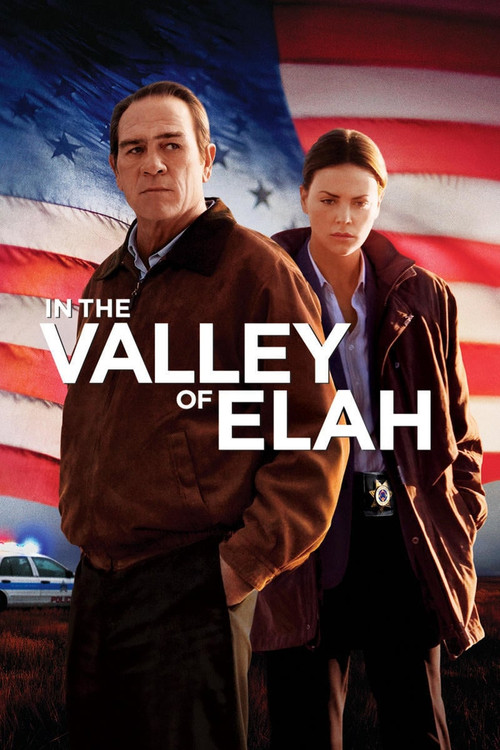
The first thing you notice about Tommy Lee Jones in In the Valley of Elah isn't his dialogue; it’s the way he wears his face. By 2007, Jones had already perfected the role of the weary lawman or the stoic father, but here, under the direction of Paul Haggis (Crash), he looks like a man made of cracked leather and old regrets. I watched this for the first time on a rainy Tuesday while wearing a wool sweater that was two sizes too small, and that itchy, physical discomfort felt like the perfect companion to the movie’s slow-burn unease.
While 2007 was a monstrously competitive year for cinema—we’re talking about the year of No Country for Old Men and There Will Be Blood—this film slipped through the cracks for many. It’s a "mystery" in the same way a funeral is a "social gathering." You come for the procedural elements, but you stay for the devastating realization that some things, once broken, stay broken.
The Face of a Thousand Sorrows
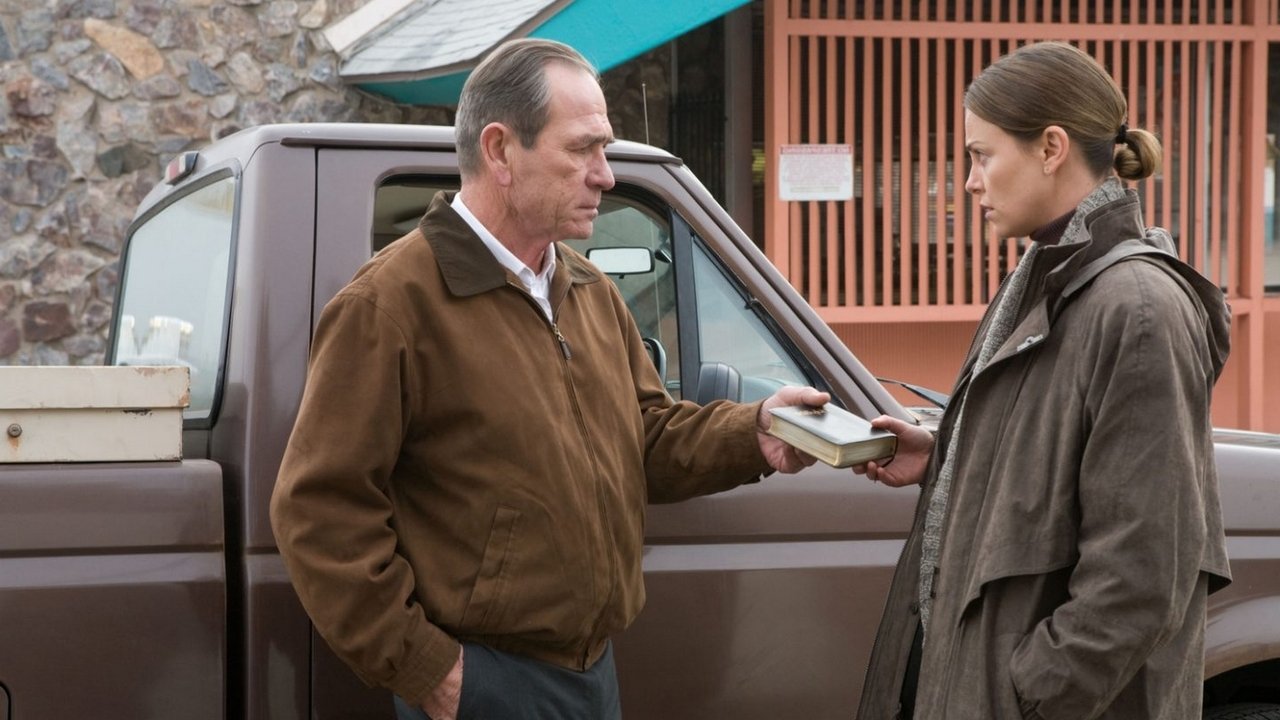
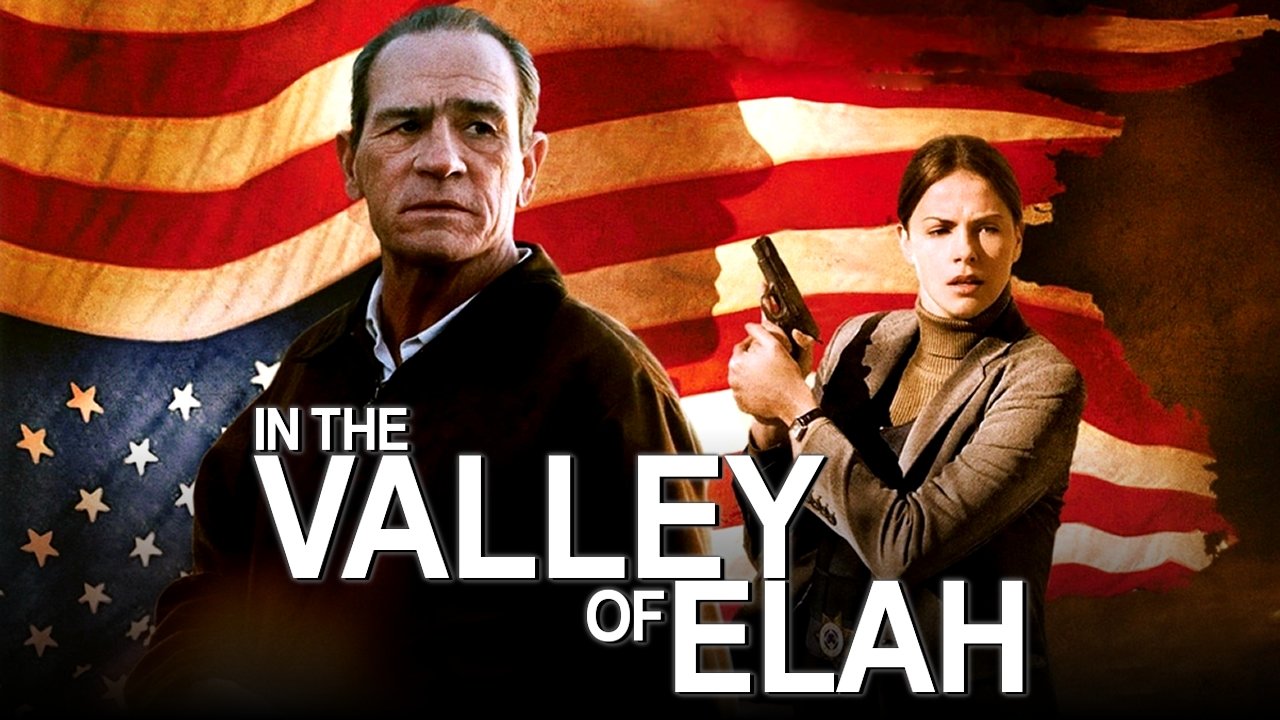
The story follows Hank Deerfield (Jones), a retired military MP and a man who believes in order, starch in his shirts, and the sanctity of the American flag. When his son Mike (Jonathan Tucker) goes missing shortly after returning from a tour in Iraq, Hank doesn't wait for the authorities. He drives to the base, starts poking around, and eventually drags a reluctant local detective, played by Charlize Theron, into the muck with him.
Charlize Theron is fantastic here because she’s so aggressively normal. Coming off her transformative work in Monster (2003) and the high-gloss action of Aeon Flux (2005), her Detective Emily Sanders is a refreshing palette cleanser. She’s a single mom dealing with casual sexism at the precinct, and her chemistry with Jones is built on a shared, quiet competence. They don't have witty banter; they have shared silences. Susan Sarandon also appears as Mike’s mother, and though her screen time is limited, she delivers one of the most heartbreaking phone call scenes in modern drama. I’ll go on record saying this is actually the best work Tommy Lee Jones has ever done, and yes, I’m counting his Oscar win for The Fugitive.
The Grainy Truth of the 2000s
What anchors this film firmly in the "Modern Cinema" era is its use of technology as a narrative device. This was 2007—the dawn of the smartphone—and a huge chunk of the mystery is solved by recovering grainy, corrupted video files from Mike’s cell phone. Looking back, those low-res, pixelated clips are haunting. They represent the first time we really saw war through the eyes of the soldiers in real-time, unfiltered by news crews.
The cinematography by the legendary Roger Deakins (The Shawshank Redemption, Blade Runner 2049) is intentionally desaturated. It captures the beige, dusty reality of military towns—fast food joints, strip clubs, and chain-link fences. It’s a world where the "hero’s welcome" is a myth and the reality is a long, slow slide into PTSD. The movie treats the Iraq War not as a political debate, but as a mental health crisis.
There’s a bit of trivia that makes the film even more somber: it’s based on a real-life case involving a soldier named Lanny Davis. Paul Haggis originally struggled to get the film made because studios were terrified of "Iraq War movies" at the time. They thought audiences wanted escapism, not a mirror. To be fair, they were right—the film barely broke even at the box office—but that’s exactly why it warrants a revisit today. It captures a specific post-9/11 anxiety that felt raw then and feels prophetic now.
A Different Kind of Battlefield
One detail I love involves the title itself. Hank tells a story to Emily’s son about the Valley of Elah—where David fought Goliath. He explains that David’s bravery wasn't just in fighting the giant, but in being the only one willing to step into the valley in the first place. By the end of the film, you realize that the "giant" isn't a person; it’s the institutional rot and the psychological toll of a war that followed these kids home.
There’s a sequence involving an upside-down flag that serves as the film’s visual punctuation mark. In the world of the film, an upside-down flag is an international distress signal. It means "come help us, we are in over our heads." In 2007, that felt like a radical statement. Today, it feels like a somber acknowledgement of a generation we failed to protect.
If you’re looking for a fast-paced thriller with a tidy ending where the bad guys get handcuffed and everyone goes to Applebee’s, steer clear. This is a heavy, meditative piece of work. But if you want to see a masterclass in restrained acting and a story that treats its audience like adults, this is the "forgotten" gem of the late 2000s you need to queue up.
The film ends not with a bang, but with a lingering shot that will sit in your gut for a few days. It’s one of those rare dramas that manages to be deeply patriotic while being fiercely critical of how we treat our veterans. Hank Deerfield starts the movie looking for his son, but he ends it finding a reality he spent his whole life trying to ignore. It’s a tough watch, but an essential one.
Keep Exploring...
-
The Next Three Days
2010
-
Kill the Messenger
2014
-
Confessions of a Dangerous Mind
2002
-
United 93
2006
-
The Client
1994
-
Basic
2003
-

Revolver
2005
-
Tell No One
2006
-

Pride and Glory
2008
-
Edge of Darkness
2010
-
Breakdown
1997
-
Kiss the Girls
1997
-
Arlington Road
1999
-
The Pledge
2001
-
The Hunted
2003
-
K-19: The Widowmaker
2002
-
I'm Not Scared
2003
-

Mystic River
2003
-
Lucky Number Slevin
2006
-
Untraceable
2008