Live Free or Die Hard
"Old school hero. New school havoc."
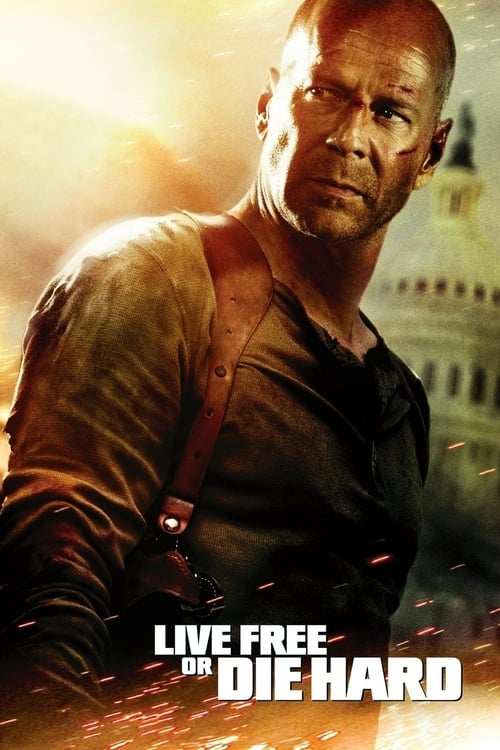
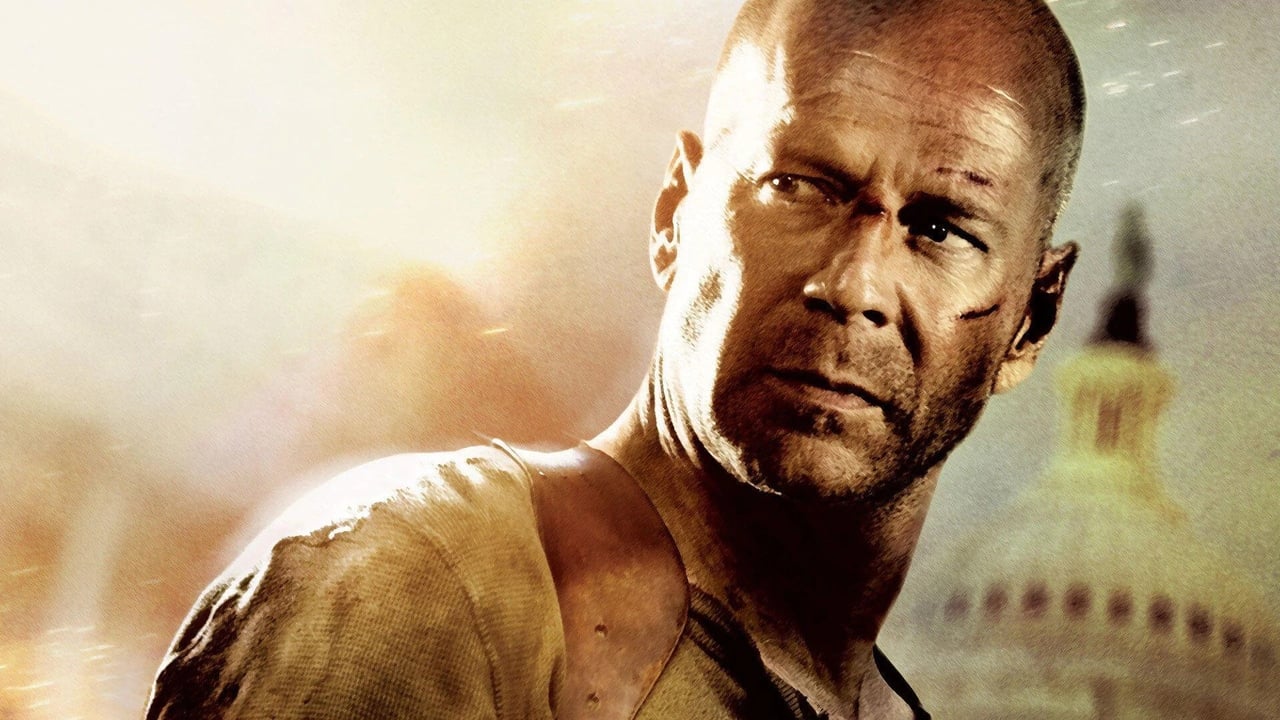
I vividly remember sitting in a sticky-floored theater in 2007, clutching a tub of popcorn that cost more than my first car, and wondering if Bruce Willis still had "it." It had been twelve years since Die Hard with a Vengeance (1995), and the cinematic landscape had shifted. We were deep into the era of the "shaky-cam" and the rise of the digital blockbuster. The question wasn't just whether John McClane could save the country, but whether an 80s relic could survive a 21st-century upgrade.
The Analog Cowboy in a Fiber-Optic Corral
Live Free or Die Hard is a fascinating time capsule of mid-2000s anxieties. It arrived right as the world was realizing that our reliance on interconnected systems was a massive, glowing "Kill" switch waiting to be flipped. The plot involves a "fire sale"—a three-stage systematic attack on the nation's transportation, financial, and utility networks. Looking back, the techno-babble is undeniably dated, but the core conflict remains compelling: McClane is a guy who solves problems with a wrench, trapped in a world where the problems are solved with a keyboard.
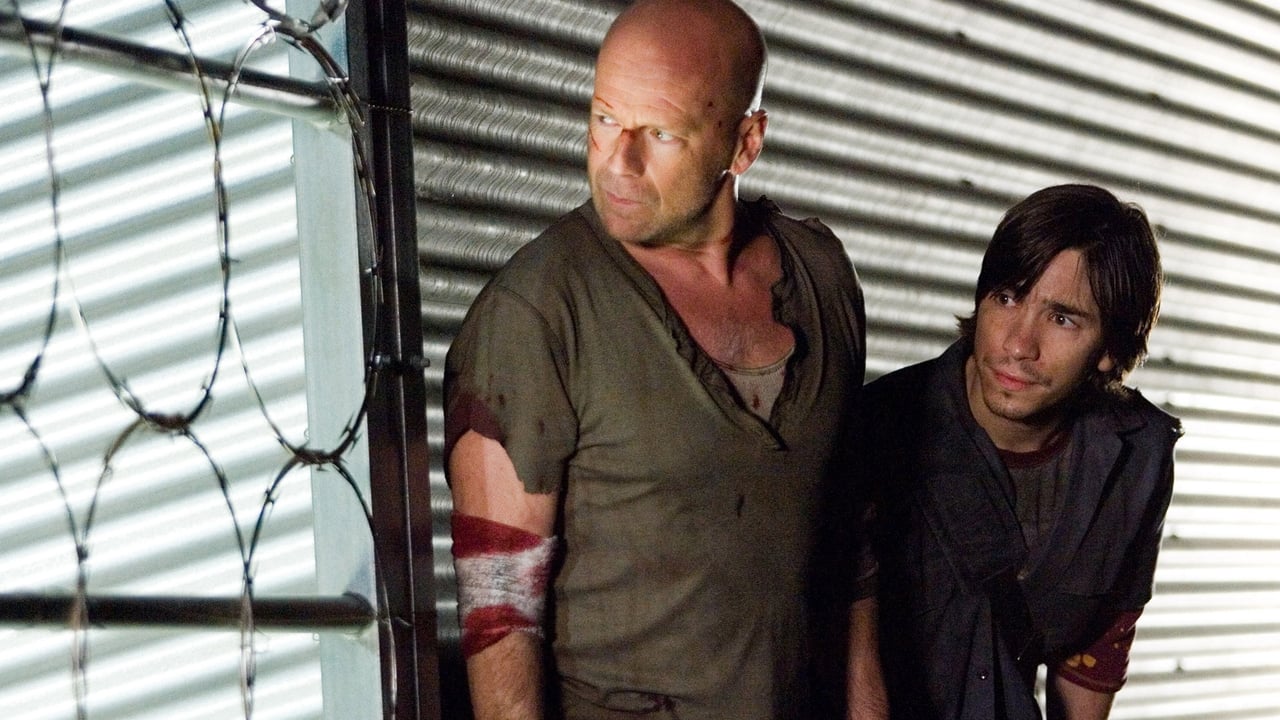
Pairing Willis with Justin Long (the "Mac" guy from those ubiquitous Apple commercials) was a stroke of genius. Long plays Matt Farrell, a "black hat" hacker who serves as McClane’s digital translator. Their chemistry works because it’s built on genuine mutual bewilderment. Justin Long captures that frantic, "I’m-about-to-die" energy perfectly, while Willis leans into the "grumpy uncle who can't find the HDMI port" persona. It’s a classic buddy-cop dynamic refurbished for the Y2K generation, and it keeps the movie grounded even when the physics start to take a vacation.
Gravity is Merely a Suggestion
Director Len Wiseman, fresh off the Underworld franchise, brought a sleek, steel-blue aesthetic to the series that felt very "of its time." While the original Die Hard (1988) was a masterclass in spatial geography within a single building, Live Free is a sprawling road movie. The action choreography is, for the most part, spectacular, even if it pushes the boundaries of reality until they snap.
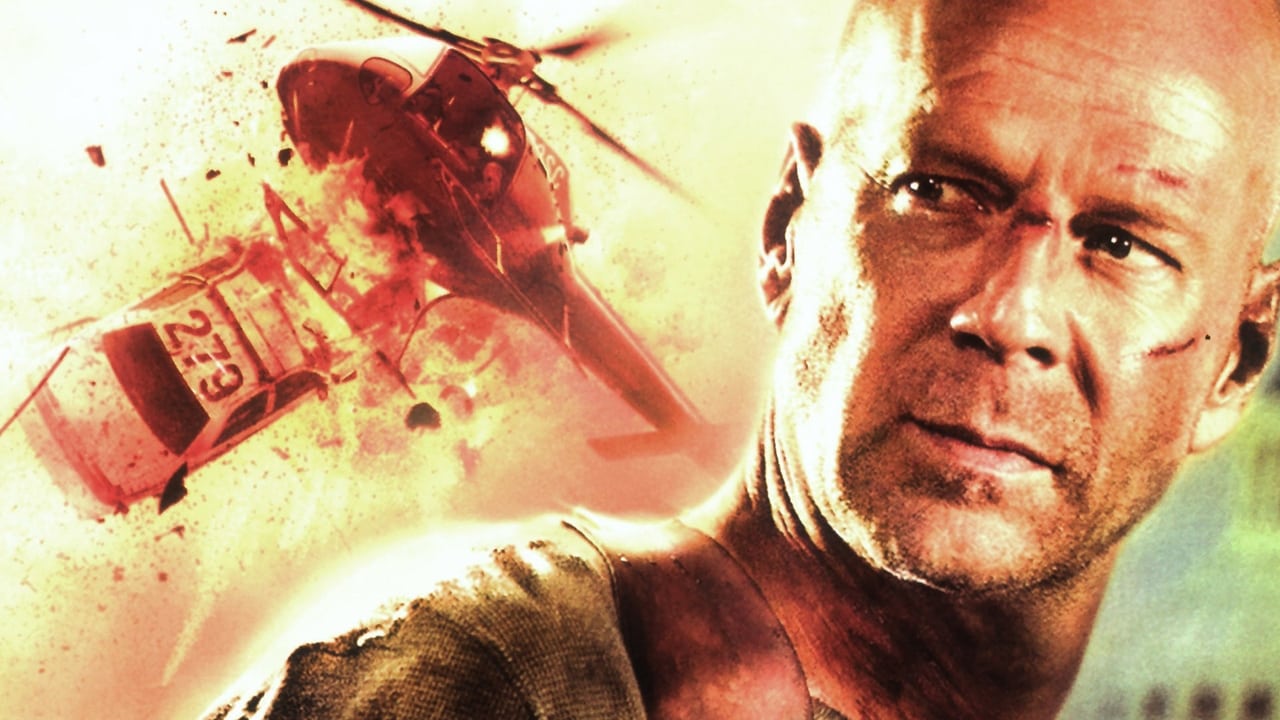
The standout sequence—the one everyone talked about at the watercooler—is the car-vs-helicopter tunnel stunt. It’s a glorious bit of practical-meets-digital mayhem. However, the film eventually hits a ceiling with the F-35 jet sequence toward the finale. By the time McClane is literally sliding down the wing of a hovering fighter jet, the movie has essentially become a live-action Wile E. Coyote cartoon. It’s fun, sure, but it loses that "everyman" grit that made the original 1988 classic so relatable. Still, seeing a car launch into a helicopter because "I ran out of bullets" is the kind of cinematic junk food I’ll never turn down.
The Olyphant in the Room
Every great Die Hard movie needs a great villain, and Timothy Olyphant (years before he perfected the modern cowboy in Justified) takes a swing at it here as Thomas Gabriel. Gabriel isn’t the charismatic rogue that Hans Gruber was; he’s a cold, calculated bureaucrat with a grudge. Olyphant plays him with a simmering, tech-bro arrogance that makes you desperately want to see him punched in the face.
The supporting cast is surprisingly deep. Mary Elizabeth Winstead (later a cult icon in Scott Pilgrim vs. The World) shows up as Lucy McClane, proving that the "tough-as-nails" DNA definitely skipped the Y chromosome in that family. We also get a pre-fame Cliff Curtis (Sunshine) and a hilarious cameo from Kevin Smith as "The Warlock," a legendary hacker living in his mother’s basement. It’s a perfect snapshot of 2007’s perception of "nerd culture" before it became the dominant global force.
The $383 Million Gamble
From a business perspective, Live Free or Die Hard was a behemoth. With a $110 million budget—unthinkable for an action film a decade prior—it was a high-stakes play by 20th Century Fox to see if the brand still had legs. It paid off massively, raking in over $383 million worldwide. It became the highest-grossing film in the entire franchise, adjusted for inflation or not.
The production wasn't without its scars, though. In a very McClane-esque turn of events, Willis’s stunt double, Larry Rippenkroeger, was seriously injured during a fall, leading to a temporary shutdown of production. This commitment to physical stunts (even when augmented by CGI) is why the film still feels weightier than the digital soup of modern superhero movies. It captured a moment when Hollywood was still trying to balance the "real" with the "rendered," and while it’s occasionally clumsy, the ambition is infectious.
Ultimately, Live Free or Die Hard is a loud, proud, and slightly ridiculous evolution of a legend. It’s not the lean, mean thriller the original was, but it’s a vastly better film than the later, disastrous A Good Day to Die Hard. It captures the mid-2000s transition from analog to digital with a smirk and a shattered windshield. If you can forgive a few physics-defying stunts and some "hacker magic," it’s a top-tier popcorn flick that proves you can’t keep a good New York cop down.
Keep Exploring...
-
Die Hard 2
1990
-
Die Hard: With a Vengeance
1995
-
Total Recall
2012
-
Die Hard
1988
-
Underworld: Evolution
2006
-

RED
2010
-
Underworld
2003
-
Armageddon
1998
-
Dawn of the Planet of the Apes
2014
-
The Last Boy Scout
1991
-
Hostage
2005
-

16 Blocks
2006
-
Surrogates
2009
-
Minority Report
2002
-
The Bourne Identity
2002
-
xXx
2002
-
2 Fast 2 Furious
2003
-

The Matrix Reloaded
2003
-

National Treasure
2004
-
The Bourne Supremacy
2004