Next
"Two minutes is all the head start he needs."
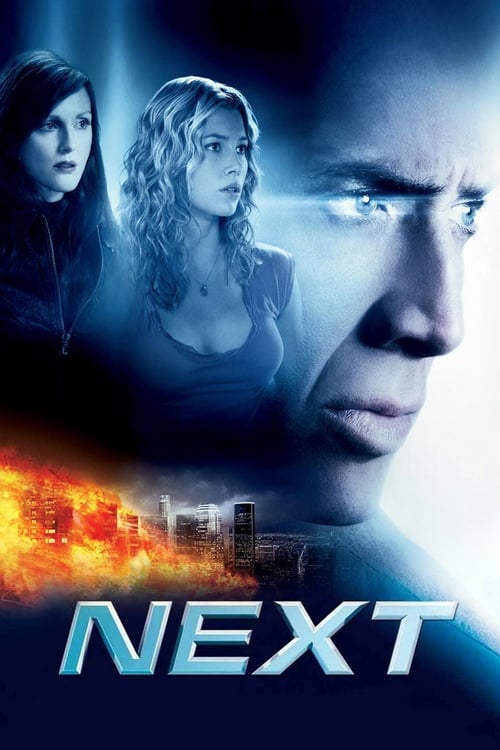
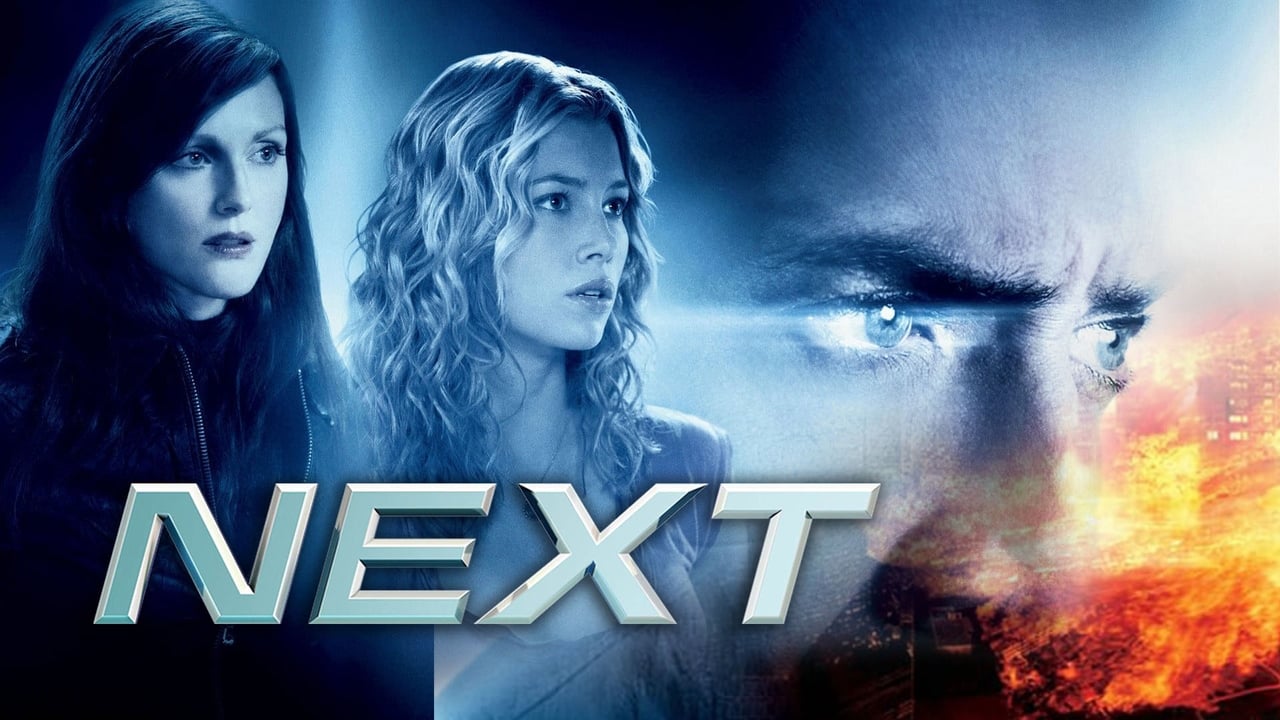
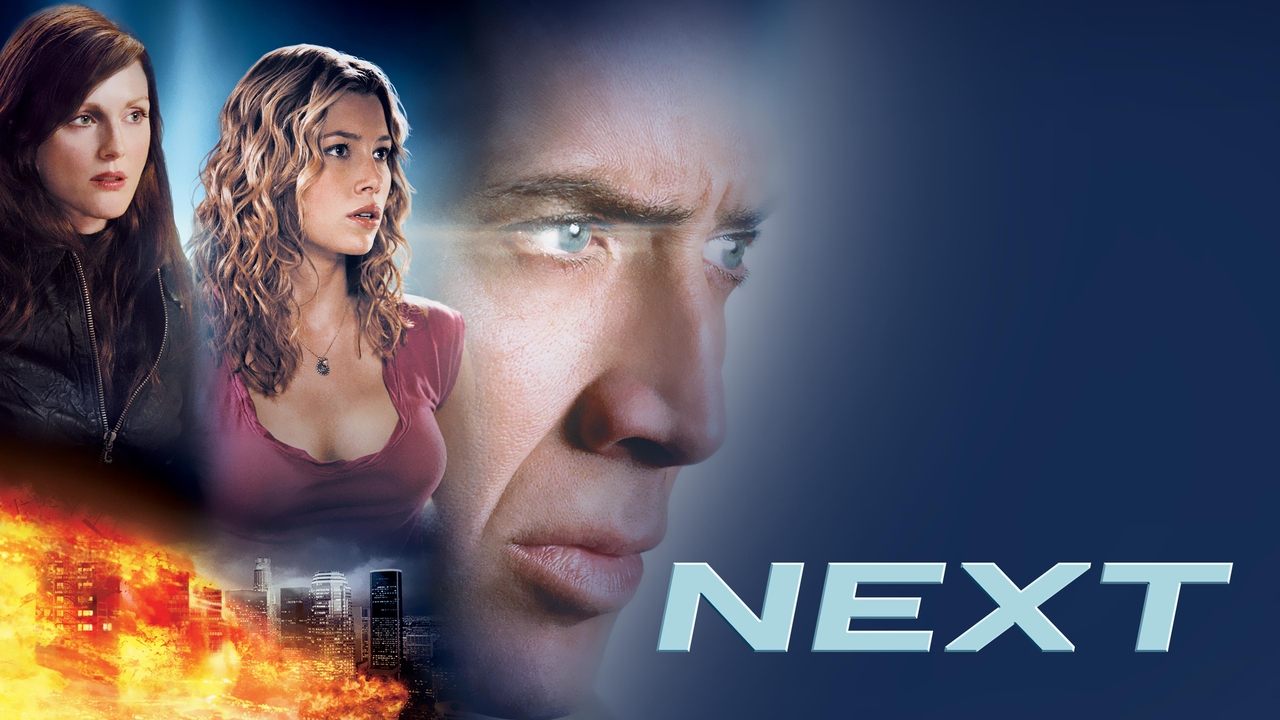
If I could see exactly two minutes into my own future, I’d probably use it to avoid stubbing my toe on the coffee table or to perfectly time the removal of a bagel from the toaster. Cris Johnson, played with a weary, hangdog intensity by Nicolas Cage, uses his gift to dodge security guards in Las Vegas casinos and perform mid-tier magic acts under the stage name Frank Cadillac. It’s the ultimate low-stakes superpower movie, at least until the nuclear winter starts knocking on the door.
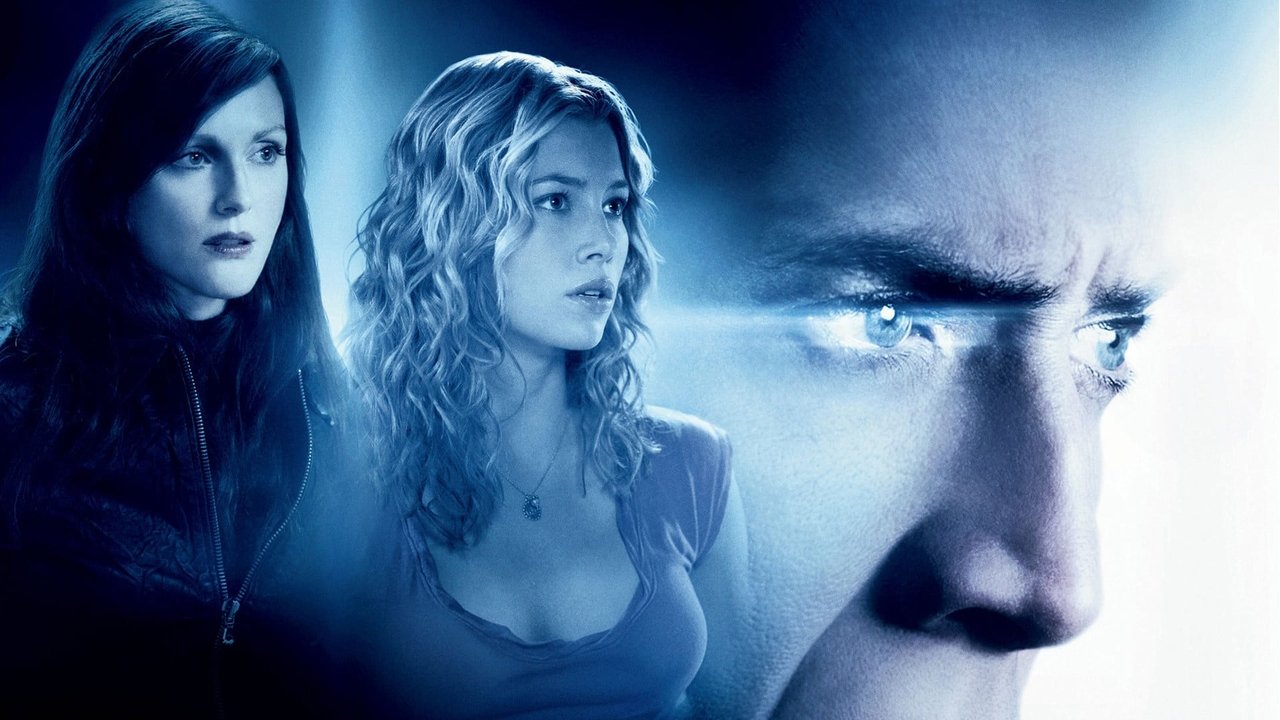
I recently revisited Next on a rainy Tuesday while eating a bowl of lukewarm SpaghettiOs, and I realized that the orange glow of the canned pasta perfectly matched the oversaturated, mid-2000s color palette of the film. It’s a movie that feels like a relic of a very specific window in Hollywood—that post-9/11 era where we were obsessed with "remote viewing," terrorist cells, and the frantic ticking clocks of 24, but before the MCU turned every superpower into a multi-billion-dollar brand identity.
A Philip K. Dick Fever Dream
Loosely—and I mean very loosely—based on Philip K. Dick's short story "The Golden Man," Next is a fascinating example of how the 2000s handled sci-fi concepts. In the original story, the protagonist is a golden-skinned mutant who is essentially an animal; here, he’s a guy in a leather jacket with a hairpiece that has its own SAG card and more screen presence than the actual terrorists.
The director, Lee Tamahori (who gave us the high-octane madness of Die Another Day), treats the "two-minute" rule as a playground for visual experimentation. Looking back, the CGI hasn't aged like fine wine—it’s more like a boxed juice that’s been sitting in the sun—but there’s a charm to its ambition. There’s a scene where Nicolas Cage rolls down a mountain to escape a plummeting car, and the physics are so delightfully "early-digital" that it feels like watching a video game character clip through the environment. It’s not "good" in a traditional sense, but it’s immensely watchable because the film never stops moving.
Action in 120-Second Bursts
The action choreography is where Next actually finds its groove. Because Cris can see the immediate consequences of his actions, the fights aren't just about punching; they’re about positioning. There’s a fantastic sequence in a warehouse toward the end where Cris "splits" into dozens of transparent versions of himself, exploring every possible corridor to see which one leads to a bullet and which leads to safety. It’s a clever way to visualize a psychic ability without relying on the tired "slow-motion dodge" we saw a thousand times after The Matrix.
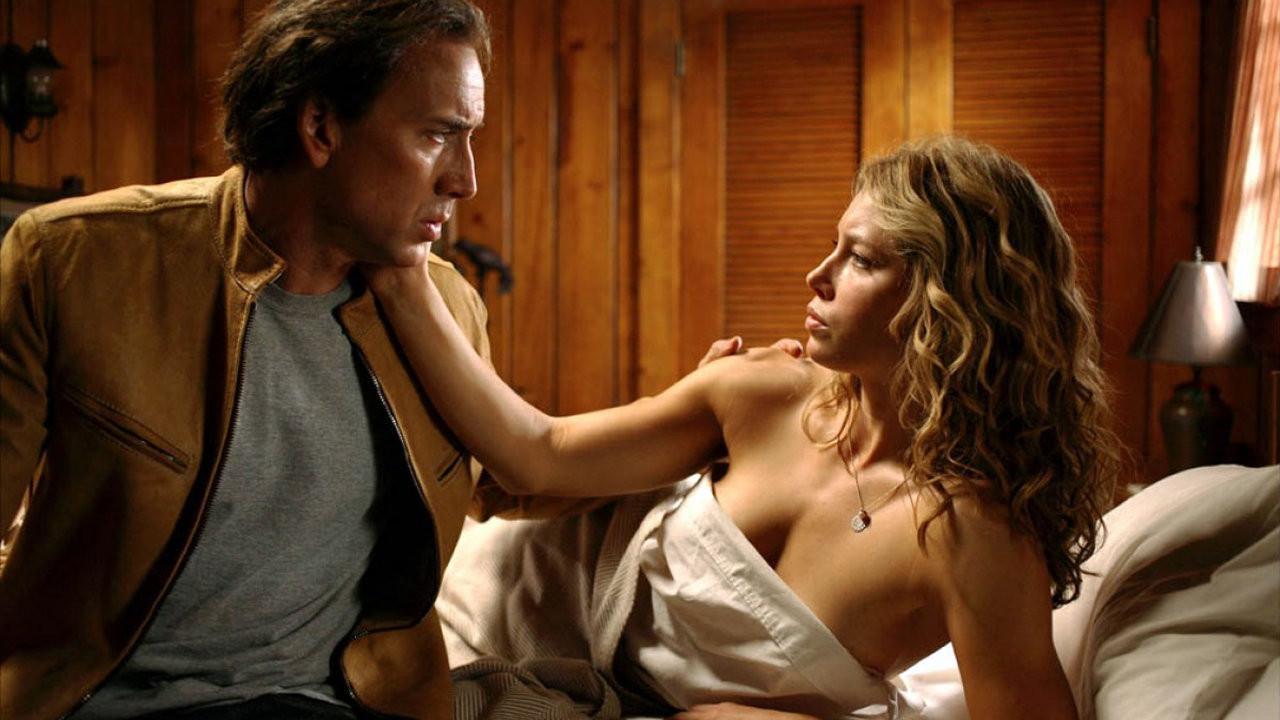
Julianne Moore shows up as Callie Ferris, an FBI agent who is determined to weaponize Cris’s brain. Moore is an absolute pro, which means she plays this role with a straight-faced gravity that the script probably didn't deserve. Watching her trade barbs with Nicolas Cage is like watching a world-class violinist play a duet with a guy on a kazoo—it shouldn’t work, but the friction is entertaining. Meanwhile, Jessica Biel plays Liz, the "woman of his dreams" (literally, he sees her in a vision), and while her role is mostly to be the emotional anchor/damsel, she and Cage have a weirdly sweet chemistry that keeps the middle act from dragging.
The "Cage Factor" and the Great Escape
Apparently, Nicolas Cage was the one who insisted on the "Frank Cadillac" name, a tribute to his favorite car and his favorite magician. This is peak "Nouveau Shamanic" Cage—he’s internal, brooding, and occasionally explodes into the kind of kinetic energy that only he can provide. It’s also a classic example of the mid-2000s DVD culture; I remember the special features on the disc went into agonizing detail about the "staircase sequence" where Cris avoids a series of falling objects. They used a mix of practical rigs and early digital compositing that felt groundbreaking at the time, even if it looks a bit like a fever dream now.
The film’s biggest hurdle—and the reason it remains a cult oddity rather than a classic—is the ending. Without spoiling the specifics, the finale is basically a massive middle finger to the audience’s patience. It’s a narrative choice that felt cheap in 2007 and feels even cheaper now, reflecting a studio trend of the time where "the twist" was more important than the payoff.
However, the journey there is a blast. Whether it's Thomas Kretschmann playing a generic but menacing villain or the appearances of character actors like Jim Beaver and Tory Kittles, the movie populates its world with enough talent to keep you from changing the channel. It’s a film that failed to set the box office on fire, barely clawing back its budget, but it found a second life on cable TV where its 96-minute runtime makes it the perfect "I'll just watch ten minutes of this" trap.
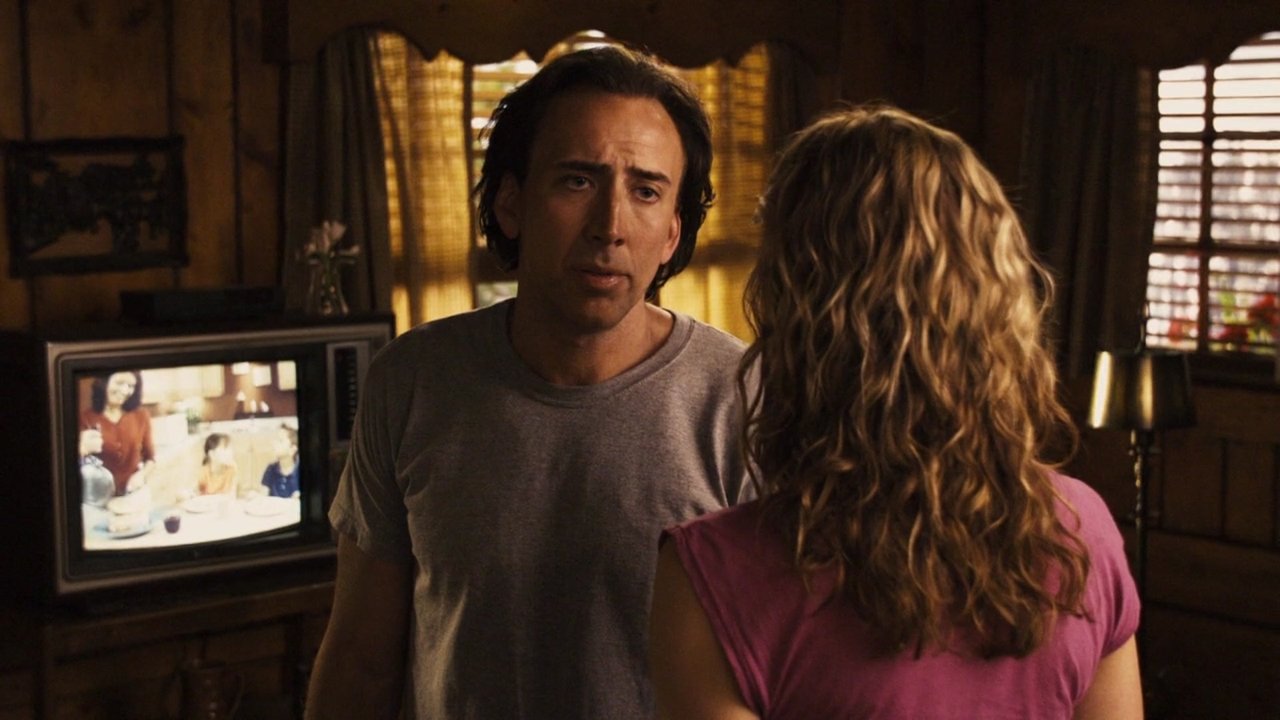
Next is the cinematic equivalent of a airport thriller novel: you know exactly what you’re getting, it’s a bit silly, and you’ll forget half of it by the time you land, but the ride is undeniably smooth. It captures a moment when Nicolas Cage was transitioning from "Oscar-winning leading man" to "unpredictable genre icon," and for that reason alone, it’s worth a look. Just don’t expect the ending to pay your tab. It’s a breezy, effects-heavy romp that reminds us that sometimes, seeing the future is less about saving the world and more about looking cool while dodging a falling log.
***
Stuff You Might Have Missed:
Nicolas Cage actually performed some of the magic tricks seen in the Las Vegas showroom scenes himself after training with professional consultants. Julianne Moore reportedly took the role primarily because she wanted to work with Cage, proving even the best actors aren't immune to the Cage-ian gravity. The film was one of the last major productions to use the iconic Grand Canyon locations before stricter filming regulations were put in place for large-scale action sets. The "two-minute" rule is actually broken several times throughout the film for plot convenience, a fact that has kept internet forum users busy for nearly two decades. The title of the film changed several times during production, but they landed on Next* to emphasize the immediate, short-term nature of Cris’s precognition.
Keep Exploring...
-
Total Recall
2012
-
Knowing
2009
-
The Tuxedo
2002
-
Terminator 3: Rise of the Machines
2003
-
The Matrix Revolutions
2003
-
Æon Flux
2005
-
The Island
2005
-

X-Men: The Last Stand
2006
-
Babylon A.D.
2008
-
Gamer
2009
-

G.I. Joe: The Rise of Cobra
2009
-
Surrogates
2009
-
Terminator Salvation
2009
-
The Book of Eli
2010
-
Cowboys & Aliens
2011
-
I Am Number Four
2011
-

Battleship
2012
-
Ghost Rider
2007
-
Die Another Day
2002
-
Equilibrium
2002