Paranormal Activity
"The silence is what kills you."
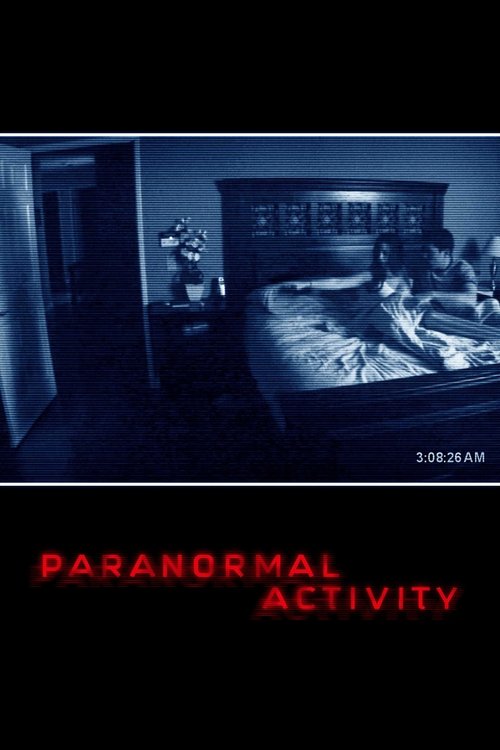
I first watched Paranormal Activity in a cramped dorm room on a laptop screen, sitting in a squeaky IKEA chair that sounded exactly like the floorboards in the movie. I was drinking a lukewarm Diet Coke that had lost its fizz hours ago, but by the time the time-lapse clock on the screen started racing toward 3:00 AM, I was too paralyzed to reach for it. That is the singular power of this film: it turns your own living space against you. It’s not about a masked killer in the woods; it’s about the fact that you have to go to sleep eventually, and you have no idea what your legs are doing while you’re out.
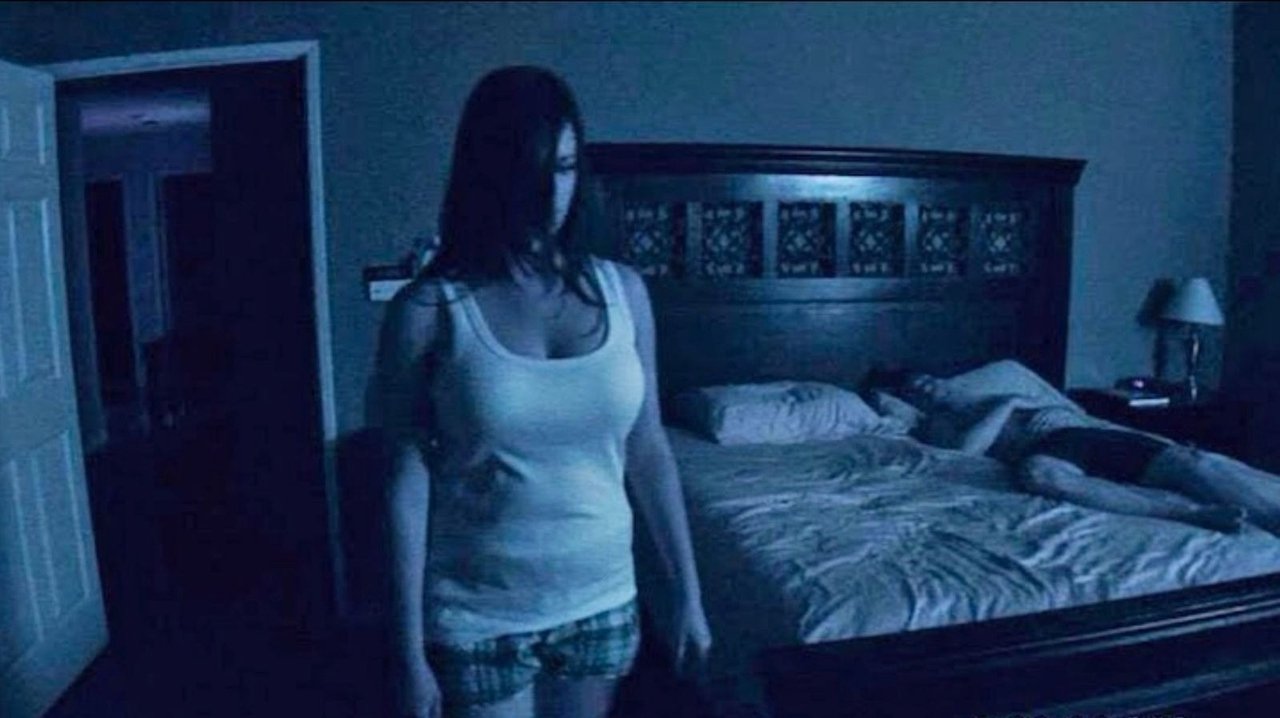
Before it was a billion-dollar franchise and the cornerstone of the Blumhouse empire, Paranormal Activity was just a $15,000 experiment shot in director Oren Peli’s own house. Looking back from an era where every horror movie feels like it’s competing for the most complex "elevated" metaphor, there is something profoundly refreshing about how literal this movie is. There is a ghost. It is mean. It wants to stand over your bed and stare at you for four hours. That’s it, and that’s plenty.
The Art of Doing Absolutely Nothing
The genius of the film lies in its mastery of the "negative space" of cinema. In 2007, we were still recovering from the "torture porn" wave of the early 2000s—films like Saw or Hostel that tried to outdo each other with practical gore. Oren Peli went the opposite direction, betting everything on the idea that a door moving six inches is scarier than a chainsaw.
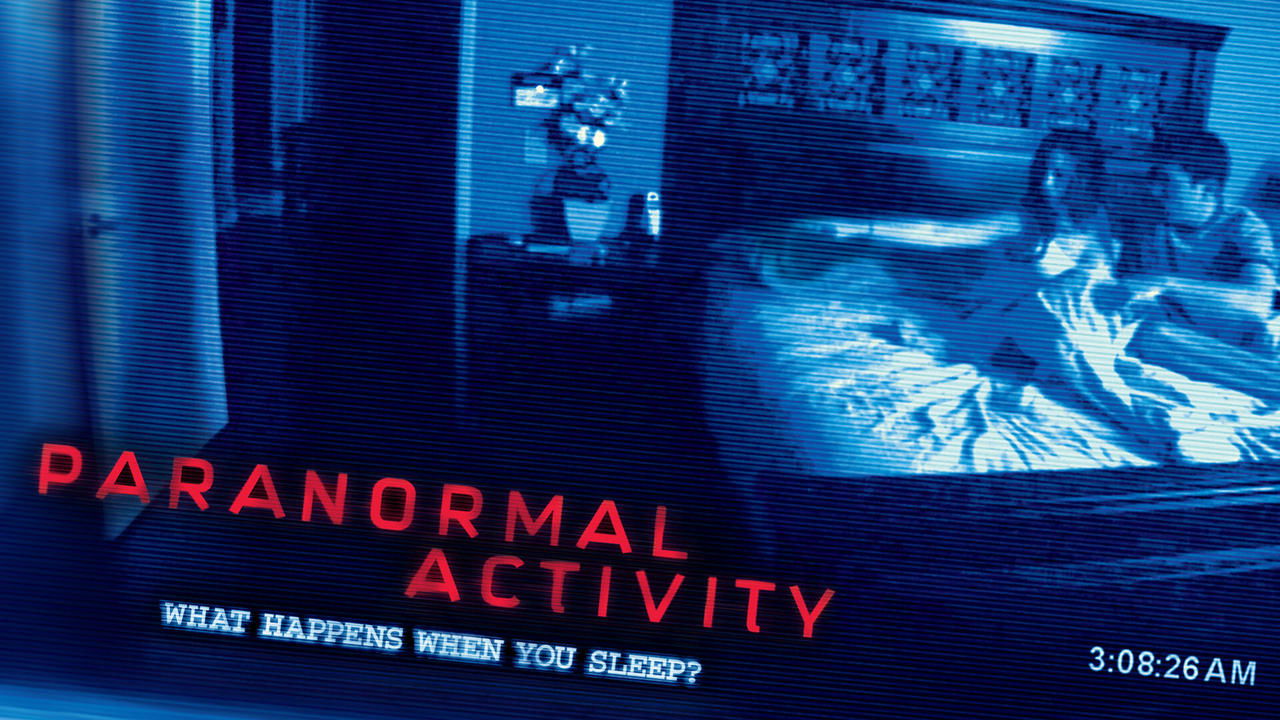
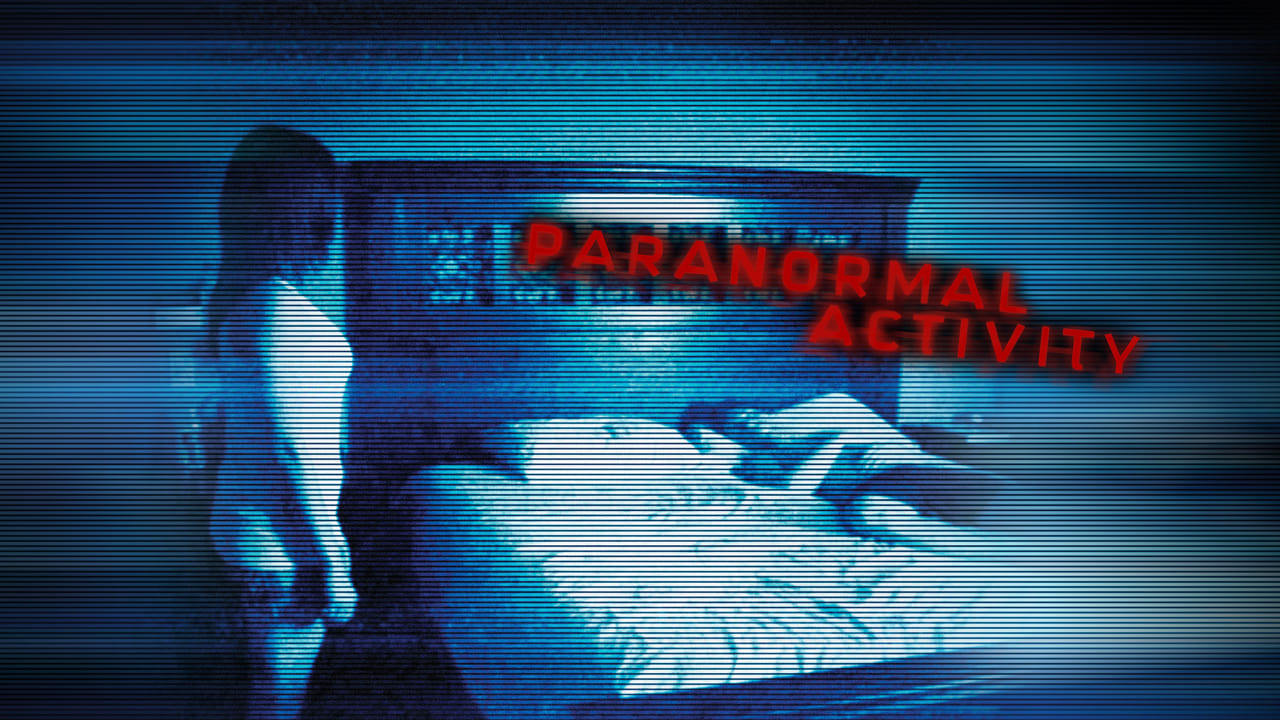
The film utilizes a fixed-camera perspective, mostly centered on the bedroom of Katie Featherston and Micah Sloat. Because the camera doesn't move, your eyes start to do the work for it. You find yourself scanning the top right corner of the frame, wondering if that shadow just shifted, or staring at the hallway door until your vision blurs. It forces a level of active participation that most big-budget horror lacks. When the low-frequency hum (the "demon's theme") kicks in on the soundtrack, it’s a physical signal to brace yourself. I remember feeling a genuine sense of resentment toward the film because it refused to give me a jump scare to break the tension; it just let the dread simmer until I wanted to crawl out of my skin.
The "Found Footage" Renaissance
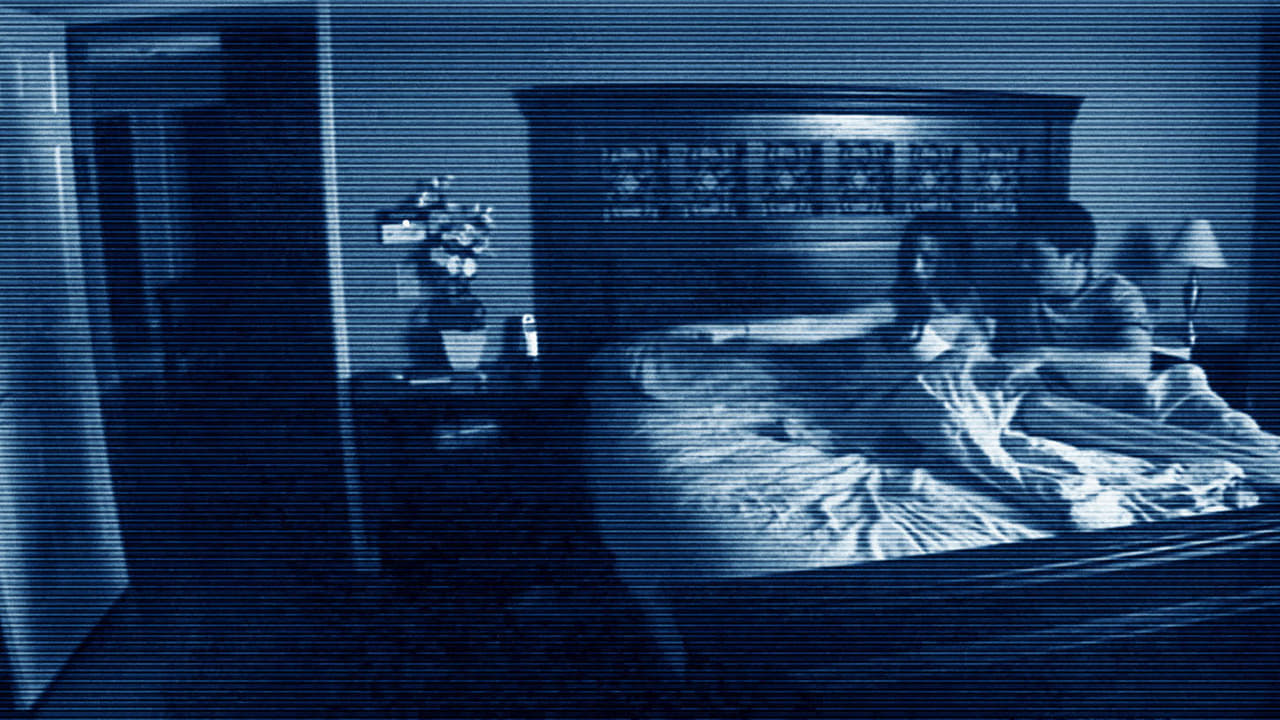
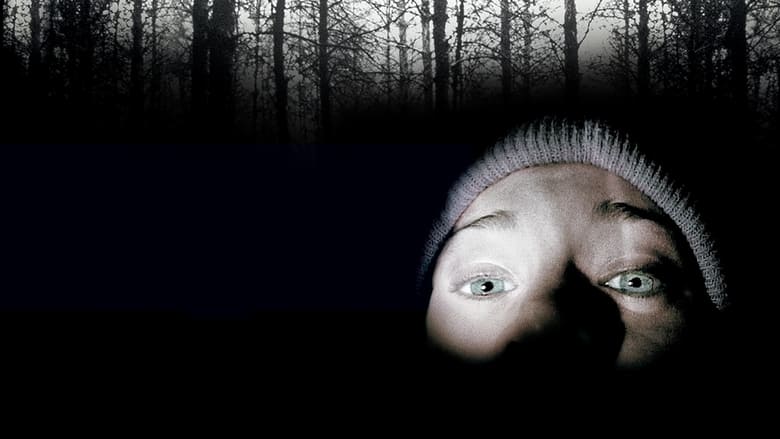
While The Blair Witch Project (1999) invented the modern found-footage wheel, Paranormal Activity polished it for the digital age. By 2007, everyone had a digital camera or a high-end phone; the idea of a guy like Micah Sloat buying expensive gear to "document" his life felt entirely plausible.
The performances are the secret sauce here. Because Katie Featherston and Micah Sloat used their real names and improvised much of the dialogue, the domestic friction feels uncomfortably real. Micah is essentially the villain of the movie because he treats a demonic haunting like a tech-support ticket he can solve with a better tripod. His arrogance is the perfect foil to Katie’s escalating terror. I’ve always found their relationship to be the most realistic part of the movie—the way an external stressor reveals the pre-existing cracks in a couple's communication. It’s a domestic drama that just happens to involve a poltergeist.
A Masterclass in Viral Momentum
You can’t talk about this film without talking about how it conquered the world. It sat on a shelf for a couple of years before Paramount and Jason Blum figured out how to sell it. They famously used the "Demand It" campaign, where fans had to vote online to bring the movie to their city. It turned the release into an event, fueled by grainy night-vision footage of theater audiences leaping out of their seats.
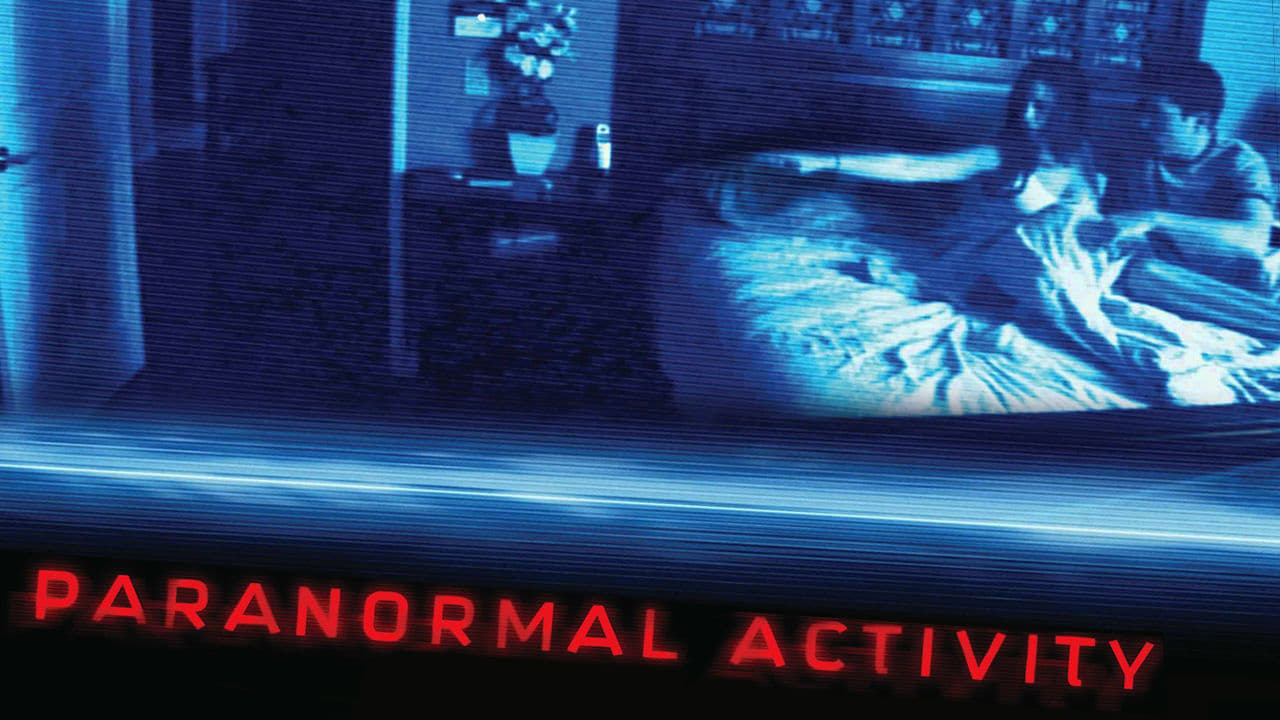
Apparently, the hype was so intense that Steven Spielberg himself got a DVD of the film and allegedly returned it in a garbage bag because he thought the disc was haunted. Whether that’s true or just brilliant marketing, it added to the film's "forbidden" mystique. It didn't feel like a product; it felt like a tape you weren't supposed to see. Even the financial trajectory—turning $15k into nearly $200 million—felt like a glitch in the Hollywood matrix. It proved that in the digital era, a good idea and a tripod could still beat a $100 million marketing budget.
Ultimately, Paranormal Activity holds up because it preys on a universal vulnerability. We all have to sleep, and we all have houses that make weird noises at night. It’s a lean, mean piece of DIY filmmaking that stripped the genre down to its studs and found something primal underneath. It might have spawned a dozen lesser sequels that over-explained the lore, but this original entry remains a masterpiece of minimalist tension. If you haven't seen it in a while, watch it tonight with the lights off—just don't blame me when you're still awake at 4:00 AM staring at your bedroom door.
Keep Exploring...
-
Paranormal Activity 3
2011
-
Paranormal Activity 2
2010
-
The Ring
2002
-
The Grudge
2004
-
Final Destination 3
2006
-

The Omen
2006
-
1408
2007
-
Final Destination 5
2011
-
The Blair Witch Project
1999
-
I Know What You Did Last Summer
1997
-

Scream 2
1997
-
The Last Exorcism
2010
-

Sinister
2012
-
Saw
2004
-
The Mothman Prophecies
2002
-

Final Destination 2
2003
-
Gothika
2003
-
High Tension
2003
-
Dark Water
2005
-
Hide and Seek
2005