Penelope
"True love is a bit of a pig."
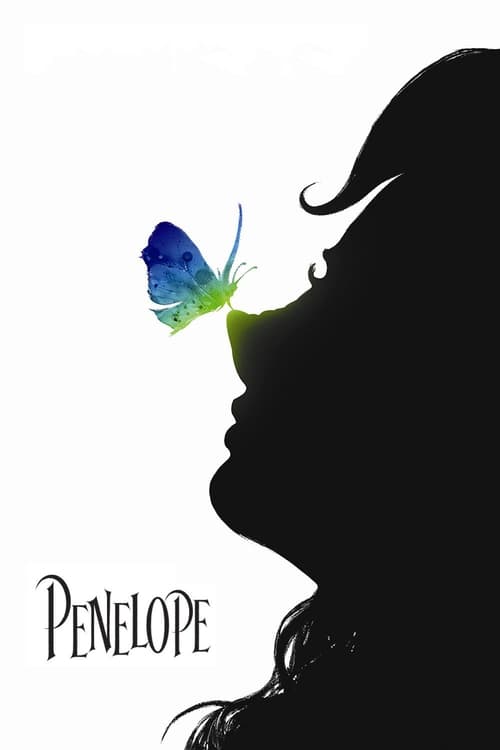
There is a specific brand of mid-2000s whimsy that feels like it was dipped in a vat of saturated syrup and left to dry in a boutique gift shop. It was the era of "twee"—a time of oversized cardigans, saturated color palettes, and a desperate desire for modern-day fables that didn't involve a Shrek-style wink to the camera. Penelope (2007) is the crown jewel of this forgotten aesthetic. It’s a film that arrived just as the indie-fantasy trend was peaking, sandwiched between the gritty realism of the post-9/11 era and the looming shadow of the MCU’s homogenized gloss.

I’ve always found it strange that this movie didn't become a massive sleepover staple. It has all the ingredients: a cursed socialite with a pig snout, a soulful gambler in a dusty waistcoat, and enough production design to make a Wes Anderson fan weep with joy. Yet, due to a tangled distribution mess where it sat on a shelf for nearly two years before Summit Entertainment (the house that Twilight built) finally dumped it into theaters, it remains a "hidden gem" that most people only vaguely recall seeing on a Blockbuster shelf.
A Masterclass in Practical Whimsy
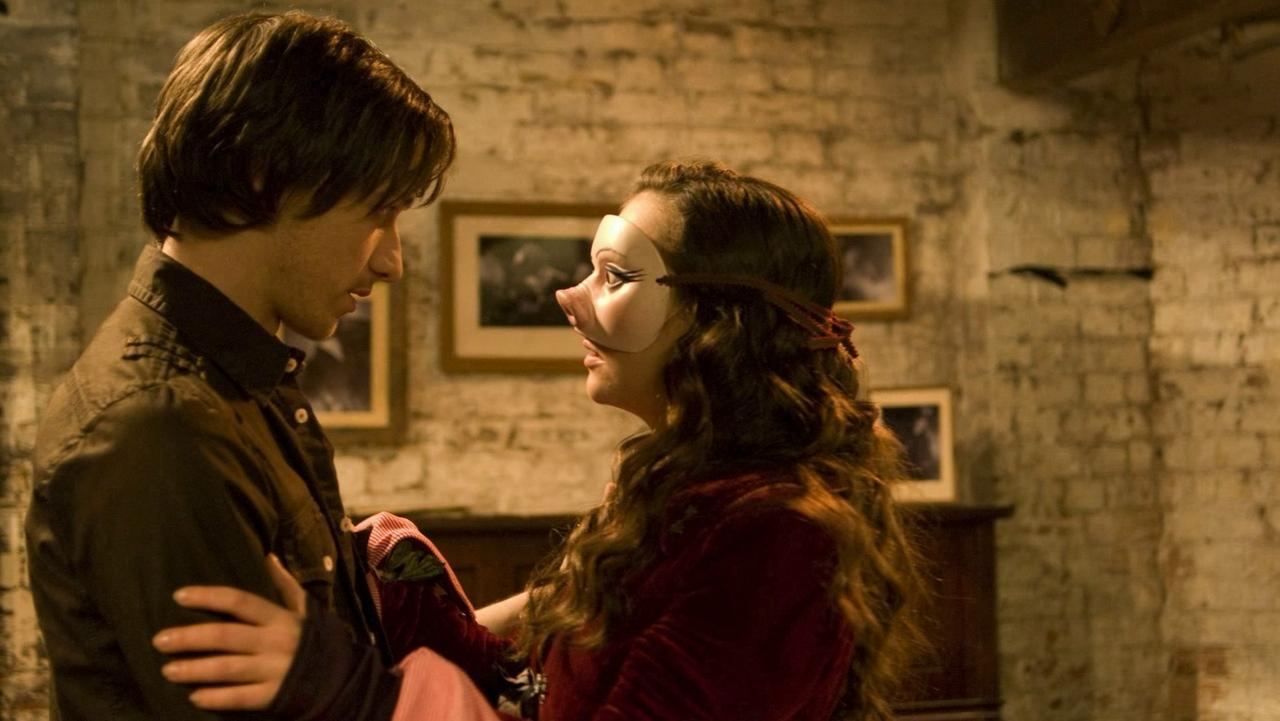
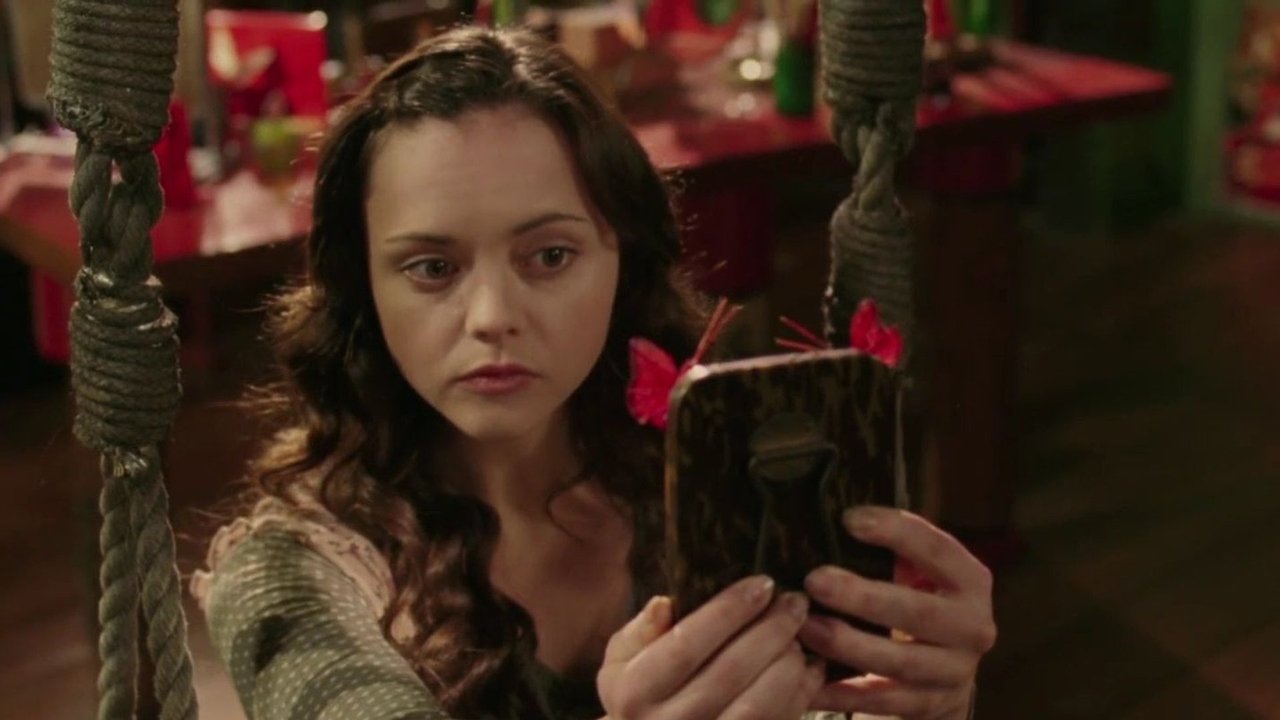
What immediately strikes me upon a re-watch is how well the practical effects hold up. In an era where we were just starting to lean too heavily on "good enough" CGI, director Mark Palansky opted for a prosthetic nose for Christina Ricci. It was a risky move—if the snout looked too grotesque, the romance wouldn't fly; if it looked too fake, the stakes would vanish. Instead, it’s remarkably cute. It fits Ricci’s famously expressive, large eyes perfectly, allowing her to act through the rubber rather than being buried by it.
The film's world-building is equally tactile. Penelope’s bedroom is a sprawling, ivy-covered sanctuary that looks like a high-end botanical garden collided with a Victorian library. I actually tried to knit a scarf exactly like Penelope’s yellow-and-orange one while watching this for the first time, and I ended up with a tangled yarn ball that looked like a bird’s nest and a very frustrated cat. That sense of "handmade" charm permeates the whole movie. The cinematography by Michel Amathieu uses a "Digital Intermediate" process that was popular at the time to push the greens and yellows into a hyper-real, storybook territory that feels cozy rather than artificial.
Casting Against the Curse
The cast is a literal "who’s who" of people I would trust with my life. Christina Ricci (who I’ll always love for The Addams Family) brings a wonderful, dry wit to Penelope. She isn't a tragic victim; she’s a bored girl who’s read too many books and is tired of her mother’s histrionics. Speaking of which, Catherine O'Hara is doing some of her best "pre-Moira Rose" work here as the high-strung Jessica Wilhern. Her energy is frantic, exhausting, and hilarious.
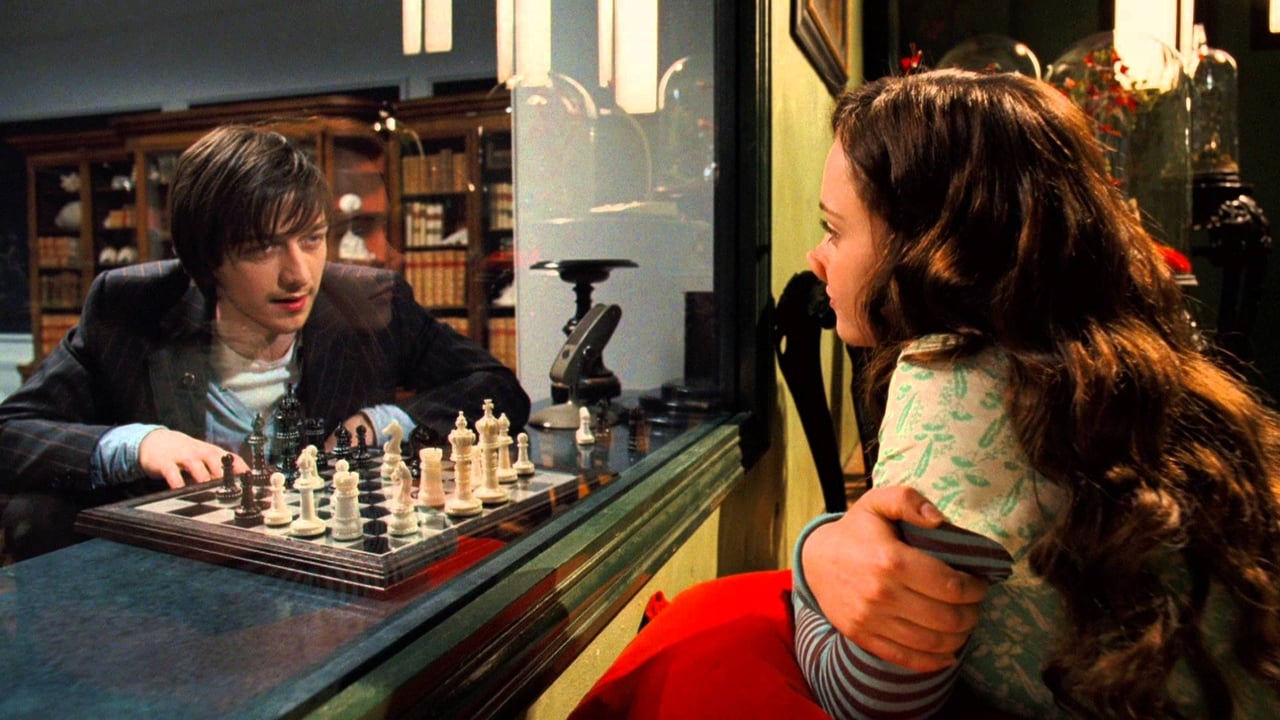
Then there’s James McAvoy. This was right around his Atonement and The Chronicles of Narnia era, and he was arguably at his most charming. He plays Max, a down-on-his-luck gambler hired by a vengeful reporter (Peter Dinklage, sporting a fantastic eye patch) to snap a photo of the "pig-girl." James McAvoy in a 2000s cardigan with messy hair is the peak of cinema, and his chemistry with Ricci—conducted mostly through a one-way mirror—is surprisingly tender. They spend most of the movie just talking, which is a rarity in modern rom-coms that usually rely on "misunderstanding" tropes to drive the plot.
Subverting the Fairytale Formula
The screenplay by Leslie Caveny is smarter than it gets credit for. The curse states that Penelope can only be freed by "one of her own kind" loving her. The movie lets you think this means a blue-blooded aristocrat, leading to a parade of hilarious cameos by wealthy suitors who jump out of windows the moment they see her. But the ultimate resolution—which I won’t spoil, though it’s beautifully earned—is a proto-feminist pivot that felt quite fresh in 2007. It’s less about a prince saving a princess and more about a girl realizing that the Wilhern family tree is a masterpiece of genealogical idiocy and she doesn't need their approval.
Interestingly, the film was produced by Reese Witherspoon, who also takes a supporting role as Annie, a leather-jacket-wearing, Vespa-riding delivery girl who introduces Penelope to the real world. Witherspoon’s influence is clear; the movie has that "Type A" heart—organized, sincere, and determined to deliver a message of self-actualization. It captures that mid-2000s transition where we were moving away from the irony of the 90s and toward a more earnest, almost "twee" sincerity.
The Mystery of the Disappearing Fable
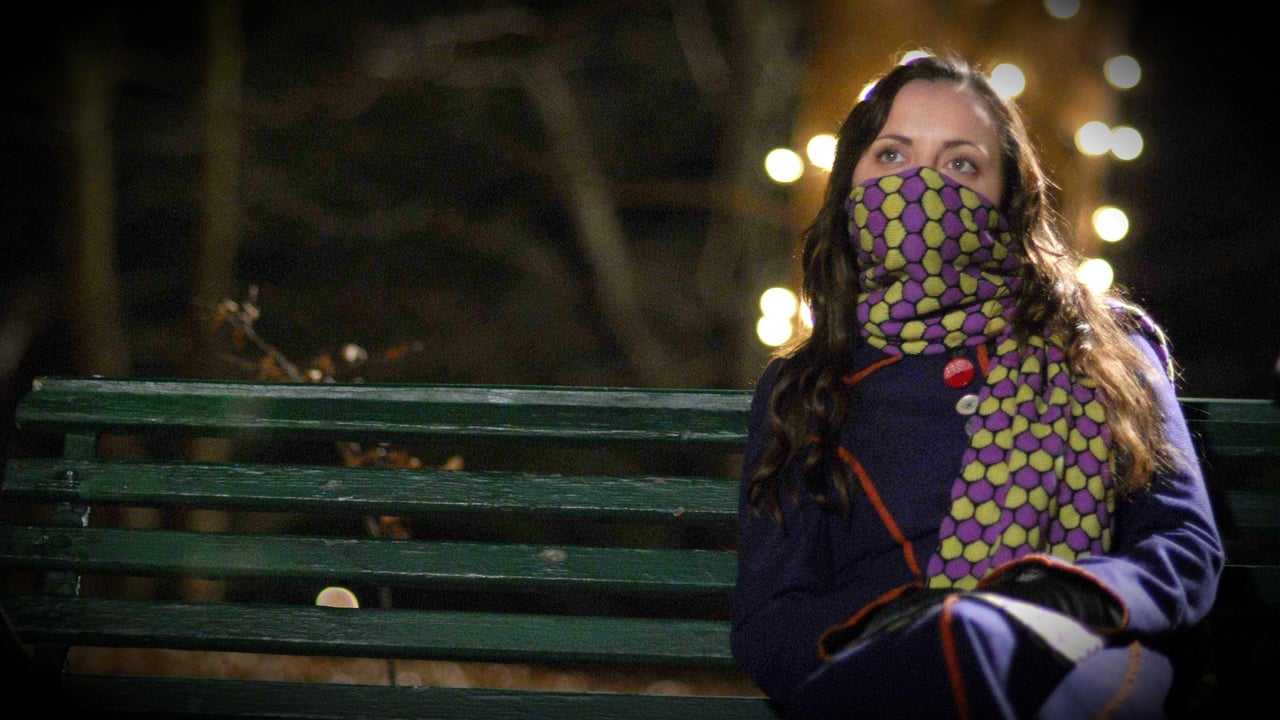
Why did it vanish? It’s a classic case of a movie being "too something" for the 2008 market. It was too whimsical for the Dark Knight crowd, too indie for the Disney crowd, and its delayed release made it feel slightly dated the moment it hit screens. Apparently, the prosthetic nose took about 90 minutes to apply every day, and Ricci has mentioned in interviews that she actually grew quite fond of it. That affection shows.
Looking back, Penelope feels like a warm hug from a decade that didn't know how to market its own imagination. It’s a film that trusts its audience to enjoy a slow-burn conversation between a girl with a snout and a guy with a secret. If you missed it during the DVD era, it’s well worth a trip back into the Wilhern estate. It’s a reminder that sometimes the best way to break a curse is to just stop believing in the people who told you that you were cursed in the first place.
In a landscape of loud, cynical blockbusters, Penelope is a quiet, colorful anomaly that dares to be sweet without being saccharine. It’s a perfect rainy-day movie, anchored by a soulful James McAvoy and a wonderfully grounded Christina Ricci. While it might not have the cultural footprint of other 2000s fantasies, its message of self-acceptance and its gorgeous, tactile world make it a fable worth rediscovering. Just don't expect your knitting projects to turn out as well as hers.
Keep Exploring...
-
Aquamarine
2006
-
Kate & Leopold
2001
-

Practical Magic
1998
-
Freaky Friday
2003
-

Stranger Than Fiction
2006
-

Ghosts of Girlfriends Past
2009
-
Midnight in Paris
2011
-
Just My Luck
2006
-
Ghost Town
2008
-

Ruby Sparks
2012
-
Shrek 2
2004
-
Just Like Heaven
2005
-
Bedtime Stories
2008
-
S1m0ne
2002
-

Under the Tuscan Sun
2003
-
First Daughter
2004
-
Casanova
2005
-
The Sisterhood of the Traveling Pants
2005
-

The Wedding Date
2005
-
Nick and Norah's Infinite Playlist
2008