The Bourne Ultimatum
"The hunter becomes the architect of his own escape."
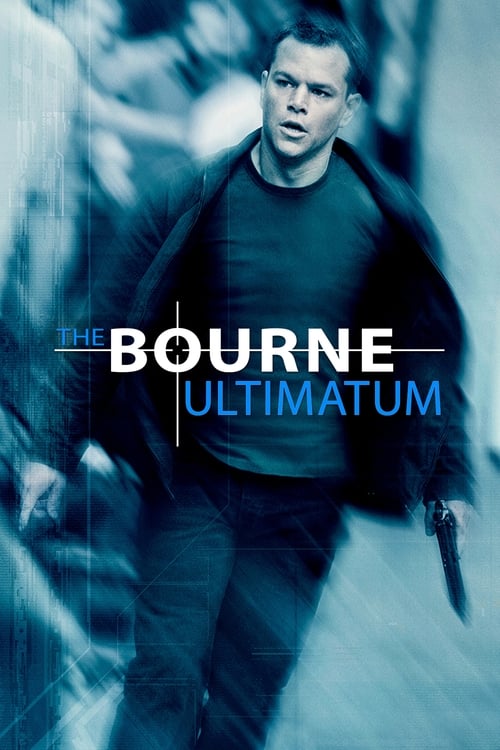
The first thing that hits you isn’t a punch or a bullet; it’s the sound of a heavy, frantic breathing that seems to vibrate inside your own ribcage. By the time the third entry in the Bourne trilogy arrived in 2007, the franchise had already reinvented the spy genre, but The Bourne Ultimatum felt like a deadline finally catching up with its protagonist. There is no "previously on" montage here. Director Paul Greengrass assumes you’ve been paying attention, throwing us directly into the freezing rain of Moscow as Jason Bourne limps away from a car crash. It’s a masterclass in narrative momentum—a film that moves so fast it makes the original James Bond films look like they’re underwater.
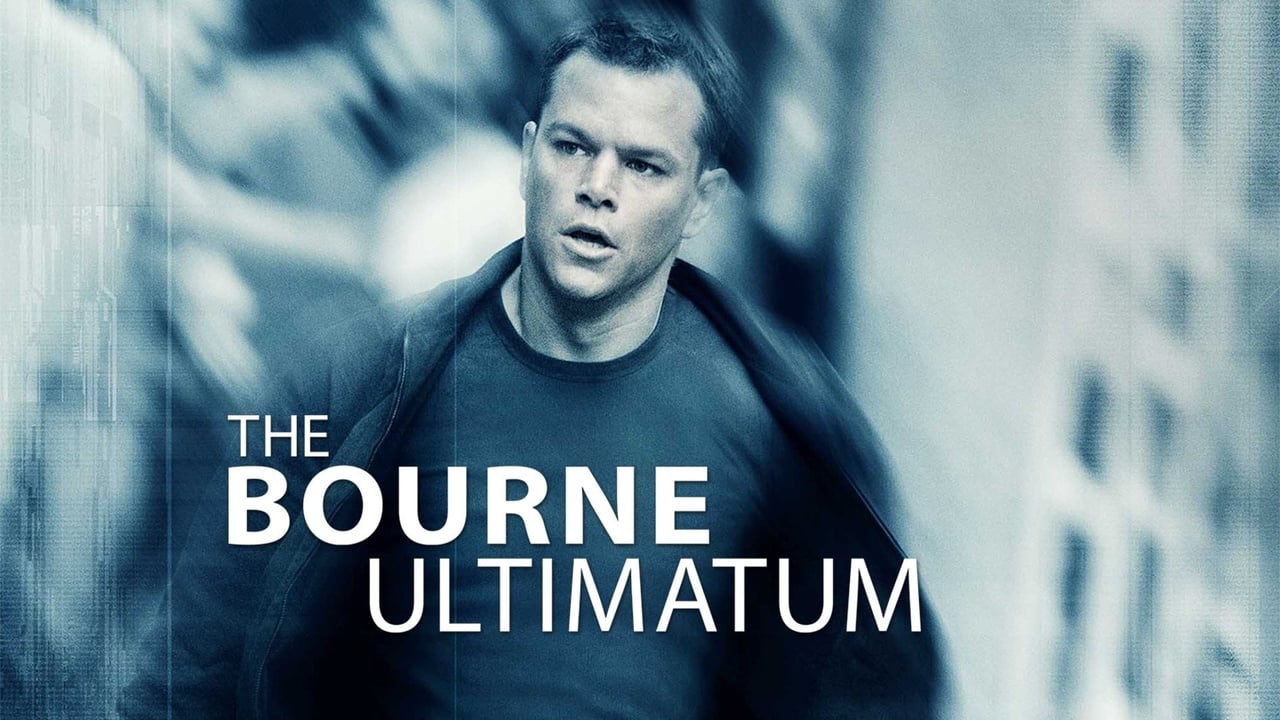
I watched this most recently on a flight where the person next to me was aggressively peeling a hard-boiled egg, and somehow the sulfurous smell and the cramped seating only enhanced the claustrophobic, "man-on-the-run" tension of the Waterloo Station sequence.
The Geography of Chaos
We have to talk about the "shaky cam." In the mid-2000s, Paul Greengrass and cinematographer Oliver Wood (who also lensed The Other Guys and Face/Off) became the architects of a visual language that half of Hollywood would spent the next decade failing to replicate. While critics at the time complained about motion sickness, looking back, the frenetic camerawork in Ultimatum is incredibly disciplined. You always know where Bourne is in relation to his target. It’s not "chaos" for the sake of hiding bad choreography; it’s a way to put the audience in Bourne’s hyper-vigilant headspace.
The Waterloo Station set piece is perhaps the greatest sequence in 21st-century action cinema. It’s ten minutes of a man with a burner phone guiding a terrified journalist, Paddy Considine (later of House of the Dragon fame), through a sea of CCTV cameras and assassins. There are no explosions. No one even throws a punch for most of it. It’s pure, distilled tension built on the geography of a crowded room. John Powell’s score—all driving strings and rhythmic percussion—does more heavy lifting than most dialogue-heavy dramas. It’s the sound of a heartbeat at 140 BPM.
The Practicality of the Punch
While the late 2000s saw the MCU beginning to germinate and Transformers turning the screen into a CGI soup, The Bourne Ultimatum stayed stubbornly, gloriously physical. When Matt Damon and Edgar Ramírez (playing the asset, Paz) finally collide in a Tangier bathroom, it feels less like a choreographed dance and more like a desperate struggle for oxygen. They use a book. They use a towel. The fight choreography is so brutal it makes you want to check your own teeth for chips.
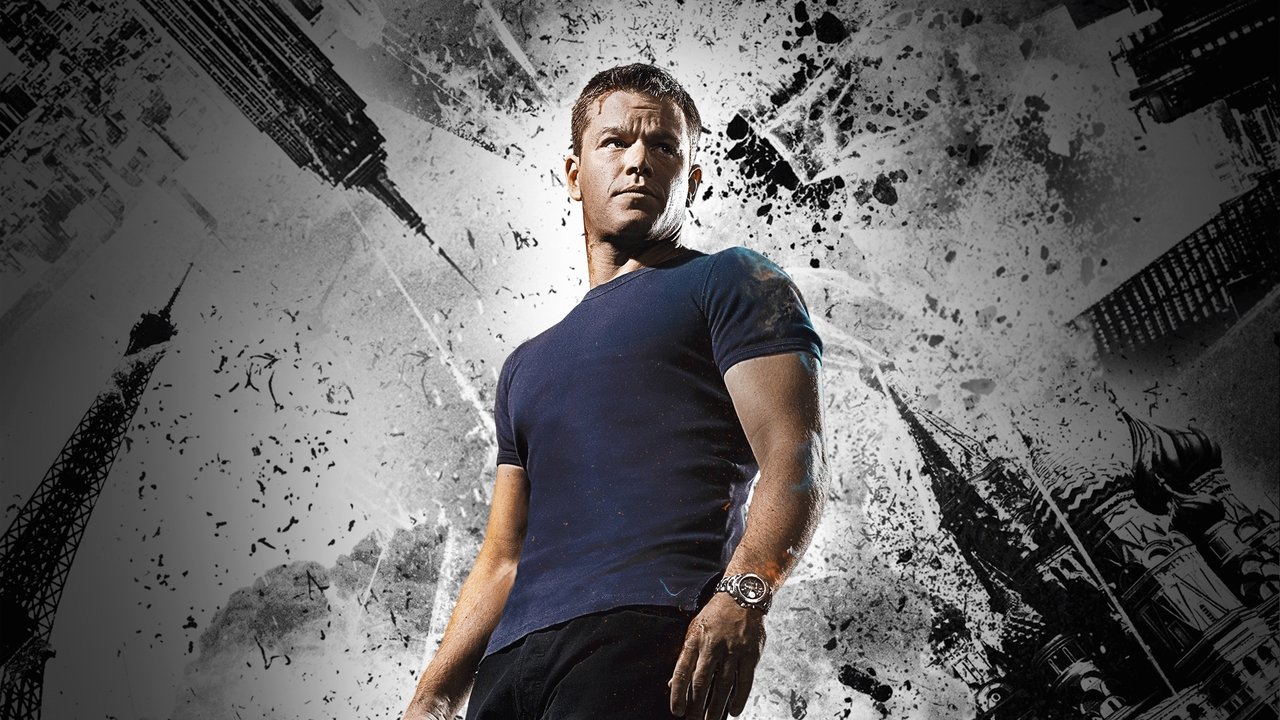
There’s a legendary shot in the Tangier rooftop chase where a cameraman followed a stuntman jumping through a narrow window using a "cable-cam" rig. At the time, this was a logistical nightmare that required pinpoint precision. Seeing it today, in an era where a digital double could just be rendered in post-production, that shot still carries a weight and a "thud" that CGI can’t simulate. It’s a testament to the second-unit director Dan Bradley, who understood that for Bourne to matter, the stakes had to feel tactile. If Bourne hits a wall, we need to see the plaster dust.
A Post-9/11 Ghost Story
Beneath the world-class stunts, there’s a cold, dark heart beating in this film. This was 2007; the heights of the Patriot Act and the "War on Terror" were reflected in the antiseptic, blue-tinted offices of the CIA. David Strathairn is chilling as Noah Vosen, a man who views the U.S. Constitution as a series of inconvenient suggestions. He’s not a cackling villain; he’s a middle-manager with the power to order an extrajudicial killing from a comfortable chair in Virginia.
Matt Damon delivers what might be his most underrated performance here. He has very few lines, but he carries the weight of a man who is realizing he wasn't just a victim—he was a volunteer. The film's tagline, "Remember everything. Forgive nothing," hits home in the final act. When Bourne finally confronts the man who made him (Albert Finney), it isn't a moment of triumph. It’s a funeral for the man he used to be. The film manages to be a $400 million blockbuster that is essentially a movie-length panic attack about government overreach.
The Legacy of the Asset
Universal Pictures knew they had a goldmine, and the financial results proved it. With a $70 million budget, it raked in over $440 million worldwide—an astronomical return for an R-rated (in spirit, if not in its PG-13 rating) political thriller. Even more impressive? It swept all three Academy Awards it was nominated for (Editing, Sound Mixing, and Sound Editing). For a genre film to win "Technical Oscars" is common; for it to win them for a style as divisive as this one was a massive validation of the Greengrass method.
Looking back, The Bourne Ultimatum represents the end of an era. Shortly after this, the "shaky cam" trend would be run into the ground by lesser directors, and the "grounded" action movie would eventually give way to the neon-soaked, heightened reality of John Wick. But Ultimatum remains the gold standard. It’s a film that respects your intelligence, refuses to waste a single frame, and ends on a note that feels both conclusive and hauntingly cyclical.
The film concludes with "Extreme Ways" by Moby kicking in as the credits roll, and for once, the needle drop feels earned rather than obligatory. It’s the definitive closing chapter to one of the most consistent trilogies in cinema history. If you haven't revisited it in a decade, you'll be surprised by how much of its DNA is still present in modern television like Slow Horses or the Mission: Impossible sequels. It's a high-water mark for the genre—intense, intelligent, and utterly relentless.

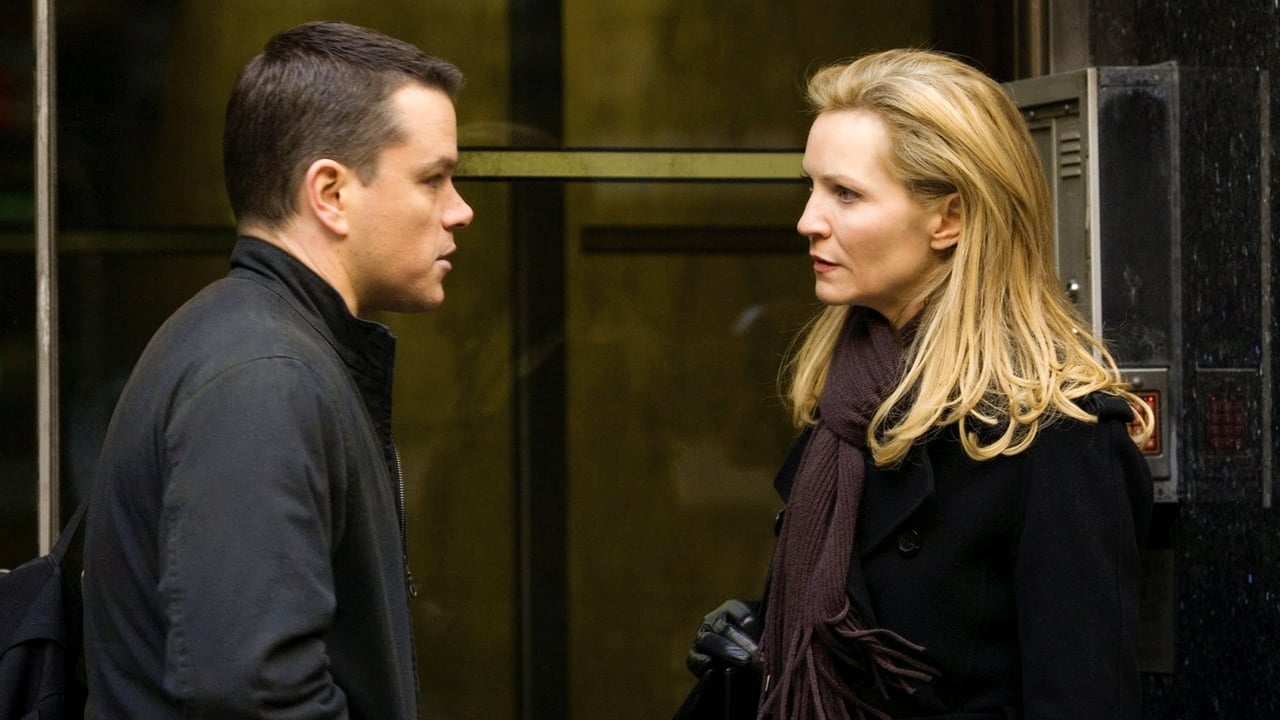
Keep Exploring...
-
The Bourne Supremacy
2004
-
The Bourne Identity
2002
-
The Bourne Legacy
2012
-

Captain Phillips
2013
-
Jason Bourne
2016
-
Green Zone
2010
-
United 93
2006
-
Rise of the Planet of the Apes
2011
-
Infernal Affairs
2002
-

Oldboy
2003
-
Mystic River
2003
-

The Dark Knight Rises
2012
-
Unbreakable
2000
-
Dawn of the Planet of the Apes
2014
-
In the Line of Fire
1993
-
The Girl with the Dragon Tattoo
2009
-

Ghost
1990
-
The Fugitive
1993
-
Primal Fear
1996
-
Man on Fire
2004