The Game Plan
"Quarterbacks, cupcakes, and the ultimate tackle."
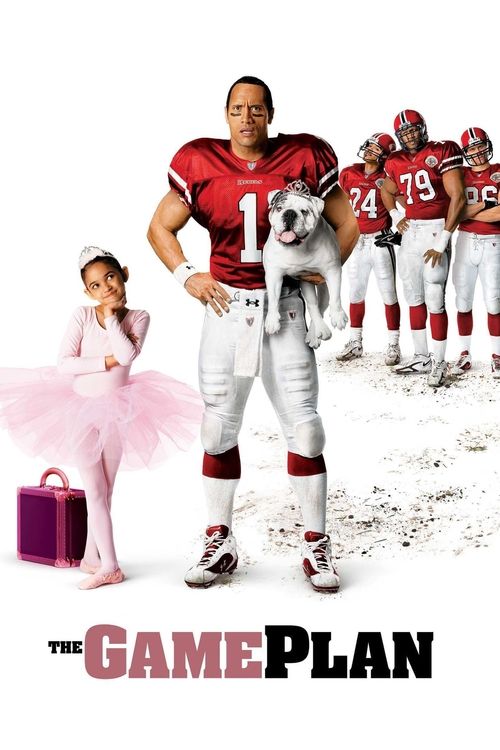
I remember watching The Game Plan in a drafty theater where the air conditioning was cranked so high I had to wrap my arms inside my shirt like a penguin. I was also eating those neon-yellow nachos that look like liquid plastic, and honestly, that’s the exact energy this movie provides. It’s loud, it’s colorful, it’s a little bit artificial, but you’ll probably finish the whole tray and feel strangely satisfied afterward.
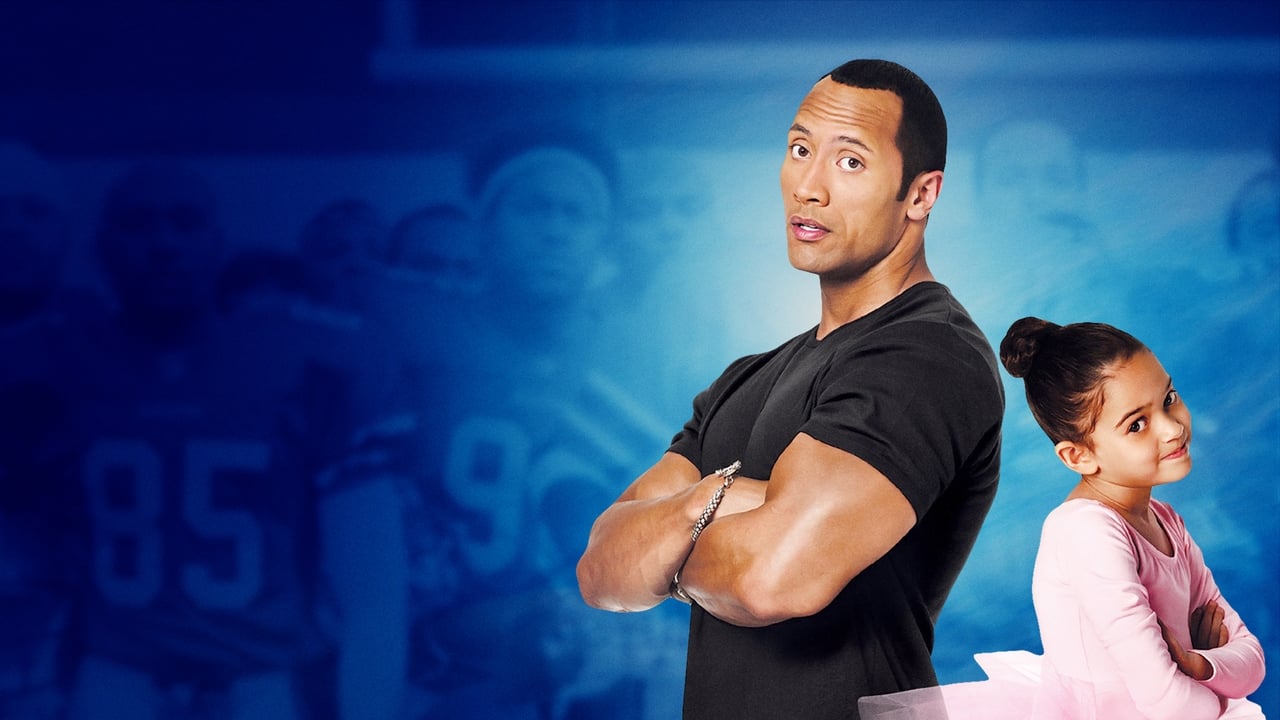
By 2007, the "Action Star Meets a Tiny Human" subgenre was already a well-worn path. We’d seen Arnold Schwarzenegger do it in Kindergarten Cop and Vin Diesel try his hand at it in The Pacifier. But Dwayne "The Rock" Johnson brought something different to the table. This was a crucial moment in his career; he was actively trying to shed the "pro wrestler" skin and prove he could carry a Disney tentpole. Looking back, this film is the DNA sequence for the global megastar he eventually became. It’s the moment he realized that his greatest superpower wasn't his biceps, but his ability to look absolutely ridiculous while grinning like a million-dollar Cheshire Cat.
The Tutu and the Touchdown
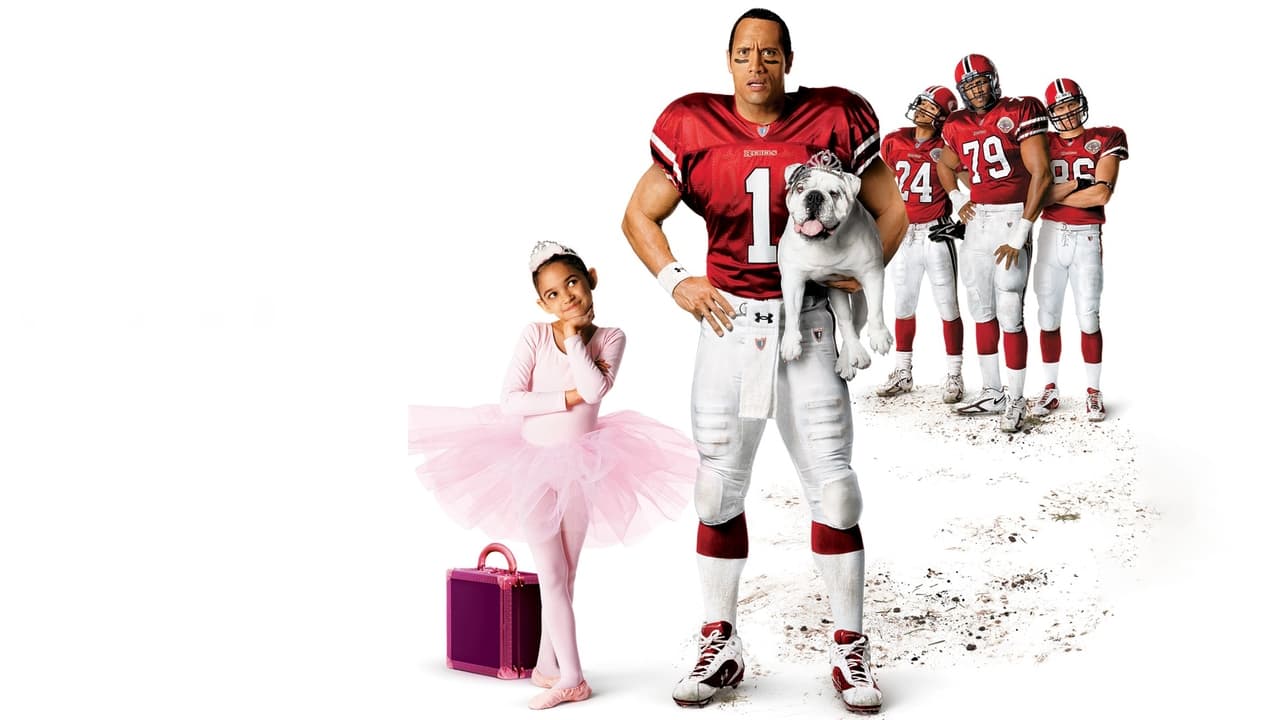
The setup is pure sitcom gold. Joe Kingman (Dwayne Johnson) is a superstar quarterback for the Boston Rebels. He lives in a high-tech bachelor pad that looks like a Sharper Image catalog threw up on a football field. He’s obsessed with himself, his mirrors, and Elvis Presley. Enter Peyton (Madison Pettis), the 8-year-old daughter he never knew he had. She arrives with a bedazzled suitcase and a direct order to dismantle his ego.
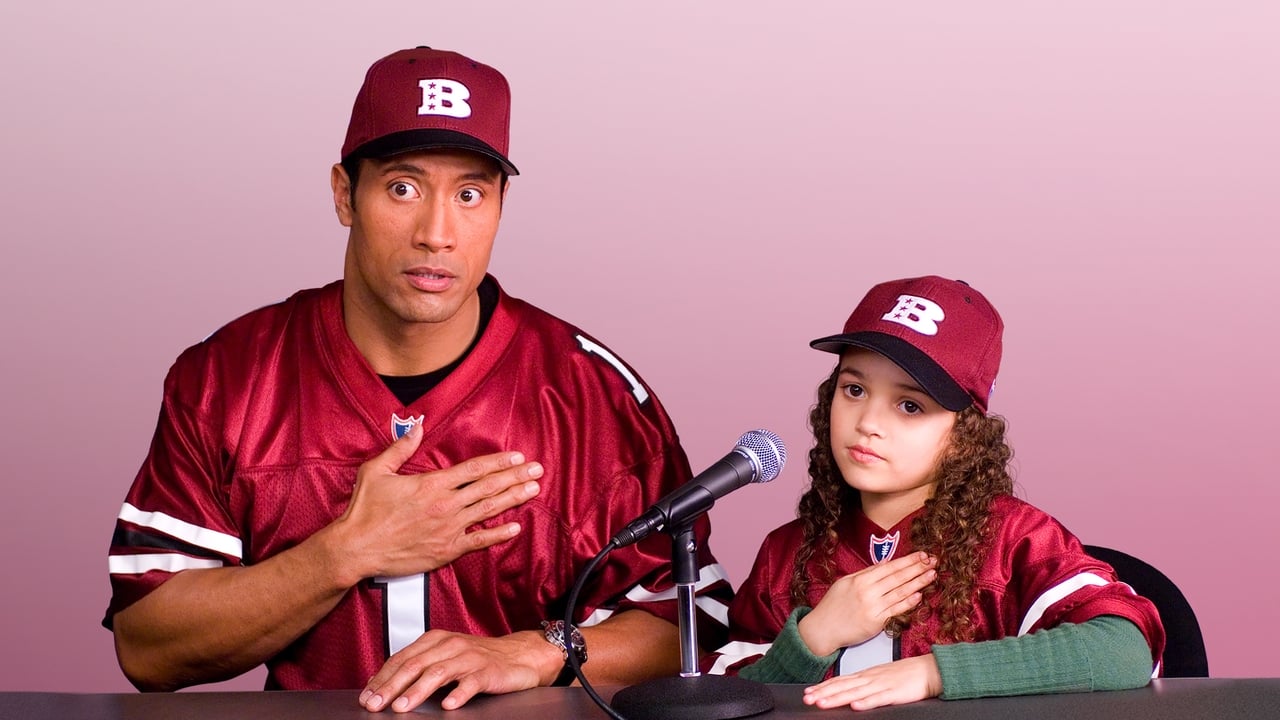
What makes this work isn't the script—which is as predictable as a preseason scrimmage—it’s the chemistry. Madison Pettis is remarkably poised here, avoiding the "cloying child actor" trap by playing Peyton with a sharp, tactical precision. She doesn't just want a dad; she wants to manage him. Watching Johnson navigate a world of ballet slippers and cinnamon allergies is a masterclass in physical comedy. There’s a scene involving a bubble bath and a very large dog that is the cinematic equivalent of a sugar rush followed by a nap, and yet, Johnson’s commitment to the bit is total. He never winks at the camera to say "can you believe I'm doing this?" He just does it.
Mid-2000s Gloss and Disney Polish
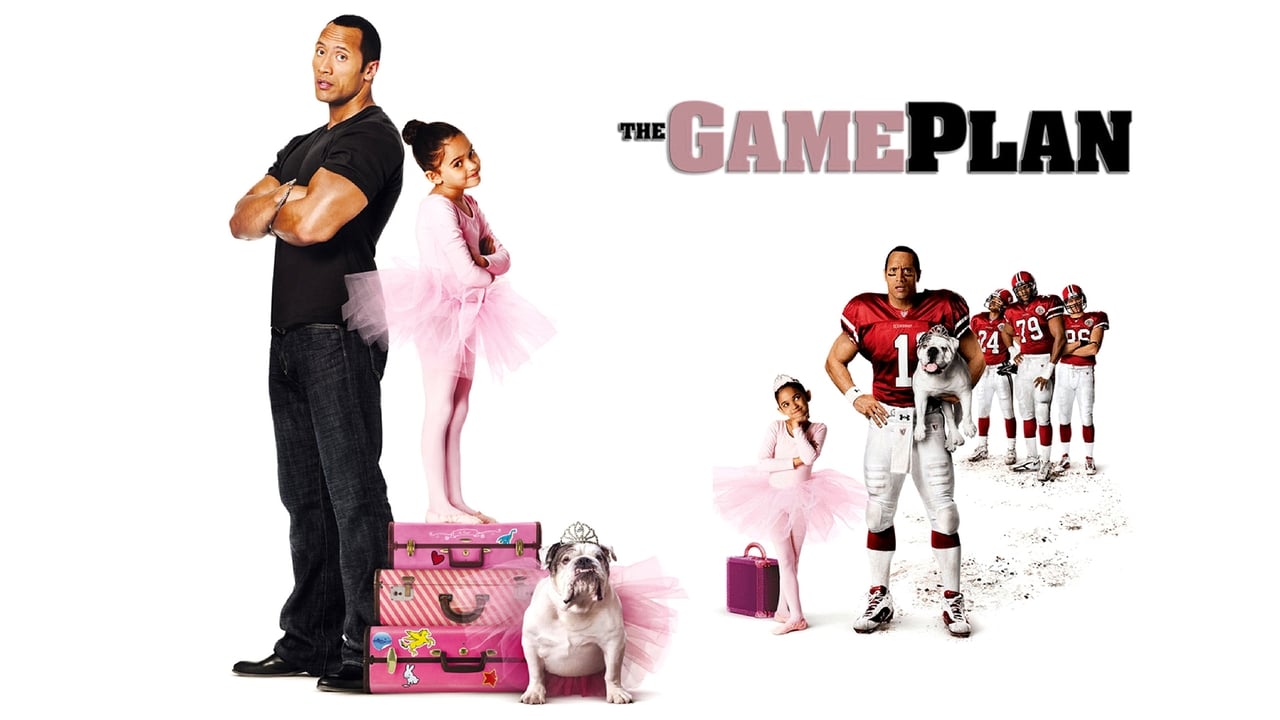
Director Andy Fickman, who also gave us the underrated She’s the Man, leans heavily into the 2007 aesthetic. Everything is saturated and glossy. This was the era of the "Disney Vault" and the peak of the DVD boom. I remember the special features on the disc being a huge selling point—deleted scenes and bloopers were essentially a second movie back then.
The supporting cast does a lot of heavy lifting to keep the world feeling inhabited. Kyra Sedgwick plays Joe’s agent, Stella, and she looks like she’s in a completely different, much better movie about high-stakes sports PR. She’s brittle, fast-talking, and seemingly the only person who realizes how insane the situation is. Then you have Roselyn Sánchez as the ballet instructor who provides the inevitable romantic interest. While their subplot is thinner than a piece of crepe paper, Sánchez brings a much-needed groundedness to the more cartoonish elements of the Rebels’ locker room.
One of the cooler details I learned later was that the Elvis obsession wasn't just a character quirk; Johnson is a legitimate, die-hard Elvis fan in real life. Most of the memorabilia in Joe’s apartment was actually from the Rock’s personal collection or cleared specifically because of his connection to the Presley estate. It adds a layer of genuine weirdness to the character that feels less like a screenwriter’s invention and more like a star’s personal touch.
A Box Office End-Run

Financially, The Game Plan was a monster. On a modest $22 million budget, it raked in over $147 million worldwide. It proved that Johnson was "four-quadrant" gold—meaning he could appeal to kids, parents, men, and women simultaneously. This was the blueprint. Without Joe Kingman wearing a tutu, we might never have gotten the high-glosss, family-friendly version of the Fast & Furious franchise or Jumanji.
It also captures that specific mid-2000s transition where Hollywood was moving away from the gritty post-9/11 mood and back into unapologetic, high-concept comfort food. The football sequences are shot with a surprising amount of kinetic energy—thanks to cinematographer Greg Gardiner—making the Rebels feel like a real (if slightly stylized) NFL team. The stakes aren't high, but the "Big Game" finale still manages to pull a few heartstrings, even if you’ve seen the "wounded hero returns" trope a thousand times before.
Ultimately, The Game Plan isn't trying to reinvent the wheel; it’s just trying to make sure the wheel is covered in glitter and playing an Elvis cover. It’s a relic of a time when a simple "fish out of water" premise and a charismatic lead were enough to dominate a weekend. If you’re looking for a nostalgic trip back to the mid-2000s, or just want to see the exact moment Dwayne Johnson decided to become the world’s biggest entertainer, it’s well worth the 110 minutes. Just make sure you bring your own snacks—the theater nachos aren't getting any better with age.
Keep Exploring...
-
Race to Witch Mountain
2009
-
Spy Kids 2: The Island of Lost Dreams
2002
-

Cheaper by the Dozen
2003
-
Freaky Friday
2003
-
The Princess Diaries 2: Royal Engagement
2004
-

The SpongeBob SquarePants Movie
2004
-
Hoodwinked!
2005
-
Nanny McPhee
2005
-
She's the Man
2006
-

High School Musical 3: Senior Year
2008
-

Hannah Montana: The Movie
2009
-

Hotel for Dogs
2009
-

You Again
2010
-

Arthur Christmas
2011
-
The Muppets
2011
-

Ice Age
2002
-
Garfield
2004
-
Shark Tale
2004
-
Charlie and the Chocolate Factory
2005
-

Madagascar
2005