The Man from Earth
"14,000 years of history. One living room."
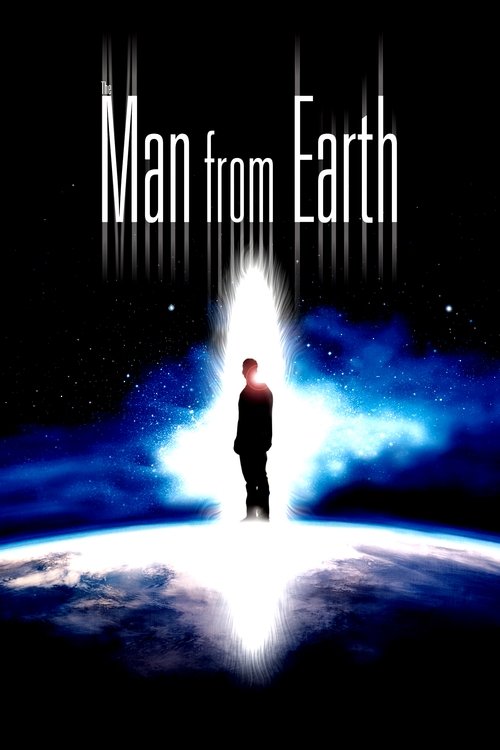
I first stumbled across The Man from Earth on a grainy DVD I’d rented while nursing a head cold and eating a granola bar so crunchy I actually missed several lines of dialogue during the first act. I didn’t expect much. The cover art looked like a generic Hallmark movie, and the production value had the visual fidelity of a late-night infomercial for a steam mop. But about twenty minutes in, I stopped chewing. I forgot I was sick. I just listened.

It’s rare to find a science fiction film that treats a living room like a galaxy and a conversation like a high-speed chase. Released in 2007—the same year Transformers was busy melting our retinas with CGI—this movie went in the opposite direction. It’s the ultimate "bottle movie," a film where the special effects are entirely located between the audience's ears.
The $200,000 Masterclass in Restraint
In an era where the indie "Sundance generation" was starting to get swallowed by big studio deals, The Man from Earth felt like a defiant throwback. It was shot on digital video for about $200,000, which in Hollywood terms is roughly the budget for a single explosion’s catering. You can feel that budget in every frame; the lighting is flat, and the camera work is functional at best.
But looking back, that lack of polish is almost a superpower. Because the film doesn’t look like a "Movie" with a capital M, it feels like a fly-on-the-wall recording of a private moment. The premise is deceptively simple: Professor John Oldman (David Lee Smith) is moving away. His colleagues—a group of brilliant, skeptical academics—show up for a surprise farewell. To explain his sudden departure, John drops a bombshell: he’s a Cro-Magnon who hasn't aged in 14,000 years.
What follows isn’t a series of flashbacks or a chase from government agents. It’s just a group of friends sitting on floor cushions and mismatched chairs, trying to debunk a man they’ve known for years. It’s a cerebral cage match that proves most big-budget scripts are just hiding behind shiny objects.
A Script Written on a Deathbed
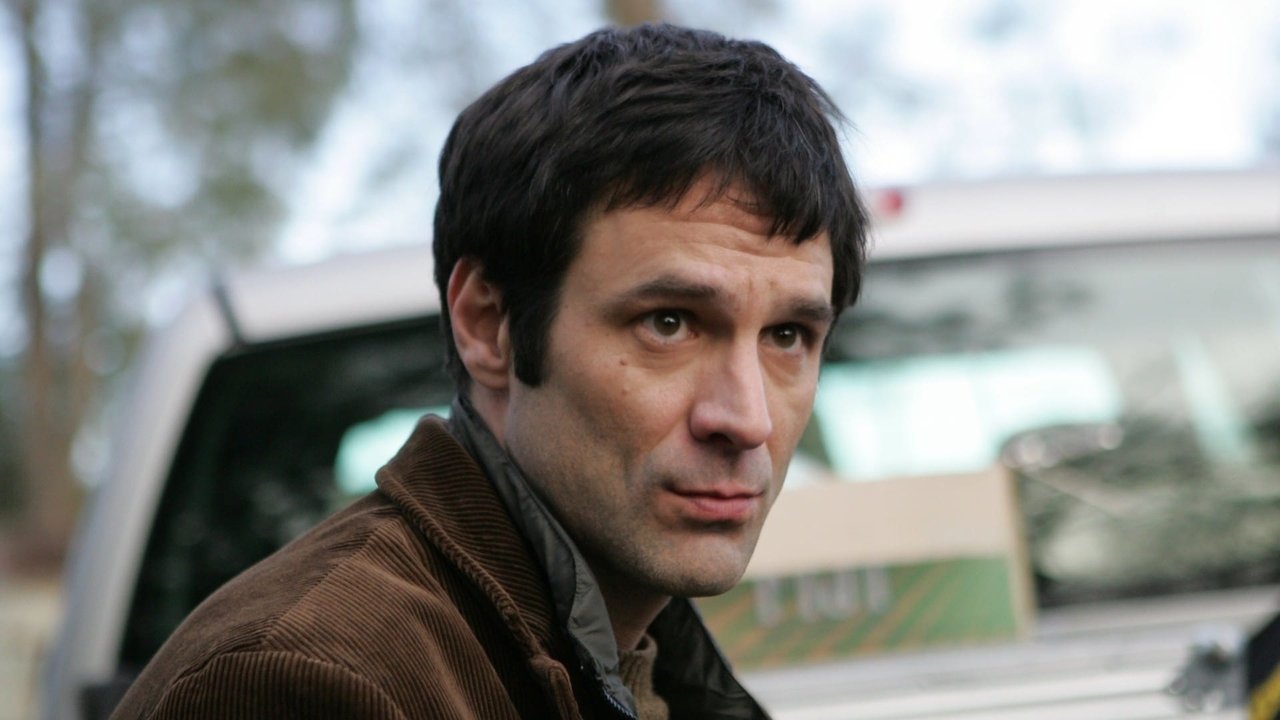
The secret sauce here is the screenplay by Jerome Bixby. If that name rings a bell for the sci-fi nerds in the room, it should. Bixby was a titan who penned legendary episodes of The Twilight Zone and the original Star Trek. He reportedly dictated the final polish of this script to his son from his deathbed in 1998. It was his swan song, and you can feel the weight of a lifetime of thinking behind every line.
The ensemble cast is a "Who's Who" of "Hey, I know that guy!" actors who carry the intellectual load beautifully. John Billingsley, whom I’ll always love as Dr. Phlox from Star Trek: Enterprise, plays Harry with a delightful, bumbling curiosity. Then you have Tony Todd—yes, Candyman himself—delivering a performance of such grounded, empathetic warmth that it makes you wish he’d been given more roles that didn't involve hook-hands or bees.
Watching these actors work is like watching a high-level tennis match. John presents a historical "fact" from his life, and his colleagues—experts in archaeology, biology, and psychiatry—smash it back over the net. Alexis Thorpe and Annika Peterson provide the necessary emotional tethering, making sure the film doesn't drift off into a dry Wikipedia lecture.
Challenging the Sacred and the Secular
About halfway through, the movie pivots from "fun historical hypothetical" to "genuinely dangerous territory." John begins to discuss his role in the origins of world religions, and the tone in the room shifts from amused skepticism to visceral anger. This is where the film really earns its stripes. It tackles the idea of myth-making and the human need for divinity with a surgical precision that still feels provocative today.
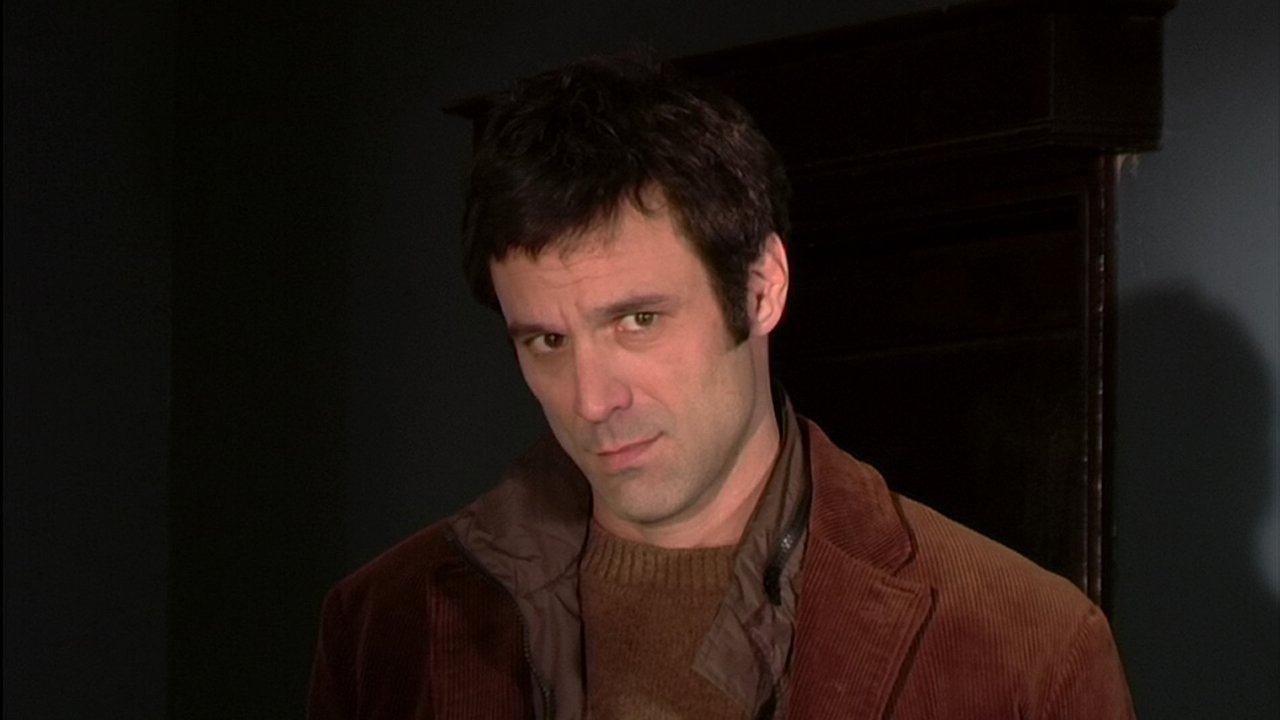
Ellen Crawford gives a standout performance as Edith, the devout Christian of the group. Her reaction to John’s claims isn't just an intellectual disagreement; it’s a soul-deep crisis. The film handles this without being "edgy" or dismissive. It understands that if you tell someone their foundation is built on a misunderstanding, they won't just say "Oh, interesting." They’ll fight you.
Is it a "perfect" movie? Technically, no. The digital grain is a reminder of the limitations of 2007-era indie tech, and the score occasionally leans a bit too hard into "mystical flute" territory. But as a piece of pure storytelling, it makes Inception look like a game of Hungry Hungry Hippos. It doesn't need a spinning top to make you question reality; it just needs a guy sitting on a sofa telling a really, really good story.
The Man from Earth is a reminder that the most expensive piece of equipment in any film is the script. It’s a movie that trusts its audience to be as smart as its characters, and it rewards that trust with a narrative that lingers in your brain for days. If you’ve ever sat around a campfire and wondered "What if?", this is the film you’ve been looking for. Just maybe skip the extra-crunchy snacks so you don't miss a single word.

Keep Exploring...
-

I Origins
2014
-
Primer
2004
-

Robot & Frank
2012
-
Bowling for Columbine
2002
-

Mysterious Skin
2005
-

The Girl Who Leapt Through Time
2006
-

Evangelion: 1.0 You Are (Not) Alone
2007
-

Evangelion: 2.0 You Can (Not) Advance
2009
-

Moon
2009
-

Mr. Nobody
2009
-
Good Bye, Lenin!
2003
-

Like Stars on Earth
2007
-

The Iron Giant
1999
-

Night on Earth
1991
-
Before Midnight
2013
-

Short Term 12
2013
-

Open Your Eyes
1997
-

Another Earth
2011
-
Batman: The Dark Knight Returns, Part 1
2012
-

Neon Genesis Evangelion: The End of Evangelion
1997