The Simpsons Movie
"The dome is up, and the gloves are off."
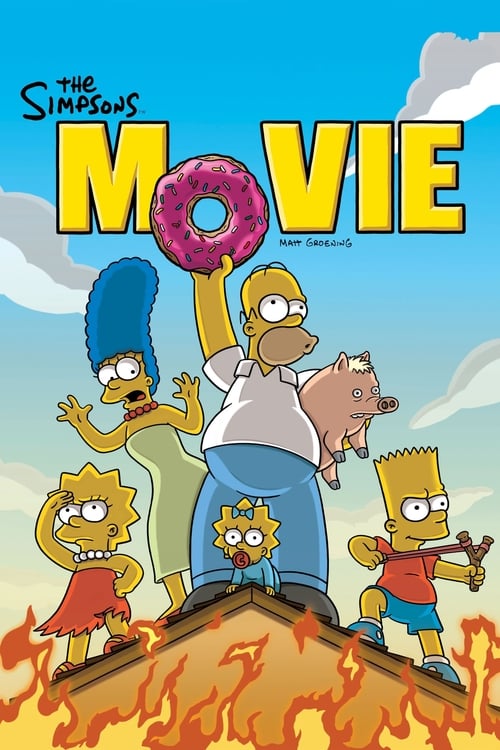
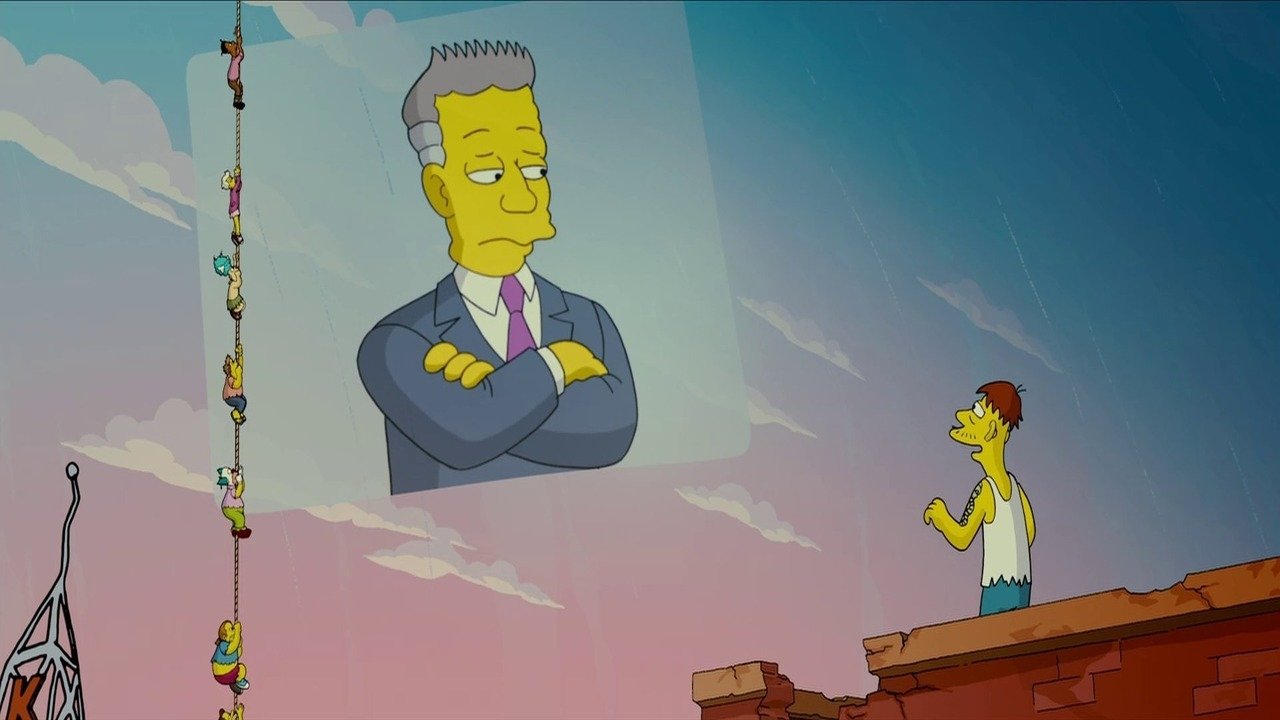
By 2007, the collective consensus on The Simpsons was that the show had entered its "twilight years"—a polite way of saying the yellow-skinned family was wandering toward a nursing home. Then, after nearly two decades of rumors and false starts, the movie finally dropped, encased in a giant glass dome and fueled by a budget that could have bought several actual Springfields. It wasn't just a long-awaited film; it was a high-stakes test to see if a 2D sitcom could still command a global audience in an era where Pixar’s 3D polish was the new gold standard.
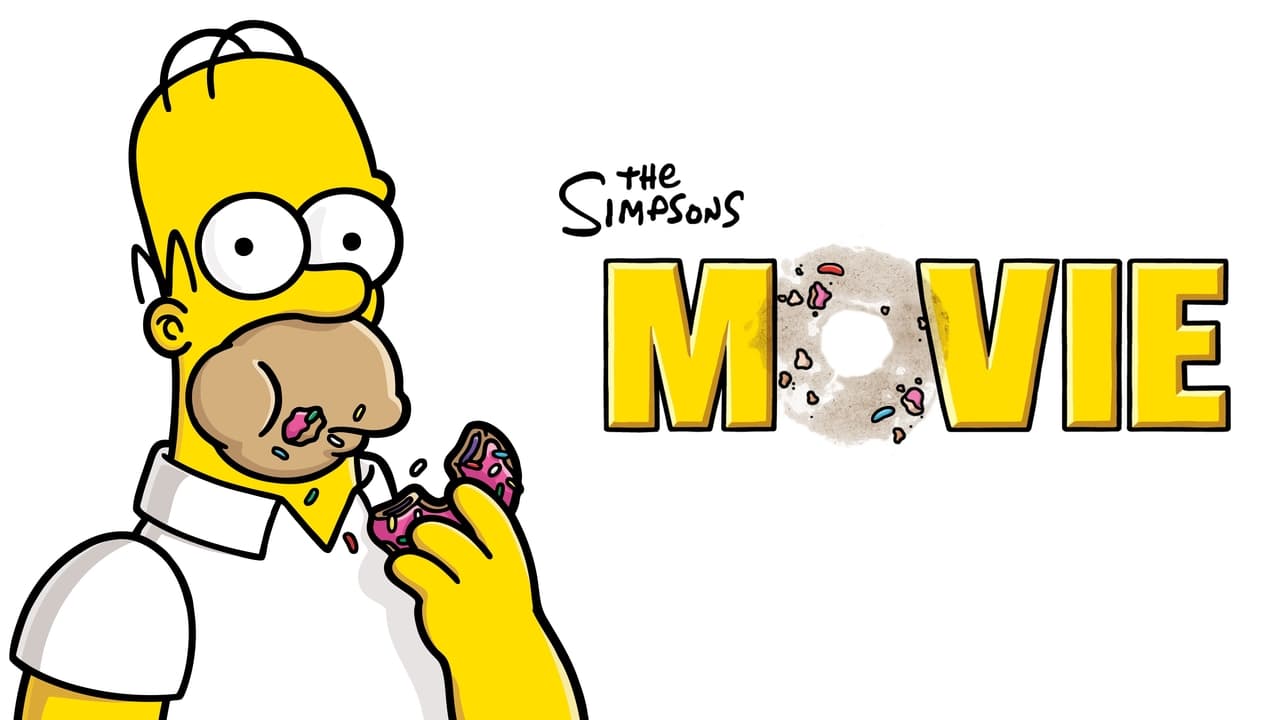
I watched this during a matinee where the teenager behind me kept accidentally kicking my seat every time he laughed, and honestly, the film was so relentless with its gag-rate that I barely minded the lumbar massage.
The 18-Year Pregnancy
The most striking thing about The Simpsons Movie is how it looks. David Silverman, who also directed Monsters, Inc. (2001) for Pixar, was the perfect choice to bridge the gap between television simplicity and cinematic scale. The 1.85:1 widescreen aspect ratio does wonders for a town we’d only seen in a boxy 4:3 format. The animation team used CGI to assist with the lighting and shadows, giving the characters a weight and depth they never had on the small screen, yet it never lost that "hand-drawn" soul.
Watching Dan Castellaneta (as Homer) and Julie Kavner (as Marge) perform these characters on a massive soundstage of a screen reveals the nuance in their voices that we often take for granted. The script was a "who’s who" of the show’s legendary writers' room, with eleven credited writers including James L. Brooks and Matt Groening. They reportedly went through 158 drafts. That kind of obsessive fine-tuning is visible in the pacing—Homer Simpson is effectively a lovable bio-terrorist in this movie, and yet the film manages to keep us on his side through sheer, stupid charisma.
Comedy by Committee (That Actually Works)
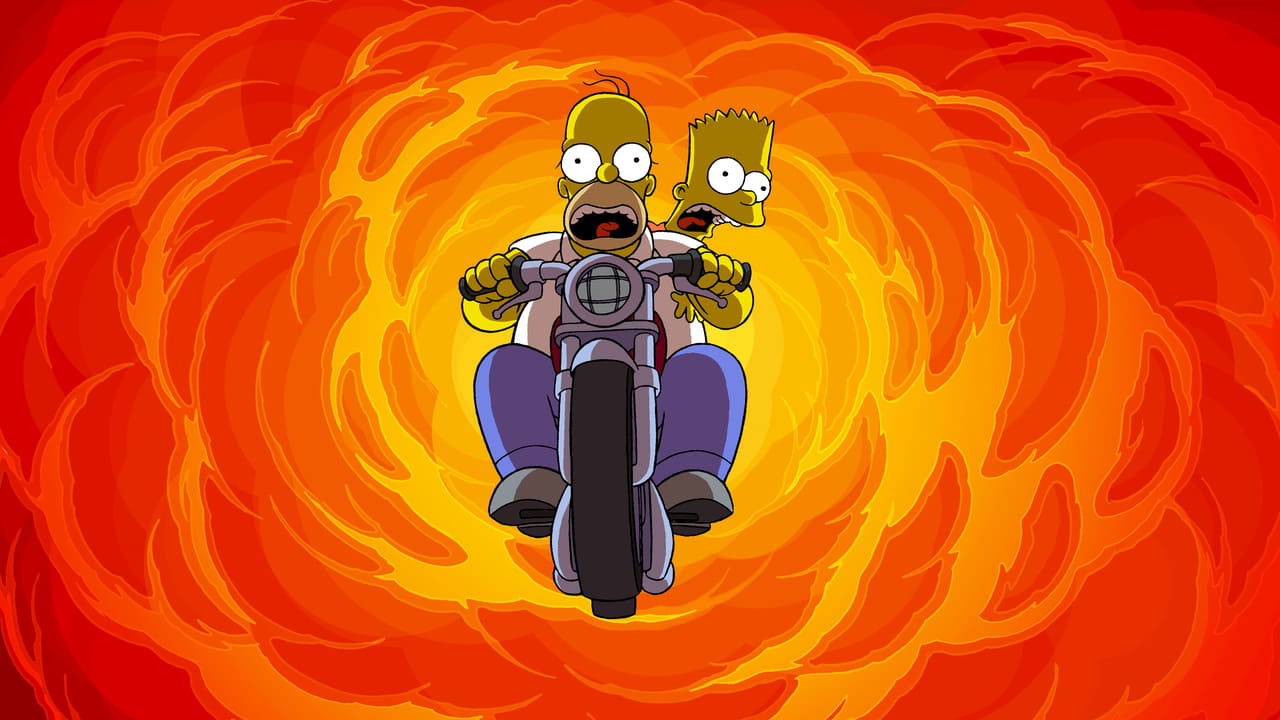
The film’s humor is a fascinating blend of the "Golden Era" wit and the "Modern Cinema" need for spectacle. It opens with a meta-joke about the audience being "suckers" for paying to see something they get for free at home, setting a tone that is classic Simpsons: cynical, self-aware, and slightly mean-spirited.
The comedic timing is surgical. Think about the "Spider-Pig" sequence. It’s a simple, absurd gag—Homer walking a pig on the ceiling—but the way it’s framed and the catchy, low-effort jingle turned it into a global phenomenon. It’s the kind of bit that would have been a B-plot in a Season 4 episode, but here, it’s given the room to breathe and become a cultural touchstone. Nancy Cartwright (Bart) and Yeardley Smith (Lisa) provide the emotional anchors, especially in a surprisingly poignant scene where Bart looks to Harry Shearer’s Ned Flanders as a father figure. It’s a reminder that beneath the slapstick, the show’s longevity is built on these oddly specific family dynamics.
The film also captures that mid-2000s anxiety about the environment and government overreach. Having President Arnold Schwarzenegger (voiced with pitch-perfect absurdity by Harry Shearer) choose a "Plan C" because he was "elected to lead, not to read" felt like a sharp jab at the political climate of the time. It’s satire that has aged surprisingly well, even if the EPA being the "villain" feels like a quaint relic from a pre-climate-crisis-denial era.
A $527 Million Yellow Box
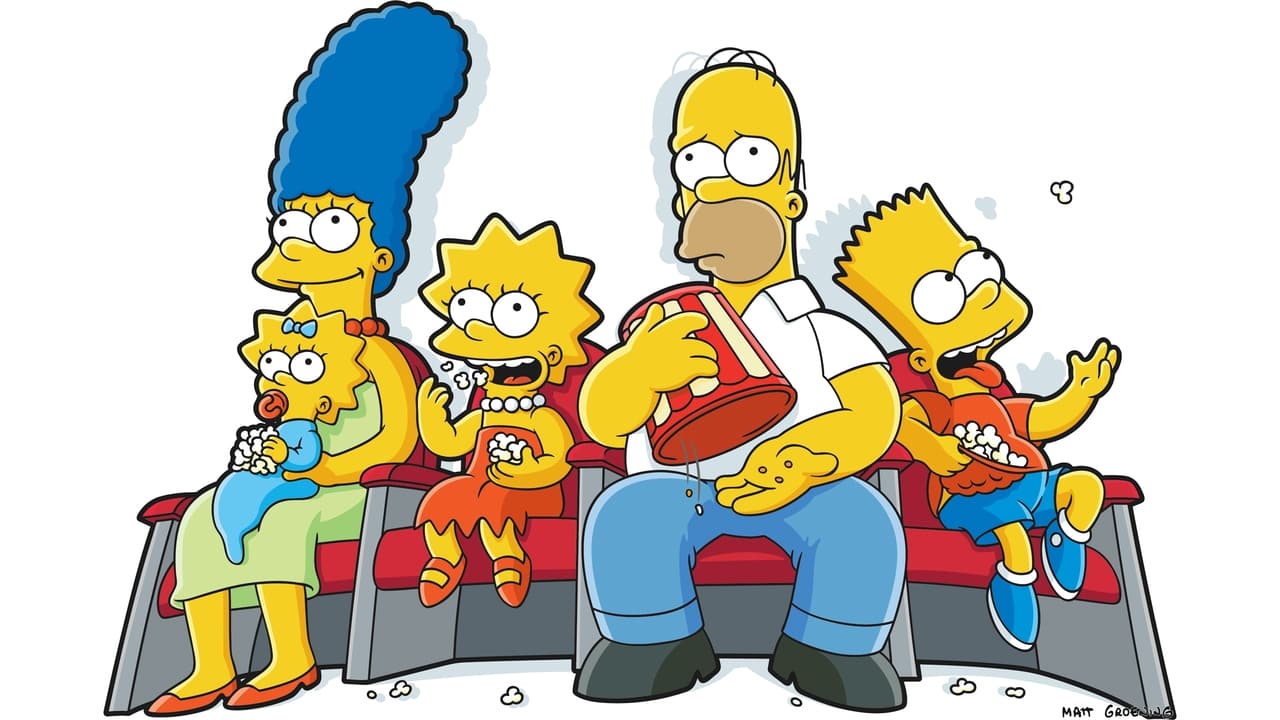
From a "Blockbuster" perspective, the success of this film was staggering. It pulled in over $527 million worldwide on a $75 million budget. To put that in context, it was the highest-grossing traditional 2D animated film since The Lion King (1994). The marketing was a masterclass in "stunt" promotion; 20th Century Fox struck a deal with 7-Eleven to transform a dozen stores into actual Kwik-E-Marts, complete with Buzz Cola and Squishees. I remember the frenzy—people were driving hours just to buy a box of Krusty-O’s that probably tasted like cardboard.
The film also benefited from the "DVD Culture" of the late 2000s. The home release was packed with deleted scenes and commentaries that revealed just how much was left on the cutting room floor (including a massive musical number that was storyboarded but never finished). It felt like the last hurrah for a certain type of movie-going experience before the MCU took over the concept of "interconnected universes." Here, the "universe" was just a town of 300 recurring characters, and seeing Hank Azaria cycle through voices for Moe, Apu, and Chief Wiggum in a single scene felt like watching a virtuoso at work.
Ultimately, The Simpsons Movie succeeds because it doesn't try to reinvent the wheel; it just gives the wheel a really expensive alignment and a new set of rims. It captures the frantic energy of the show’s peak while acknowledging that, in 2007, we needed a bit more "boom" for our buck. It’s a riotous, colorful, and occasionally heartfelt defense of why these characters have occupied our brain space for thirty-plus years. If you haven't revisited it lately, do yourself a favor and dive back under the dome—the "Spider-Pig" song is still stuck in your head anyway.

Keep Exploring...
-

Ice Age
2002
-

Lilo & Stitch
2002
-
Shrek 2
2004
-

Madagascar
2005
-
Robots
2005
-
Cars
2006
-
Happy Feet
2006
-

Ice Age: The Meltdown
2006
-
Over the Hedge
2006
-
Ratatouille
2007
-
Horton Hears a Who!
2008
-
Kung Fu Panda
2008
-
Madagascar: Escape 2 Africa
2008
-

Ice Age: Dawn of the Dinosaurs
2009
-

Up
2009
-
Despicable Me
2010
-
Toy Story 3
2010
-
Kung Fu Panda 2
2011
-

Puss in Boots
2011
-
Rio
2011