Transformers
"Heavy metal has never looked this good."
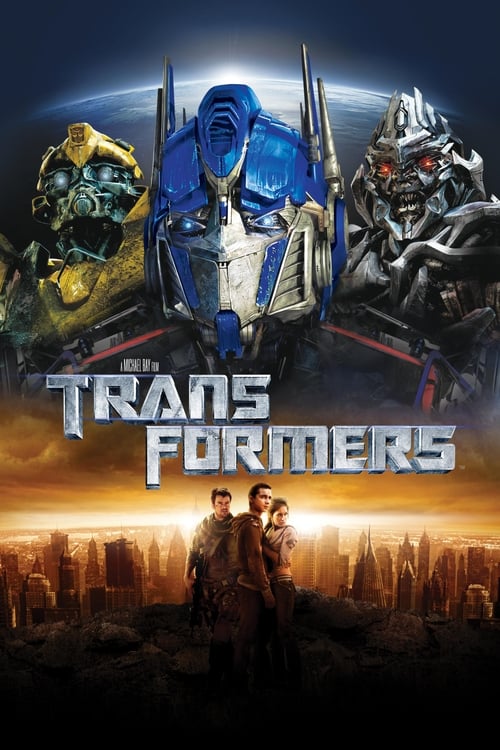
There is a specific, metallic crunch that defines the summer of 2007—a sound of shifting gears and hydraulic hisses that signaled the arrival of something the world hadn't quite seen before. Before the "Bayhem" label became a shorthand for exhausted cynicism, Michael Bay (The Rock, Bad Boys) managed to pull off a minor miracle: he took a property designed to sell plastic toys to eight-year-olds and turned it into a surprisingly tactile, high-stakes war film that felt like it had actual weight.

I watched this recently on a laptop with a cracked screen that made Megatron look like he had a permanent lightning bolt across his face, and honestly, the sheer scale of the film still pierced right through the hardware.
The Physics of Giant Robots
Looking back, 2007 was a pivot point for visual effects. We were moving away from the "rubbery" look of the early 2000s and into a period where Industrial Light & Magic (ILM) was figuring out how to make digital objects look like they lived in our sunlight. When Bumblebee first transforms in that dusty refinery, you see every piston, every speck of rust, and every fleck of yellow paint. The way these machines moved felt physically exhausting, as if the air itself was struggling to get out of their way.
This was the CGI revolution in its prime. Unlike the weightless, purple-hued blobs of modern superhero climaxes, the robots in Transformers feel like they are made of several thousand pounds of American steel. When a Decepticon skids down a highway, it doesn't just disappear into a cloud of dust; it tears up the asphalt with a terrifying, grounded reality. Michael Bay used his signature "low-angle spinning shot" to treat these machines like gods, and for five minutes at a time, I genuinely believed they were there.
The Human Element (and the Jitters)
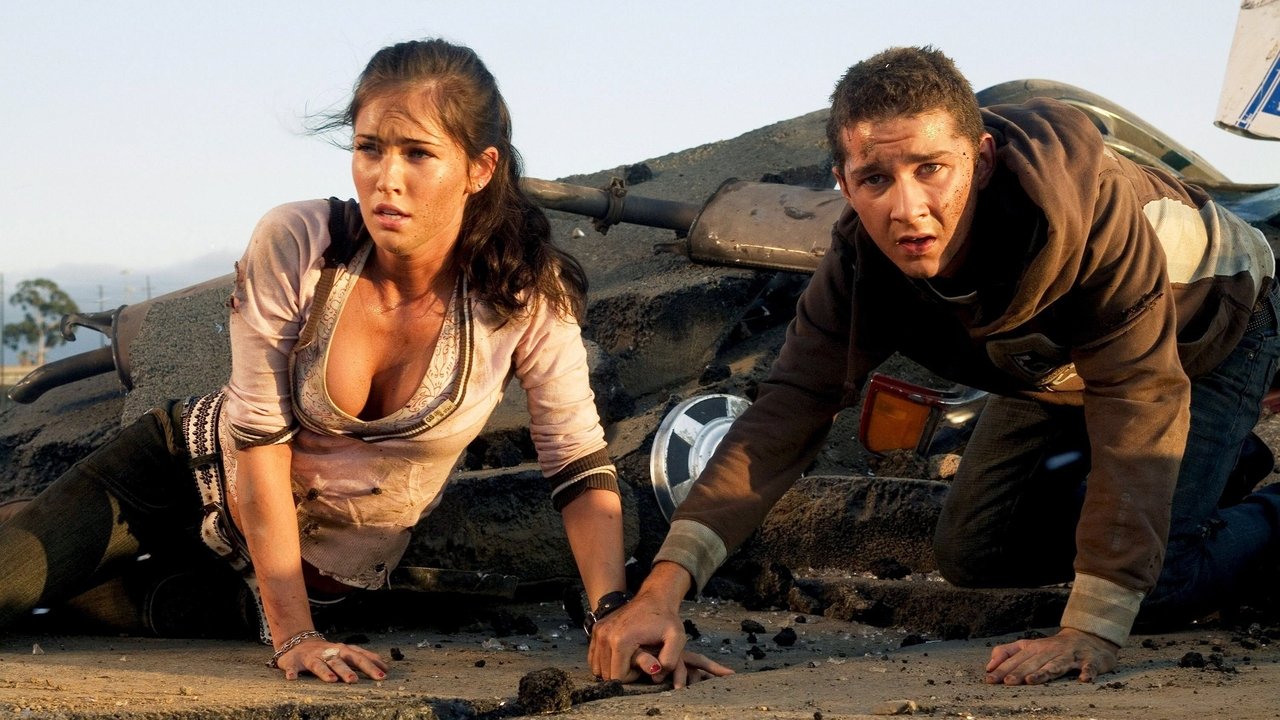
At its heart, the movie is a "boy and his dog" story, if the dog was a 1977 Camaro that could level a city block. Shia LaBeouf (Disturbia, Fury) was at his absolute peak here, channeling a frantic, stuttering energy that felt refreshingly human next to the stoic robots. His Sam Witwicky wasn't a hero; he was a teenager who just wanted to impress Megan Fox and not get stepped on by a sentient tank.
Megan Fox (Jennifer's Body), for her part, had the unenviable task of being the "Bay Girl," but she brought a grounded, mechanical competence to Mikaela that often outshone the guys. While the camera certainly lingers on her in ways that feel very "mid-2000s male gaze," she’s the one hot-wiring trucks and dragging Bumblebee into battle while the soldiers are still figuring out their radio frequencies.
Speaking of soldiers, the subplot featuring Josh Duhamel and Tyrese Gibson serves as a fascinating snapshot of the post-9/11 action landscape. The film leaned heavily into military fetishism, largely because Michael Bay had unprecedented access to the Department of Defense. Seeing real F-22 Raptors and CV-22 Ospreys on screen added a level of production value that $150 million shouldn't have been able to buy.
Stuff You Didn't Notice
The production was a massive undertaking, and some of the details are wilder than the plot. To keep the budget from spiraling, the crew filmed on actual military bases, and many of the "extras" in the desert sequences were real-life service members. But the real soul of the film comes from the voice booth. Bringing back Peter Cullen to voice Optimus Prime—a role he originated in the 1980s cartoon—was the smartest move the production made. When he says, "Freedom is the right of all sentient beings," it doesn't sound like a toy commercial; it sounds like a declaration of war.
It’s also worth noting that Hugo Weaving (The Matrix, The Lord of the Rings) voiced Megatron, though he later famously admitted he hadn't even read the script or seen the movie before doing the work. That lack of personal investment somehow works for the character; he sounds cold, detached, and utterly alien.

Then there’s the score by Steve Jablonsky. The theme "Arrival to Earth" remains one of the most soaring, evocative pieces of blockbuster music from that entire decade. It captures the wonder of the "Amblin" era that producer Steven Spielberg likely brought to the table, balancing out Michael Bay’s more aggressive instincts with a sense of genuine awe.
Why It Still Works
The sequels eventually collapsed under the weight of their own incoherent metal, but this first entry is a remarkably tight action-adventure. It knows exactly what it is. It’s loud, it’s proud, and it’s unashamedly enthusiastic about things blowing up in slow motion. It captured a cultural moment where we were still amazed by what a computer could do, and it utilized that technology to create icons that still dominate toy aisles today.
Whether you're here for the nostalgia of the 2000s or the sheer audacity of the stunt work, Transformers remains the gold standard for how to turn a brand into a blockbuster. It’s a movie that demands a large screen and a loud sound system, reminding us that sometimes, we just want to see the big robots hit each other.
The 2007 Transformers is a high-octane blast of pure popcorn cinema that somehow holds up better than almost everything that followed it. It balances Spielbergian wonder with Michael Bay’s chaotic energy to create a visual spectacle that feels surprisingly physical. It’s not deep, it’s not subtle, but as a piece of pure technical craft, it remains a defining pillar of the modern blockbuster era.
Keep Exploring...
-
Transformers: Revenge of the Fallen
2009
-

Transformers: Dark of the Moon
2011
-
Transformers: Age of Extinction
2014
-
Transformers: The Last Knight
2017
-
The Island
2005
-
Armageddon
1998
-

The Matrix Reloaded
2003
-
The Rock
1996
-
The Amazing Spider-Man 2
2014
-
Star Wars: Episode II - Attack of the Clones
2002
-
X2
2003
-
Spider-Man 2
2004
-

Star Wars: Episode III - Revenge of the Sith
2005
-
Spider-Man 3
2007
-
Iron Man
2008
-
2012
2009
-
Avatar
2009
-

Star Trek
2009
-

Iron Man 2
2010
-
Resident Evil: Afterlife
2010