Doubt
"In the shadows of conviction, truth disappears."
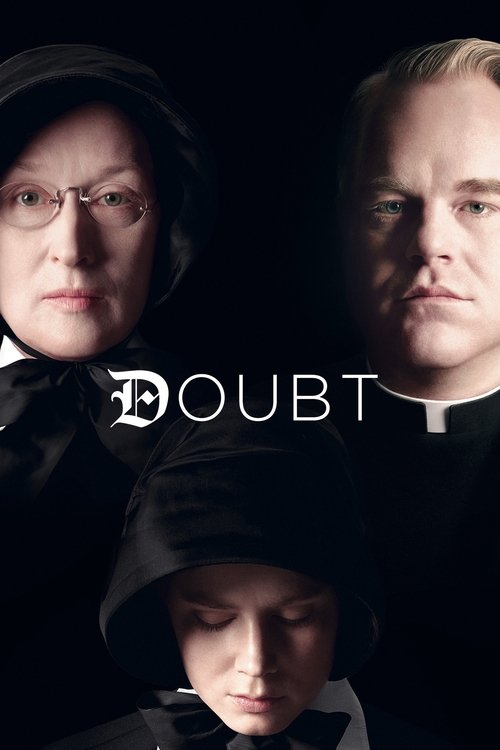
There is a specific kind of silence that only exists in a 1960s Catholic school—a heavy, starch-scented quiet that suggests something is always about to be judged. In 2008, John Patrick Shanley took his Pulitzer-winning play and turned it into a cinematic pressure cooker that feels less like a movie and more like a high-stakes interrogation. Released right as the grittiness of the mid-2000s was beginning to merge with the high-gloss prestige of the early digital era, Doubt stands as a reminder that you don’t need a $200 million budget to create a spectacle. You just need four of the best actors on the planet and a script that refuses to blink.
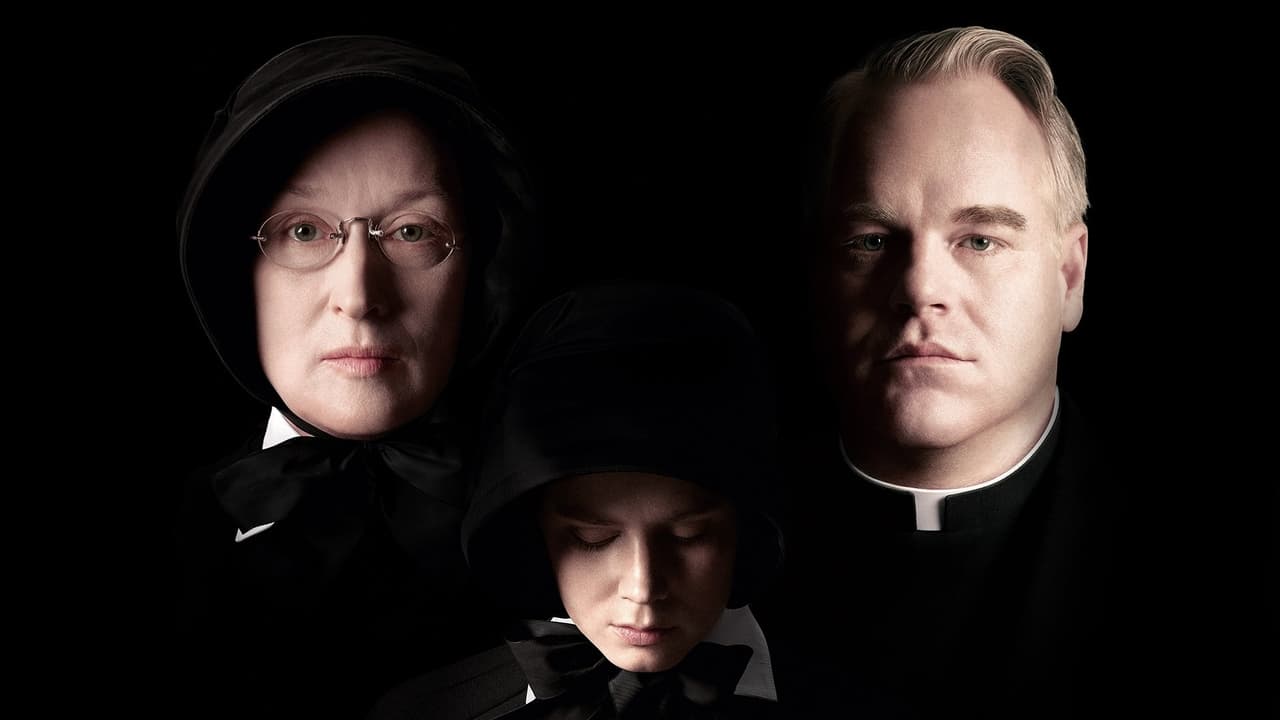
I watched this recently on a rainy Tuesday while my neighbor was loudly power-washing their driveway, and the constant, aggressive hum outside actually made the schoolyard confrontations feel even more claustrophobic. It’s a film that demands your attention, pulling you into a 1964 Bronx parish where the wind always seems to be howling and the tea is always served with a side of suspicion.
The Clash of the Titans
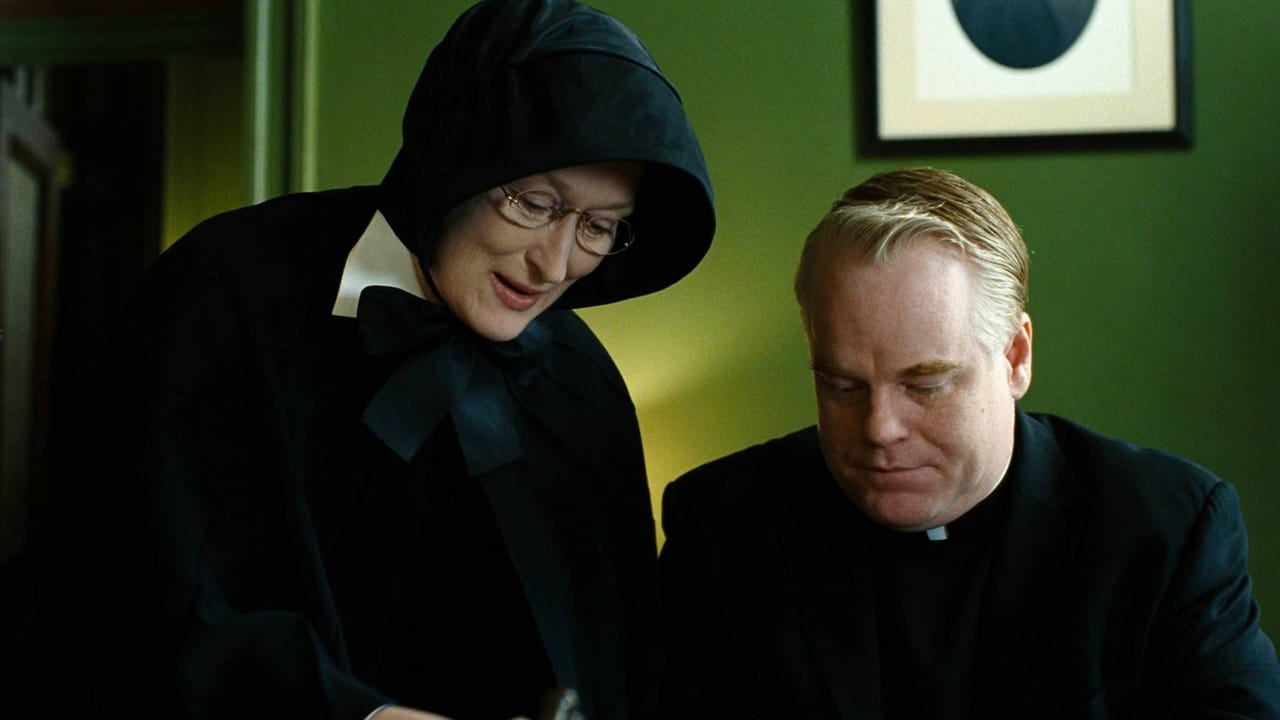
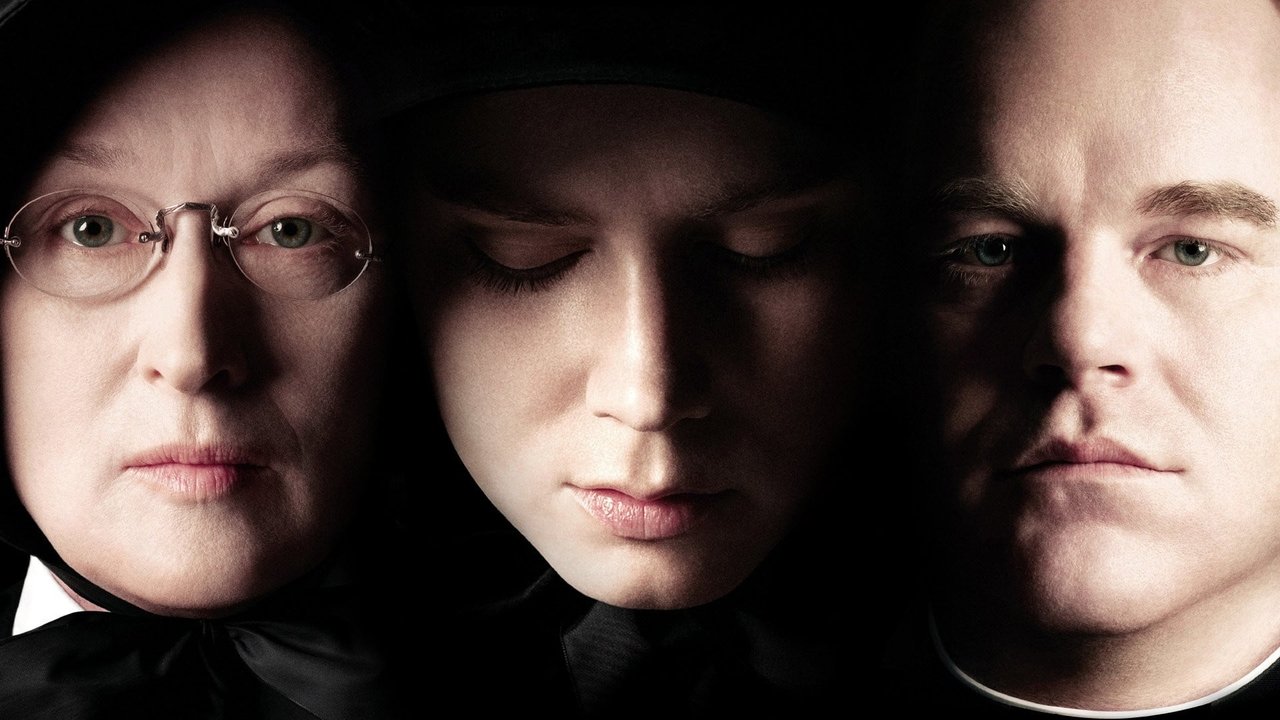
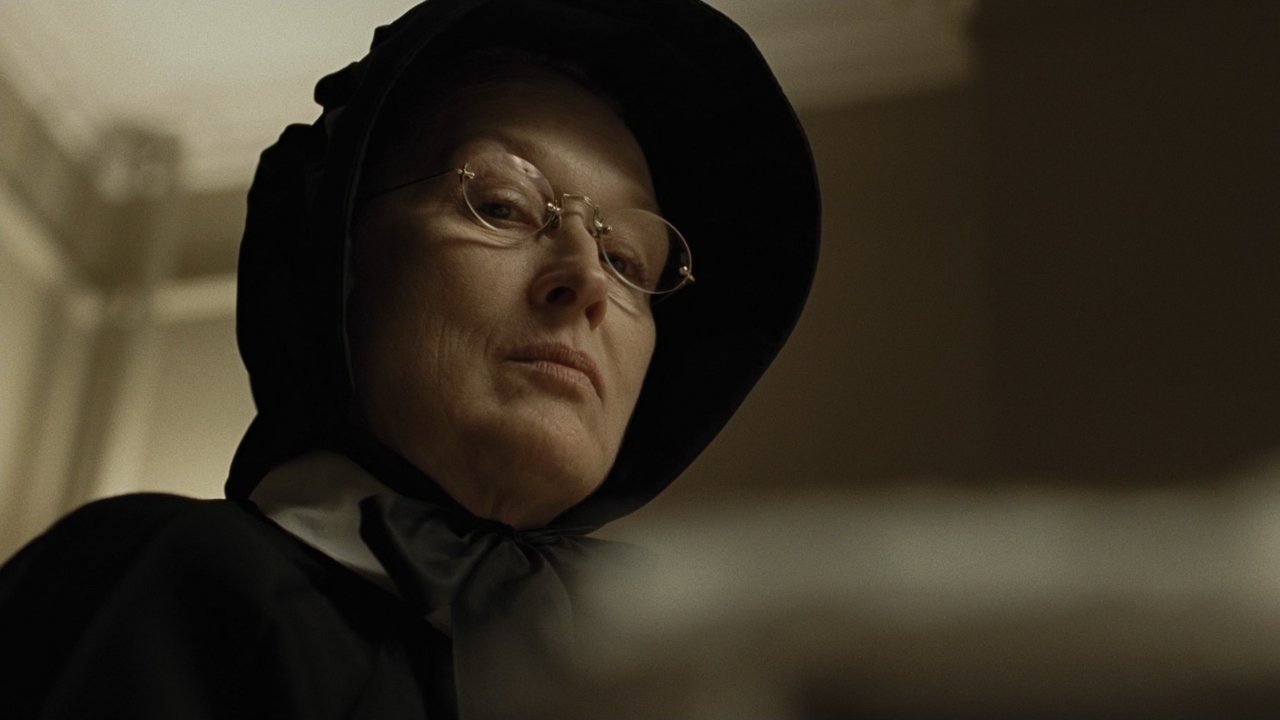
At the heart of the film is a collision between two very different philosophies of faith and humanity. Meryl Streep plays Sister Aloysius Beauvier, the school principal who treats discipline like a holy sacrament. Looking back at her filmography, this was Streep in her "Iron Lady" formative years, fresh off The Devil Wears Prada (2006). She plays Aloysius with a rigid, bird-like intensity, her eyes darting behind those rimless glasses looking for any sign of secular rot.
Opposing her is Philip Seymour Hoffman as Father Flynn. It is still hard to watch Hoffman and not feel the ache of his absence in modern cinema. He brings a revolutionary warmth to Flynn—he’s the guy who wants to bring "Frosty the Snowman" into the Christmas pageant and actually uses sugar in his tea. The tension between them isn’t just about a potential scandal involving the school’s first African-American student; it’s about the old world of the Church desperately trying to strangle the new world before it can take root. Their scenes together are like watching two grandmasters play chess where the loser goes to hell.
The Eight-Minute Revelation
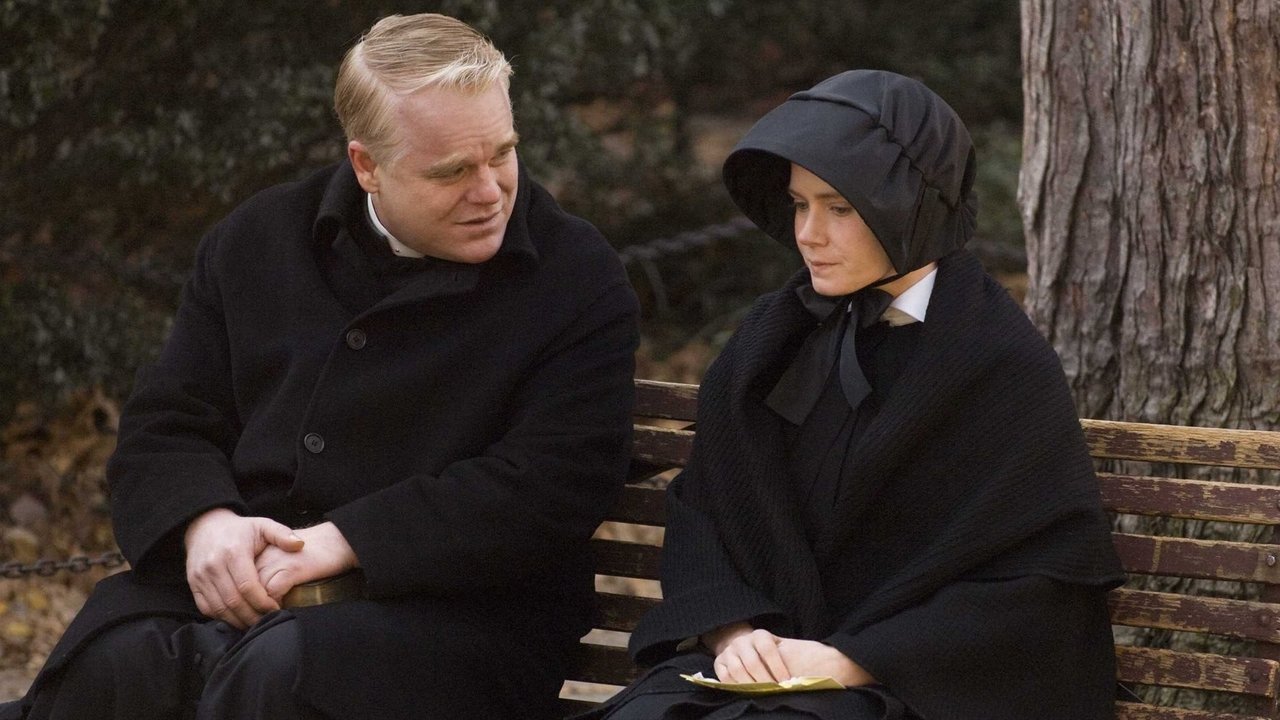
While the heavyweights trade blows, Amy Adams provides the necessary soul as Sister James. She is the audience surrogate—innocent, hopeful, and increasingly terrified by the war she’s caught in. Adams has this incredible ability to make "naive" feel like a legitimate moral position rather than a character flaw.
But we have to talk about the scene that changed everything for Viola Davis. Playing Mrs. Miller, the mother of the boy at the center of the controversy, Davis is on screen for exactly one scene—roughly eight minutes. In that time, she completely upends the movie's moral foundation. Looking back, this was the moment Davis transitioned from a reliable character actor to a formidable screen icon. She brings a crushing, pragmatic reality to a story that, up until that point, had been largely about abstract morality. She reminds us that while the priests and nuns are arguing about "certainty," there is a real child caught in the middle whose life is far more complicated than a Sunday sermon.
Style and the "Deakins Tilt"
Because this was adapted from a stage play, there was a risk of it feeling "room-bound" or static. To combat this, Shanley teamed up with legendary cinematographer Roger Deakins (who was also shooting Revolutionary Road and The Reader around the same time—the man was busy). They chose to lean into a visual style that mirrors the characters' internal instability.
You’ll notice a lot of "Dutch angles"—shots where the horizon line is intentionally tilted. Honestly, the cinematography sometimes looks like the camera operator had one leg shorter than the other, but it works. It creates a sense of vertigo, reflecting how Sister James and Father Flynn feel as their world starts to lean. The use of light and shadow, particularly in the scenes involving Alice Drummond as the elderly Sister Veronica, adds a layer of gothic dread that keeps the film from feeling like a mere filmed play.
Stuff You Didn't Notice
It’s interesting to note that Shanley based the story on his own childhood experiences in the Bronx, and he actually filmed parts of the movie at his old school, St. Anthony’s. That sense of place is palpable; the drafty hallways and the biting New York winter feel lived-in and authentic.
Another fun detail: The "breaking lightbulb" in Sister Aloysius’s office wasn’t just a random prop choice. In the original play, the lighting changes were more subtle, but for the film, Shanley used the physical environment—the wind blowing open windows, the sudden darkness of a storm—to manifest the "Hand of God" or perhaps just the chaos of the truth. It was a very 2008 way of making a drama feel "active," a technique also used by directors like Joe Wright during that decade to bring energy to period pieces.
Doubt is one of those rare films from the late 2000s that doesn't rely on a twist ending to be memorable. It’s a movie about the discomfort of not knowing, which is a much harder sell than a clean resolution. It manages to be intellectually rigorous without being boring, mostly because it trusts its actors to do the heavy lifting.
The film leaves you with a lingering chill that has nothing to do with the Bronx snow. It asks what we are willing to sacrifice in the pursuit of being "right," and whether conviction is just another word for pride. By the time the credits roll, you might find yourself checking your own certainties, which is exactly what a great drama should make you do. It’s a masterly exercise in tension that proves some of the biggest explosions in cinema happen in total silence.
Keep Exploring...
-
August: Osage County
2013
-
The River Wild
1994
-

Charlie Wilson's War
2007
-

United 93
2006
-

Trust
2010
-
Alive
1993
-
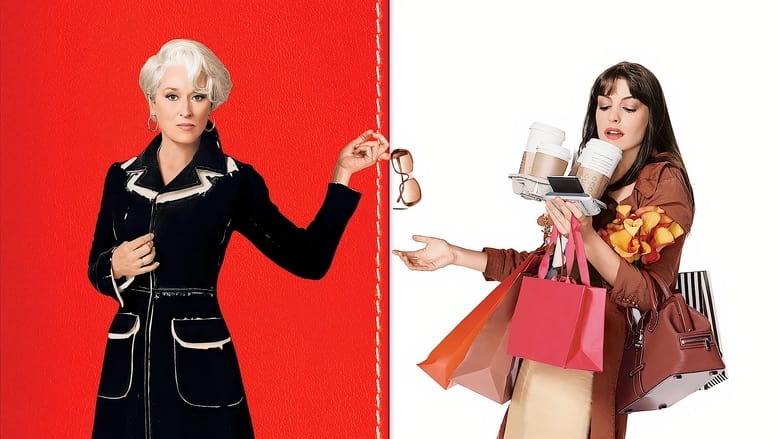
The Devil Wears Prada
2006
-
Trouble with the Curve
2012
-
Holes
2003
-
Honey
2003
-
Open Range
2003
-

Uptown Girls
2003
-

What a Girl Wants
2003
-
Walking Tall
2004
-

A Lot Like Love
2005
-
Broken Flowers
2005
-
Casanova
2005
-
Good Night, and Good Luck.
2005
-

Ice Princess
2005
-
The Devil's Rejects
2005