Hellboy II: The Golden Army
"Monsters, machines, and the tragedy of being human."

The first time I saw the Angel of Death in Hellboy II: The Golden Army, I forgot to breathe. It isn’t just the multiple eyes flickering on those tattered, vulturine wings; it’s the way Doug Jones moves—ethereal, terrifying, and strangely mournful. It’s a sequence that summarizes the entire film: a high-fantasy fever dream masquerading as a superhero sequel. I originally watched this on a portable DVD player that hissed like a radiator, and even on a seven-inch screen, the sheer imagination on display felt too big for the hardware.
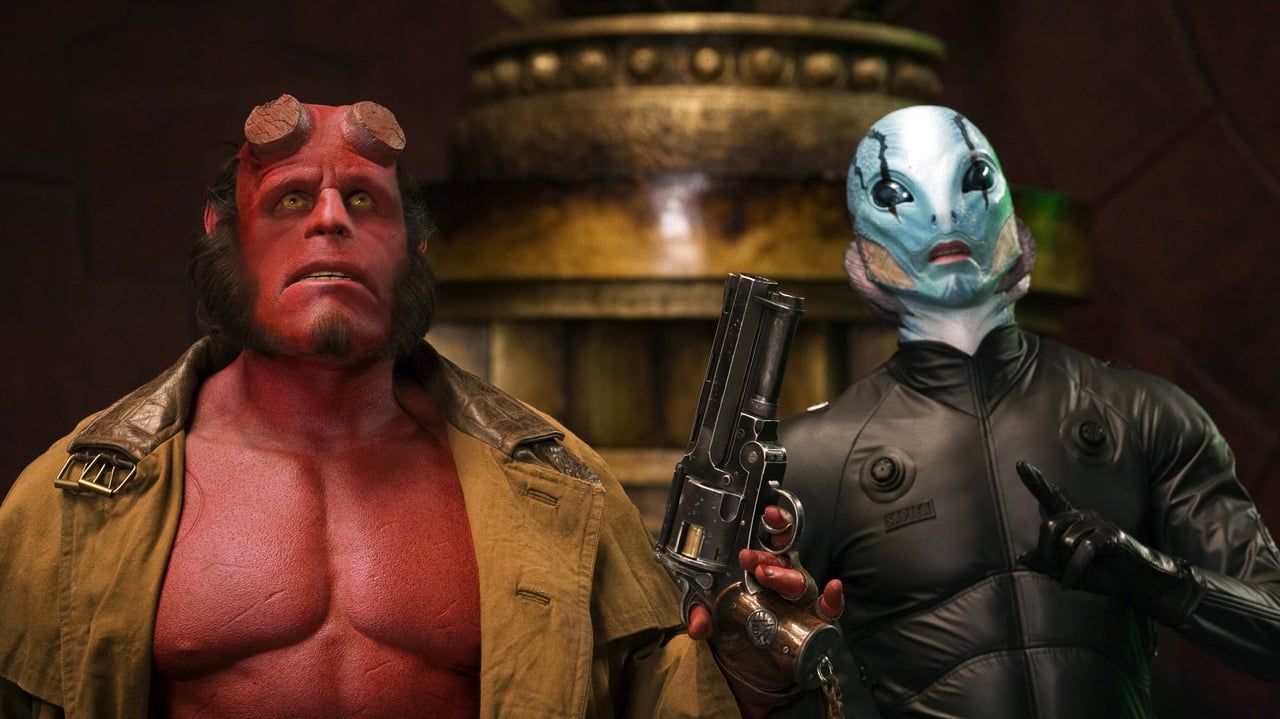
Coming out in 2008, The Golden Army had the misfortune of being sandwiched between Iron Man and The Dark Knight. While those films were busy inventing the modern "grounded" superhero template, Guillermo del Toro went in the opposite direction. He leaned into the weird, the wet, and the clockwork. Looking back, this movie feels like the last great stand for high-budget practical creature effects before the industry fully succumbed to the weightless "gray sludge" of digital-only environments.
The Blue-Collar Demon
What I’ve always loved about Ron Perlman’s Hellboy is that he doesn’t act like a savior; he acts like a guy who’s annoyed his shift isn't over yet. He’s a cigar-chomping, red-skinned tank who just wants to drink beer and watch TV with Selma Blair’s Liz Sherman. Their relationship in this sequel is refreshingly messy. They aren't "super-partners"; they’re a couple arguing about the dishes and the fact that she’s literally a human torch when she gets angry.
The addition of Johann Krauss—a containment suit filled with ectoplasmic mist—is a stroke of genius. Voiced with prissy, German precision by Seth MacFarlane, Krauss is the perfect bureaucratic foil to Hellboy’s "smash first, file reports never" attitude. I honestly think Krauss is a more compelling digital-hybrid character than 90% of the CGI sidekicks we get today. He’s physically there, a gorgeous piece of suit acting by John Alexander, but the "soul" is a voice we usually associate with Family Guy, yet it works perfectly here.
A World Under the Bed
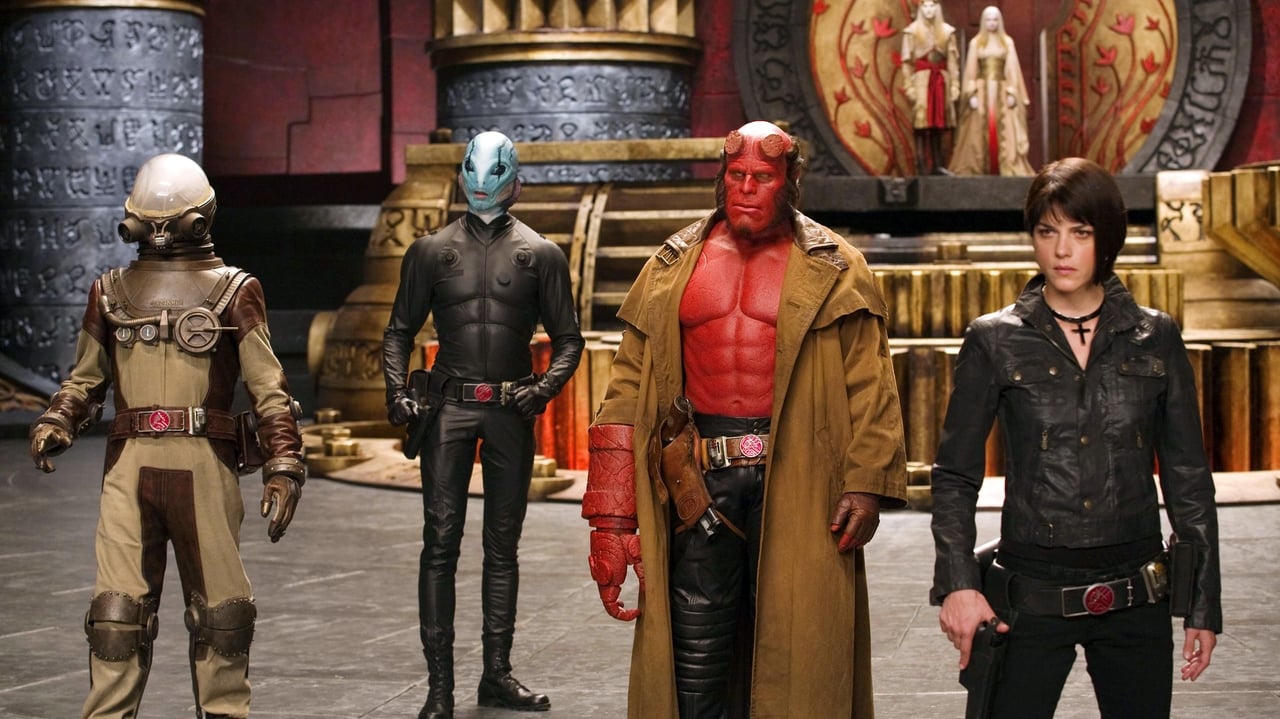
The centerpiece of the film is undoubtedly the Troll Market. It’s the moment Guillermo del Toro fully unleashes his sketchbook. I read somewhere that Guillermo del Toro actually turned down the chance to direct Harry Potter and the Half-Blood Prince to make this movie, and you can see why. He didn't want to play in someone else’s sandbox; he wanted to build his own out of teeth, clockwork, and slime.
The Troll Market feels lived in. It smells of spices and rot. There are creatures in the background that only appear for three seconds but look like they have entire histories. This is where the film earns its "cult" stripes. Fans spent years pausing the DVD just to identify the different monsters. Interestingly, Doug Jones didn't just play Abe Sapien and the Angel of Death; he also played the Chamberlain, the spindly, nervous aide to the Elven King. He’s the unsung hero of the era’s "physical-digital" transition, a man who can communicate more with a tilt of his head than most actors can with a monologue.
The villain, Prince Nuada, played by Luke Goss, is one of the most underrated antagonists of the 2000s. He isn't trying to blow up the world; he’s trying to save his culture from being paved over by parking lots. Nuada is basically a fantasy version of a preservationist with a very sharp spear. His fight choreography has a weight and rhythm that feels miles ahead of the frantic, "shaky-cam" style that dominated action movies in the post-Bourne years.
The Tragedy of the "Almost" Trilogy

There’s a profound melancholy running through The Golden Army. It’s a movie about things ending. The elves are dying out, the Golden Army is a relic of a more brutal age, and Hellboy himself is told his destiny is to bring about the apocalypse. It’s heavy stuff for a movie that also features a scene where a demon and an aquatic empath get drunk on Tecate and sing Barry Manilow’s "Can't Smile Without You."
That singalong scene is actually my favorite moment in the film. Apparently, it was one of the hardest things for del Toro to keep in the cut because the studio didn't "get" it. But that’s the heart of the film. It’s about the humanity found in the monsters. It’s a "Cult Classic" because it treats its weirdos with more dignity than the humans treat each other.
It’s a shame we never got the third chapter. This film leaves so many threads hanging—Liz’s pregnancy, Hellboy’s dark future—that it feels like a beautiful, unfinished bridge. Looking back from our current era of endless cinematic universes, Hellboy II stands out because it wasn't trying to sell us the next ten movies. It was just trying to show us something we’d never seen before.
If you haven't revisited this since the 2000s, do yourself a favor and find the highest resolution copy possible. Even fifteen years later, the practical makeup and puppet work hold up better than the CGI in movies that came out last month. It’s a masterpiece of creature design, a surprisingly touching romance, and a reminder that "superhero" movies don't have to follow a formula to be fantastic. Just watch out for the Tooth Fairies; they’re much less charming than the name suggests.

Keep Exploring...
-
Hellboy
2004
-

Blade II
2002
-
Pan's Labyrinth
2006
-
Pacific Rim
2013
-

The Devil's Backbone
2001
-

Sinbad: Legend of the Seven Seas
2003
-
Constantine
2005
-
Thor
2011
-

Brave
2012
-
Rise of the Guardians
2012
-
The Hobbit: An Unexpected Journey
2012
-

The Hobbit: The Desolation of Smaug
2013
-
Underworld
2003
-
Underworld: Rise of the Lycans
2009
-
Daybreakers
2010
-
Frankenstein
2025
-
Last Action Hero
1993
-
DragonHeart
1996
-
Reign of Fire
2002
-
Perfume: The Story of a Murderer
2006