Il Divo
"The man who knew everything and said nothing."
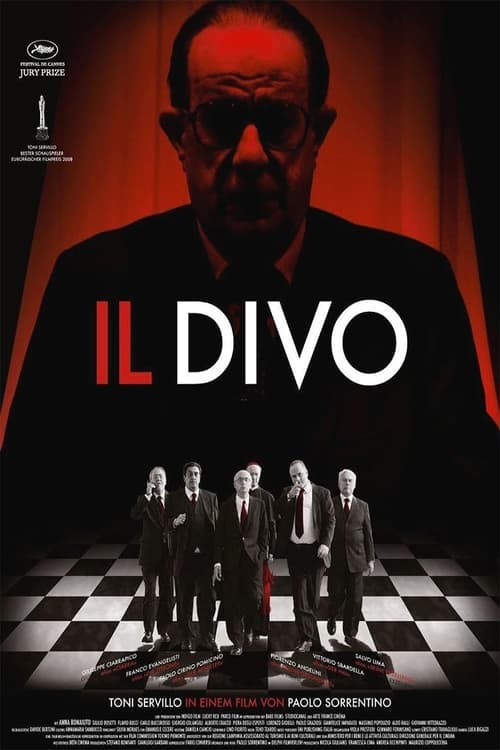
I once tried to replicate Giulio Andreotti’s rigid, elbows-pinned-to-the-ribs walking style while waiting for a root canal in a cramped dentist’s office. I thought it might project an air of stoic mystery; instead, the receptionist asked if I was having a gallbladder attack. That is the singular magic of Toni Servillo in Il Divo. He takes a man who looks like a sentient chess piece and turns him into the most magnetic, terrifying, and oddly hilarious figure in 21st-century cinema.
The Nosferatu of Parliament
If you go into Il Divo expecting a dry, C-SPAN style recount of Italian parliamentary procedures, you are in for a violent shock. Paolo Sorrentino doesn’t do "dry." This is a political biopic filmed like a high-octane mafia thriller, directed by a man who seemingly viewed the transition from analog to digital as an excuse to turn the camera into a heat-seeking missile.
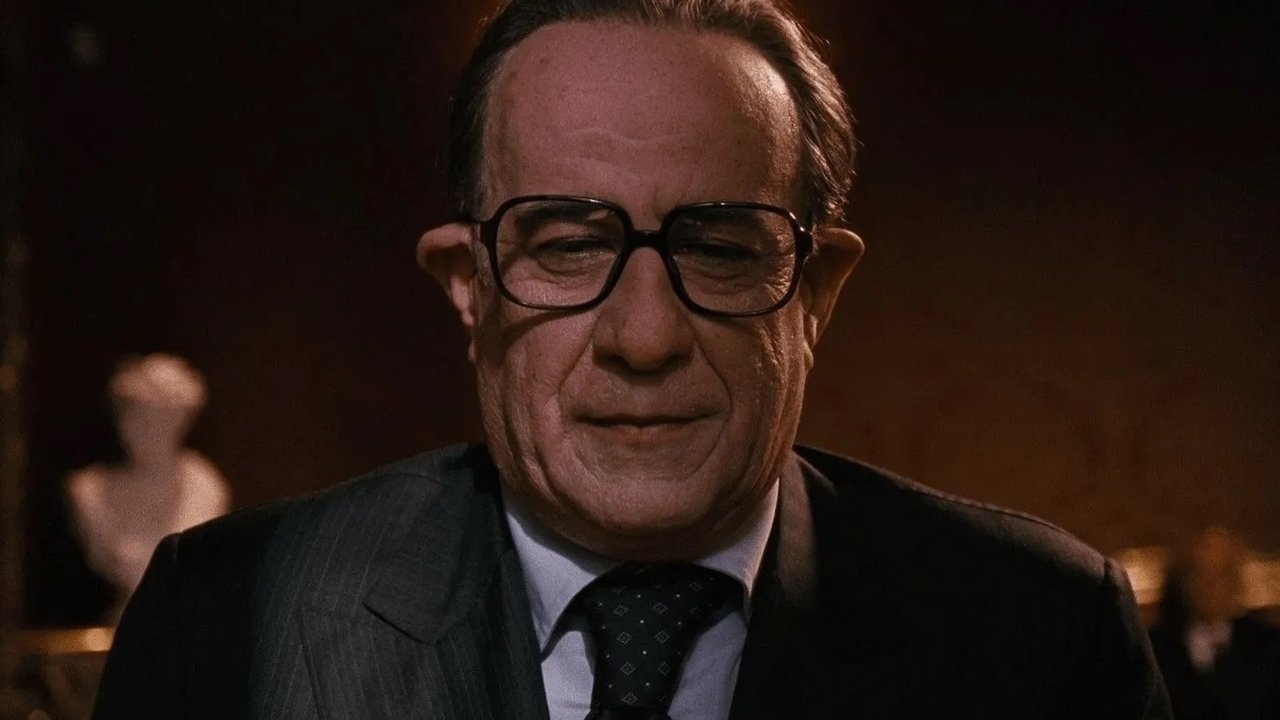
At the center of the storm is Giulio Andreotti, the seven-time Prime Minister of Italy. He was nicknamed "The Beelzebub" and "The Sphinx." As played by Toni Servillo, he is a creature of pure subtext. With his oversized ears, thick glasses, and a posture that suggests he’s carrying the literal weight of Italy’s secrets on his hunched shoulders, he is a minimalist masterpiece. While the world around him explodes—quite literally, in the case of the film’s stylized assassinations—Andreotti remains a vacuum of emotion. He doesn’t walk; he glides like a vampire through the marble halls of power. Servillo’s performance is a masterclass in doing everything by doing absolutely nothing, proving that a well-timed blink can be more explosive than a car bomb.
Scorsese in the Eternal City
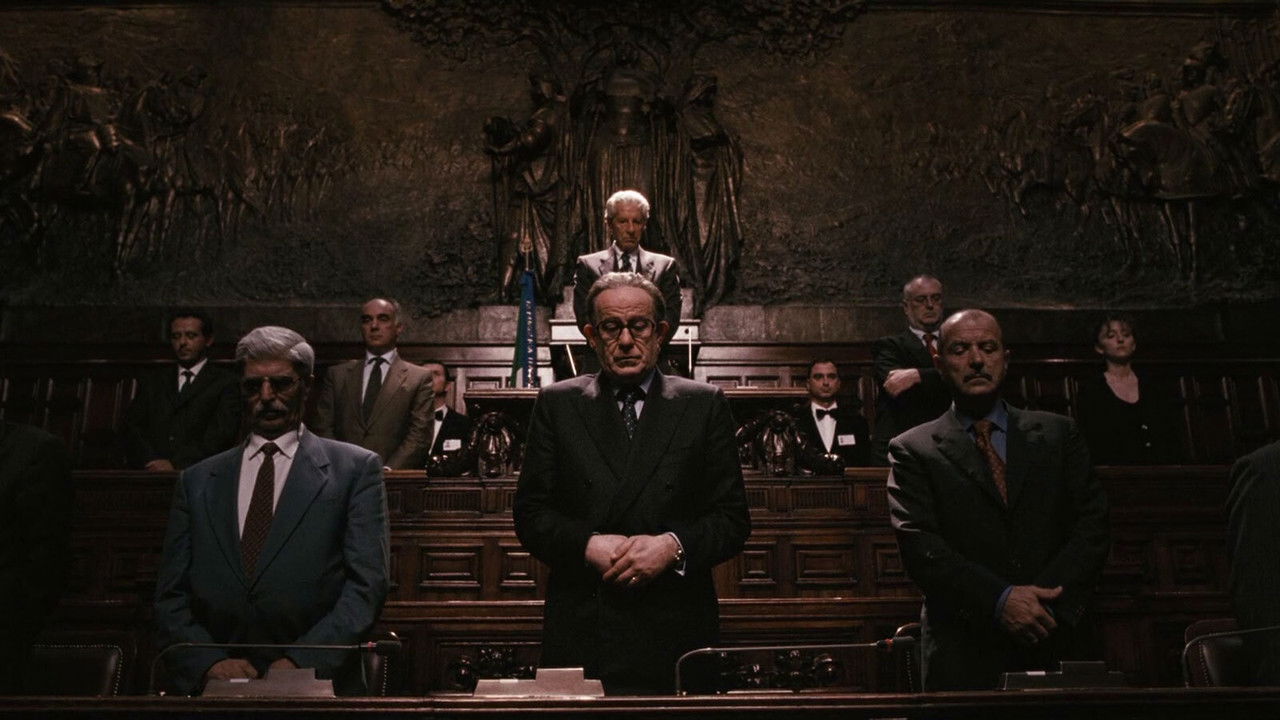
Released in 2008, Il Divo arrived just as the "Indie Film Renaissance" of the 90s was maturing into something slicker and more visually aggressive. Sorrentino leans into the era’s burgeoning digital toolkit to create a hyper-real version of Rome. The cinematography by Luca Bigazzi is spectacular, utilizing deep shadows and sweeping tracking shots that feel like a direct challenge to Martin Scorsese’s Goodfellas.
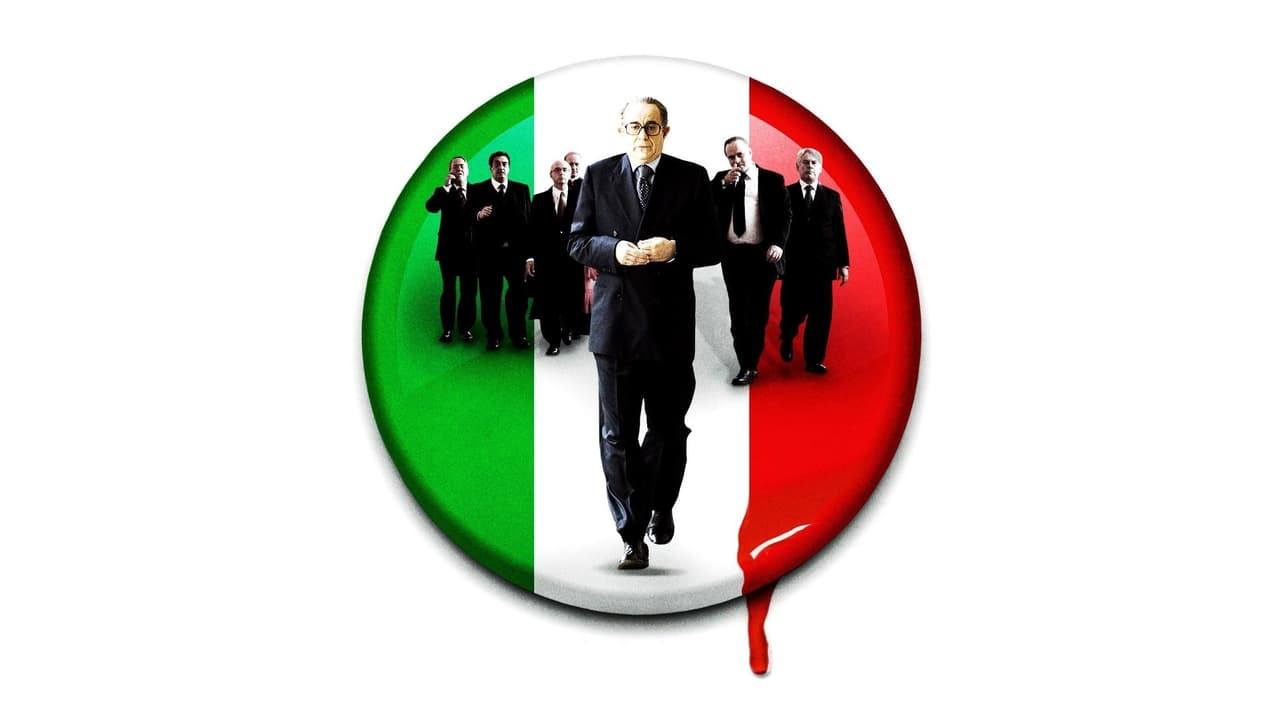
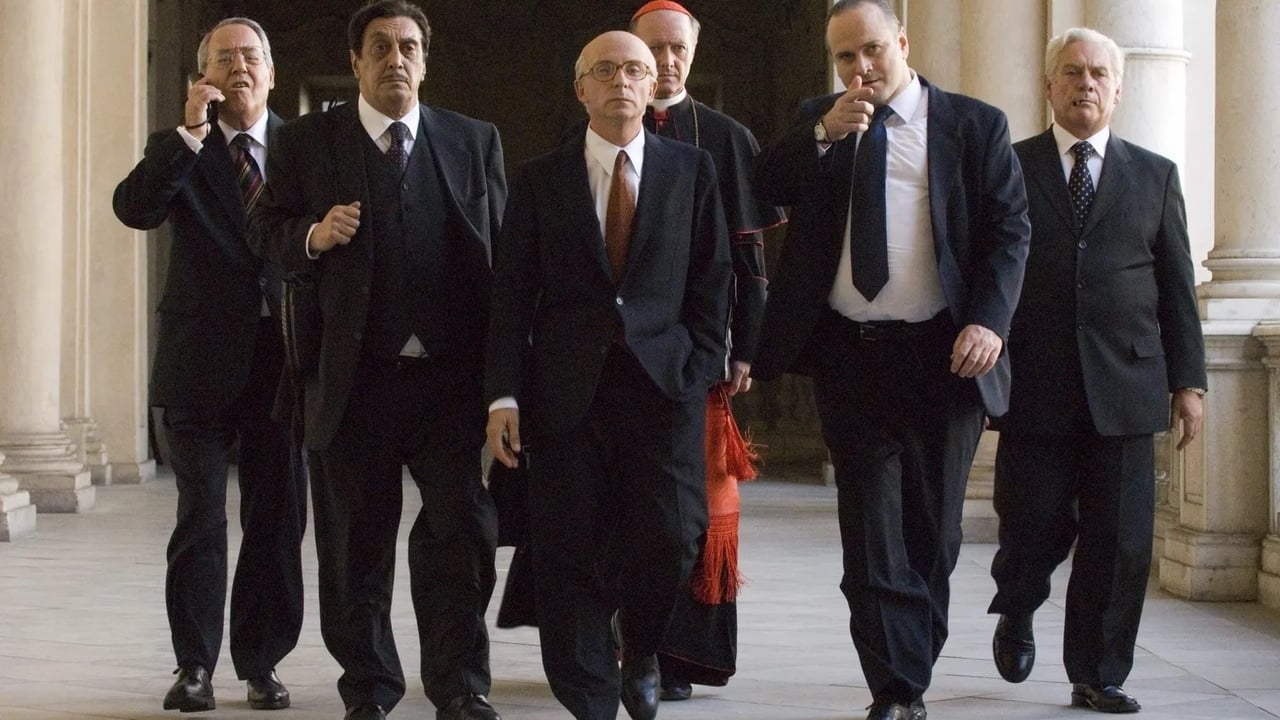
The film’s energy is infectious. There’s a scene where Andreotti’s "factions"—a group of colorful, corrupt, and deeply weird politicians—walk toward the camera in slow motion to a pulsing electronic score by Teho Teardo. It’s absurd. It’s cool. It’s entirely "too much," and yet it perfectly captures the theatricality of Italian power. We see Carlo Buccirosso as the flamboyant Paolo Cirino Pomicino and Flavio Bucci as the frantic Franco Evangelisti, forming an ensemble that feels less like a cabinet and more like a high-stakes circus troupe.

Sorrentino understands that politics isn’t just about policy; it’s about the performance of authority. By using the visual language of a rock video to describe a man who supposedly lived on white pasta and prayer, he highlights the grotesque gap between the public servant and the private power-broker.
The Burden of the Secret
For a film so loud and stylish, Il Divo is surprisingly cerebral. It grapples with a heavy philosophical question: Can a man be "holy" if he oversees a hellscape? Andreotti was a devout Catholic who went to Mass every morning, yet he was allegedly the bridge between the state and the Cosa Nostra.
The movie doesn’t offer a simple "guilty" or "innocent" verdict. Instead, it invites us to inhabit the psychological space of a man who believes that his own survival is synonymous with the survival of the nation. In a stunning late-night monologue, Andreotti addresses the camera—and his absent accusers—suggesting that his "black work" was a necessary evil to keep the wheels of democracy turning. It’s a chilling moment that forces you to consider the moral cost of stability.
Looking back from our current era of hyper-transparent (and hyper-messy) social media politics, Il Divo feels like a dispatch from a lost world of "The Great Silencers." It’s about the time when power resided in what was not said, and what was not shown.
Why Did This Slip Under Your Radar?
Despite winning the Jury Prize at Cannes, Il Divo remains a bit of a "forgotten curiosity" for general audiences outside of Europe, often overshadowed by Sorrentino’s later Oscar-winner, The Great Beauty. It’s a dense film, packed with names and events that might feel obscure if you didn't grow up reading Italian newspapers in the 90s.
However, you don't need a degree in European History to enjoy it. You just need to appreciate the spectacle of a filmmaker at the height of his powers dismantling the myth of a "Great Man." Apparently, the real Andreotti actually watched the film and was so incensed he walked out, calling it "a caricature"—though he later reportedly quipped that he would have preferred a more "sympathetic" portrayal. If the guy who survived dozens of trials and mafia allegations found it "too much," you know it’s doing something right.
Il Divo is a visual espresso shot. It’s a rare beast that manages to be intellectually demanding while remaining shamelessly entertaining. Between Toni Servillo’s tectonic performance and Sorrentino’s bravura direction, it’s a film that demands to be watched, then re-watched, then discussed over a very strong drink. It captures the frantic, anxious energy of the turn-of-the-century transition better than almost any other political drama of its time. Seek it out, even if you have to hunt for it through the digital archives—it’s the most fun you’ll ever have watching a man in a cardigan contemplate the end of the world.
Keep Exploring...
-
The Great Beauty
2013
-
The Consequences of Love
2004
-
This Must Be the Place
2011
-
The Hand of God
2021
-
The Sea Inside
2004
-

The Fall
2006
-
Control
2007
-

Evangelion: 1.0 You Are (Not) Alone
2007
-
The Diving Bell and the Butterfly
2007
-
Synecdoche, New York
2008
-
Evangelion: 2.0 You Can (Not) Advance
2009
-

My Name Is Khan
2010
-

A Separation
2011
-
From Up on Poppy Hill
2011
-
Amour
2012
-
Laurence Anyways
2012
-
Instructions Not Included
2013
-
Nebraska
2013
-
The Tale of The Princess Kaguya
2013
-
Spring, Summer, Fall, Winter... and Spring
2003