Kung Fu Panda
"There is no secret ingredient."
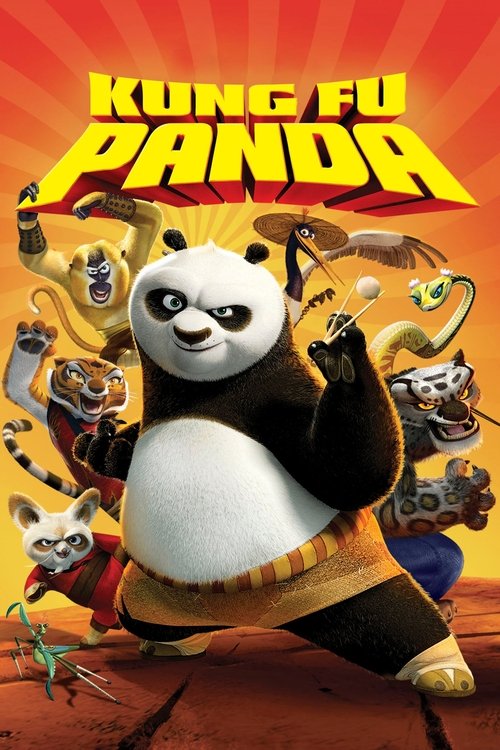
By 2008, the "DreamWorks Smirk" had become a bit of a cinematic plague. You know the one—every animated animal on every poster looked like it was judging your life choices while preparing to drop a Shrek-style pop culture reference. Then a clumsy panda stumbled onto the scene, and suddenly, the studio found its soul. Looking back at Kung Fu Panda, it wasn't just another digital distraction for kids; it was the moment DreamWorks decided to actually compete with Pixar’s prestige instead of just mocking it from the sidelines.
Wuxia with a Side of Dumplings
Most western attempts at martial arts movies end up feeling like a parody, but directors Mark Osborne and John Stevenson clearly did their homework. They traded the snark for genuine reverence for the Shaw Brothers era and films like Ang Lee's Crouching Tiger, Hidden Dragon. The action choreography here is genuinely brilliant, operating on a level of physical logic that most live-action blockbusters completely ignore.
The bridge fight involving the Furious Five and Tai Lung (Ian McShane) is a masterclass in spatial awareness and escalation. I watched this again recently on a DVD I borrowed from a neighbor whose cat had chewed the corner of the case, and I found myself hitting the rewind button just to track the physics of the rope movements. It’s fast, it’s legible, and it has actual stakes. The film understands that for the comedy to land, the danger has to feel real. When Ian McShane's Tai Lung escapes from prison, it isn't played for laughs; it’s a high-octane jailbreak that wouldn't look out of place in a Mission: Impossible flick.
The Power of the Soft Hero

At the center of the chaos is Jack Black as Po. This was the absolute peak of the "Black-aissance," coming right off the heels of School of Rock and Nacho Libre. What I love about Po is that the movie never makes his weight the "problem" to be solved. He doesn’t need a training montage that turns him into a shredded athlete. Instead, the film suggests that his perceived weaknesses—his obsession with food, his "softness," his fan-boy enthusiasm—are actually his greatest tactical advantages. Po is the only action hero allowed to be soft, and that makes him more dangerous than a thousand stoic soldiers.
Opposite him, Dustin Hoffman provides the perfect dry foil as Master Shifu. You can practically hear the weary sigh in Hoffman's vocal cords every time Po accidentally breaks a thousand-year-old relic. Their chemistry turns the classic "master and apprentice" trope into something that feels earned rather than gifted by a prophecy. And let’s be honest, James Hong as Mr. Ping (Po’s goose father) steals every single scene he’s in. His "secret ingredient" speech is the kind of simple, profound writing that separates the classics from the "straight-to-DVD" fodder.
A $600 Million Masterstroke
Financially, this thing was a juggernaut. With a $130 million budget—a massive sum for 2008—DreamWorks was betting the farm on a panda. It paid off to the tune of $632 million worldwide, becoming the highest-grossing non-sequel film the studio had ever produced at that point. It wasn't just a hit; it was a cultural pivot. It launched a franchise that somehow maintained its quality through multiple sequels and TV spin-offs, largely because the foundation was built on character rather than current-event gags.
The score by Hans Zimmer (who previously gave us the epic sounds of Gladiator and The Lion King) and John Powell is another reason the film hits so hard. They managed to blend traditional Chinese instrumentation with a massive Western orchestra in a way that feels heroic without being stereotypical. It gives the Valley of Peace a sense of scale that makes Po’s journey from noodle-slinger to Dragon Warrior feel genuinely operatic. Even the opening 2D dream sequence—a stylized, hand-drawn homage to anime—showed a level of artistic ambition that we just weren't seeing from big-budget CGI fests at the time.
Ultimately, Kung Fu Panda succeeds because it trusts its audience to appreciate both a well-timed fart joke and a sincere meditation on self-worth. It captures that rare lightning-in-a-bottle moment where the technology finally caught up to the imagination of the storytellers. It’s a film that respects its genre, its characters, and the sheer joy of a well-choreographed fight over a single dumpling. If you haven't visited the Valley of Peace in a few years, it’s time to go back. It's aged like fine peach blossoms.

Keep Exploring...
-
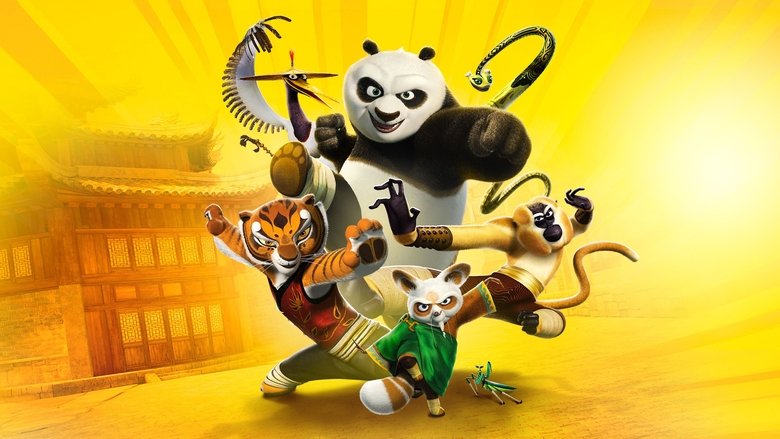
Kung Fu Panda 2
2011
-
Kung Fu Panda 3
2016
-
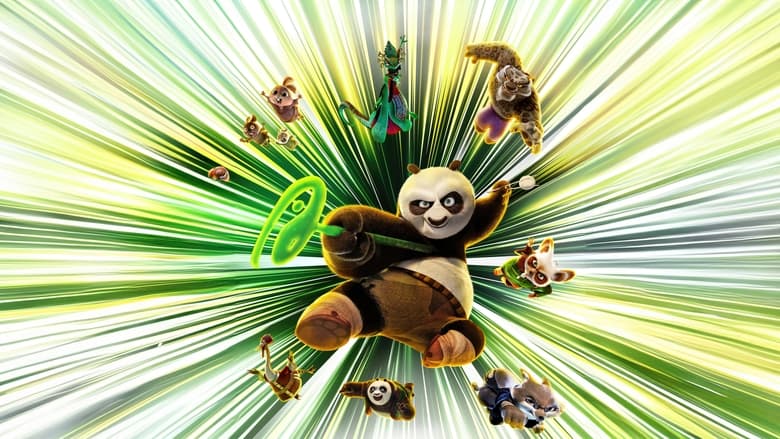
Kung Fu Panda 4
2024
-

Puss in Boots
2011
-
Big Hero 6
2014
-
How to Train Your Dragon 2
2014
-

Sinbad: Legend of the Seven Seas
2003
-
Horton Hears a Who!
2008
-
Brave
2012
-
Shrek 2
2004
-

Madagascar
2005
-
Cars
2006
-

Ice Age: The Meltdown
2006
-

Night at the Museum
2006
-
Madagascar: Escape 2 Africa
2008
-

Ice Age: Dawn of the Dinosaurs
2009
-

Up
2009
-
Rio
2011
-
Madagascar 3: Europe's Most Wanted
2012
-
The Croods
2013