Lakeview Terrace
"The law lives next door. And he’s watching."
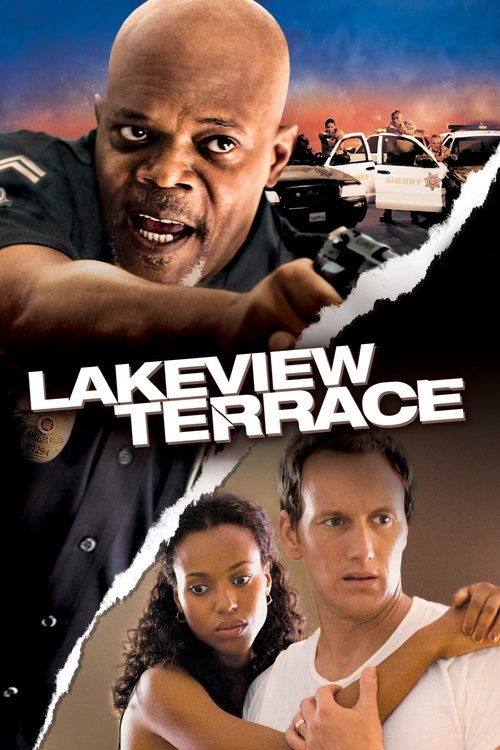
I remember finding the DVD of Lakeview Terrace in a clearance bin at a closing Circuit City, tucked behind three copies of Gothika and a scratched Norbit. I watched it that night on a tiny CRT television while trying to assemble a very frustrating IKEA bookshelf, and the mounting tension of the film perfectly matched my desire to throw a hex key through a window. It’s a movie that lives in that specific, uncomfortable friction—the kind that makes your skin crawl because the threat isn't a masked slasher, but a guy with a badge and a lawnmower.
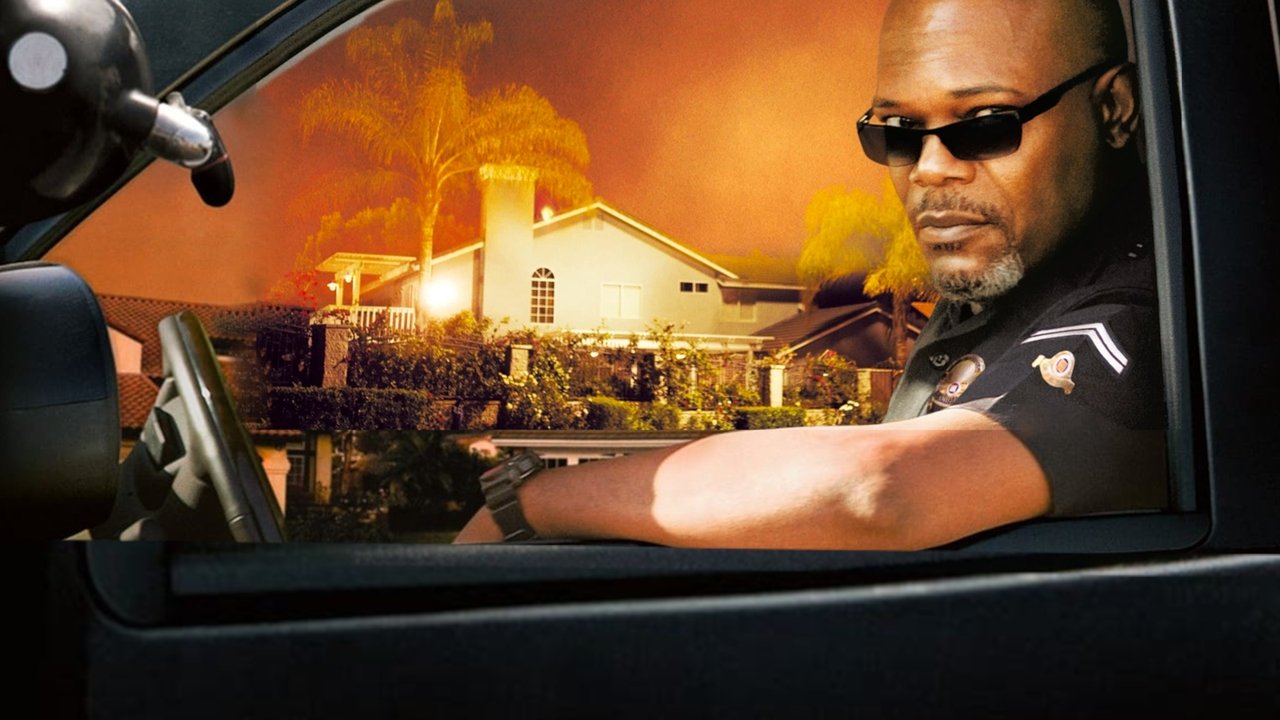
Released in 2008, Lakeview Terrace arrived at a fascinating crossroads in American culture. We were on the precipice of the "post-racial" narrative that accompanied the Obama era, yet the film, directed by Neil LaBute, felt like a splash of ice water to the face. It takes the classic "neighbor from hell" trope—think Pacific Heights or Unlawful Entry—and injects it with a jagged, modern anxiety about race, authority, and the fragile sanctity of the "dream home."
The Simmering Heat of the Valley
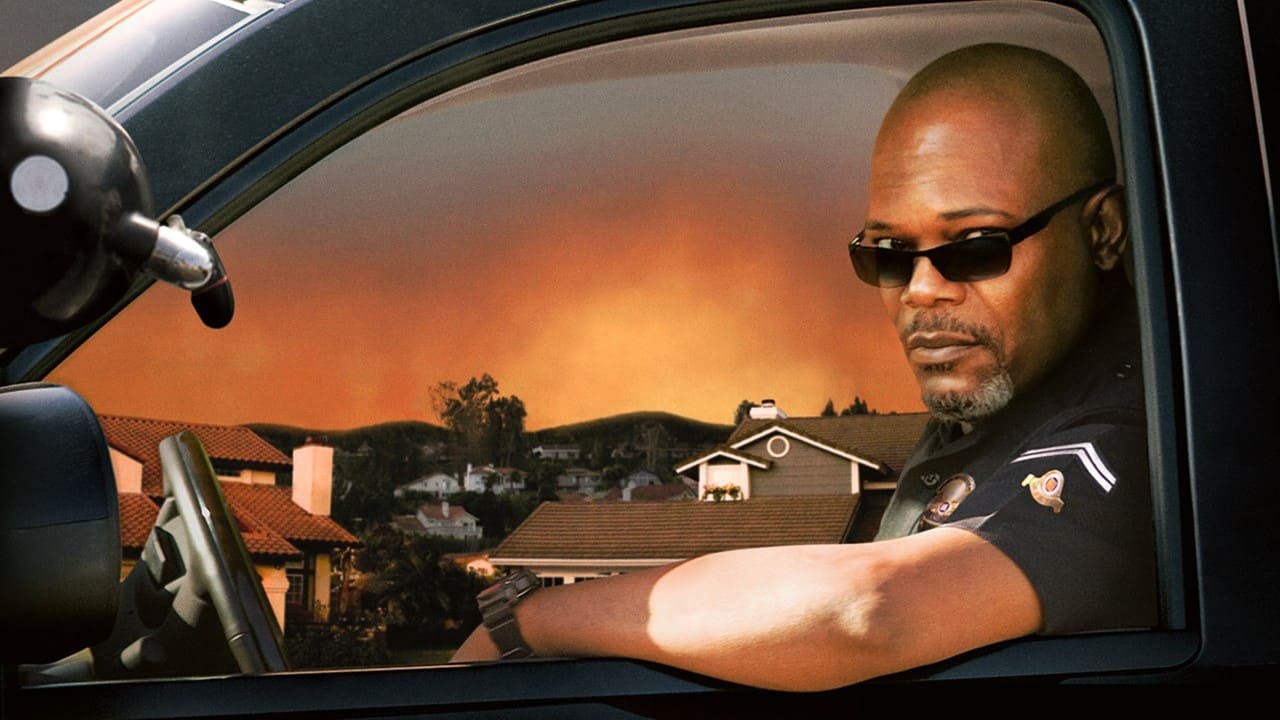
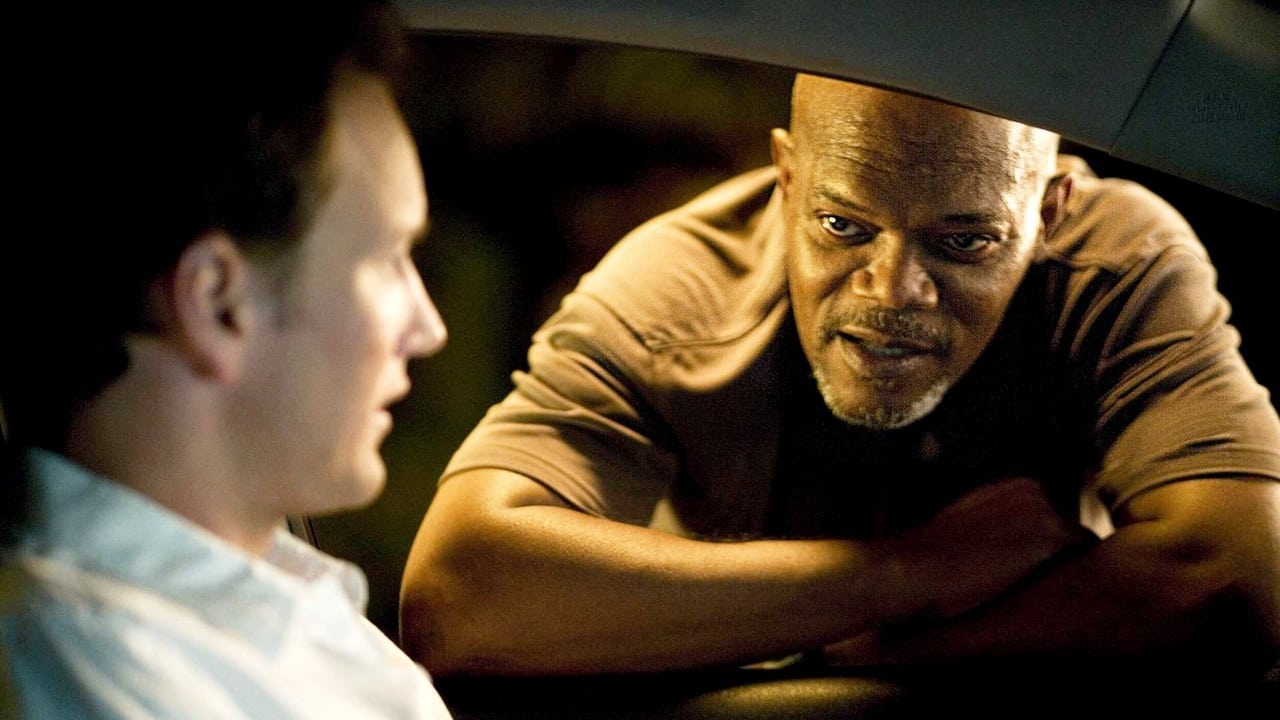
The setup is deceptively simple. Chris Mattson (Patrick Wilson) and Lisa Mattson (Kerry Washington) are a young, attractive interracial couple moving into a beautiful cul-de-sac in Lakeview Terrace, California. Their neighbor is Abel Turner (Samuel L. Jackson), a veteran LAPD officer who spends his nights patrolling his own street with a flashlight and a scowl.
From the jump, Abel makes it clear he doesn't approve of the Mattsons. It starts with passive-aggressive comments about their "lifestyle" and escalates into floodlights aimed at their bedroom window, security cameras that track their every move, and an increasingly terrifying psychological siege. Samuel L. Jackson is the sun around which this movie orbits. While we’re used to his "loud" persona, here he plays Abel with a quiet, vibrating intensity. He’s a man who believes he is the hero of his own story—a grieving widower trying to protect his children from a world he views as decaying—which makes his cruelty feel all the more dangerous. He isn't just a villain; he’s a man who has weaponized his own badge and his own trauma.
A Relic of the Mid-Budget Thriller
Looking back, Lakeview Terrace feels like one of the last of its kind. This was a "studio thriller"—a mid-budget, adult-oriented drama that wasn't trying to start a franchise or sell toys. In the late 2000s, these were the bread and butter of the box office, but today, a story like this would likely be compressed into a three-part limited series on a streaming service.
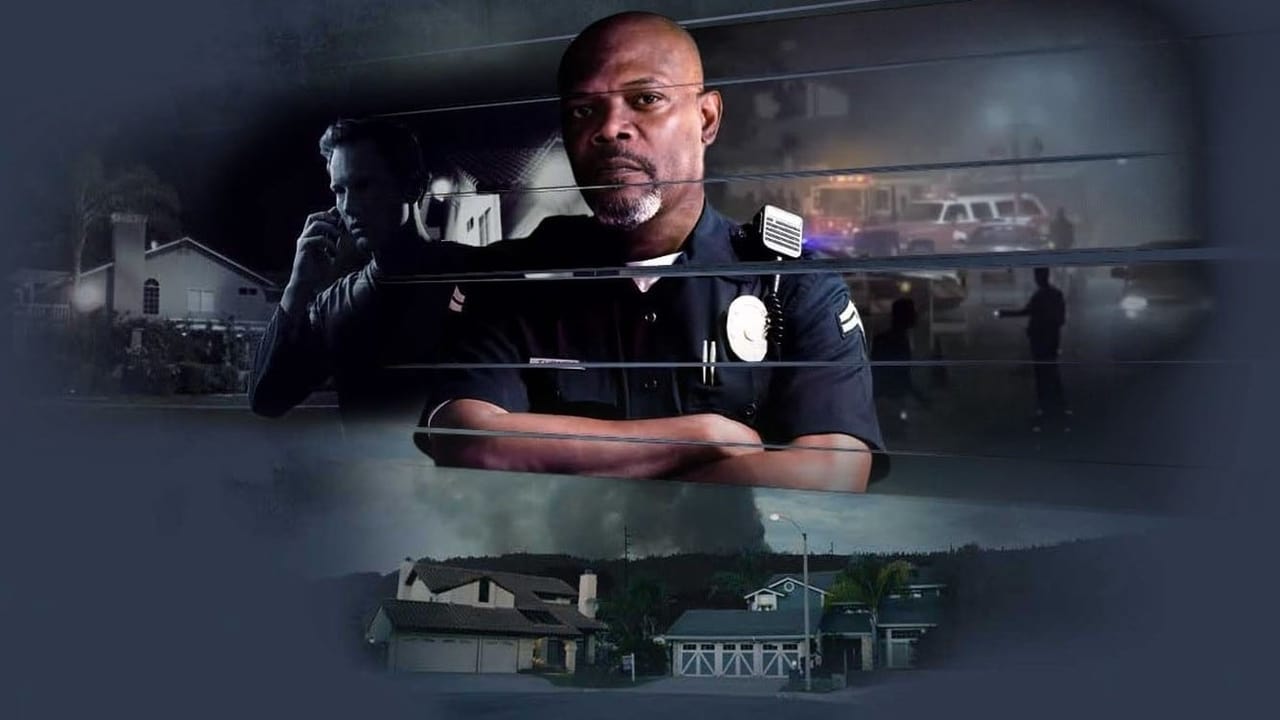
Neil LaBute, a director known for his cynical and often misanthropic explorations of human nature (like In the Company of Men), was an interesting choice for this. He keeps the camera tight and the atmosphere claustrophobic. The backdrop of the film is a literal wildfire creeping toward the neighborhood, a visual metaphor that might be a bit on the nose, but it effectively ratchets up the sense of impending doom. The heat feels real; you can almost smell the smoke through the screen.
Patrick Wilson is excellent here as the "nice guy" pushed to his limit. He has a specific talent for playing characters who desperately want to be reasonable until they simply can't be anymore. His chemistry with Kerry Washington provides the emotional stakes—you actually care if this marriage survives the neighborly assault.
Why It Slipped Through the Cracks
Despite being a modest success at the time, Lakeview Terrace has largely vanished from the cultural conversation. Part of that is the "LaBute factor"—his films are rarely "fun" in the traditional sense. They are designed to make you squirm. Another reason is the ending. Without spoiling it, the third act shifts from a nuanced psychological drama into a more conventional, high-octane action-thriller. Apparently, the original script was even darker, but test screenings led to a more "explosive" finale that feels a bit disjointed from the subtle terror of the first hour. It’s essentially a 90s stalker flick that went to grad school for a semester to study sociology only to drop out during finals week.
There’s also the reality of how we view police on screen now versus 2008. Abel Turner’s abuse of power hits differently today than it did sixteen years ago. In 2008, he was a "bad apple" archetype; in a modern context, the film feels almost prophetic about the ways institutional power can be used to enforce personal prejudices.
If you can find it, Lakeview Terrace is well worth the 110 minutes. It’s a taut, well-acted reminder of a time when Hollywood still made movies for adults that weren't afraid to be genuinely unpleasant. It doesn't quite stick the landing, and some of the subplots—like Abel’s relationship with his own kids—feel a bit undercooked, but the central performances carry it through. It’s a suburban nightmare that’ll make you want to go out and buy some very thick curtains.
Stuff You Didn't Notice
Real Smoke: The wildfires seen in the background weren't all CGI. During production, actual fires broke out in the San Fernando Valley, and Neil LaBute decided to incorporate the real smoke and hazy orange light into the film to enhance the atmosphere. A Different Abel: Before Samuel L. Jackson signed on, the role of Abel Turner was reportedly offered to several other heavy hitters, including James Gandolfini. While Gandolfini would have brought a different kind of menace, it’s hard to imagine anyone matching Jackson’s specific brand of authoritative intimidation. * The Overbrook Connection: The film was produced by Will Smith's production company, Overbrook Entertainment. It was part of a conscious effort by Smith to produce diverse stories that explored different facets of the Black experience, even the darker ones.
Lakeview Terrace isn't a masterpiece, but it’s a sharp, effective thriller that captures a specific moment of American unease. It’s the kind of movie that makes you look at your own neighbor and wonder what they’re doing with that flashlight at 3:00 AM. Hopefully, they're just looking for their cat.
Keep Exploring...
-
Takers
2010
-
Alpha Dog
2006
-
In the Valley of Elah
2007
-
We Own the Night
2007
-
Street Kings
2008
-
Untraceable
2008
-
The Last House on the Left
2009
-
Brooklyn's Finest
2010
-

The American
2010
-

Trust
2010
-

Get the Gringo
2012
-
Killer Joe
2012
-

The Iceman
2012
-

Dead Man Down
2013
-

Runner Runner
2013
-
Cleaner
2007
-
Unthinkable
2010
-

Basic
2003
-

Out of Time
2003
-
The Hunted
2003