Pineapple Express
"A friendship fueled by bad timing and better weed."
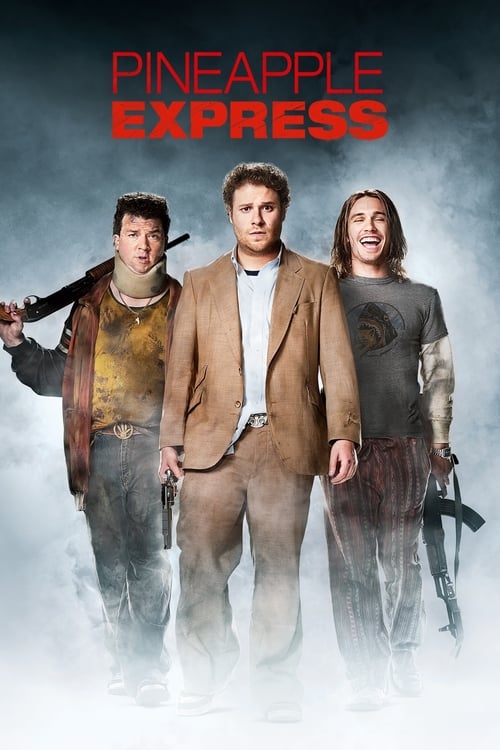
There was a brief, shimmering moment in the late 2000s when the "Apatow" brand felt less like a production credit and more like a law of nature. You couldn't walk into a multiplex without seeing a group of shaggy-haired men over-explaining a pop-culture reference before accidentally tripping into a plot. But while Superbad captured the hormonal panic of youth, and The 40-Year-Old Virgin tackled the delayed onset of adulthood, it was David Gordon Green’s Pineapple Express that decided to see what happened if you mixed a bag of premium herb with a 1980s buddy-cop shootout.
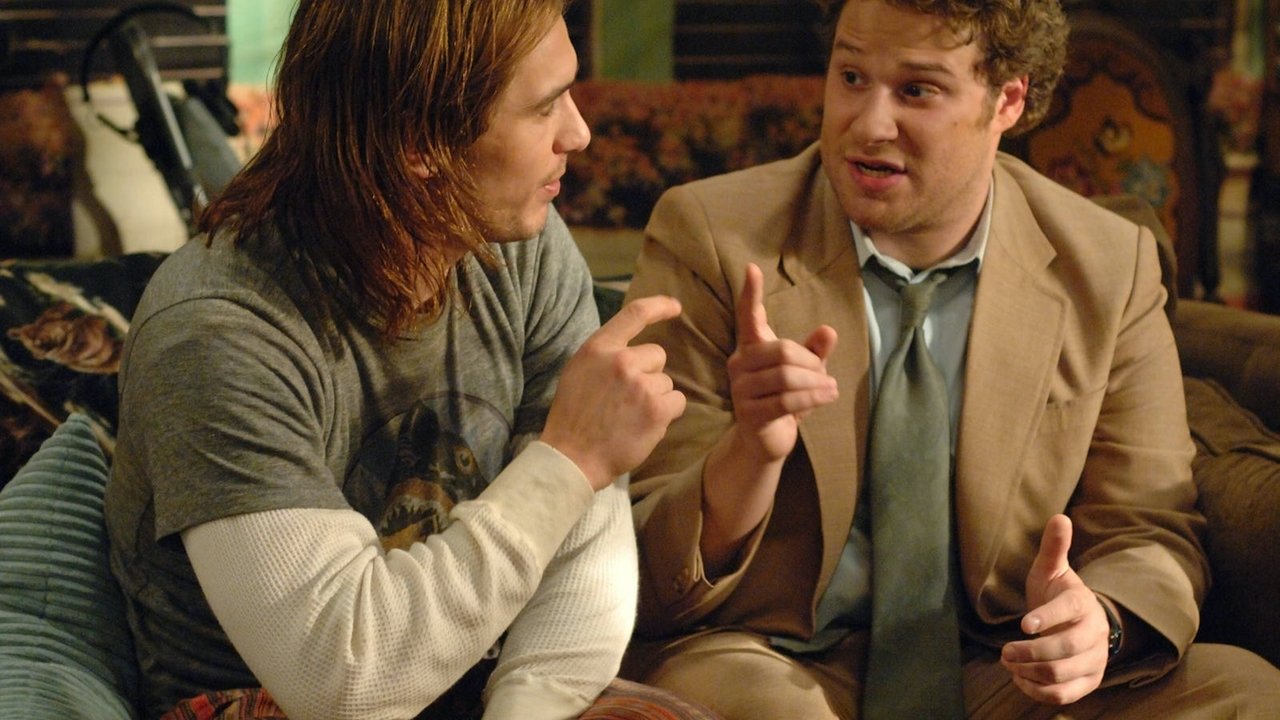
I watched this for the third time in a basement while my roommate tried to explain how crypto worked—back when it was just a weird internet rumor—and the movie was significantly more coherent than he was. Looking back, it’s a fascinating relic of the era where the DVD market was still king. I distinctly remember the "Unrated" stickers on the plastic cases at Blockbuster, promising more swearing and more "Item 9" than the theatrical cut could handle.
The Unlikely Marriage of High and High-Octane
What keeps this film from being just another disposable stoner flick is the sheer physicality of the direction. David Gordon Green, who was previously known for poetic, Southern gothic indies like George Washington and All the Real Girls, was an inspired choice for the chair. He brought along his usual cinematographer, Tim Orr, and instead of the flat, fluorescent lighting that plagued most comedies of the 2000s, they gave the film a hazy, anamorphic glow that feels like a vintage Walter Hill thriller.
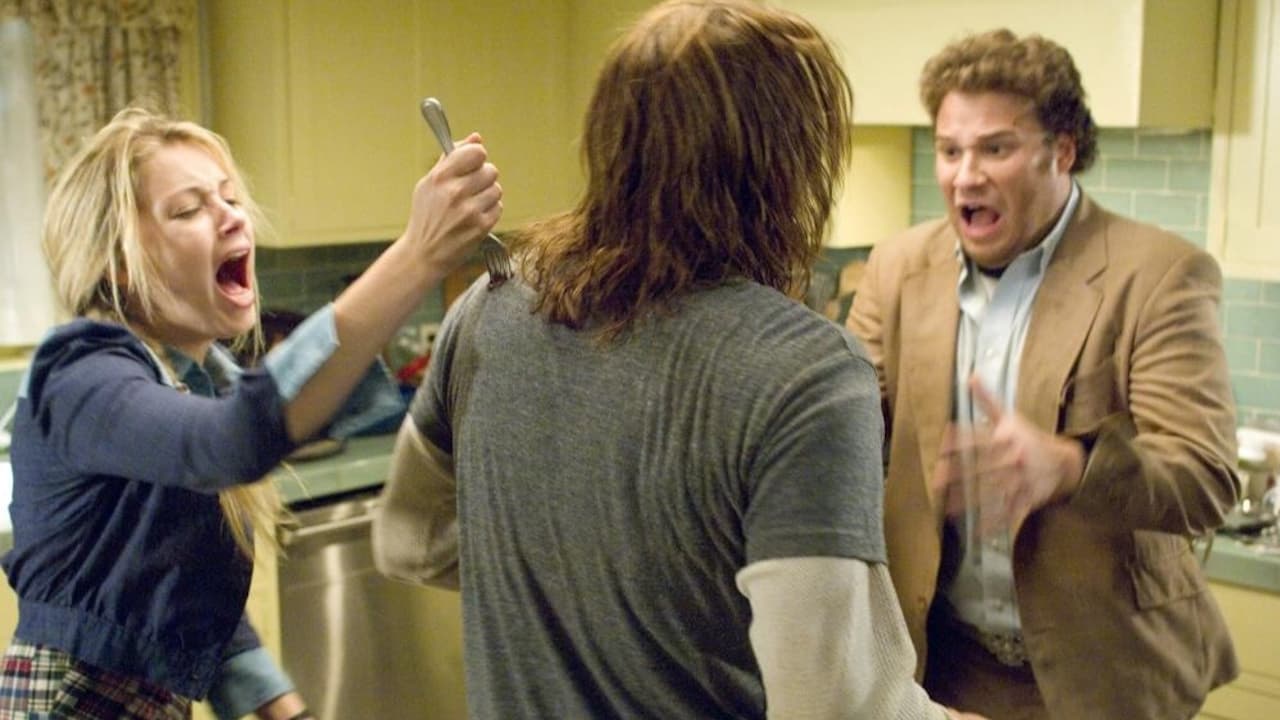
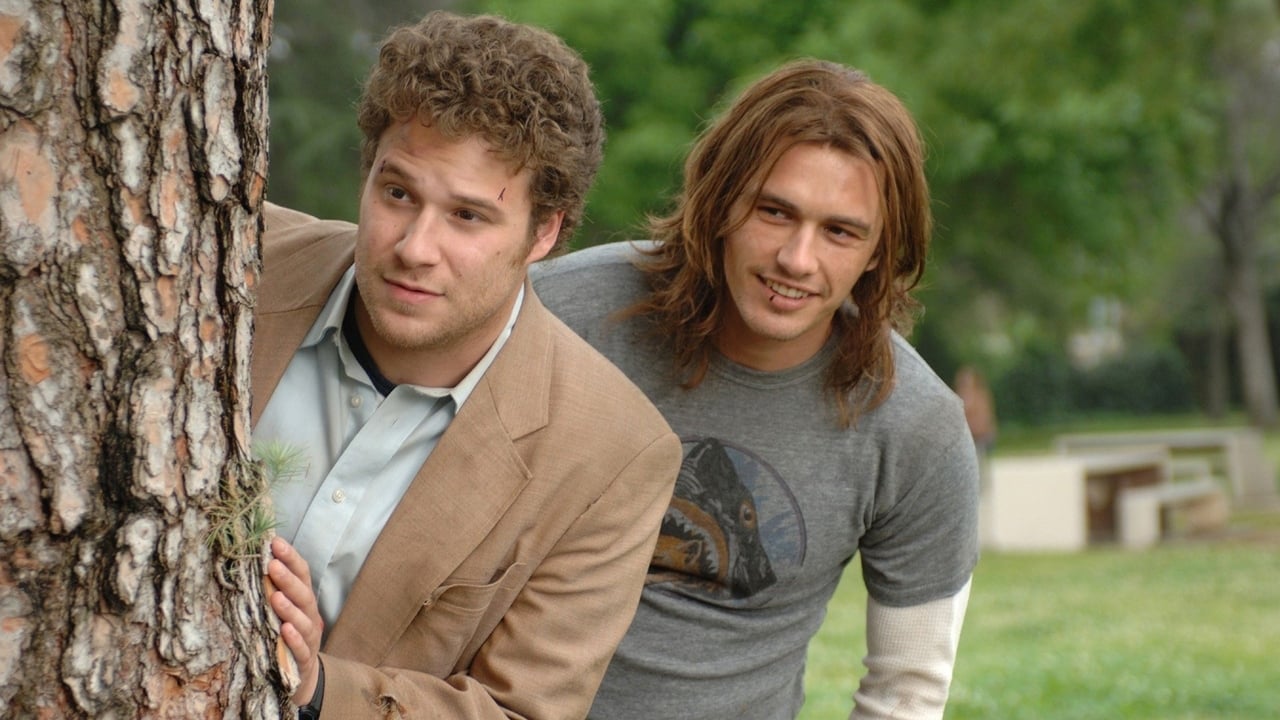
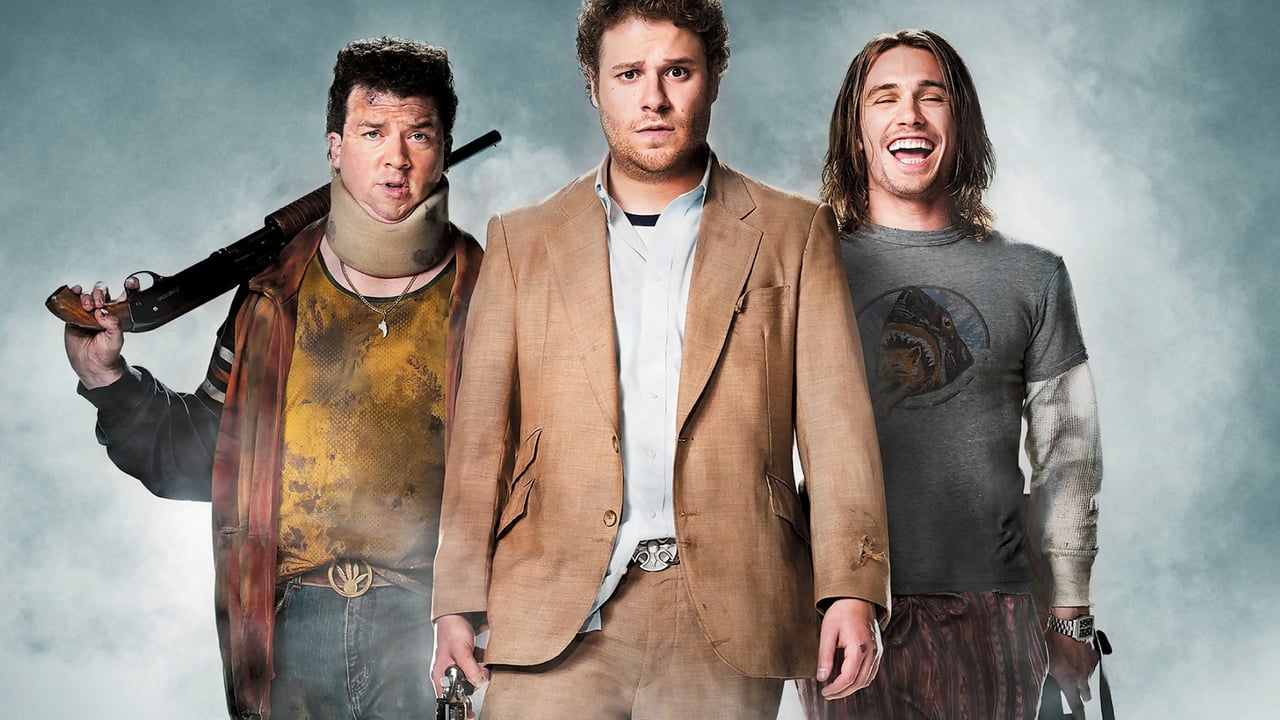
The action isn't just a punchline; it’s heavy, clumsy, and surprisingly impactful. Take the kitchen fight in Red’s house. It’s a masterpiece of "fumble-core" choreography. When Seth Rogen (playing the process-serving Dale Denton), James Franco, and Danny McBride start whaling on each other, it feels dangerous. There’s a specific sound design to the hits—the crunch of a ceramic plate against a skull, the heavy thud of a body hitting a countertop—that gives the chaos weight. The final shootout is choreographed with more genuine spatial awareness than most modern superhero movies, proving that you don't need a $200 million budget to make a car chase feel desperate.
The Saul Silver Spectrum
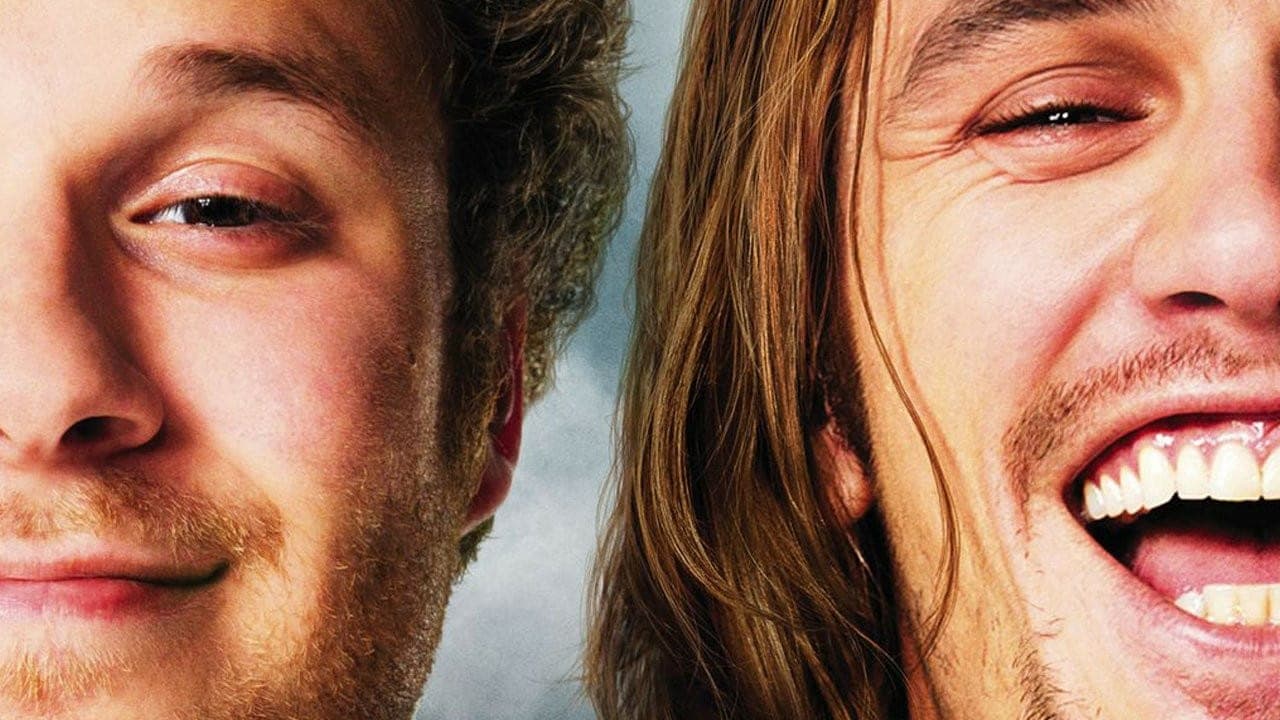
The film’s greatest legacy, however, is the career pivot of James Franco. Before this, he was mostly known as the brooding Harry Osborn or a dramatic lead. Apparently, Seth Rogen and Evan Goldberg originally wrote the script with the intention of Rogen playing Saul, the dealer, and Franco playing the straight-man Dale. But once they realized Franco was a secret comedic weapon, they swapped. It was the right call. James Franco's Saul Silver is the only time the actor has ever been truly, effortlessly likable on screen. He plays Saul not as a caricature, but as a genuinely sweet, lonely guy who just happens to sell "the product of baby-soul engineering."
Then there’s Danny McBride. His portrayal of Red—the indestructible, bathrobe-wearing middleman—is legendary. Danny McBride's Red is the closest thing American cinema has to a modern-day Looney Tune. He gets shot multiple times, blown up, and hit with a car, yet he keeps coming back with a bowl of cereal or a bandage on his head. The chemistry between these three feels like a genuine friendship born of shared trauma and bad decisions, which makes the stakes feel real even when the plot is hovering around a nonsensical drug war involving a corrupt cop (Rosie Perez) and a disgruntled kingpin (Gary Cole).
A Legacy in Smoke
From a production standpoint, the film was a massive win for Columbia Pictures. With a modest $27 million budget, it raked in over $100 million, proving that there was a massive appetite for R-rated comedies that didn't skimp on the pyrotechnics. It also served as a training ground for the stunts. During the scene where Saul and Dale are running through the woods, James Franco actually ran full-speed into a tree, resulting in three stitches. If you look closely at the movie, he’s wearing a grey headband for the rest of the film; that wasn't a costume choice—it was there to hide the actual bandage.
Even the soundtrack by Graeme Revell and the title track by Huey Lewis and the News leans into that 80s action-vibe, bridging the gap between the Lethal Weapon era and the digital age. It captures that 2008 sweet spot: right after the indie boom and right before every major studio film became a cog in a ten-year franchise plan. It’s a standalone, weird, loud, and incredibly funny experiment that actually respects the genres it’s spoofing.
Ultimately, Pineapple Express works because it never treats its premise as a joke. The characters are terrified, the bullets are real, and the weed is, well, supposedly top-shelf. It’s a quintessential 2000s time capsule that manages to be a great action movie and a great comedy simultaneously—a feat that’s much harder to pull off than the "Apatow Mafia" made it look. If you haven't revisited it since your DVD player bit the dust, it's time to light it up again.
Keep Exploring...
-
This Is the End
2013
-

21 Jump Street
2012
-
The Heat
2013
-

Kung Fu Hustle
2004
-

RED
2010
-
Johnny English Reborn
2011
-

The Green Hornet
2011
-
Another 48 Hrs.
1990
-
Lethal Weapon 3
1992
-
Bad Boys
1995
-
Rush Hour
1998
-
Rush Hour 2
2001
-
Shoot 'Em Up
2007
-
Stand Up Guys
2012
-
The Family
2013
-
22 Jump Street
2014
-
Bad Boys II
2003
-
Taxi 3
2003
-
Bandidas
2006
-
OSS 117: Cairo, Nest of Spies
2006