Resident Evil: Degeneration
"The games you love, now without the controller."
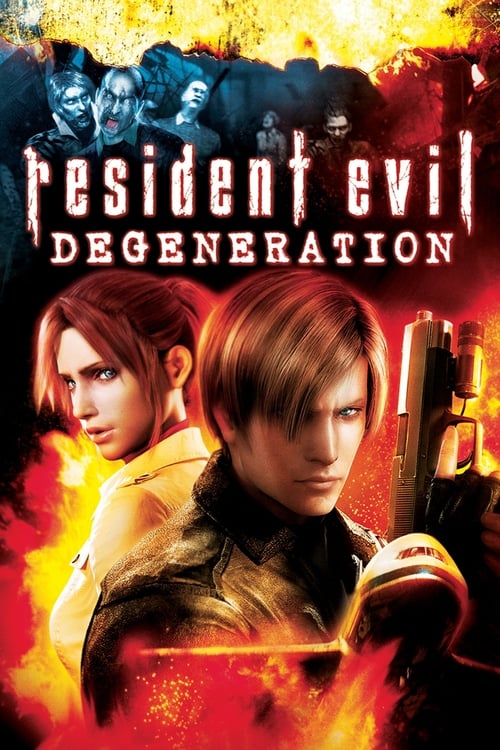
There is a specific kind of "late-2000s" gloss that only Capcom could produce—a weirdly sterile, hyper-detailed world where hair never quite moves in the wind and every character’s eyes look like they’ve peered into the heat death of the universe and found it mildly inconvenient. Resident Evil: Degeneration arrived in 2008 not as a cinematic powerhouse, but as a peace offering. For years, fans of the PlayStation-born horror franchise had watched Paul W.S. Anderson turn their beloved survival-horror roots into a high-octane, leather-clad fever dream starring Milla Jovovich. We wanted the "real" Leon. We wanted the "real" Claire. We wanted the clunky, earnest, bio-organic nightmare we grew up with.

I watched this film on a Tuesday night while eating a bowl of cereal that had gone slightly soggy, which felt oddly appropriate for a movie about decaying flesh and soggy corporate conspiracies. As a piece of digital history, Degeneration is a fascinating relic of the "Modern Cinema" transition, sitting right on the fence between a feature film and a ninety-minute video game cutscene.
The Uncanny Valley of 2008
Director Makoto Kamiya (who has a deep background in special effects, including work on the Gamera series) clearly understood the assignment: make it look like the games, but "more." In 2008, the CGI was touted as groundbreaking. Looking back now, it’s a time capsule of that era’s technological limitations. The environments—specifically the Harvardville Airport where the first act unfolds—are impressively moody, but the human characters often suffer from a severe case of "Mannequin Face."
Leon S. Kennedy, voiced by the iconic Paul Mercier (reprising his role from Resident Evil 4), moves with a stiff, military precision that feels nostalgic but undeniably dated. There’s a hilarious lack of weight to some of the physics; Leon can sprint through a crowd of zombies with the grace of a gazelle, yet his face remains as immobile as a granite cliff. Leon has the emotional range of a very handsome piece of driftwood, which, to be fair, is exactly how he behaved in the games. It’s not a flaw; it’s a feature for the initiated.
The horror mechanics, however, work surprisingly well. The airport setting provides that classic Resident Evil sense of claustrophobia. Watching Claire Redfield (Alyson Court) navigate a terminal swarming with the undead captures the "resource management" anxiety of the source material without making us actually hunt for green herbs. The lighting is the real star here; the way shadows dance across the flickering monitors of the airport lounge creates a genuine sense of dread that the live-action films often traded for slow-motion explosions.
Fan Service as a Narrative Engine
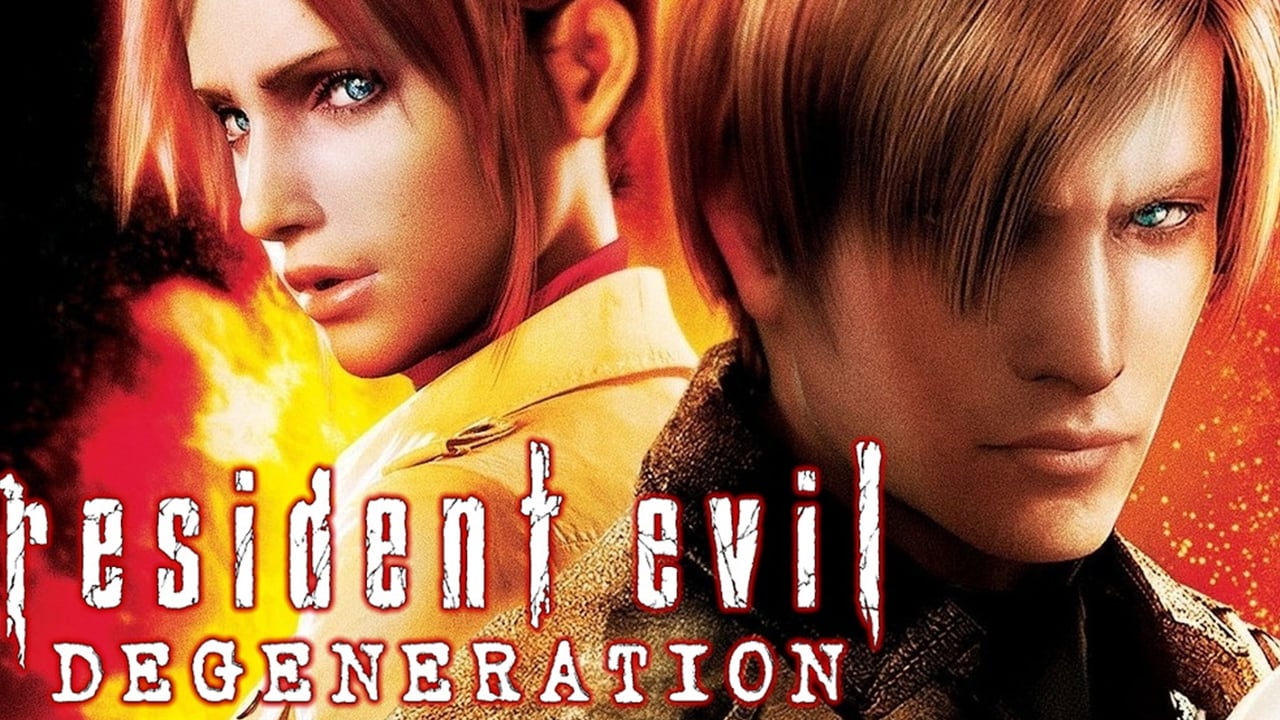
The plot is a direct sequel to the events of Resident Evil 2, ignoring the live-action movie timeline entirely. It’s a dense, somewhat convoluted tale involving the G-Virus, a grieving brother seeking revenge, and a shadowy pharmaceutical company called WilPharma. For the uninitiated, it’s a lot of proper nouns and glowering scientists. For the fans, it was the first time we saw Leon and Claire reunite since 1998.
The chemistry between Paul Mercier and Alyson Court is what carries the film. They don't have to "act" in the traditional sense—their voices carry a decade of shared history that the stiff animation can’t quite convey. We also get Laura Bailey as Angela Miller, a local cop caught in the crossfire, who provides the necessary "human" perspective to the superhuman antics of our protagonists.
Interestingly, the film serves as a massive lore bridge. Apparently, Capcom viewed this not just as a movie, but as a vital marketing tool. The villainous "TriCell" corporation is teased here, setting the stage directly for Resident Evil 5, which was released just months later. It’s a prime example of the "Transmedia" boom of the late 2000s, where you had to watch the movie to fully understand the game, a strategy that has since become standard for franchises like the MCU.
The Mystery of the Missing $400,000
If you’ve never heard of Degeneration, there’s a reason. Despite the Resident Evil name being a license to print money, this film vanished from theaters almost instantly. It earned a measly $403,117 at the box office. Why? Because Sony Pictures and Capcom barely bothered with a theatrical run. They knew their audience. This was a "DVD Culture" masterpiece. In 2008, the Blu-ray and DVD market was still the king of the castle, and Degeneration went on to sell millions of physical copies to fans who wanted to watch Leon kick a zombie’s head off in 1080p.
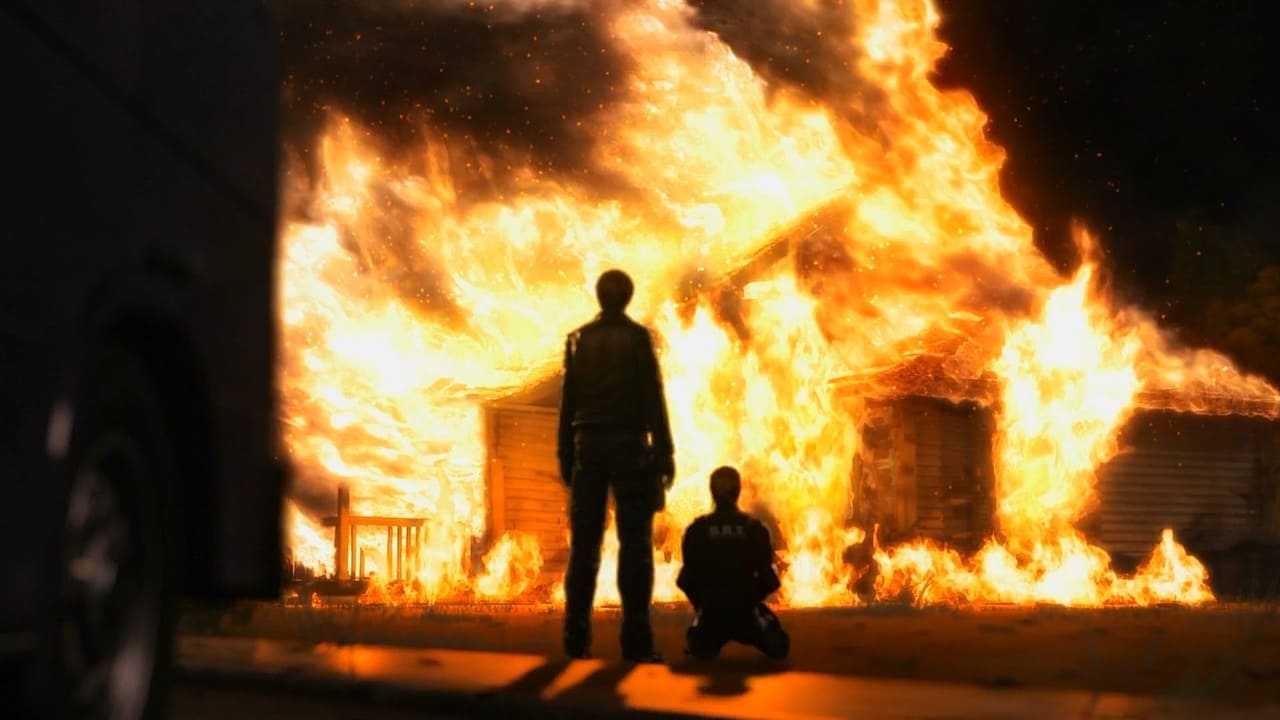
One bit of trivia that makes me chuckle: the original tagline was "Evil never rest." Not "Evils," not "Evil never rests." Just a singular, grammatically suspicious threat. It’s that kind of endearing "Lost in Translation" quirk that defines the Japanese-led side of the franchise. It’s also worth noting that Roger Craig Smith, who voices the mutated Curtis Miller, went on to become the voice of Chris Redfield in the games. Capcom loves to keep their voice talent in the family, even if they have to swap bodies once in a while.
The creature design—specifically the G-Virus mutation in the final act—is legitimately grotesque. It’s a pulsing, multi-eyed mass of meat that reminds us why the series was king of body horror in the late 90s. The zombies look like they’re made of high-quality rubber, but the "big bad" is a triumph of digital gristle.
Resident Evil: Degeneration isn't going to win over anyone who doesn't already know what a "T-Virus" is. It’s clunky, the dialogue is often pure expository cheese, and the animation is firmly stuck in the Bush era. However, for a fan, it’s a comfort watch. It’s a film that respects the lore, brings back the "correct" voices, and delivers exactly the kind of B-movie thrills that defined the PS1 era. It’s a fascinating look at a time when studios were still figuring out how to turn games into movies without losing their soul—or their logic—in the process. If you can handle the Uncanny Valley, it’s a trip worth taking.


Keep Exploring...
-

Resident Evil: Damnation
2012
-
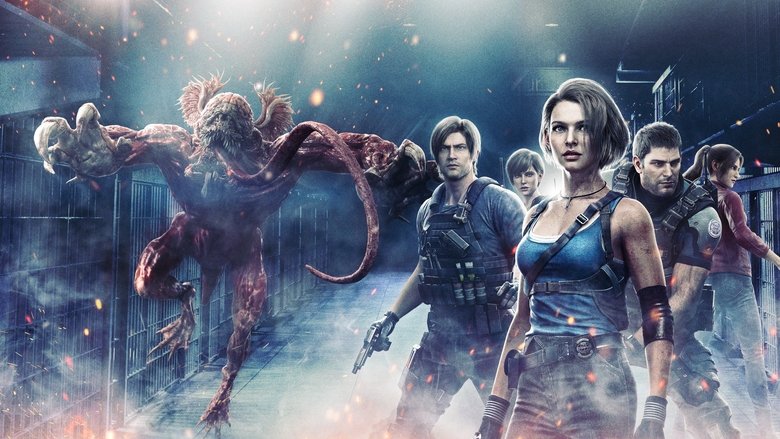
Resident Evil: Death Island
2023
-
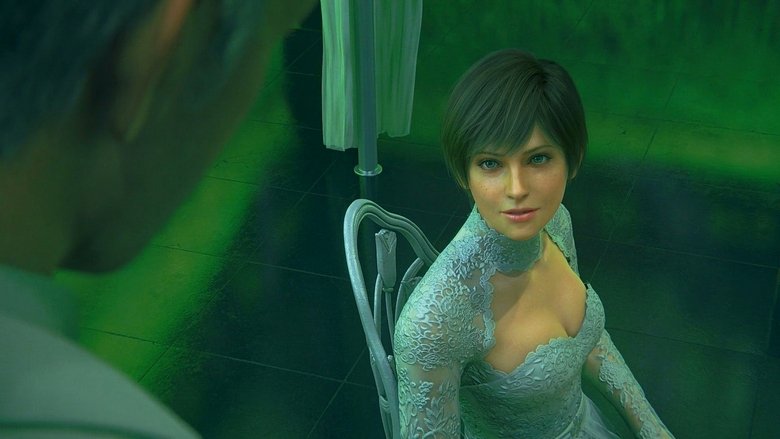
Resident Evil: Vendetta
2017
-

Final Fantasy VII: Advent Children
2005
-

Evangelion: 3.0 You Can (Not) Redo
2012
-
Astro Boy
2009
-
Carriers
2009
-
Justice League: Doom
2012
-

Dragon Ball Z: The Return of Cooler
1992
-

Dragon Ball Z: Broly - The Legendary Super Saiyan
1993
-

Dragon Ball Z: Fusion Reborn
1995
-
Lake Placid
1999
-
Titan A.E.
2000
-

Final Fantasy: The Spirits Within
2001
-
Osmosis Jones
2001
-

Evangelion: 1.0 You Are (Not) Alone
2007
-

Evangelion: 2.0 You Can (Not) Advance
2009
-

Dragon Ball Z: Battle of Gods
2013
-

Atlantis: Milo's Return
2003
-
AVP: Alien vs. Predator
2004