Revolutionary Road
"The honeymoon is over. Forever."
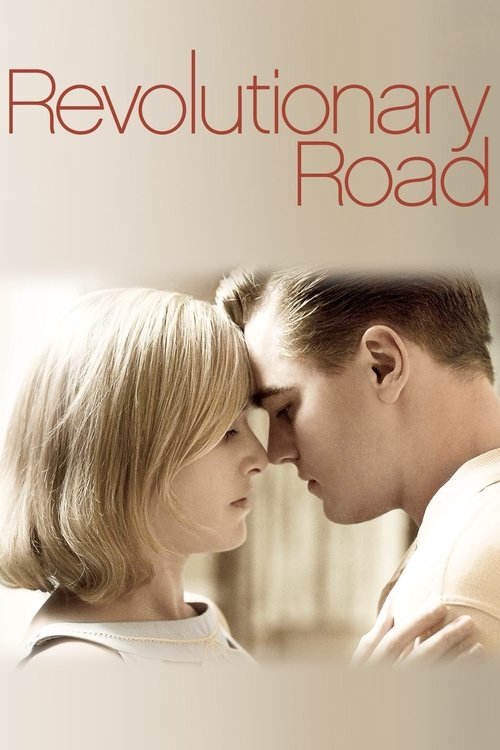
The first time I sat down to watch Revolutionary Road, I was distracted by my roommate in the next room loudly failing to assemble a minimalist IKEA bookshelf. The rhythmic thwack-thwack-thwack of a rubber mallet against particle board shouldn’t have added anything to the experience, but somehow, it provided the perfect metronome for the domestic demolition happening on screen. While my roommate was struggling to build a home, Leonardo DiCaprio and Kate Winslet were busy tearing one down to the studs.
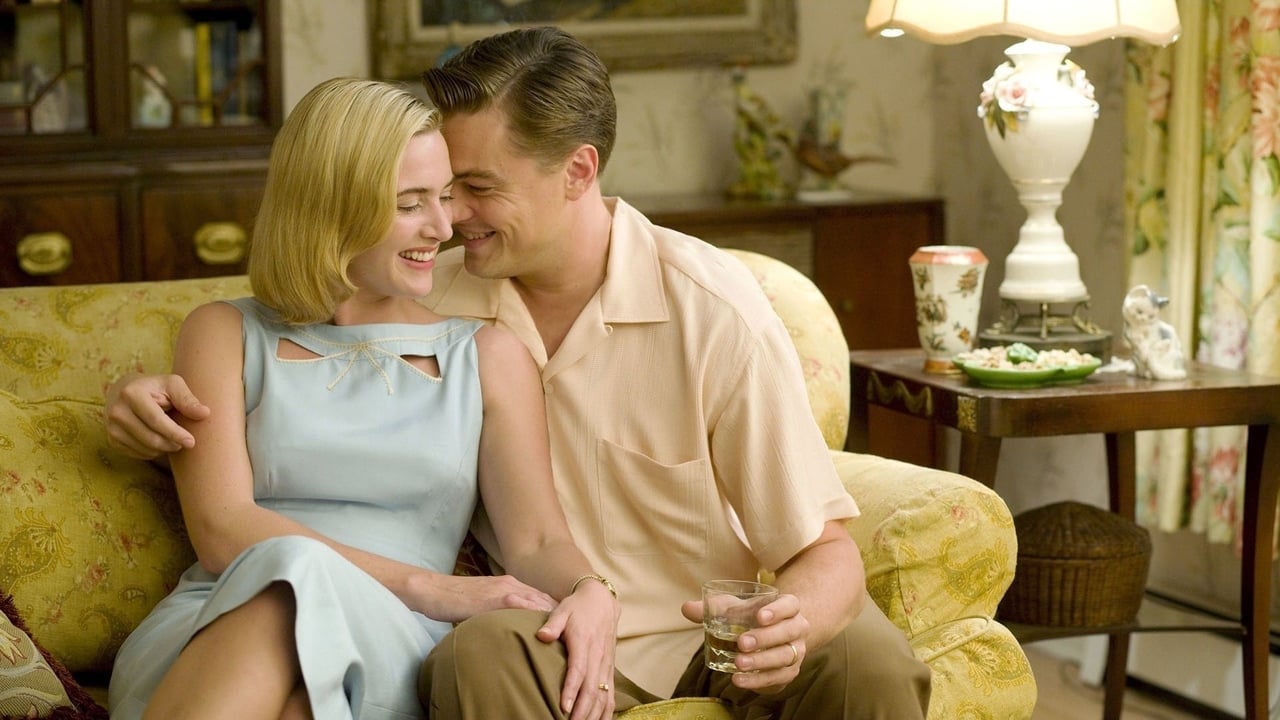
Coming out in late 2008, the marketing for this film leaned heavily on the "Reunited!" angle. It had been eleven years since the ship sank, and the world was collectively gasping at the prospect of Jack and Rose finally getting their suburban happily-ever-after. But Sam Mendes (the guy who already dissected the suburbs in American Beauty) wasn't interested in a fairy tale. He handed us a cold, sharp scalpel and invited us to watch him perform an autopsy on the American Dream. It’s a movie that doesn’t just invite you to watch; it dares you to look away.
The Anti-Titanic
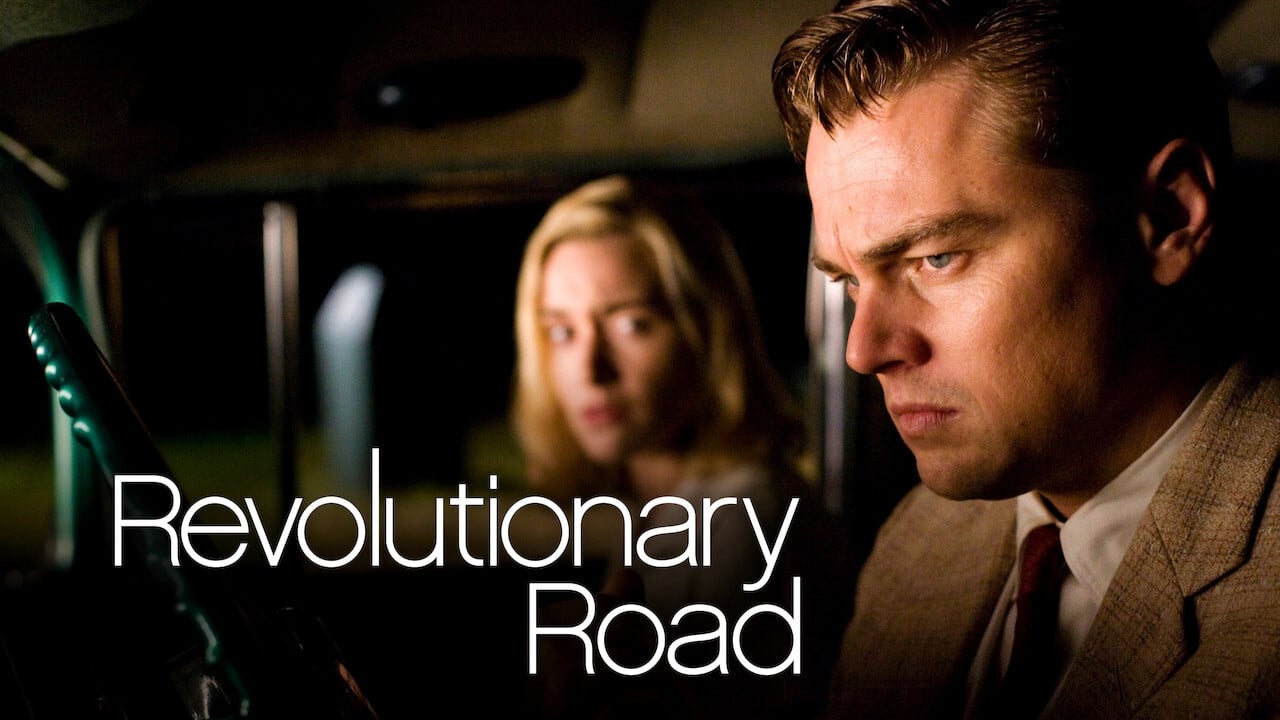
Looking back, the cultural bait-and-switch was legendary. People walked in expecting a sweeping romance and walked out feeling like they’d just survived a three-car pileup. Leonardo DiCaprio plays Frank Wheeler, a man terrified of being ordinary, while Kate Winslet is April, a woman suffocating under the weight of "fine." They are young, beautiful, and live in a lovely house in Connecticut—and they absolutely loathe each other for it.
DiCaprio’s performance here is fascinating because it marks the exact moment he shed his "boyish" persona for good. He’s sweaty, desperate, and occasionally pathetic. Meanwhile, Winslet is a goddamn force of nature. There is a specific stillness to her April Wheeler—a quiet, vibrating rage—that makes the inevitable explosions feel like natural disasters. I honestly think this is the most honest work either of them has ever done, precisely because they aren't trying to be likable. They are trying to be real, and reality in the 1950s was often a well-manicured cage.
The Truth-Teller in the Room

While the leads are doing the heavy lifting, the movie is frequently hijacked by Michael Shannon. He plays John Givings, the "mentally ill" son of their neighbor (played with a delightful, nervous twitch by Kathy Bates, another Titanic alum). John is the only character in the movie who sees through the Wheelers’ bullshit. He shows up for two scenes, says the things no one else is brave enough to say, and leaves the audience gasping for air.
Shannon earned an Oscar nod for about fifteen minutes of screen time, and he deserved every bit of it. In an era where 2000s dramas were often obsessed with prestige and polish, Shannon brought a jagged, dangerous energy that makes the rest of the film feel dangerously fragile. He is the human equivalent of a brick thrown through a stained-glass window. It’s worth watching the movie just to see him dismantle Frank Wheeler’s ego over a plate of hors d'oeuvres.
A Masterclass in Mid-Century Misery
The film is also a stunning example of the transition period in cinematography. Shot by the legendary Roger Deakins (The Shawshank Redemption, No Country for Old Men), it has a crispness that feels almost clinical. Every frame is gorgeous, which only serves to highlight the ugliness of the emotions on display. It’s that 2000s aesthetic—the era of the "Prestige Drama"—where everything looked a little too perfect, a little too intentional.

The score by Thomas Newman (who did Finding Nemo and Skyfall) is iconic in its own right. It’s minimalist and haunting, never telling you how to feel but rather humming along with the characters' anxiety. It’s the kind of music that makes you feel like something is about to go wrong even when the characters are just eating breakfast.
What’s wild is how the film has aged. In 2008, we looked at the 1950s as a distant, dusty relic. Today, the themes of feeling trapped by societal expectations and the "curse of the ordinary" feel uncomfortably modern. The Wheelers weren't just fighting the fifties; they were fighting the human condition.
The production was famously intense. Sam Mendes was married to Winslet at the time, and he allegedly would give her direction from a different room during her sex scenes with DiCaprio to avoid the awkwardness. That level of discomfort permeates the entire film. It’s not a "fun" watch, but it is an essential one for anyone who appreciates acting as a contact sport. By the time the credits roll, you’ll feel exhausted, slightly cynical, and deeply grateful for your own mundane, non-dramatic life. Just don’t watch it right before a big anniversary dinner. Trust me on that one.

Keep Exploring...
-

Jarhead
2005
-
Road to Perdition
2002
-

Titanic
1997
-

What If
2013
-

Match Point
2005
-

Stranger Than Fiction
2006
-

The Fountain
2006
-
The Illusionist
2006
-

The Lake House
2006
-

High School Musical 2
2007
-

The Other Boleyn Girl
2008
-

The Wrestler
2008
-

Vicky Cristina Barcelona
2008
-

(500) Days of Summer
2009
-

Adventureland
2009
-

The Time Traveler's Wife
2009
-

Letters to Juliet
2010
-

Life As We Know It
2010
-

Remember Me
2010
-

The Last Song
2010