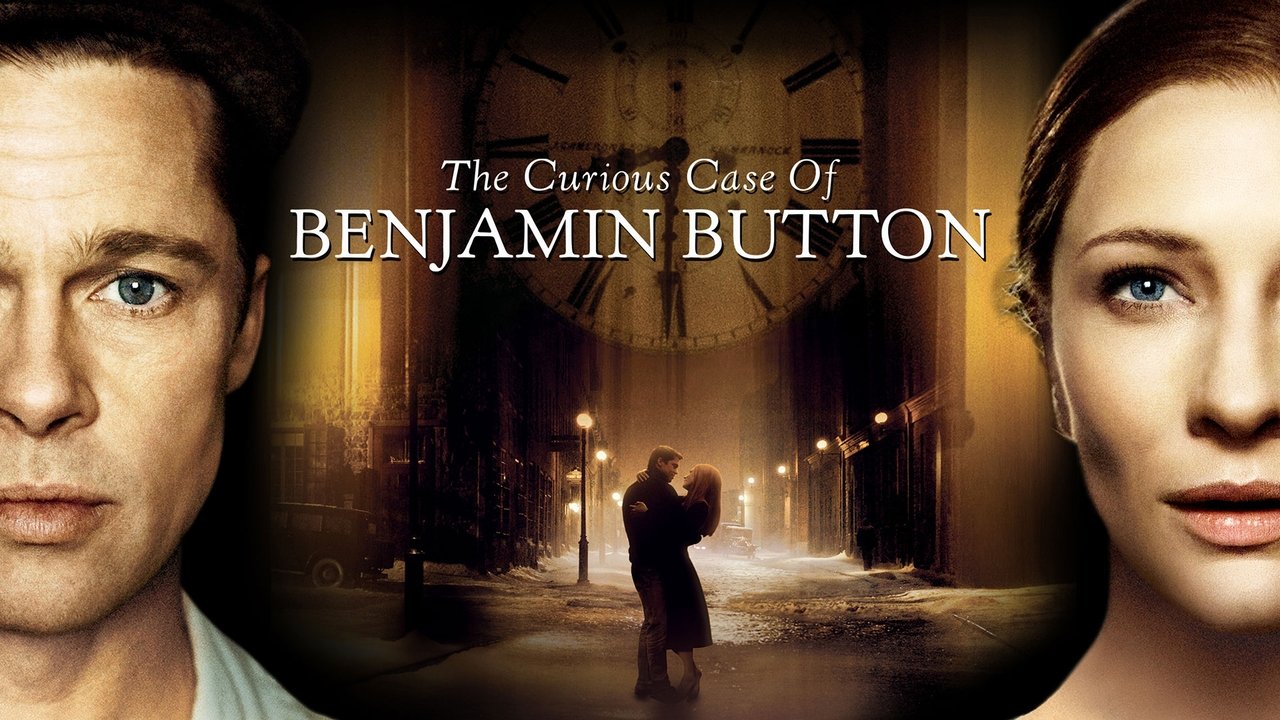
The Curious Case of Benjamin Button
"We’re all heading for the same middle."
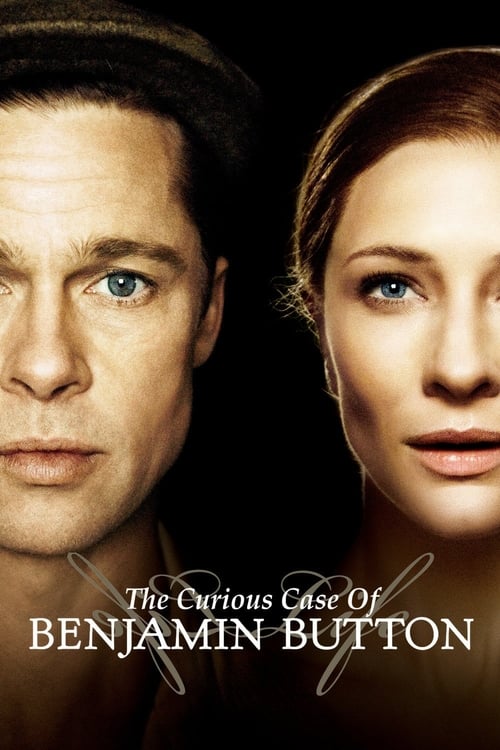
I saw The Curious Case of Benjamin Button on a rainy Tuesday in 2008, sitting in a theater seat with a broken spring that poked into my lower back every time I leaned left. Strangely, that physical discomfort kept me grounded while the movie tried its hardest to float away into the ether of pure fable. There’s something inherently sprawling about a David Fincher film, but this one felt different—less like the clinical precision of Zodiac (2007) and more like a lush, digital fever dream.
Looking back, it’s wild to remember how much we obsessed over the technology of this movie. In the late 2000s, "de-aging" wasn't a button you clicked in an app; it was a Herculean feat of data processing. We were all staring at Brad Pitt’s face, trying to find the seams where the CGI ended and the human began. It was the peak of the "Uncanny Valley" era, and while some parts of the early "old-baby" Benjamin look a bit like a haunted marionette today, the emotional weight of the performance still manages to break through the pixels.
A Fincher Film in a Velvet Suit
Most people think of David Fincher as the guy who makes movies about serial killers and basement-dwellers, but Benjamin Button is his version of a grand, romantic epic. It’s a massive, $150 million gamble on a story about a guy who ages backwards, yet it’s surprisingly quiet. The film captures that transition from the analog grit of the 90s to the digital smoothness of the 2000s perfectly. It was shot on the Viper FilmStream camera, and Claudio Miranda’s cinematography gives New Orleans a golden, amber-hued glow that feels like an old photograph come to life.
The plot, penned by Eric Roth (who also wrote Forrest Gump), follows Benjamin from his birth as a wrinkly octogenarian in 1918 through his "youth" as a middle-aged man in the 60s, and finally to his infancy in the early 2000s. It’s basically Forrest Gump for people who prefer existential dread over boxes of chocolates. While Benjamin is the anchor, the movie belongs to the women in his life. Taraji P. Henson is the soul of the film as Queenie, the woman who raises him in a nursing home, and Tilda Swinton shows up for a brief, heartbreaking affair in Murmansk that remains my favorite segment of the entire 166-minute runtime.
The Chemistry of Crossing Paths
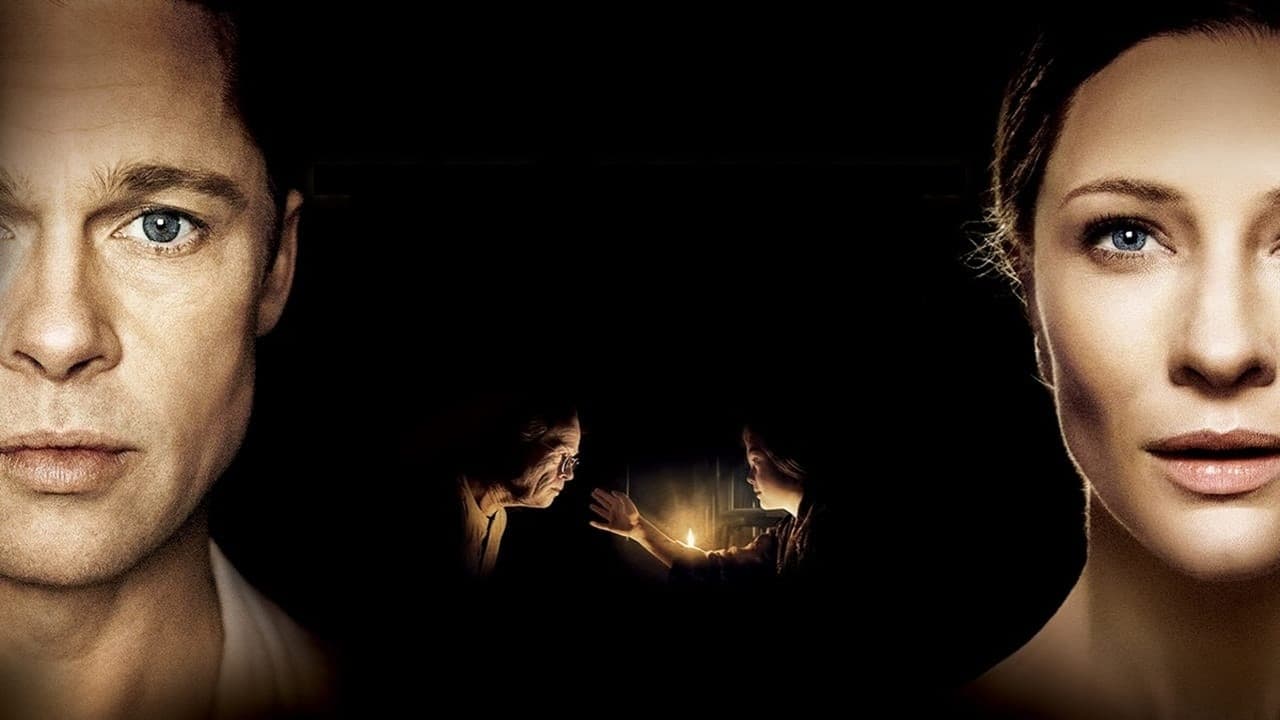
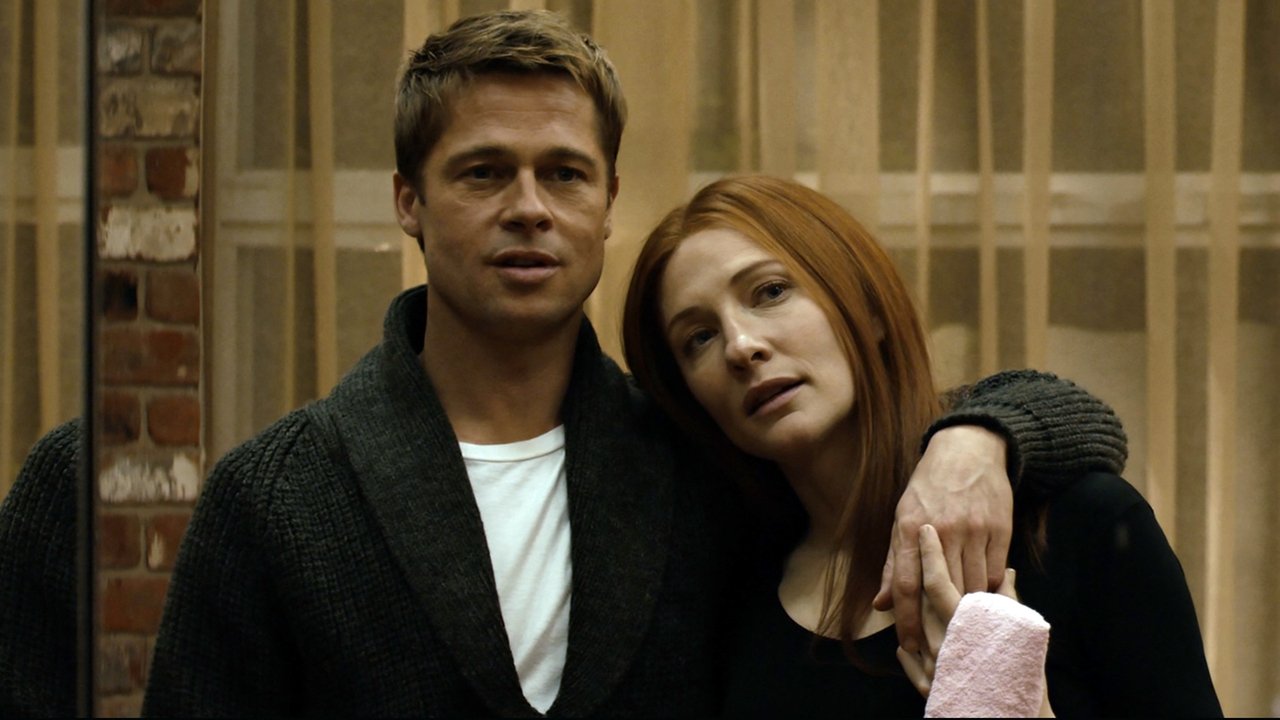
The heart of the story is the relationship between Benjamin and Daisy, played with a sharp, brittle elegance by Cate Blanchett. Because they are aging in opposite directions, they spend most of the movie waiting to meet "in the middle." When they finally do—around the time Benjamin looks like the Brad Pitt from Thelma & Louise (1991) and Daisy is a peak-career ballerina—the film hits a high note of pure, cinematic romance.
There’s a specific kind of melancholy in watching them realize their time is a Venn diagram that is slowly un-overlapping. I remember thinking at the time that Pitt’s Southern accent sounded like he was trying to swallow a mouthful of warm taffy, but his performance is remarkably restrained. He plays Benjamin as a passive observer, a man who knows he’s a freak of nature and decides to just be polite about it. Blanchett, meanwhile, does the heavy lifting, portraying Daisy’s evolution from a vain, ambitious dancer to a woman reconciled with her own mortality.
The Stuff You Didn’t Notice
The "cult" of this movie has grown among tech nerds and Fincher completionists who recognize just how difficult this was to pull off before the MCU made digital makeup look easy. Here are a few details that make the production even more fascinating:
The Three Benjamins: For the first 52 minutes of the film, Brad Pitt isn't physically there. He performed the facial movements in a studio, which were then digitally grafted onto the bodies of three different small-statured actors. Decades in the Making: This project sat on a shelf for twenty years. At one point in the 90s, Steven Spielberg was going to direct it with Tom Cruise starring. I can't even imagine how different that "hopeful" version would have been. The Katrina Shift: The story was originally set in Baltimore (like the F. Scott Fitzgerald short story), but they moved it to New Orleans to take advantage of tax incentives and to help the local economy after Hurricane Katrina. The Hidden Legend: The man who plays the clockmaker, Elias Koteas, is a Fincher veteran, but the real star of the "backwards clock" sequence is the incredible practical set-building that hasn't aged a day. * The Literal Makeup: Even with the CGI, Brad Pitt spent up to five hours a day in a makeup chair for the scenes where he was "only" middle-aged.
In the years since its release, The Curious Case of Benjamin Button has moved out of the "Oscar bait" category and into the "grand curiosity" category. It’s a movie about the passage of time that actually respects the viewer’s time, even if it asks for nearly three hours of it. It’s not as cynical as Fincher’s other work, and that’s why I find myself returning to it. It’s a beautiful, slightly weird meditation on the fact that no matter which way you’re heading, the destination is always the same.
The film serves as a landmark of that era where Hollywood was still willing to spend obscene amounts of money on a single, original drama that wasn't trying to set up a sequel. It’s a reminder that sometimes the most spectacular special effect isn't a superhero flying through a skyscraper, but a man and a woman sitting on a mattress in an empty apartment, finally being the same age for five minutes. If you haven't revisited it since the DVD era, it’s worth seeing how it’s aged—thankfully, it’s doing so in the normal direction.
Keep Exploring...
-
Meet Joe Black
1998
-
Just Like Heaven
2005
-
Stranger Than Fiction
2006
-
The Illusionist
2006
-

The Time Traveler's Wife
2009
-
What Dreams May Come
1998
-
The Family Man
2000
-

The Tree of Life
2011
-
Only Lovers Left Alive
2013
-
Edward Scissorhands
1990
-
Stardust
2007
-

The Game
1997
-
Beautiful Creatures
2013
-
Across the Universe
2007
-
Moonrise Kingdom
2012
-

Ruby Sparks
2012
-
Big Fish
2003
-

Cinderella Man
2005
-

Memoirs of a Geisha
2005
-

Hairspray
2007