The Forbidden Kingdom
"Two legends, one staff, and the ultimate playground debate settled."
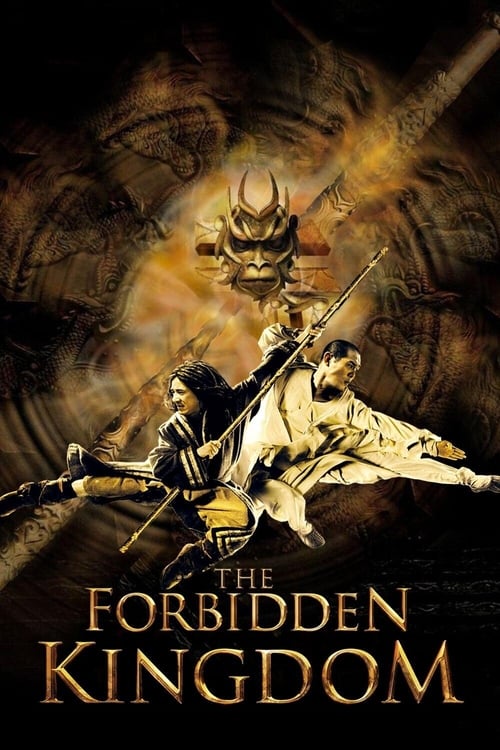
I remember the playground debates of the late 90s like they were yesterday. It was the martial arts equivalent of "Beatles vs. Stones" or "Ford vs. Ferrari." You were either a Jackie Chan devotee—worshipping at the altar of slapstick athleticism and furniture-based combat—or you were a Jet Li purist, preferring the icy, fluid precision of Once Upon a Time in China. For over a decade, the idea of them sharing a frame was the "In Case of Emergency" glass that Hollywood seemed too afraid to break.
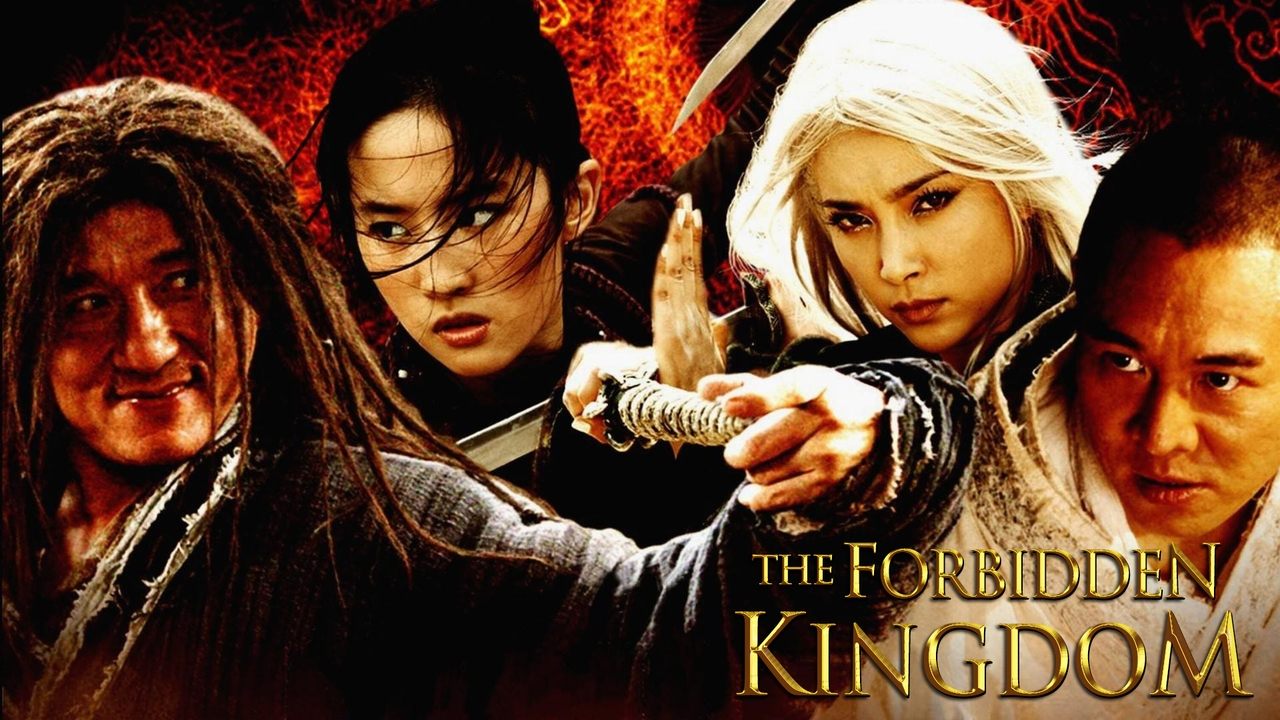
When The Forbidden Kingdom finally arrived in 2008, it felt like a cosmic alignment. I watched it for the first time on a grainy flight to Chicago while the person in the middle seat aggressively encroached on my armrest, and even on a six-inch seatback screen, the sheer novelty of seeing these two icons trade blows made me forget about my lack of personal space.
The Fight We Waited a Lifetime For
Let’s get the elephant in the room out of the way: the plot is essentially a "Greatest Hits" compilation of Wuxia tropes seen through the lens of a Western teenager. Michael Angarano plays Jason, a Boston kid who loves kung-fu movies and finds himself transported to ancient China via a magic staff. If that sounds like the plot of a Disney Channel Original Movie, that’s because director Rob Minkoff (the man behind The Lion King) treats the material with a bright, adventurous sincerity rather than the gritty realism that was starting to take over action cinema in the late 2000s.
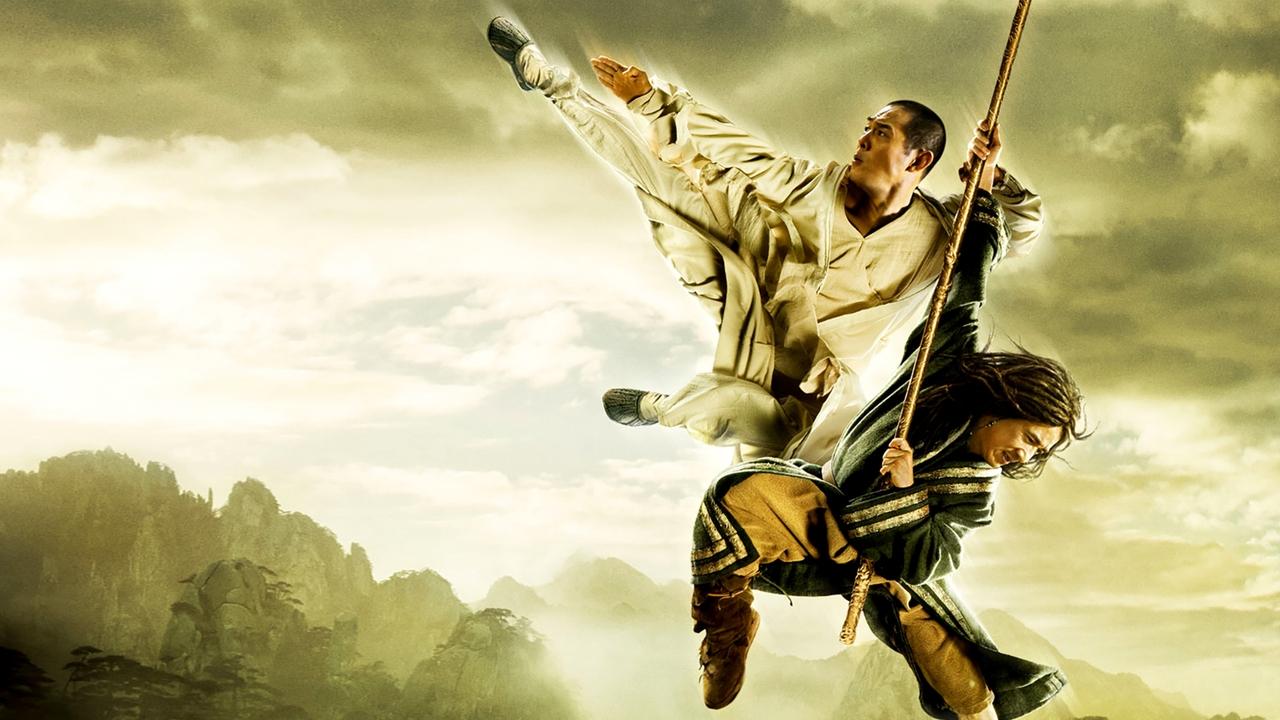
But we didn't buy tickets for the plot. We bought them for the ten-minute sequence where Jackie Chan’s Lu Yan (the Drunken Immortal) and Jet Li’s Silent Monk first encounter each other in a dilapidated temple. This sequence was choreographed by the legendary Yuen Woo-ping, the mastermind who shaped the action in The Matrix and Crouching Tiger, Hidden Dragon.
Looking back, the clarity of the action is a breath of fresh air. This was the era of "Bourne-style" shaky cam and rapid-fire editing that often turned fights into a blender of elbows and knees. Here, Peter Pau Tak-Hai (the cinematographer who won an Oscar for Crouching Tiger) keeps the camera back. You see the footwork. You see the shift in weight. Apparently, Jackie Chan and Jet Li were moving so fast during their initial takes that Rob Minkoff had to ask them to slow down so the cameras could actually capture the movement. The Jason Tripitikas character is basically a human placeholder for an Xbox controller, but when he’s standing between these two titans, you’re just happy to be in the room.
A Time Capsule of the CGI Transition
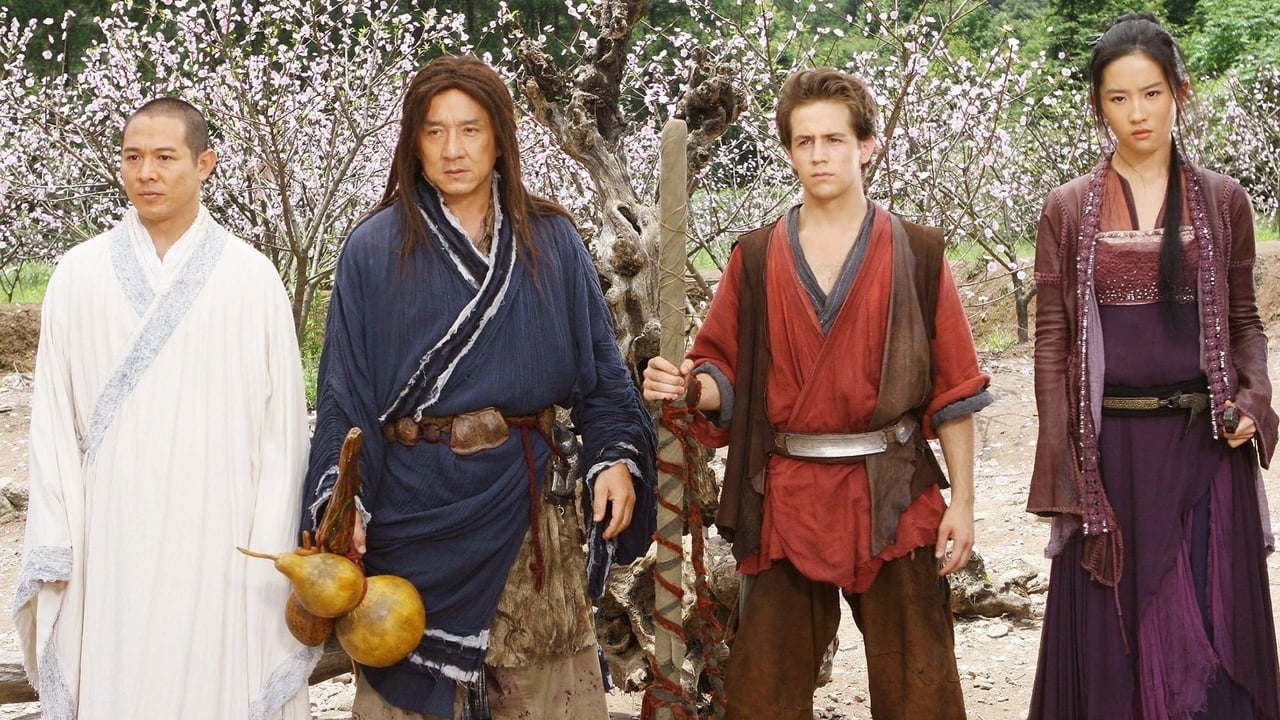
The Forbidden Kingdom sits right in that 2000s sweet spot where digital effects were beginning to take over, but practical stunt work still held the line. The Jade Warlord’s palace is a sprawling digital landscape that looks a bit like a high-end video game cutscene by today's standards, yet it captures the "fantasy" element perfectly.
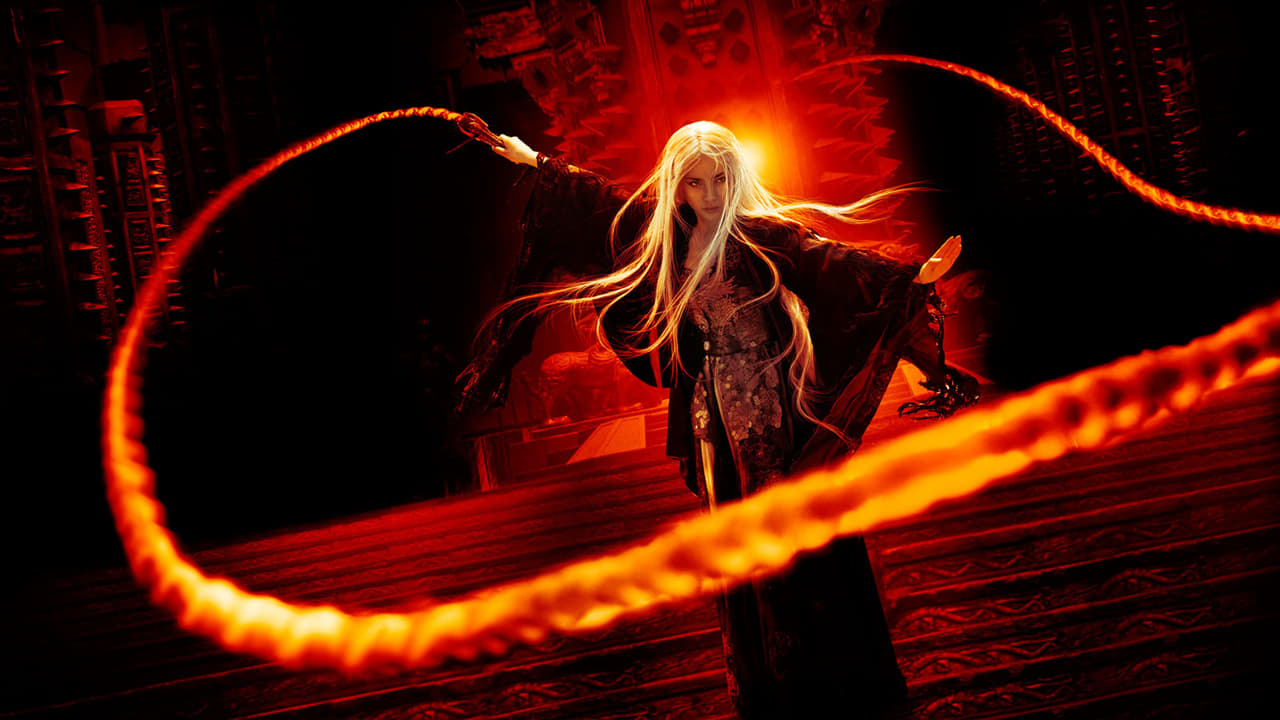
What’s fascinating is seeing how the film bridges the gap between old-school Hong Kong grit and new-school Hollywood sheen. You have Li Bingbing as the White-Haired Witch, a character straight out of classic Chinese literature, wielding her hair like a whip. In 1993, that would have been a wig on a wire; in 2008, it’s a flurry of CGI that feels ethereal and dangerous. It doesn't always "hold up" if you’re looking for Avatar-level integration, but there’s a charm to the ambition.
The film also captures the peak of the "DVD Special Feature" era. I recall the behind-the-scenes segments where the two stars joked about how long it took to finally work together. Jet Li actually plays a dual role, also appearing as the Monkey King, and seeing him under heavy prosthetic makeup reminds you of a time when stars were willing to disappear under layers of latex for the sake of the mythology.
Why It Slipped Into the Shadows
So, why isn't The Forbidden Kingdom mentioned in the same breath as the greats? Part of it is the "Westernized" framing. By centering the story on an American teenager, the film occasionally feels like it’s apologizing for its own genre, trying to make the deep lore of Journey to the West more "palatable" for a 2008 audience. It’s a bit of a "Diet Wuxia" experience.
However, looking back at it now, it’s an incredibly pleasant watch. It’s a film that loves its inspirations. The screenplay by John Fusco is a love letter to the Shaw Brothers era, packed with references to The 36th Chamber of Shaolin and Come Drink with Me. Even Liu Yifei, as the vengeful Golden Sparrow, delivers a performance that feels rooted in the classic swordplay films of the 60s and 70s.
It’s a rare "Middle-Budget" fantasy—the kind of movie that cost $55 million and felt like it, before every action movie either had to be a $5 million indie or a $250 million franchise starter. It’s colorful, it’s earnest, and it features the two greatest martial artists of their generation trying to out-maneuver each other in the dust of a forgotten temple.
Ultimately, The Forbidden Kingdom is a movie that deserves a Saturday afternoon revisit. It’s a transition-era relic that captures the exact moment the legends of the past met the technology of the future. It might not be the definitive martial arts masterpiece we dreamed of, but seeing Jackie and Jet finally square off is a cinematic itch that stays scratched long after the credits roll.
Keep Exploring...
-
Race to Witch Mountain
2009
-
Final Fantasy VII: Advent Children
2005
-
Cirque du Freak: The Vampire's Assistant
2009
-
Solomon Kane
2009
-
Valhalla Rising
2009
-

Wizards of Waverly Place: The Movie
2009
-
The Extraordinary Adventures of Adèle Blanc-Sec
2010
-
Rurouni Kenshin Part I: Origins
2012
-
Mighty Joe Young
1998
-

Mystery Men
1999
-
Stuart Little
1999
-
Final Fantasy: The Spirits Within
2001
-

Lara Croft: Tomb Raider - The Cradle of Life
2003
-

Sinbad: Legend of the Seven Seas
2003
-
The Brothers Grimm
2005
-

Night at the Museum
2006
-

Pirates of the Caribbean: Dead Man's Chest
2006
-
Pirates of the Caribbean: At World's End
2007
-
Avatar
2009
-
Night at the Museum: Battle of the Smithsonian
2009