Wild Child
"Pink tracksuits meet grey skies and actual discipline."
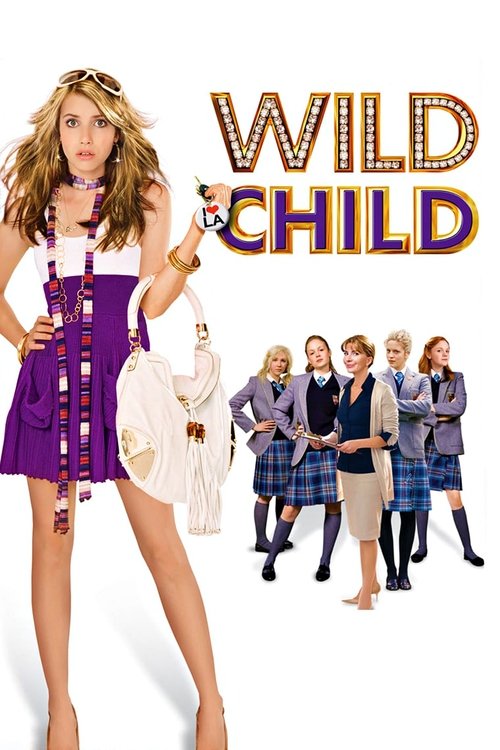
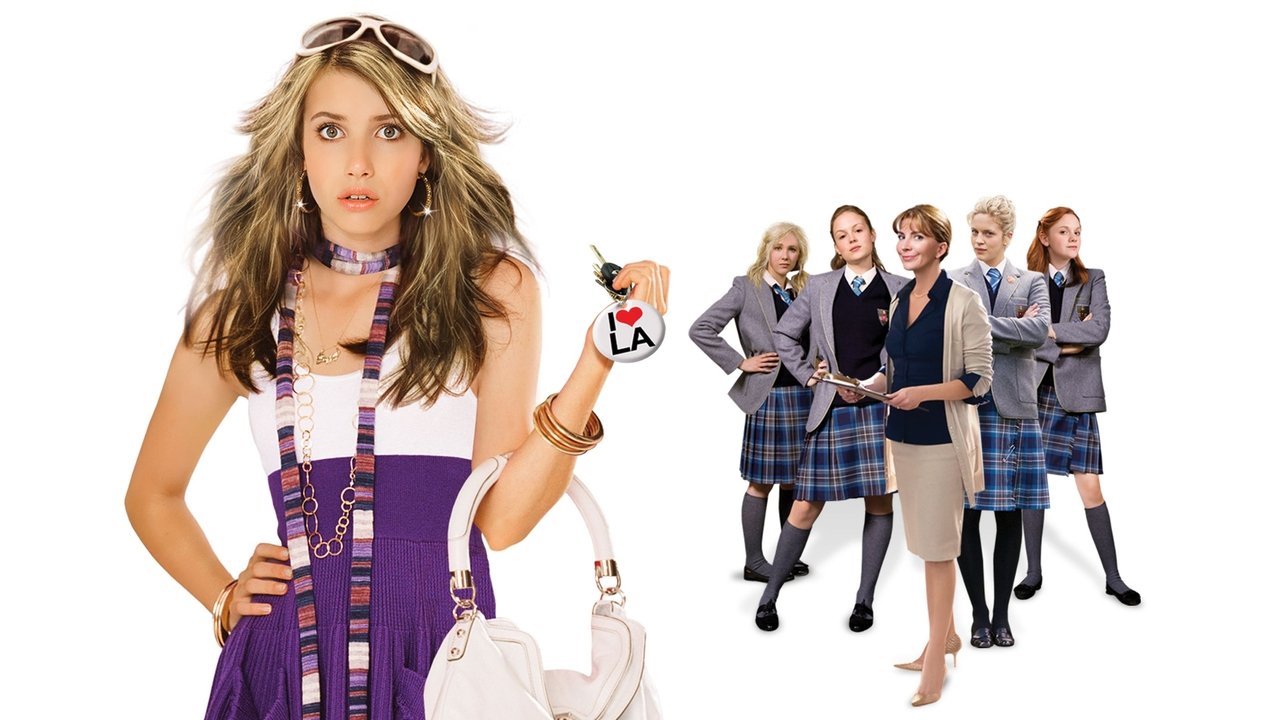
There is a very specific flavor of 2008 that is preserved in Wild Child like a butterfly in amber. It was the era of the side-fringe, the Juicy Couture velour tracksuit, and the belief that any personal crisis could be solved by a pop-punk makeover montage. I watched this on a rainy Tuesday while trying to assemble a particularly stubborn IKEA bedside table; the sound of Emma Roberts shrieking about her ruined hair perfectly matched my own DIY-induced frustration. It’s a film that feels like a time capsule of a transition period in cinema—the moment where the "Mean Girl" trope was starting to pivot toward something slightly more heartfelt and, dare I say, British.
The Malibu-to-Malory Towers Pipeline
The premise is a classic fish-out-of-water setup that feels like it was cooked up during a particularly inspired lunch between a Hollywood executive and someone who grew up reading Enid Blyton. Emma Roberts plays Poppy Moore, a Malibu princess whose bratty behavior finally pushes her father to his breaking point. His solution? Ship her off to Abbey Mount, a strict boarding school in the English countryside.
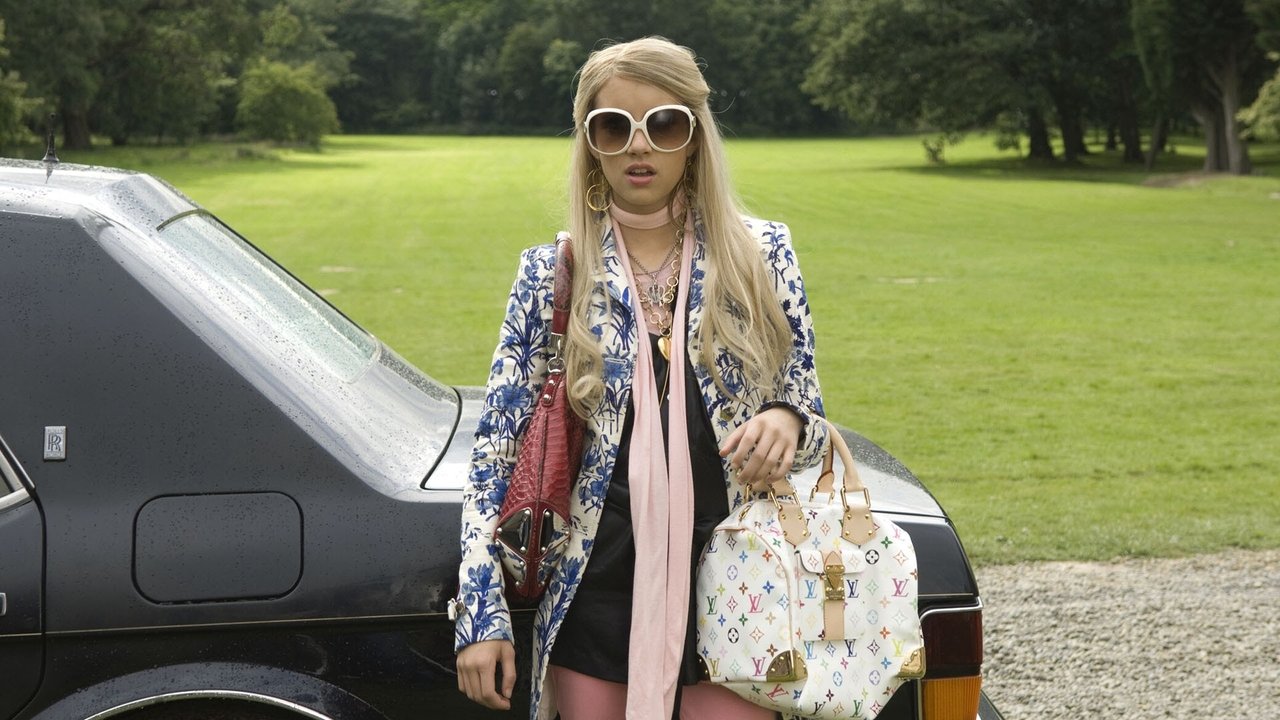
What makes this work better than your average teen fluff is the screenplay by Lucy Dahl. If that surname sounds familiar, it’s because she is the daughter of Roald Dahl. While there are no giant peaches or chocolate factories here, there is a sharp, distinctively British wit buried under the California gloss. The film doesn't just mock the English girls for being "stuffy"; it mocks Poppy for her vapid consumerism. Emma Roberts basically invented the 'unlikable but magnetic' archetype for a whole generation of girls who thought wearing a Beret was a personality. She plays the "spoiled brat" with a jagged edge that makes her eventual redemption feel earned rather than forced.
A Masterclass in Supporting Charm
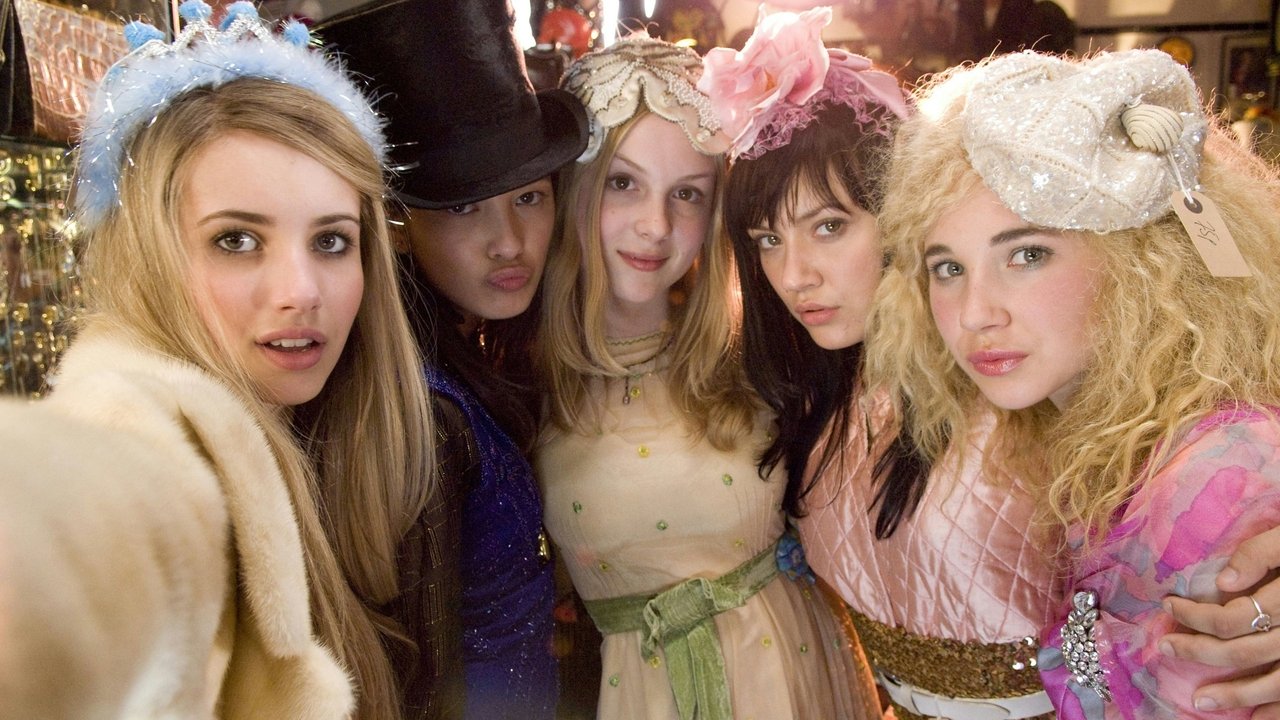
The real joy of Wild Child, however, lies in its ensemble. Abbey Mount is populated by a group of girls who feel like actual human beings rather than the cardboard cutouts usually found in the "clique" genre. Kimberley Nixon is wonderful as the earnest Kate, and a pre-indie-darling Juno Temple pops up as the eccentric 'Drippy.' They don't immediately bow down to Poppy’s designer handbags; they find her exhausting.
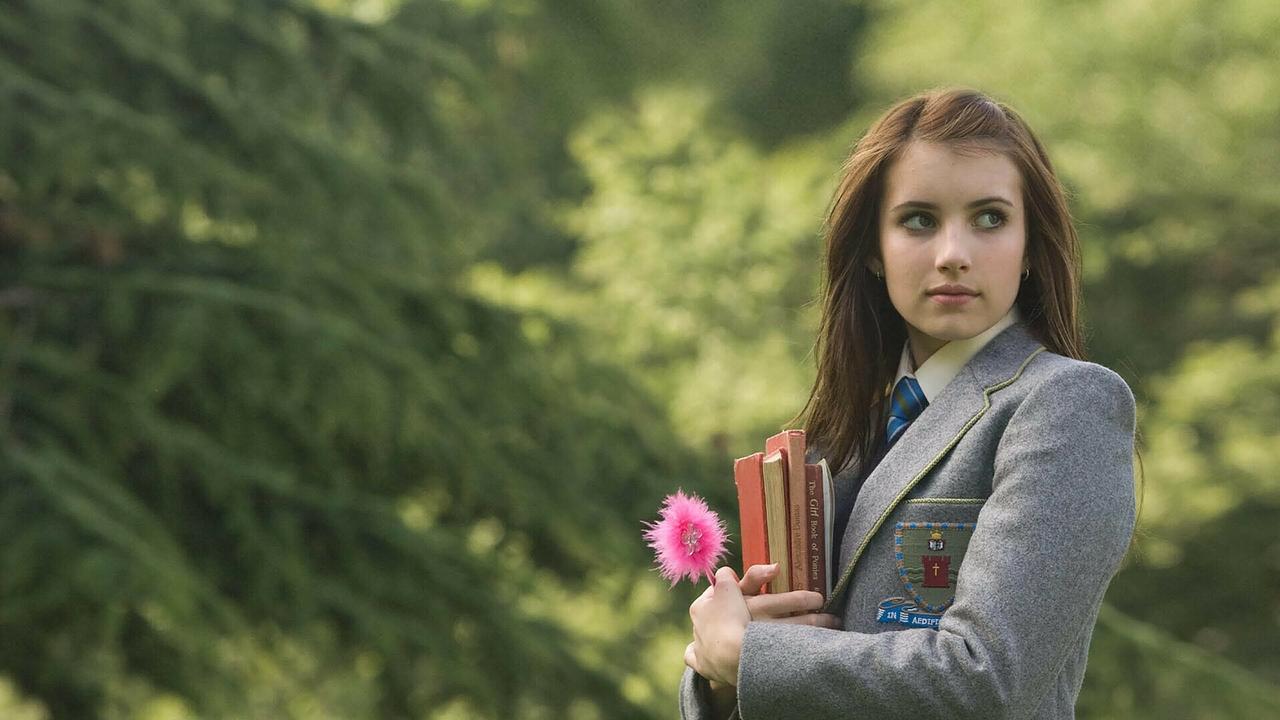
Then there is the late, great Natasha Richardson as Mrs. Kingsley, the headmistress. Looking back, her performance is the soul of the movie. She brings a quiet, maternal dignity to a role that could have been a "wicked headmistress" caricature. There’s a scene where she confronts Poppy about her mother’s death that hits much harder than you’d expect from a movie marketed with a bright pink poster. It’s a reminder of what a nuanced performer Richardson was, providing the "thematic weight" that prevents the movie from drifting away into total fluff.
On the other side of the coin, we have the "villain," Harriet, played by Georgia King. She is the school’s Head Girl and a certified psychopath in a blazer. Her rivalry with Poppy is the engine of the film’s second half, culminating in a lacrosse match that I am convinced is the peak of 2000s sports cinema. The lacrosse sequence is basically the teen girl version of the trench run in Star Wars, and I will not be taking questions at this time.
Why It Vanished (And Why It Stayed)
In the United States, Wild Child was something of a ghost. It barely touched theaters and vanished into the "Direct-to-DVD" bargain bins of Blockbuster. It was a victim of poor timing and a studio that didn't know how to market a British-American hybrid to a post-High School Musical audience. But in the UK and Australia, it became a cult phenomenon. It’s the kind of movie that lived on through repeated airings on cable TV and worn-out DVD copies at sleepovers.

The film represents that late-2000s bridge between analog and digital culture. You see it in the technology—the flip phones and the heavy reliance on digital cameras—but you also see it in the storytelling. It’s a drama that values "real" connections over the superficiality of Malibu, yet it’s unashamedly a product of the Hollywood machine. It lacks the cynicism that would come to define the teen genre just a few years later with the rise of social media-centric plots.
The soundtrack, too, is a nostalgic goldmine. From Sugababes to Kate Nash, it captures the "Indie-Pop" explosion of the era perfectly. It was a time before the MCU formula dictated every beat of a movie’s rhythm; Wild Child is content to be a mid-budget, character-driven comedy-drama that focuses on female friendship and the terrifying ordeal of being known.
Ultimately, Wild Child succeeds because it treats its characters' emotions as valid, even when their problems are as trivial as a ruined eyebrows-threading appointment. It’s a cozy, well-acted, and surprisingly funny look at a girl finding her footing in a world that doesn’t care about her credit limit. It might not be "high art," but as a piece of 2000s comfort cinema, it’s practically royalty. If you missed it during its initial quiet release, it’s well worth a retrospective watch—if only to see Alex Pettyfer as the ultimate 2008 heartthrob before he decided to go all "action star" on us.
Keep Exploring...
-
What a Girl Wants
2003
-
First Daughter
2004
-
Jersey Girl
2004
-

A Lot Like Love
2005
-
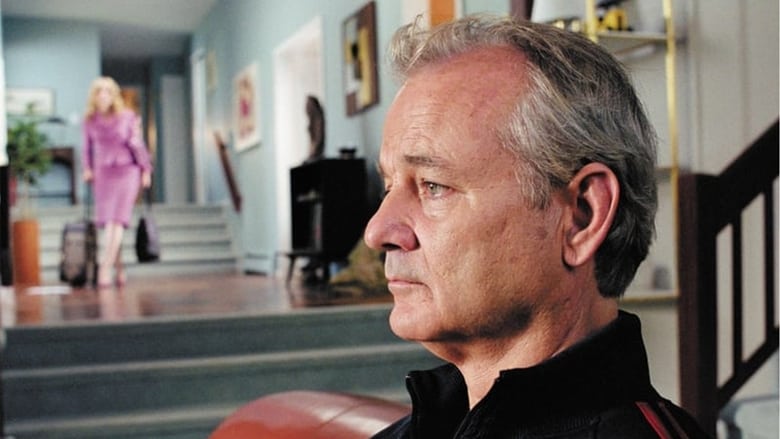
Broken Flowers
2005
-
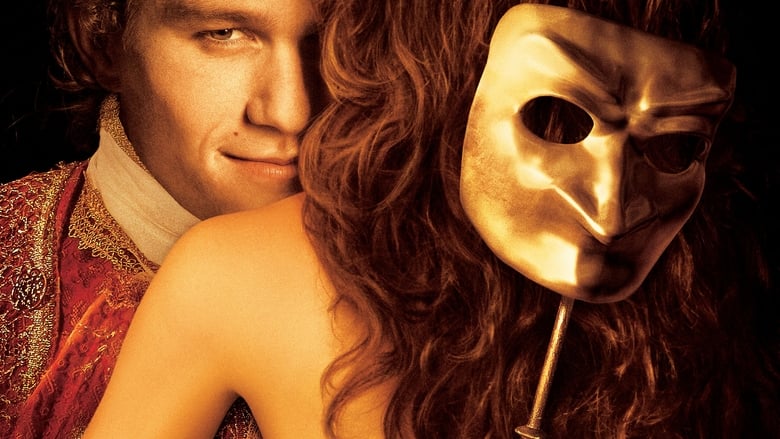
Casanova
2005
-
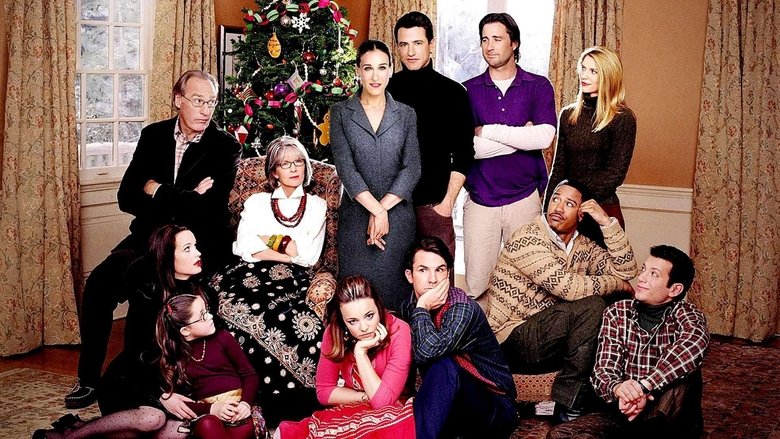
The Family Stone
2005
-
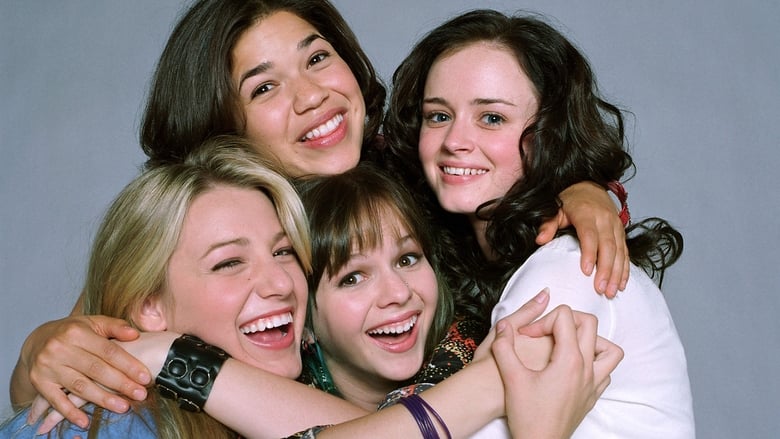
The Sisterhood of the Traveling Pants
2005
-

A Good Year
2006
-
Just My Luck
2006
-
Dan in Real Life
2007
-
Lars and the Real Girl
2007
-
The Nanny Diaries
2007
-
Ghost Town
2008
-
Nick and Norah's Infinite Playlist
2008
-
Youth in Revolt
2009
-
I Love You Phillip Morris
2010
-
Morning Glory
2010
-
The Switch
2010
-
You Will Meet a Tall Dark Stranger
2010