Yes Man
"The power of 'yes' meets the chaos of Jim Carrey."
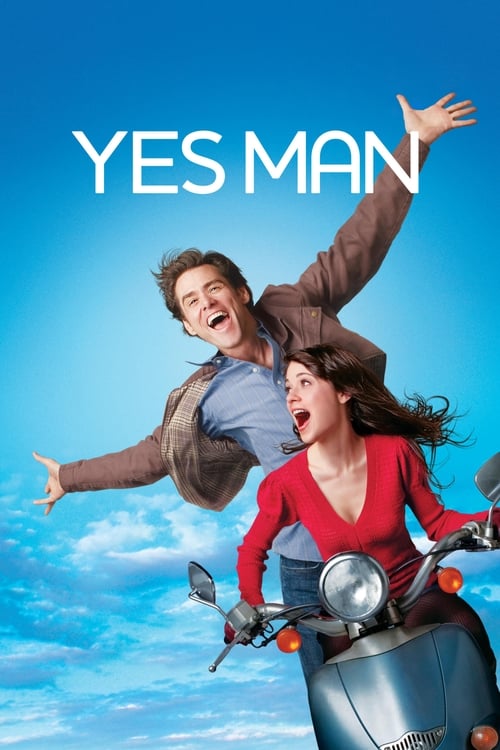
I remember watching Yes Man for the first time on a cross-country flight while sitting next to a guy who was meticulously peeling a hard-boiled egg. The smell was atrocious, yet I found myself completely locked into Jim Carrey’s manic energy, occasionally snickering loud enough to earn a side-eye from my egg-eating neighbor. There’s something about a 2008 comedy that feels like a time capsule now—a moment right before the "Apatow Style" of improv-heavy riffing completely took over, but after the high-concept slapstick of the 90s had started to cool down.
The $223 Million Gamble
In retrospect, Yes Man was a fascinating pivot for Jim Carrey. By 2008, he wasn't just a comedian; he was a legacy act trying to navigate a changing landscape. He did something here that few stars of his caliber would dare: he declined his $20 million upfront salary in exchange for 36.2% of the film’s "back-end" profits. It was a massive bet on his own brand, and it paid off spectacularly. The movie turned a $70 million budget into a $223.2 million global box office haul. It proved that even in the era of burgeoning franchises, a singular "Carrey Movie" could still move the needle.
The film follows Carl, a man stuck in a self-imposed purgatory of "no." He dodges calls from his best friend Peter (a pre-Hangover Bradley Cooper), ignores his boss, and spends his nights watching DVDs alone. After a chance meeting with an old friend, he ends up at a seminar led by a silver-tongued guru (the legendary Terence Stamp) and commits to saying "yes" to every opportunity that comes his way. It’s a simple premise, but in the hands of director Peyton Reed (who later brought that same kinetic polish to Ant-Man), it becomes a high-octane exploration of middle-class rebirth.
Red Bull, Bungee Jumps, and 2000s Quirk
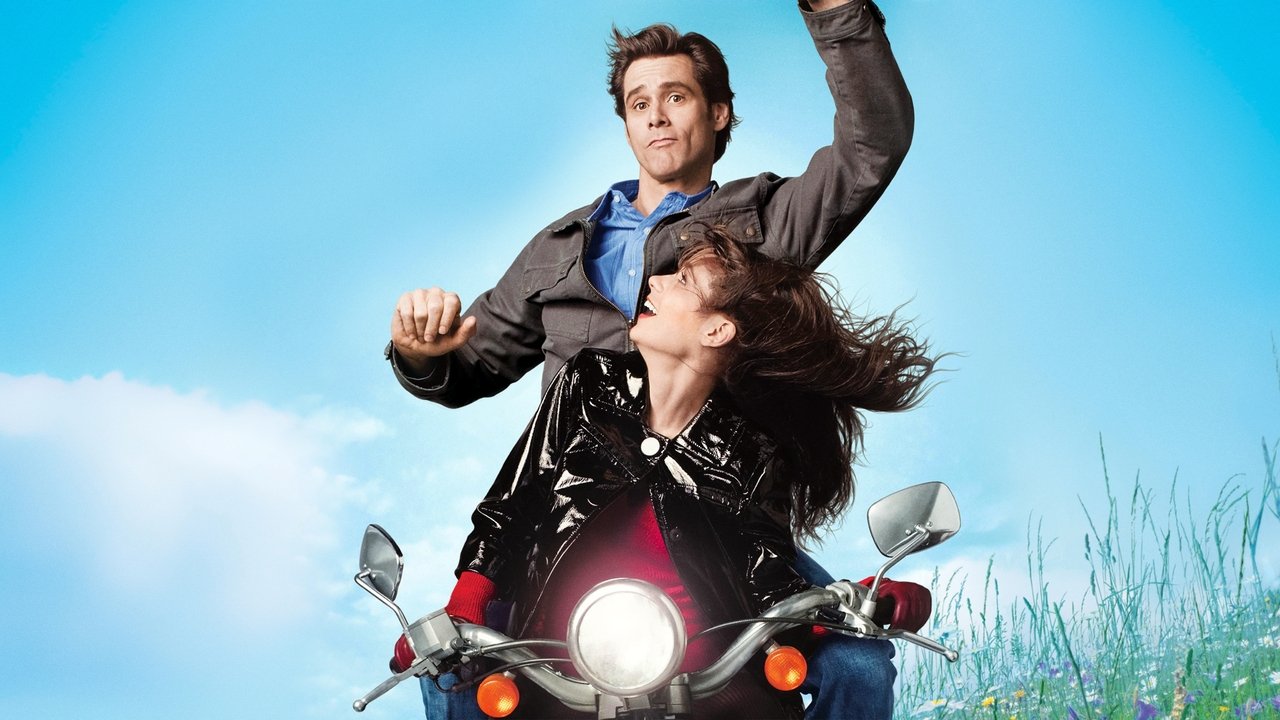
What strikes me now is how much this film serves as the ultimate showcase for Zooey Deschanel’s "Manic Pixie Dream Girl" phase. As Allison, she is the literal embodiment of the mid-2000s indie aesthetic—she leads exercise-photography classes and sings in a weird synth-pop band called Munchausen by Proxy. Looking back, she’s basically a walking Pinterest board from 2009, but her chemistry with Carrey is surprisingly sweet. There’s a thirty-year age gap between them that the movie just sort of breezes past with a shrug, which is a very "of its time" Hollywood trope that feels a bit jarring by today’s standards.
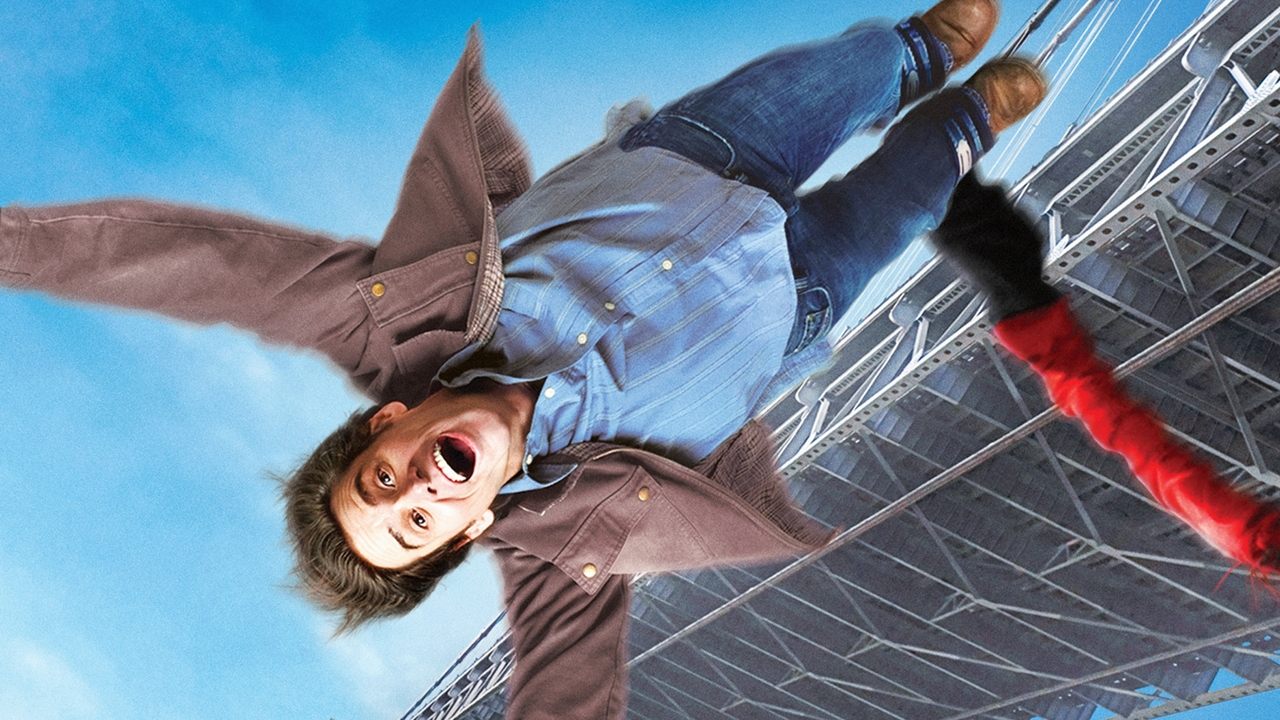
The humor, however, still carries a decent hit-to-miss ratio. Carrey is dialled back from his Ace Ventura days, but he still finds room for that elastic physicality. The scene where he consumes an ungodly amount of Red Bull is a standout—it’s essentially a feature-length ad for heart palpitations and reckless lending, but Carrey sells the jittery euphoria with every fiber of his being. I’ve always appreciated that he did his own bungee jump for the film’s climax. Apparently, the crew was terrified, but Carrey wanted to prove that "saying yes" wasn't just a script choice; it was a production philosophy.
The Ensemble and the Afterglow
While Carrey drives the bus, the supporting cast is what keeps the wheels from falling off. Rhys Darby, fresh off Flight of the Conchords, is a revelation as Norman, the socially awkward boss obsessed with themed parties. His Harry Potter party is a cringe-comedy masterpiece that deserves more credit than it usually gets. We also see John Michael Higgins and Danny Masterson popping up to fill out the world of 2000s Los Angeles.
Technically, the film looks great thanks to cinematographer Robert D. Yeoman. If the colors look familiar, it’s because he’s Wes Anderson’s go-to guy (having shot The Royal Tenenbaums and The Grand Budapest Hotel). He gives the film a crisp, vibrant look that elevates it above the flat lighting of most modern studio comedies. It captures a sunny, hopeful version of L.A. that feels almost nostalgic now.

Does the "Yes" philosophy actually hold up? Probably not. If you actually said yes to every random person on the street, you’d be broke or kidnapped within forty-eight hours. But as a vehicle for a star who was learning how to age gracefully while still being the funniest person in the room, it’s a delightful relic. It’s a movie that asks very little of you, which is exactly why it was such a hit on the DVD circuit back in the day.
Yes Man represents the tail end of the era where a movie could be built entirely on the shoulders of one man’s face. It’s sunny, occasionally sentimental, and features Jim Carrey playing "Third Eye Blind" on a guitar to stop someone from jumping off a ledge. It might be a bit formulaic, but in a world that often feels like it's built on a foundation of "no," spend a couple of hours with Carl Allen and his absurd, caffeinated optimism. You could do a lot worse.

Keep Exploring...
-

The Break-Up
2006
-
The Mask
1994
-

Fun with Dick and Jane
2005
-
Wedding Crashers
2005
-
He's Just Not That Into You
2009
-

The Ugly Truth
2009
-
American Wedding
2003
-

How to Lose a Guy in 10 Days
2003
-

Something's Gotta Give
2003
-

Meet the Fockers
2004
-
Shall We Dance?
2004
-

Shrek 2
2004
-
Hitch
2005
-

Failure to Launch
2006
-

Enchanted
2007
-

Mamma Mia!
2008
-
Sex and the City
2008
-

Valentine's Day
2010
-
I Love You Phillip Morris
2010
-

Bruce Almighty
2003